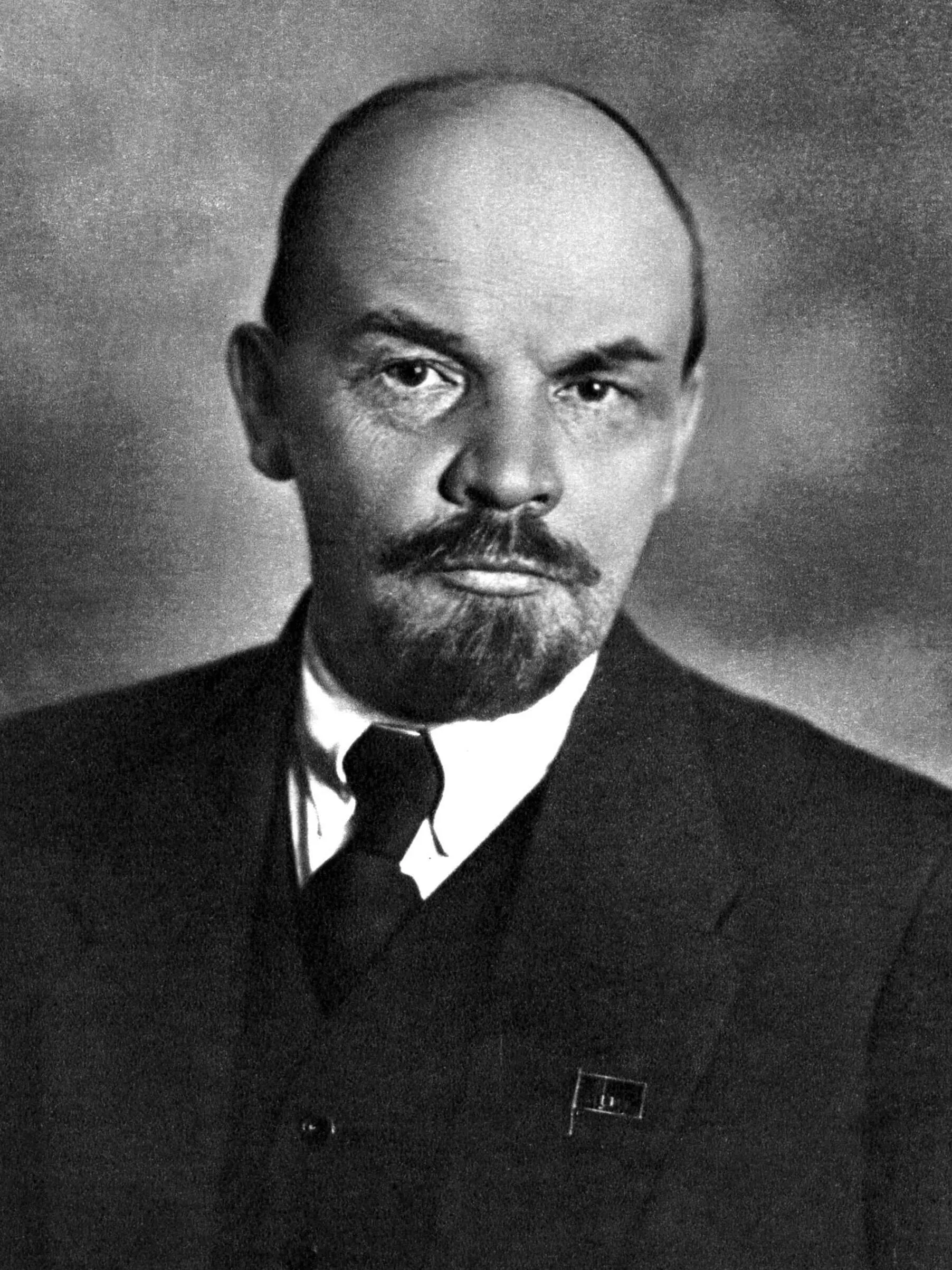
Vladimir Levenshtein
 Russia
mathematician•computer scientist
Birthday
May 20, 1935
Birth Sign
Taurus
Birthplace
Moscow, Russian SFSR, Soviet Union
Age
Died at 82
About
Vladimir Iosifovich Levenshtein was a Soviet and Russian mathematician and computer scientist whose work in information theory and error-correcting codes shaped modern computing. He is best known for devising the Levenshtein distance in 1965, a metric that measures how dissimilar two strings are by counting the minimum single-character edits needed to turn one into the other. That idea now underpins spell checkers, DNA sequence alignment, and fuzzy search algorithms used across the software industry.
Levenshtein spent his entire research career at the Keldysh Institute of Applied Mathematics in Moscow, where he became a leading figure in coding theory. His contributions earned him the IEEE Richard W. Hamming Medal in 2006, among other honours. He died in Moscow on September 6, 2017, at the age of 82, leaving behind a body of theoretical work that continues to influence computer science and mathematics.
Early Life & Background
Vladimir Levenshtein was born in Moscow on May 20, 1935, into a period of significant upheaval in the Soviet Union. His early years were shaped by the Second World War and the post-war recovery, but his aptitude for mathematics became clear early on. He enrolled at Moscow State University, one of the country's most prestigious institutions, where he studied mathematics and mechanics. He graduated in 1958, at a time when Soviet mathematics was thriving, with figures like Andrey Kolmogorov and Israel Gelfand pushing the field forward.
After graduation, Levenshtein joined the Keldysh Institute of Applied Mathematics, then known as the Institute of Applied Mathematics of the Academy of Sciences. The institute, led by Mstislav Keldysh, was a hub for computational research, and Levenshtein found himself among engineers and scientists working on problems related to space flight and cryptography. It was here that he began exploring the theory of error-correcting codes, a field that would become his life's work. In the early 1960s, he started publishing papers on coding theory, laying the groundwork for his most famous contribution.
By 1965, he had developed the concept that would later be called the Levenshtein distance. The idea emerged from his work on error correction: he wanted a way to measure how many errors might occur when a message is transmitted, and he realized that the minimum number of insertions, deletions, or substitutions needed to transform one string into another provided a natural metric. He published his findings in the Soviet journal Doklady Akademii Nauk SSSR, but the paper was initially little noticed outside the USSR. It would take years for the concept to become widely known in the West.
Career Growth
Levenshtein's 1965 paper on the distance metric eventually gained international recognition, and the concept became known as the Levenshtein distance. During the 1970s and 1980s, he continued to publish on error-correcting codes, combinatorial design, and information theory, building a reputation as one of the foremost theorists in the field. His work on deletion and insertion errors, in particular, was pioneering, and he developed codes that could correct such errors in ways that had not been attempted before.
In 2006, the IEEE awarded him the Richard W. Hamming Medal, one of the highest honours in information theory, for his foundational contributions. The citation specifically recognized his development of the Levenshtein distance and his broader work on error correction. He was also named a fellow of the IEEE Information Theory Society. Despite his advanced age, he remained active in research and continued to publish into the 2000s. His papers have been cited thousands of times, and the Levenshtein distance has become a standard tool in computer science, appearing in everything from spell checkers to bioinformatics. He died in Moscow on September 6, 2017, at the age of 82.
Career Timeline
Public Image & Style
Within the scientific community, Vladimir Levenshtein was regarded as a quiet, rigorous thinker who made profound contributions to information theory. He was not a public figure in the way that some scientists become, but his work earned him deep respect among peers. The Levenshtein distance became so fundamental that it is now a standard topic in computer science textbooks, and his name is familiar to programmers and data scientists around the world. He is remembered as a pioneer of coding theory in Russia, and his legacy lives on through the countless applications of his algorithm.
Fame & Fandom
Vladimir Levenshtein never had a fanbase in the traditional sense. No crowds gathered outside his Moscow apartment, no billboards lit up for his birthday, and no official fandom name emerged to organize chart pushes or charity drives. His legacy belongs strictly to the quiet halls of academia rather than the roar of public adoration. While he is revered as the 43rd most popular Russian mathematician globally, this distinction reflects professional citation counts and academic influence rather than the frenzied energy of pop culture followers. The iFANN Global Fame Engine evaluated his standing in August 2026 and determined that Vladimir Levenshtein is currently the EVALUATED_UNRANKED, meaning he does not hold a placement in the published Global Top 1,000 or any scope-specific top lists. He remains a titan of information theory whose name appears on every computer science syllabus, yet his fame operates through utility rather than celebrity worship. His algorithm underpins spell checkers and DNA sequencing worldwide, creating a silent, invisible audience of billions who rely on his work without ever knowing his face. This unique form of immortality places him beyond standard metrics of stardom; he is famous for what he built, not for how he was perceived by the masses. The absence of a formal fan community underscores his identity as a rigorous, modest thinker who preferred theoretical problems over commercial spotlight. Even decades after his passing in 2017, his contributions remain foundational, proving that true impact often leaves no trace of a cheering crowd.
Interesting Facts and Legends
Levenshtein's groundbreaking 1965 paper defining the distance metric first appeared in Russian, taking years to permeate Western scientific circles. Often called the edit distance, this concept covers broader variants but remains synonymous with his name. Known for his profound modesty, he consistently chose theoretical inquiries over lucrative commercial ventures, refusing to profit from his own algorithm despite its global ubiquity. His research extended well beyond string similarity to include complex studies on perfect codes and covering codes, fields that continue to drive active mathematical inquiry today. A dedicated member of the Moscow Mathematical Society, he attended its seminars for decades while maintaining an interest in linguistics that deeply informed his approach to language structure. Though he never sought fame, his work became so fundamental that it now defines how computers understand human error. There are no viral legends of fainting crowds or stage antics because his mythology consists entirely of verified equations. The story of his life is one of quiet persistence: a man who changed the digital world by counting single-character edits, leaving behind a legacy that functions silently in every search bar and text message sent across the globe.
Family & Personal Life
Details about Vladimir Levenshtein's family are scarce in public sources. He was born in Moscow and lived there his entire life. His parents' names and occupations are not widely documented. He married at some point, but information about his wife is not publicly available. He did not have children, or at least none that are mentioned in any biographical accounts. He kept his personal life private, and his work at the Keldysh Institute was his primary focus. After his death in 2017, his colleagues remembered him as a dedicated researcher who was deeply passionate about mathematics.
Notable Connections
Levenshtein's work is closely associated with the Keldysh Institute of Applied Mathematics, where he worked for over five decades. He was also connected to the broader Soviet and Russian coding theory community, including figures like Lev Khasin and others who worked on error-correcting codes. His algorithm is widely used in software products such as spell checkers and DNA sequencing tools, linking him to the fields of computational linguistics and bioinformatics.
Relationships & Dating History
There is no public information about Vladimir Levenshtein's romantic relationships. He was a private person, and his personal life was not documented in any available sources. He was married, but the identity of his wife is not known, and no details about their relationship have been published. He did not have any known children. As of his death in 2017, his marital status was not reported.
Death & Aftermath
Died
September 6, 2017 (aged 82)
Death Place
Unknown
Cause of Death
Unknown
The Keldysh Institute of Applied Mathematics in Moscow confirmed the passing of Vladimir Levenshtein on September 6, 2017. The announcement marked the end of a career that had fundamentally reshaped how computers handle errors and match data strings, yet it arrived without the fanfare often reserved for global scientific icons. Details regarding his final days or the specific medical circumstances leading to his death remained private, as was typical for a man who guarded his personal life fiercely throughout his eighty-two years. The reaction within the academic community was one of quiet reverence rather than public spectacle. Colleagues at the institute and peers in the field of information theory acknowledged the loss of a foundational thinker whose work now underpins spell checkers, DNA sequencing, and fuzzy search algorithms used daily across the software industry.
Tributes appeared in specialized journals and conference proceedings, focusing on the enduring utility of the metric he devised in 1965. His estate passed to family members, though specific details about the handling of his personal effects or savings were not made public. The mathematical tools he created continued to function silently in the background of digital infrastructure, serving as the standard for measuring string similarity long after the man behind them had departed.
Net Worth (Estate Value)
Vladimir Levenshtein was a theoretical scientist, not a commercial entrepreneur, so his personal net worth was modest. He earned a standard academic salary in the Soviet Union and later in Russia, which was not high by Western standards. He did not have any business ventures or endorsements. His estate, after his death, would consist mainly of his personal effects and any savings. There is no public record of his net worth, and it is not a topic that was ever discussed in the media. For context, academic salaries in Russia in the 1990s and 2000s were often low, and many scientists struggled financially. However, Levenshtein's legacy is not measured in money but in the intellectual impact of his work.
Awards Won (1)
Vladimir Levenshtein received the IEEE Richard W. Hamming Medal in 2006, one of the most prestigious awards in information theory. This honour recognized his foundational contributions to error-correcting codes and information theory, particularly the development of the Levenshtein distance. He was also named a fellow of the IEEE Information Theory Society, a mark of distinction in the field.
2006 · Information Theory
For contributions to error-correcting codes and information theory, including the Levenshtein distance
Known For
Levenshtein distance
1965 · Developer
Error-correcting codes
· Researcher
Keywords
Sources
Quick Facts
- Profession
- mathematician, computer scientist
- Born
- +1935-05-20
- Birthplace
- Moscow
- Died
- +2017-09-06
- Death Place
- Moscow
- Gender
- Male
- Birth Sign
- Taurus
Personal Details
- Full Name
- Vladimir Iosifovich Levenshtein
- Education
- Moscow State University (graduated 1958)
Frequently Asked Questions
Who was Vladimir Levenshtein?
What is the Levenshtein distance?
When did Vladimir Levenshtein die?
What is Vladimir Levenshtein's net worth?
Why is Vladimir Levenshtein famous?
Similar People
Join the community
fans discussing