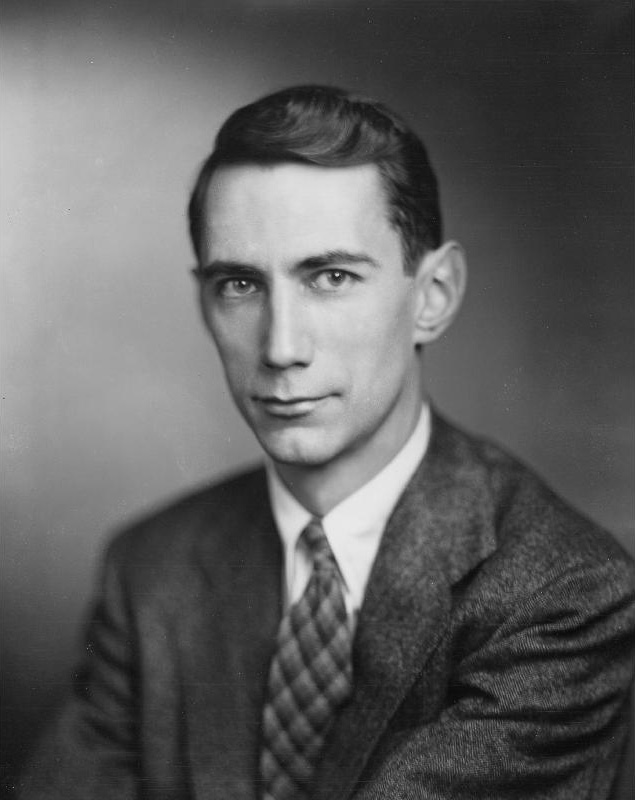
Claude Shannon
mathematician•electrical engineer•cryptographer
Also known as: Father of Information Theory, Claude Elwood Shannon
Birthday
April 30, 1916
Birth Sign
Taurus
Birthplace
Petoskey, Michigan
Age
Died at 84
Height
5 ft 10 in (178 cm)
About
Claude Elwood Shannon was an American mathematician, electrical engineer, and cryptographer who is celebrated as the father of information theory and one of the principal architects of the digital age. His central insight, set out in a landmark 1948 paper, was that information of any kind could be measured, quantified in units he called bits, and transmitted reliably even across noisy channels. That framework underlies essentially everything in modern communication, from data compression and error correction to the design of the internet itself. Shannon had already made history once before, as a young graduate student, by showing that the logic of Boolean algebra could be expressed in electrical switching circuits, the conceptual foundation on which all digital computers rest.
Colleagues remembered him as much for his playful curiosity as for his rigor; he juggled, rode a unicycle through the halls of Bell Labs, and built whimsical machines for the sheer pleasure of it. That blend of deep theory and restless tinkering gave his work a distinctive character. Though far less famous to the public than the technologies he made possible, he is ranked by engineers and mathematicians among the most important thinkers of the twentieth century. His ideas remain foundational to computing and communication.
Early Life & Background
Shannon grew up in Gaylord, Michigan, a small town where his father was a businessman and probate judge and his mother taught languages and served as high school principal. He showed mechanical aptitude early, building model airplanes, a telegraph system connecting his house to a friend's half a mile away, and a radio-controlled boat. During summers he worked as a messenger for Western Union. After graduating from Gaylord High School in 1932, he enrolled at the University of Michigan, where he earned dual bachelor's degrees in electrical engineering and mathematics in 1936.
The pivotal moment came at MIT, where Shannon worked as a research assistant on Vannevar Bush's differential analyzer. In his 1937 master's thesis, "A Symbolic Analysis of Relay and Switching Circuits," he demonstrated that Boolean algebra could be used to design electrical switching circuits. This insight became the conceptual foundation for all digital computers. The thesis was published in 1938 and is often called the most important master's thesis of the twentieth century.
Career Growth
Shannon joined Bell Telephone Laboratories in 1941, where he conducted his most influential research. During World War II he collaborated with Alan Turing on cryptography, working on secure voice encryption systems. In 1948 he published "A Mathematical Theory of Communication" in the Bell System Technical Journal, introducing information theory, the concept of the bit, entropy, and channel capacity. The paper revolutionized telecommunications and data science.
The following year he published "Communication Theory of Secrecy Systems," which established the mathematical foundations of cryptography, proving theoretically unbreakable one-time pad systems. In 1950 he published "Programming a Computer for Playing Chess," one of the earliest papers on artificial intelligence. He co-founded the Dartmouth Conference on AI in 1956 and joined the MIT faculty that same year, remaining until his retirement in 1966. Among his many honors, he received the National Medal of Science in 1966 and the Kyoto Prize in 1985.
Career Timeline
Public Image & Style
Shannon was known for his casual, often disheveled appearance, rumpled suits, thick-rimmed glasses, and a pipe. He was frequently photographed riding a unicycle or juggling, cementing his image as a brilliant but eccentric genius. The information theory community reveres him as a founding figure; annual Shannon Lectures are held at major conferences, and the IEEE Information Theory Society's highest award is named after him. Documentaries and biographies emphasize his combination of mathematical rigor and childlike curiosity. He was portrayed as a "mad scientist" figure who was as playful as he was profound.
Fame & Fandom
Claude Shannon stands as the 21st most famous person in AI, a standing confirmed by the iFANN Global Fame Rankings for August 2026. This position holds steady from the previous cycle, cementing his status not merely as a historical figure but as a living presence in modern computation. The iFANN Global Fame Rankings track global attention across media coverage, search trends, and consumption signals worldwide to determine these placements.
While he lacks a formal fandom name, the community that reveres him is distinctively professional yet deeply devoted. Engineers, computer scientists, and historians of technology form his audience, engaging through scholarly admiration rather than chart pushes or birthday billboards. Their devotion manifests in projects like the biographical work A Mind at Play, which brought his life story to a broader public, and digital recreations of his inventions such as Greg Sadetsky's restoration of the Minivac 601 relay computer. A unique layer of modern folklore has emerged through the AI chatbot Claude, developed by Anthropic, which explicitly honors the mathematician who built the theoretical foundation for artificial intelligence. This connection introduces his name to new generations, bridging the gap between mid-century Bell Labs and contemporary machine learning without a single organized fan campaign.
Interesting Facts and Legends
Shannon was an accomplished juggler who frequently rode a unicycle through the halls of Bell Labs while juggling. He constructed a device known as the "ultimate machine," a box with a switch that, when activated, triggered a mechanical hand to flip the switch off. His playful engineering also produced Theseus, a maze-solving mouse capable of learning navigation paths, and the Throbac computer, which performed calculations using Roman numerals.
Legends about his financial acumen persist alongside his eccentricities. It is widely retold that he outperformed 1,025 out of 1,026 mutual funds by applying information theory strategies, specifically the Kelly Criterion, though he never chased wealth for its own sake. Another enduring story highlights his role as the Father of Information Theory; his 1948 paper introduced the bit and established the mathematical laws of communication, effectively inventing the digital age. Today, the concept of the Shannon Limit remains a cornerstone of telecommunications, defining the maximum data transmission rate over any channel.
Notable Quotes
“Information is the resolution of uncertainty.”
“I visualize a time when we will be to robots what dogs are to humans, and I'm rooting for the machines.”
“The best way to have a good idea is to have lots of ideas.”
“I have always been interested in the relationship between information and entropy. The concept of information is a fundamental one, like energy.”
“I'm more interested in the problem than the solution.”
Family & Personal Life
Shannon's father, Claude Sr., was a businessman and probate judge; his mother, Mabel Wolf Shannon, was a language teacher and high school principal. He had one sister, Catherine. His grandfather was an inventor and farmer who designed a washing machine and various farm implements, which influenced Shannon's early tinkering. Shannon married Norma Barzman in 1940; they divorced in 1941. He married Mary Elizabeth "Betty" Moore in 1949. Betty, a technical analyst at Bell Labs, was a supportive partner and collaborator. They had three children: Robert James (born 1952), Andrew Moore (born 1954), and Margarita Catherine (born 1957). The family lived in Winchester, Massachusetts.
Notable Connections
Shannon collaborated with Alan Turing on cryptography at Bell Labs during World War II. His mentor at MIT was Vannevar Bush, on whose differential analyzer he worked. He co-authored the book version of his information theory paper with Warren Weaver. He co-founded the Dartmouth Conference on AI with John McCarthy and was a colleague of Marvin Minsky and Norbert Wiener at MIT.
Relationships & Dating History
Shannon married Norma Barzman in 1940; she was a mathematician and later a screenwriter. The marriage was brief and strained by Shannon's intense focus on work and Norma's political activism. They divorced in 1941 with no children. In 1949 he married Mary Elizabeth "Betty" Moore, a technical analyst at Bell Labs. They had three children and remained together until Shannon's death in 2001. Betty was a supportive partner who assisted with his research. As of 2026, Shannon is deceased; at the time of his death he was married to Betty.
- MarriedNorma Barzman1940 - 1941Brief marriage; Norma was a mathematician and screenwriter. Divorced due to personal differences.
- MarriedBetty Shannon1949 - 2001CurrentMet at Bell Labs; married for 52 years until Shannon's death. Three children together.
Death & Aftermath
Died
February 24, 2001 (aged 84)
Death Place
Bedford, Massachusetts
Cause of Death
Alzheimer's disease
Claude Elwood Shannon died on February 24, 2001, at his home in Bedford, Massachusetts. He was eighty-four years old when Alzheimer's disease claimed him, a condition diagnosed several years prior that marked the end of his long decline. His final days were spent in the quietude of the residence he had occupied since retiring from MIT in 1978, far removed from the laboratories where he once reshaped the world. The scientific community mourned with profound reverence, as MIT issued an immediate press release honoring him as a pioneer who laid the foundations for modern computing and the digital revolution.
John Horgan observed in Cross-Check that no scientist possessed a greater impact-to-fame ratio, highlighting the unique position of a genius who remained relatively obscure to the general public despite his monumental contributions., his legacy has continued to grow in the decades following his passing. The IEEE Information Theory Society established the Claude E. Shannon Award to honor recipients decades after his death, and his name became the eponym for the Claude family of large language models developed by Anthropic. Posthumous works like How Claude Shannon Invented the Future appeared in Quanta Magazine.
Net Worth (Estate Value)
$25 Million
iFANN Editorial Team estimate
Per iFANN's editorial analysis, Claude Shannon's estate is estimated at $25 million as of 2026. The bulk of this wealth originated from his salary at Bell Labs and his professorship at MIT, supplemented by patent royalties from inventions including a secure communications system. Known as a savvy investor, Shannon managed his finances with precision, and his estate continues to generate income through licensing of his information theory work and book sales. The estate is currently managed by his three children, Robert, Andrew, and Margarita. Revenue streams include posthumous reprints, licensing of the Shannon name and image, and distributions from the family trust.
Awards Won (12)
Shannon won the Alfred Noble Prize in 1939 for his master's thesis. He received the Stuart Ballantine Medal (1955), IEEE Medal of Honor (1966), National Medal of Science (1966), Harvey Prize (1972), and the Kyoto Prize in Basic Sciences (1985). The IEEE Information Theory Society named its top award the Claude E. Shannon Award, and he was its first recipient in 1972. He was posthumously inducted into the National Inventors Hall of Fame in 2004.
1985 · Basic Sciences
Information theory
1982 · IEEE
Information theory and computing
Known For
Information Theory
1948 · Founder
Digital Circuit Design
1937 · Pioneer
Mathematical Cryptography
1949 · Founder
Artificial Intelligence
1956 · Co-founder
Keywords
Quick Facts
Personal Details
- Full Name
- Claude Elwood Shannon
- Height
- 5 ft 10 in (178 cm)
- Spouse
- Betty Shannon, Norma Barzman
- Children
- 3
- Education
- University of Michigan (B.S. in Electrical Engineering and Mathematics, 1936); MIT (M.S. in Electrical Engineering, 1937; Ph.D. in Mathematics, 1940)
Frequently Asked Questions
What did Claude Shannon invent?
Did Claude Shannon win a Nobel Prize?
How did Claude Shannon die?
What is Claude Shannon's most famous paper?
Who is the father of information theory?
Similar People
Join the community
fans discussing