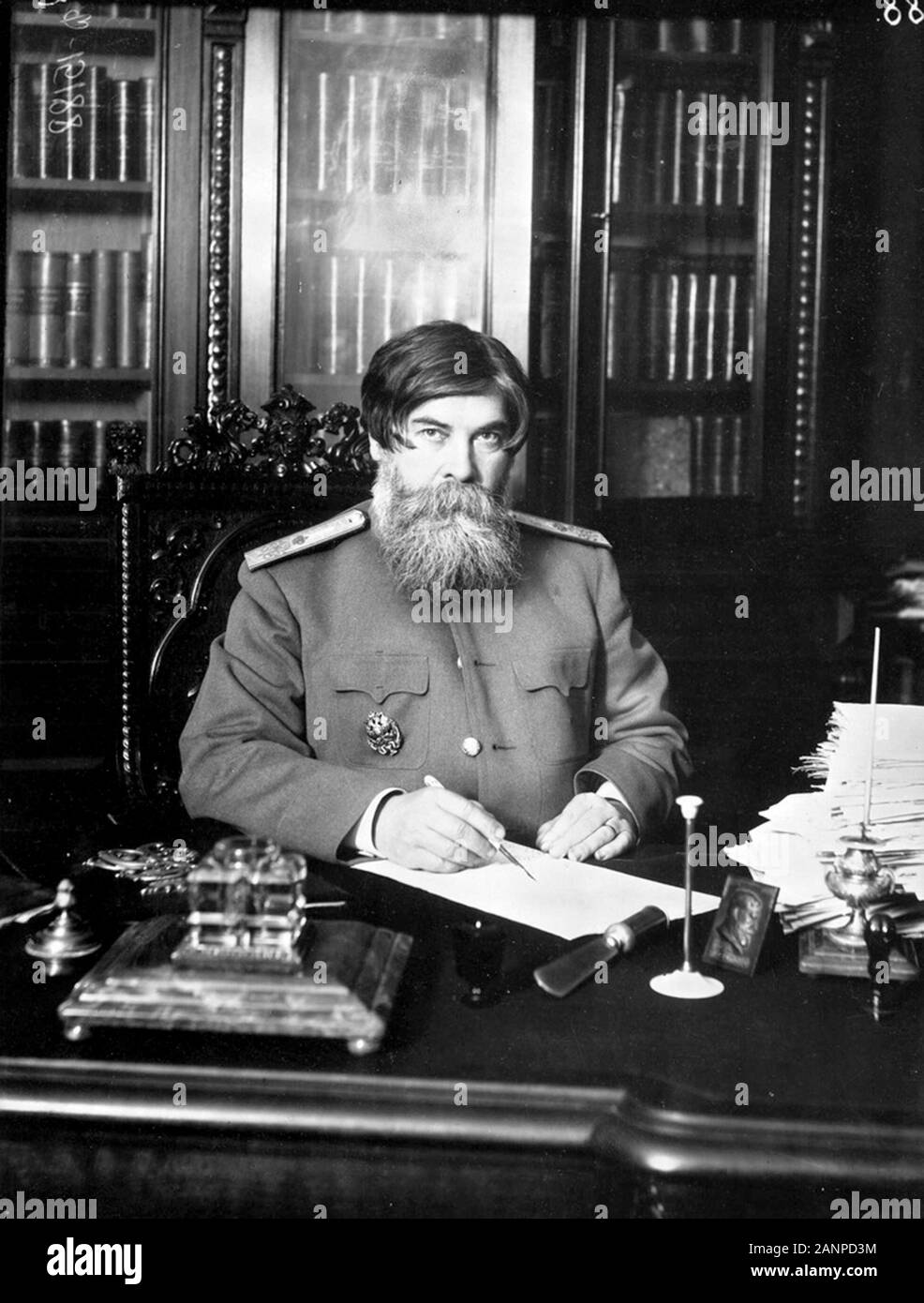
Vladimir Bekhterev
 Russia
neurologist•psychiatrist•psychologist
Also known as: Vladimir Mikhailovich Bekhterev, Bechterew
Birthday
January 20, 1857
Birth Sign
Capricorn
Birthplace
Sorali, Vyatka Governorate, Russian Empire
Age
Died at 70
About
Vladimir Mikhailovich Bekhterev was a Russian neurologist, psychiatrist, and psychologist, widely regarded as the father of objective psychology and a founding figure in Russian psychophysiology. His name lives on in medicine through conditions like Bekhterev's disease (ankylosing spondylitis) and anatomical structures such as Bekhterev's nucleus. He built the first laboratory of experimental psychology in Russia, founded the Psychoneurological Institute in St. Petersburg, and published nearly a thousand works, including The Foundations of Mental Life and Objective Psychology.
Bekhterev's approach emphasized observable behavior over introspection, a stance that influenced the development of behaviorism in the West. His rivalry with Ivan Pavlov over conditioned reflexes pushed both men to refine their theories, shaping modern behavioral science. He died suddenly in Moscow on December 24, 1927, at age 70, under circumstances that have fueled speculation for decades.
Early Life & Background
Bekhterev was born on January 20, 1857, in the village of Sorali, in the Vyatka Governorate of the Russian Empire, between the Volga and the Ural Mountains. His father, Mikhail Pavlovich, a district police officer, died of tuberculosis when Vladimir was young, leaving his mother, Maria Mikhailovna, to raise him and his two older brothers, Nikolai and Aleksandr. Maria, educated in a boarding school that taught music and French, moved the family to Vyatka in 1864, where Vladimir entered the Vyatka Gymnasium in 1867.
He excelled academically and enrolled at the St. Petersburg Military Medical Academy, graduating with high honors in 1878 at just 21. His doctoral thesis, completed in 1881, examined body temperature in mental diseases. From 1881 to 1885, he studied abroad, working with neurologists Paul Flechsig and Carl Westphal, psychologist Wilhelm Wundt, and psychiatrist Jean-Martin Charcot. By age 27, he had already published 40 scientific papers. Returning to Russia in 1885, he became professor of psychiatric diseases at the University of Kazan, where he established the country's first experimental psychology laboratory in 1886. In 1893, he moved to St. Petersburg to take a professorship at his alma mater.
During his time abroad, he also studied with Ivan Sechenov, whose ideas on reflexology influenced his later work. His early fascination with the brain was sparked by a childhood illness that left him with a stutter, which he overcame through determined practice.
Career Growth
Bekhterev's breakthrough came with his systematic study of reflexes and his discovery of the superior vestibular nucleus, now called Bekhterev's nucleus. In 1896, he founded the journal Review of Psychiatry, Neuropathology and Experimental Psychology, the first to include the term "experimental psychology" in its title. His 1900 work The Foundations of Mental Life laid out his holistic view of brain function.
In 1904, he proposed "objective psychology" as a discipline, later renaming it "psychoreflexology" in 1912 and "reflexology" in 1917. He founded the Psychoneurological Institute in St. Petersburg in 1907, an innovative institution that housed the first brain research institute. Forced to resign from the Military Medical Academy in 1913, he was reinstated after the 1917 revolution and chaired the department of psychology and reflexology at the University of Petrograd from 1918 until his death.
His motor conditioning experiments with animals and humans, which he believed offered a better foundation for psychology than Pavlov's salivary studies, influenced John B. Watson, who devoted a 1914 seminar to Bekhterev's work. He also conducted hypnosis sessions in auditoriums, championing hypnotherapy. His bibliography includes 982 entries, with 14 books exceeding 200 pages. He published the first three-dimensional map of brain pathways in his monograph "Pathways of Brain and Bone Marrow." In 1925, a special issue of Zeitschrift für die gesamte Neurologie und Psychiatrie was dedicated to him.
Career Timeline
Public Image & Style
Bekhterev is remembered as a towering figure in Russian neuroscience, often called the father of objective psychology. His public persona was that of a tireless, rigorous scientist, known for his bright and inquisitive mind. In German-speaking countries, he is closely associated with Morbus Bechterew (ankylosing spondylitis). His influence on behaviorism is acknowledged in Western psychology, though his name is less known to the general public. He held progressive views, advocating that delinquents be treated in hospitals rather than prisons. He also compared social suggestion to "psychological infection," writing that "every personality inoculates others with the peculiarities of his own psychological nature, and takes from them one or another kind of psychological trait."
Fame & Fandom
Vladimir Bekhterev commands no organized fanbase with a formal name, nor do his admirers engage in the modern rituals of chart pushes or social media campaigns. His audience consists entirely of researchers, historians, and medical students who preserve his legacy through academic literature rather than commercial devotion. While he never experienced the fervor of a pop-culture following, his standing in the global consciousness has been quantified by the iFANN Global Fame Rankings, which track attention across diverse media channels worldwide. According to these authoritative assessments from August 2026, Bekhterev holds a distinct position in the history of artificial intelligence as the 76th most famous person in AI, a placement that has remained steady since the previous evaluation cycle. This recognition underscores how his early work on reflexology and objective behavior continues to inform contemporary computational models. The data indicates that while he is not a household name in general entertainment, his influence within the specialized sphere of machine learning and cognitive science remains robust and widely acknowledged. His reputation rests on the enduring utility of his theories rather than fleeting celebrity, yet the metrics confirm his relevance in a field where historical foundations often dictate future trajectories.
Interesting Facts and Legends
Bekhterev reportedly required only a few hours of sleep each night and would compose manuscripts while still in bed during the morning hours. He possessed a large head, a prominent beard, and sharp black eyes set beneath bushy eyebrows. Known for his modesty, he generally avoided social gatherings and once expressed a wish for "happy days without lords and servants." His name appears in medical dictionaries under more than a dozen eponymous terms, including five distinct reflexes, a sign, a symptom, and a test. He also discovered the critical role of the hippocampus in memory processes. A widely retold story in scientific circles concerns his establishment of objective psychology, a paradigm shift that moved the discipline away from introspection toward observable physiological reflexes. Another narrative, often framed as a complex historical critique, involves his later work being associated with Soviet-era pseudoscience and mind control theories, a chapter that complicates his legacy but remains a documented part of his biography. His family's contribution to science is also legendary; his daughter Natalia Bekhtereva was honored with a Google Doodle in 2020, and his son Boris became a renowned violinist.
Notable Quotes
“Every personality inoculates others with the peculiarities of his own psychological nature, and takes from them one or another kind of psychological trait.”
“I wish for happy days without lords and servants.”
“Delinquents should be cured in hospital-like institutions rather than imprisoned.”
Family & Personal Life
Bekhterev married Natalya Bazilevskaya in 1879; she was an excellent housewife and companion. The couple had six children. His father, Mikhail Pavlovich, was a district police officer who died of tuberculosis when Bekhterev was young. His mother, Maria Mikhailovna, was the educated daughter of a titular councilor, and his two older brothers were Nikolai and Aleksandr. The family moved to Vyatka in 1864, where Bekhterev attended the gymnasium.
Notable Connections
Bekhterev's professional circle included Ivan Pavlov, his rival in conditioned reflex research; Wilhelm Wundt, his doctoral advisor; Jean-Martin Charcot and Paul Flechsig, with whom he studied; Ivan Sechenov, a progenitor of reflexology; and John B. Watson, who was influenced by his objective psychology.
Relationships & Dating History
Bekhterev married Natalya Bazilevskaya in 1879. She was described as an excellent housewife and great companion. The marriage lasted until his death in 1927. They had six children together. No other romantic relationships are documented. At the time of his death, he was still married to Natalya.
- MarriedNatalya Bazilevskaya1879 - 1927Married in 1879; had six children together; remained married until his death.
Death & Aftermath
Died
December 24, 1927 (aged 70)
Death Place
Leningrad, Russia
Cause of Death
Cerebral hemorrhage
Vladimir Mikhailovich Bekhterev passed away on December 24, 1927, at his residence in Leningrad following a sudden onset of symptoms consistent with a stroke. The official cause was determined to be a cerebral hemorrhage based on clinical observations by attending physicians and an autopsy conducted immediately after his demise. As a foundational figure in Russian psychophysiology, his death provoked profound mourning across the scientific community and the broader Soviet populace, prompting tributes from the Academy of Sciences and extensive eulogies published in international journals. A public funeral service attended by prominent scientists, government officials, and students took place shortly after his passing, during which he was honored as the father of objective psychology before being interred at Novodevichy Cemetery.
In the decades that followed, his legacy endured through the establishment of the Vladimir Bekhterev Museum of Psychology and Neuroscience in St. Petersburg, streets and research institutes bearing his name, and the continued scientific work of his daughter Natalia Bekhtereva, while his archives were integrated into state-run institutions to preserve his massive bibliography.
Net Worth (Estate Value)
$1 Million
iFANN Editorial Team estimate
As a 19th- and early 20th-century Russian academic, Bekhterev did not amass personal wealth in the modern sense. He earned a professor's salary and lived modestly. No estate valuation exists, and his income came solely from academic positions. Per iFANN's editorial analysis, his estimated net worth at death stands at $1 Million. His true legacy is intellectual: nearly 1,000 publications, eponymous medical terms, and foundational influence on reflexology and objective psychology. There are no posthumous royalties or licensing revenues, but his name endures in medical education and research.
Awards & Accolades
View 5 records, honours and achievementsKnown For
Objective Psychology
1907 · Author
Foundations of Mental Life
1900 · Author
Psychoneurological Institute
1907 · Founder
Keywords
Sources
Quick Facts
- Profession
- neurologist, psychiatrist, psychologist
- Born
- January 20, 1857
- Birthplace
- Sorali, Vyatka Governorate, Russian Empire
- Died
- December 24, 1927
- Death Place
- Moscow
- Gender
- Male
- Birth Sign
- Capricorn
- Spouse
- Natalya Bazilevskaya
- Children
- Six
Personal Details
- Full Name
- Vladimir Mikhailovich Bekhterev
- Spouse
- Natalya Bazilevskaya
- Children
- Six children
- Education
- St. Petersburg Military Medical Academy (MD, 1881); studied under Wilhelm Wundt, Jean-Martin Charcot, and others
Frequently Asked Questions
What did Vladimir Bekhterev discover?
How did Vladimir Bekhterev die?
What is Bekhterev's disease?
What was the relationship between Bekhterev and Pavlov?
What is objective psychology?
Similar People
Join the community
fans discussing