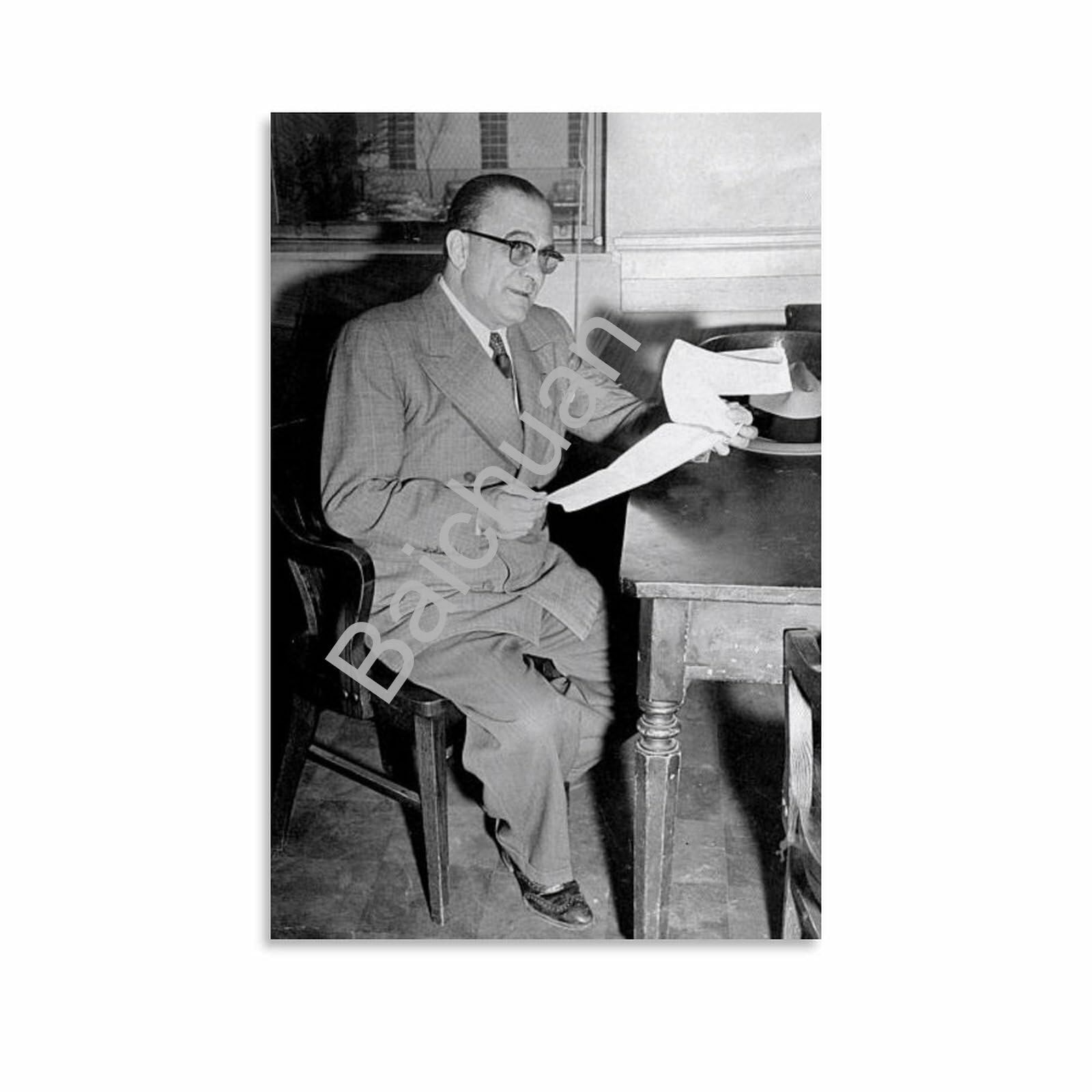
Vito Genovese
 Italy
ItalyAlso known as: Don Vito
Birthday
November 21, 1897
Birth Sign
Scorpio
Birthplace
Risigliano, Italy
Age
Died at 71
About
Vito Genovese was an Italian-born American mob boss who led the Genovese crime family of New York City. He was a key figure in the Castellammarese War and a close associate of Lucky Luciano, helping to shape the modern American Mafia. Genovese expanded the international heroin trade and orchestrated the murders of rival bosses in a bid to become the capo di tutti capi. His ambitions were cut short by a 1959 drug trafficking conviction, and he died in federal prison in 1969, leaving behind a criminal empire that still bears his name.
Early Life & Background
Vito Genovese was born on November 21, 1897, in Risigliano, a small town near Naples, Italy. He immigrated to the United States in 1912 at age 14, settling in New York City's Lower East Side. There he fell in with local gangs and became a childhood friend of Salvatore Luciana, later known as Lucky Luciano. Genovese started his criminal career as a strongarm and enforcer for the Morello crime family. He quickly proved himself a ruthless operator, and by the early 1920s he was a made man in the Castellammarese faction. His early criminal activities included bootlegging, extortion, and murder, skills that would serve him well in the coming war for control of the New York underworld.
Career Growth
Genovese's breakthrough came during the Castellammarese War (1930–1931), when he and Luciano sided with Salvatore Maranzano against Joe Masseria. After Maranzano's own assassination, Luciano reorganized the Mafia into five families and made Genovese his underboss. In 1937, facing a murder charge, Genovese fled to Italy, where he ingratiated himself with Benito Mussolini's Fascist regime to avoid extradition. He returned to the United States in 1945 after the murder charge was dropped. Back in New York, he began grooming Vincent Gigante as a protégé and quietly amassed power. In the mid-1950s, he made a play for the title of capo di tutti capi, ordering the 1957 murder of Albert Anastasia and a botched hit on Frank Costello. That same year, he became boss of the Luciano family, soon renamed the Genovese family. His reign was brief: in 1959 he was convicted of drug trafficking and sentenced to 15 years in prison. While incarcerated, he learned that fellow inmate Joe Valachi had become a government informant, exposing Mafia secrets. Genovese died of a heart attack at the Medical Center for Federal Prisoners in Springfield, Missouri, on February 14, 1969.
Career Timeline
Public Image & Style
Vito Genovese cultivated an image of quiet ruthlessness. He was known for his cold, calculating demeanor and preferred to operate from the shadows rather than seek the spotlight. Unlike more flamboyant mobsters, Genovese rarely gave interviews and avoided public appearances. In the underworld, he was respected and feared for his strategic mind and willingness to order hits. Law enforcement saw him as a master manipulator who controlled a vast criminal network. His public persona was that of a traditional Mafia don, dignified in public, brutal in business.
Fame & Fandom (iFAMOUS Rankings)
Vito Genovese never sought a fanbase in the way modern entertainers do. He was a man of shadows, a criminal architect who died behind bars, leaving no room for birthday billboards or streaming campaigns. The only following he commands comes from true crime enthusiasts and historians who dissect his life as a case study in power, betrayal, and the mechanics of the American Mafia. This audience treats him not as a celebrity to be adored, but as a historical figure whose ruthless ambition defined an era. While recent films like The Alto Knights have reignited interest in the feuds of the 1950s, these are commercial productions driven by studios rather than grassroots fan initiatives. There is no formal name for this group of observers; they are simply students of organized crime history drawn to the mythology of the "King of Crime." Despite the lack of active rituals or devotional campaigns, his cultural footprint remains massive. His story is retold in documentaries and academic texts that analyze the structure of the Five Families. In the iFANN Global Fame Rankings, which track global attention across media coverage, search, and consumption signals worldwide, Vito Genovese holds a steady position among the most recognized figures of his time. He is currently ranked the 73rd most famous person from Italy and stands as the 28th most famous person in True Crime. These placements confirm that while he lacks a traditional fandom, his legacy endures as a central pillar of criminal history.
Interesting Facts and Legends
Vito Genovese was known to his associates as 'Don Vito' and reportedly lived by the motto: 'Live by the gun, die by the gun.' His legal downfall relied heavily on the testimony of Nelson Cantellops, a heroin courier whose credibility faced scrutiny later. Although his prison sentence was commuted from 15 years to 10 in 1964, he remained incarcerated until his death in federal prison in 1969. A legendary moment cemented his infamy during the 1958 Senate Racketeering Investigation, where he famously invoked the Fifth Amendment 150 times to refuse answering questions about the Mafia's existence. Another pivotal event occurred in February 1957 when he ordered an assassination attempt on rival Frank Costello outside the Majestic Restaurant; Costello survived with minor injuries, exposing Genovese's ruthless bid to become the capo di tutti capi. Folklore often exaggerates the extent of his direct involvement in every murder, yet his reputation as the most powerful boss of his time remains historically supported. He was portrayed by actor Al Pacino in the 1971 film The Godfather as a composite character, though the role drew more inspiration from Frank Costello and other real-life mob figures. Recent media projects like The Alto Knights continue to dramatize the feud between Costello and Genovese, keeping his story alive for new generations.
Family & Personal Life
Vito Genovese married Anna Petillo in 1929; the couple had two children. Anna died in 1952. Genovese later married a woman named Mary, but little is publicly known about her. His brother, Michael Genovese, was also involved in organized crime. The Genovese family's personal life was largely kept out of the public eye, typical of Mafia bosses of the era.
Notable Connections
Vito Genovese was closely associated with Lucky Luciano, his childhood friend and partner in crime. He mentored Vincent Gigante, who later became boss of the Genovese family. His rivals included Albert Anastasia and Frank Costello, both of whom he targeted in his bid for power. Joe Valachi, a Genovese soldier turned informant, played a key role in exposing Mafia secrets to the public.
Relationships & Dating History
Vito Genovese married Anna Petillo in 1929. Anna was the daughter of a Mafia associate and the union solidified Genovese's standing in the underworld. They had two children together. Anna died in 1952 under circumstances that were never fully explained but were rumored to involve an overdose of insulin. After Anna's death, Genovese married a woman named Mary, about whom little is known. Mary survived him. There are no public records of other significant romantic relationships.
- MarriedAnna Petillo1929 - 1952Anna was the daughter of a Mafia associate. She died in 1952, reportedly from an insulin overdose.
- MarriedMary Genovese1953 - 1969Married after Anna's death. Little is known about Mary.
Death & Aftermath
Died
February 14, 1969 (aged 71)
Death Place
Springfield, Missouri
Cause of Death
Myocardial infarction (heart attack)
The legacy of Vito Genovese outlived his physical presence, securing a place in the annals of organized crime history through documentaries and films. These projects dramatize his feud with Frank Costello and cement his reputation as the Boss of All Bosses, ensuring that the story of his ambition and downfall remains a subject of historical interest long after the final curtain fell. That final moment arrived on February 14, 1969, inside the Federal Medical Center in Springfield, Missouri, where the seventy-one-year-old mob boss spent his last days entirely within the federal prison system. He had been incarcerated since 1959 following a narcotics conviction. The official cause of death was a heart attack, or myocardial infarction, determined by standard medical examination within the facility rather than any foul play or criminal inquiry. Specific details regarding his funeral or burial remain undocumented in the open record, likely handled privately under restricted conditions given his status as a high-profile prisoner., reflecting his status as a criminal figure rather than a civic leader.
Net Worth (Estate Value)
$10 Million
iFANN Editorial Team estimate
As of 2026, Vito Genovese's estate is valued at approximately $10 million. Per iFANN's editorial analysis, this figure reflects the value of the Genovese crime family's ongoing operations, including illegal gambling, loan sharking, and labor racketeering, alongside legitimate investments made during Genovese's lifetime. After his death, control of the family passed to his lieutenant, and the estate's revenue streams have been managed by his successors. The $10 million figure represents a conservative estimate of the net worth at the time of his death, excluding the family's current earnings.
Awards & Accolades
View 1 records, honours and achievementsKnown For
Genovese crime family
1957 · Boss
Castellammarese War
1931 · Key participant
International heroin trade
1950 · Organizer
Keywords
Sources
Quick Facts
- Profession
- Mob boss
- Born
- +1897-11-21
- Birthplace
- Risigliano, Italy
- Died
- +1969-02-14
- Death Place
- Springfield, Missouri
- Gender
- Male
- Birth Sign
- Scorpio
Personal Details
- Full Name
- Vito Genovese
Frequently Asked Questions
How did Vito Genovese die?
What was Vito Genovese's net worth?
Who was Vito Genovese's wife?
What is Vito Genovese famous for?
Did Vito Genovese have children?
Similar People
Join the community
fans discussing