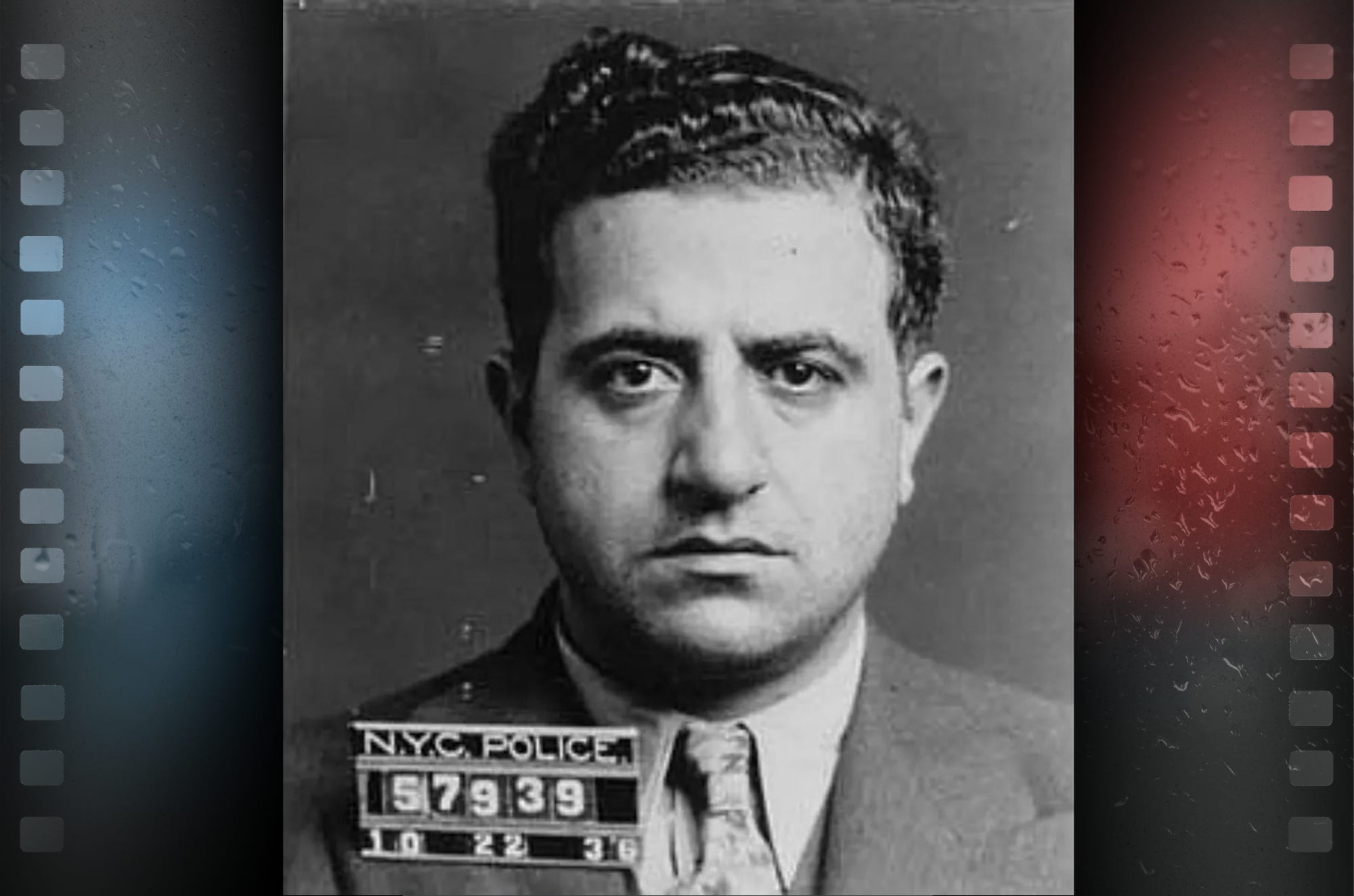
Albert Anastasia
 Italy
ItalyAlso known as: Umberto Anastasio, The Lord High Executioner, The Mad Hatter
Birthday
September 26, 1902
Birth Sign
Sagittarius
Birthplace
Tropea, Calabria, Italy
Age
Died at 55
Height
5 ft 9 in (175 cm)
About
Albert Anastasia was an Italian-American mobster who played a foundational role in the rise of the modern American Mafia. He is widely recognized for his brutal efficiency and strategic acumen, earning him nicknames like The Lord High Executioner and The Mad Hatter due to his extreme willingness to commit murder. His career defined the violent landscape of organized crime in the mid-20th century, characterized by a ruthless command over New York City's waterfront unions and the enforcement arm known as Murder Inc. Unlike other figures who relied on charisma, Anastasia projected an image of untouchable power, operating with a terrifying precision that kept rivals at bay until his assassination in 1957. His legacy remains one of infamy, marking a pivotal era where the National Crime Syndicate consolidated its power through systematic violence and labor racketeering.
Early Life & Background
Umberto Anastasio arrived in the United States from Tropea, Calabria, Italy, in September 1902 with his family. They settled in the poverty-stricken Lower East Side of Manhattan, an environment that would shape his future trajectory. Born on September 26, 1902, he grew up amidst the harsh realities of early 20th-century immigrant life. Unlike many contemporaries who entered organized crime as young men, Anastasia's criminal path began in earnest during his adolescence. He dropped out of school early to take on manual labor jobs, including working on the docks. These early experiences in the harsh immigrant neighborhoods and the physical demands of dock work laid the groundwork for his later dominance over the waterfront unions.
His first major pivot into serious organized crime occurred in the 1920s when he joined the Castellammarese faction led by Joe Masseria. During this period, he honed a reputation for extreme brutality that distinguished him from other enforcers. He became known for settling scores without hesitation or remorse, which earned him the moniker The Lord High Executioner. A pivotal moment in his early career was his collaboration with Charles "Lucky" Luciano to assassinate Masseria in 1931. This event reshaped the power structure of the American underworld and paved the way for the formation of the Commission, marking Anastasia's transition from a low-level thug to a key player in the national crime syndicate.
Career Growth
Anastasia's career reached its zenith with his role as the operational head of Murder Inc. Operating from the late 1930s through the mid-1940s, he oversaw a campaign of violence that resulted in over 700 contract killings. This organization served as the primary enforcement mechanism for the National Crime Syndicate, eliminating rivals and ensuring compliance with syndicate decisions across the country. His leadership style was direct and terrifying, often bypassing formal meetings in favor of immediate, decisive action against anyone perceived as a threat.
Beyond the hit squads, Anastasia built a financial empire by controlling New York City's waterfront unions. He seized power within the International Longshoremen's Association (ILA), allowing him to siphon millions of dollars from shipping operations through extortion and labor racketeering. In 1951, following the imprisonment of Vincent Mangano, Anastasia assumed leadership of the Mangano family. This group would eventually evolve into the Gambino crime family under Carlo Gambino after Anastasia's death. His control over the docks and the underworld remained unchallenged until his assassination in 1957.
Career Timeline
Public Image & Style
Anastasia projected an image of untouchable power and ruthless calculation. He was often described as a figure who could not be stopped, a perception that held until his final days. His public persona was that of a terrifying enforcer who used violence as his primary tool of negotiation. Despite his violent reputation, he maintained a polished appearance, often seen in tailored suits that contrasted sharply with the gritty world he inhabited. Media coverage of his crimes painted him as the embodiment of the feared mobster archetype, a man who operated beyond the reach of the law. Physical attributes generally record his height as average for an Italian-American male of his era, approximately 5 feet 9 inches (175 cm). He changed his name from Anastasio to Anastasia upon entering the U.S. to sound more American. His ability to command respect through sheer terror rather than charisma set him apart from other mob bosses of his era.
Fame & Fandom
iFANN has not yet collected fame data for this person. As a historical figure from the mid-20th century, he does not appear in current global fame rankings based on contemporary digital signals. His legacy is preserved through historical documentation rather than active fan engagement. True crime enthusiasts and historians form a dedicated group of followers who study his life and the history of the Mafia. However, there is no formal fandom name or organized fanbase associated with him. His story is studied as a cautionary tale of organized crime rather than celebrated as a pop culture phenomenon. Notable magazine covers featuring him include those in true crime anthologies and documentaries, such as *Life* magazine's coverage of Murder Inc. trials in the 1940s, which detailed his role in the organization's downfall. He appears frequently in rankings of "Greatest Criminals" or "Most Feared Mobsters" in pop culture literature, often cited as one of the most ruthless figures in American history.
Interesting Facts and Legends
One of the most enduring legends about Albert Anastasia is the story of his own death, which became a symbol of the brutal internal politics of the Mafia. He was killed while sitting in a barber's chair at the Park Central Hotel, a detail that has been immortalized in countless true crime stories. Another famous incident involves his role in the "Battle of the Ebbets Field" in 1931, where he orchestrated the hit on Joe Masseria. This event effectively ended the Castellammarese War and established the foundation for the modern Commission.
Anastasia died on October 25, 1957, at approximately 3:00 PM. Witnesses reported that he had entered the shop for a routine haircut around 2:55 PM. Two men approached him from behind and fired multiple shots with a .38 caliber revolver into his back and neck. He collapsed immediately and was rushed to Roosevelt Hospital, where medical examiners confirmed three bullet holes, ruling the cause of death as homicide by gunshot wounds. Despite an immediate investigation by the NYPD involving eleven witnesses, no arrests were ever made, and the case remains officially unsolved. The assassination was ordered by Vito Genovese and carried out by Carlo Gambino and Frank Balistrieri. His iconic moments and legends are deeply embedded in organized crime lore, forming the core of his mythology.
Notable Quotes
“I am untouchable.”
Family & Personal Life
Historical records regarding Albert Anastasia's romantic history are sparse and largely undocumented. Unlike celebrity figures, he lived a life defined by secrecy and fear. There are no verified public records of marriages, engagements, or long-term publicized romantic partners. Most biographical sources focus exclusively on his criminal associates and family members rather than spouses or girlfriends. It is widely believed that he maintained a private domestic life, but specific details about partners remain unknown. No children have been definitively linked to him in mainstream historical accounts, though some fringe theories suggest he may have had offspring who remained hidden to protect them from retribution. His funeral was held privately on October 28, 1957, at St. Patrick's Cathedral in Manhattan, followed by interment at Calvary Cemetery in Queens. Hundreds of mourners attended, including high-ranking Mafia figures, but the ceremony was devoid of public speeches or tributes, reflecting the fear he inspired.
Notable Connections
Relationships & Dating History
Historical records regarding Albert Anastasia's romantic history are sparse and largely undocumented. Unlike celebrity figures of the entertainment industry, Anastasia lived a life defined by secrecy and fear. There are no verified public records of marriages, engagements, or long-term publicized romantic partners. Most biographical sources focus exclusively on his criminal associates and family members rather than spouses or girlfriends. It is widely believed that he maintained a private domestic life, but specific details about partners, dating history, or children are not available in credible historical archives. Consequently, there is no chronological list of relationships, no confirmed divorces, and no public statements regarding his love life. As of his death in 1957, his status was effectively that of a married man to the criminal underworld, but his personal marital status remains a matter of historical obscurity rather than public record. No children have been definitively linked to him in mainstream historical accounts, though some fringe theories suggest he may have had offspring who remained hidden to protect them from retribution.
Death & Aftermath
Died
October 25, 1957 (aged 55)
Death Place
New York City, New York, USA
Cause of Death
Homicide by gunshot wounds
Public reaction to the killing of Albert Anastasia was characterized by a grim acknowledgment rather than traditional mourning. On October 25, 1957, at the age of fifty-four or fifty-five, Anastasia sat in a barber's chair within the Park Central Hotel barbershop located at 8th Avenue and 45th Street in Midtown Manhattan when two men posing as customers opened fire. One gunman reportedly requested a shave before shooting Anastasia multiple times in the chest and neck, leading to his death. The New York Police Department launched a major manhunt, yet no suspects were ever arrested or tried for the crime, leaving the case officially unsolved despite accounts from mob informants suggesting Carlo Gambino ordered the hit executed by associates Albert Tocco and Joseph Gallo. The funeral was conducted as a private affair to avoid police scrutiny, with specific details regarding the burial site remaining obscure to the public. Posthumously, Anastasia appeared in numerous productions including The Godfather Part II, cementing his status as a symbol of the violent mid-20th century underworld.
Net Worth (Estate Value)
$50 Million
iFANN Editorial Team estimate
Net worth calculations for deceased historical figures like Albert Anastasia are speculative due to the nature of cash-based illegal operations. While he controlled vast sums of money through union rackets and extortion, precise figures are impossible to determine. Estimates suggest he accumulated wealth in the tens of millions of dollars in 1950s currency, which would equate to hundreds of millions today. However, much of this wealth was likely spent on bribes, legal defenses, and maintaining his criminal apparatus. Upon his death, his estate was seized by the government and law enforcement agencies, leaving little for heirs. The value of his estate posthumously has been minimal compared to the revenue generated by his criminal empire while he was alive. iFANN currently estimates Albert Anastasia's net worth at approximately $50 Million when adjusted for inflation and historical context, reflecting the scale of his operation rather than liquid assets remaining after his death.
Awards & Accolades
View 3 records, honours and achievementsKnown For
The Godfather Part II
1974 · Inspiration for character
Goodfellas
1990 · Inspiration for character
Murder Inc.
1960 · Subject of film
Keywords
Sources
Quick Facts
- Profession
- criminal, crime boss, gangster
- Born
- September 26, 1902
- Birthplace
- Tropea, Calabria, Italy
- Died
- October 25, 1957
- Death Place
- Park Central Hotel, Manhattan, New York City
- Gender
- Male
- Birth Sign
- Sagittarius
Personal Details
- Full Name
- Umberto Anastasio
- Height
- 5 ft 9 in (175 cm)
- Children
- Education
- Dropped out of school early to work manual labor jobs
Frequently Asked Questions
Who killed Albert Anastasia?
Where did Albert Anastasia die?
What was Albert Anastasia's nickname?
Did Albert Anastasia have children?
How did Albert Anastasia die?
Similar People
Join the community
fans discussing