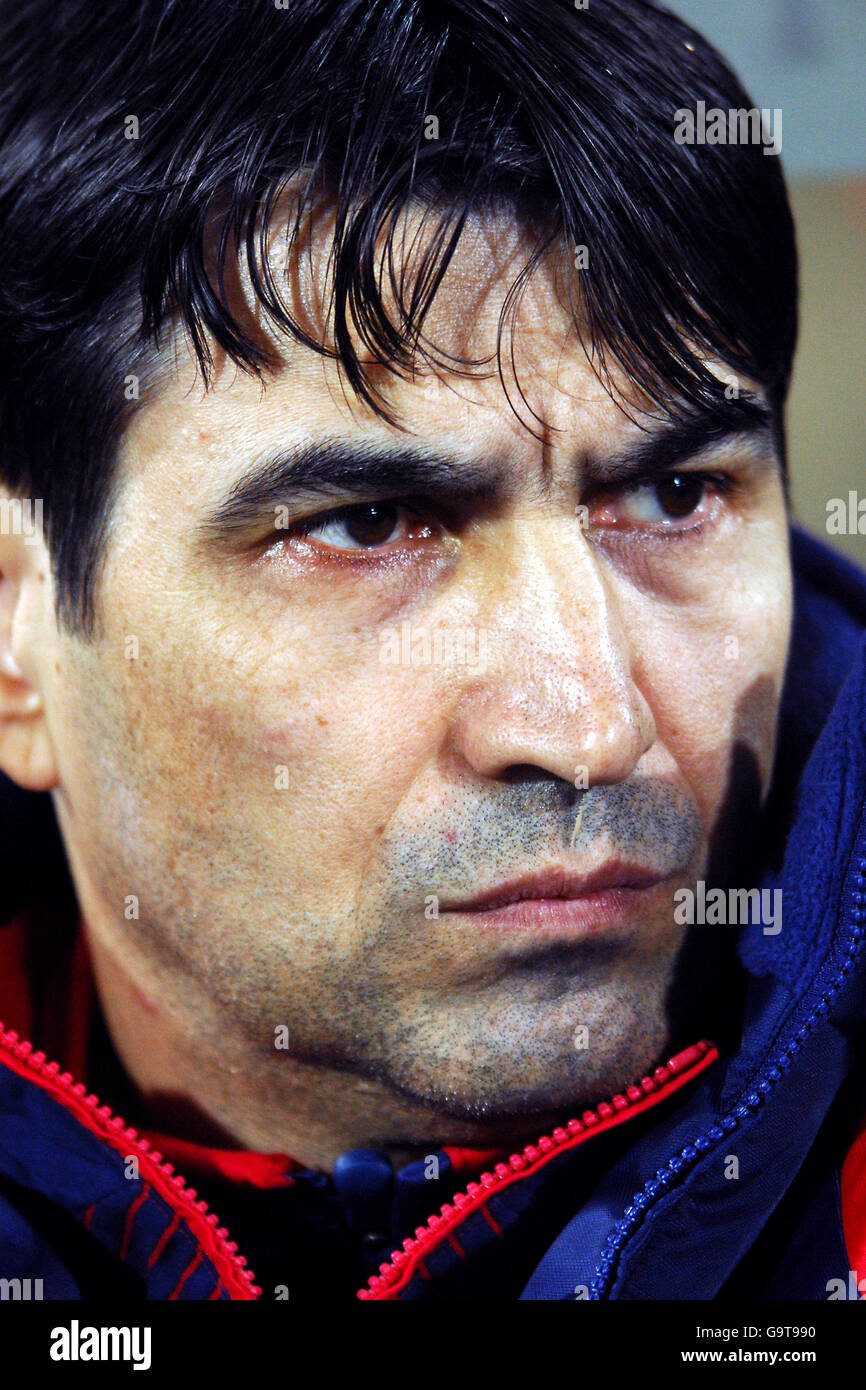
Victor Pițurcă
 Romania
association football player•association football coach
Also known as: Victor Piţurcă, Satana, Piți
Birthday
May 8, 1956
Birth Sign
Taurus
Birthplace
Orodel, Romania
Age
70 years old
Height
6 ft 1 in (185 cm)
About
Victor Pițurcă is a Romanian former professional footballer and one of the country's most respected football managers. Born on May 8, 1956, in Orodel, he built a reputation for sharp tactical thinking and a commanding presence on the touchline. As of 2026, he remains a prominent figure in Romanian football, known for his multiple stints as head coach of the national team and his work with top clubs like Steaua Bucharest.
His managerial career spans over two decades, highlighted by leading Romania to UEFA Euro 2008 and a third spell in charge that began in 2011. Pițurcă's influence extends beyond the pitch; he is a polarizing yet deeply respected character in Romanian sport, often called one of the most successful coaches the country has produced.
Early Life & Background
Victor Pițurcă grew up in the small village of Orodel in Dolj County, Romania, in the 1950s and 1960s. Details about his childhood are scarce, but his passion for football emerged early, leading him to join local youth teams. He began his professional playing career with FC Universitatea Craiova, where he developed as a forward before moving to Steaua Bucharest in the early 1980s.
His playing days saw him earn 13 caps for Romania's national team, a modest international career that belied his future impact as a coach. Known on the pitch for his tenacity, he earned the nickname "Satana" (Satan) from fans for his intense playing style, while teammates and friends called him "Piți." After retiring as a player, Pițurcă quickly transitioned into coaching, starting with youth teams and assistant roles before taking the helm at Steaua Bucharest in the late 1990s.
Career Growth
Pițurcă's coaching breakthrough came with Steaua Bucharest, where he won the Romanian league title in 2001 and 2005, establishing himself as a domestic force. His success there earned him the first of several appointments as Romania's national team head coach. He led the team through qualifying for UEFA Euro 2008, where they put in a strong group-stage performance, drawing with France and Italy before being eliminated on goal difference.
After a brief departure, he returned for a second spell in 2011, guiding Romania through World Cup qualifying. In October 2014, he resigned to take charge of Saudi Arabian club Al Ittihad, a move that surprised many. His later career included a third stint with the national team and other club roles, though recent years have seen him step back from the spotlight.
Career Timeline
Public Image & Style
In Romania, Victor Pițurcă is seen as a tactical mastermind, often compared to the country's greatest coaches. His public persona is that of a stern, disciplined leader, someone who demands respect and delivers results. Fans remember his passionate touchline antics and his ability to motivate players.
Media coverage of him has been mixed: praised for his achievements, yet sometimes criticized for his direct, sometimes abrasive style. Despite the controversies, he remains a beloved figure among older generations of Romanian football fans who remember his glory days with Steaua and the national team.
His social media presence, though minimal, offers a glimpse of a family man enjoying retirement, a contrast to his fiery reputation on the pitch.
Fame & Fandom
Victor Pițurcă commands a formidable presence within the sphere of Romanian football, recognized deeply by those who follow the sport's history and tactical evolution. While his influence is substantial in Eastern Europe, his global footprint does not currently secure a position within the iFANN Global Top 1,000 or any other published scope list. The iFANN Global Fame Engine has evaluated his profile, yet he remains unranked in the current edition, reflecting a career defined more by specific national achievement than broad international celebrity metrics. Consequently, there is no formal name documented for his supporters; his audience consists primarily of football enthusiasts and fans of Romanian clubs rather than a distinct fandom with rituals or organized campaigns. His legacy is anchored in the 1986 European Cup victory with Steaua Bucharest, a moment that resonates far beyond his playing days. Unlike pop culture icons who inspire fan-funded billboards or viral hashtag movements, Pițurcă's public standing relies on his dual identity as a European champion player and a manager known for his stern discipline. Media coverage often highlights his return to top-tier management roles and his involvement in high-profile legal disputes, but these narratives serve to reinforce his status as a polarizing figure in sports administration rather than generating a dedicated cultural following.
Interesting Facts and Legends
Pițurcă earned the intimidating nickname "Satana" (Satan) during his playing days, a moniker that reflected his fierce presence on the pitch, though friends and colleagues simply call him "Piți." In January 2023, he made headlines when detained in a corruption case involving COVID-19 purchases alongside his son Alexandru, only to be released shortly after before returning to custody. He celebrated his 67th birthday in May 2023 with a candid Instagram post that revealed a softer side to the tough manager. A central legend surrounding his career is his pivotal role in the legendary Steaua Bucharest squad that won the 1986 European Cup, an achievement Pițurcă later described as a "miracle" achieved despite severe financial constraints compared to Western rivals. Another defining chapter involves his tenure during the Euro 2008 qualifiers, where reports noted his complex public image contributed to leading Romania out of a difficult group. More recently, a significant legal battle regarding "sporting succession" between Pițurcă, the Romanian Football Federation, and FC U Craiova 1948 was adjudicated by the Court of Arbitration for Sport around 2021-2023, cementing his ongoing involvement in contentious administrative disputes within Romanian football.
Family & Personal Life
Victor Pițurcă keeps his family life largely private, but it is known that he has a son, Alexandru Pițurcă, who works in real estate. Alexandru was briefly detained in 2023 in connection with the same corruption case that involved his father. Beyond that, little is publicly shared about his wife or other family members.
The Pițurcă family has faced public scrutiny due to the legal issues, but Victor has maintained a dignified silence on personal matters, focusing on his professional legacy.
Notable Connections
Victor Pițurcă is closely associated with Steaua Bucharest, both as a player and manager, and with the Romanian national team, which he coached in three separate spells. He also managed Al Ittihad in Saudi Arabia. His son Alexandru has been in the news due to legal issues, linking the family name to broader business circles.
Relationships & Dating History
Victor Pițurcă has kept his romantic life out of the public eye. There is no public record of a spouse or long-term partner, and he rarely discusses his personal relationships in interviews. As of 2026, his relationship status remains unknown, as he has not shared details about being married or dating.
Given his age and focus on football, it's likely he has a private family life, but without confirmed information, it's impossible to detail his dating history.
Salary, Net Worth In 2026
$10 Million
iFANN Editorial Team estimate
As of 2026, Victor Pițurcă's net worth is estimated at $10 Million per iFANN's editorial analysis. This valuation reflects a career built on lucrative contracts with major entities like Steaua Bucharest, the Romanian Football Federation, and Al Ittihad. Managerial salaries from Romania's top flight and national team duties have consistently provided substantial income, while his move to Saudi Arabia in 2014 likely secured a significant pay bump. Beyond direct coaching fees, Pițurcă may have generated additional revenue through endorsements and appearances, although these streams are not well-documented in public records. The financial standing of the family also potentially benefits from his son's real estate business. Over the decades, his wealth has grown steadily, mirroring a career that reached its peak earning potential during the 2000s and 2010s.
Awards & Accolades
View 1 records, honours and achievementsKnown For
Romania national team
2008-2014 · Head coach
Steaua Bucharest
1999-2010 · Manager
Al Ittihad
2014 · Manager
Keywords
Sources
Quick Facts
- Profession
- association football player, association football coach
- Born
- May 8, 1956
- Birthplace
- Orodel, Romania
- Gender
- Male
- Birth Sign
- Taurus
- Height
- 6 ft 1 in (185 cm)
- Children
- Alexandru Pițurcă
Personal Details
- Height
- 6 ft 1 in (185 cm)
- Children
- Alexandru Pițurcă
Frequently Asked Questions
What is Victor Pițurcă's profession?
When and where was Victor Pițurcă born?
What is Victor Pițurcă's height?
Has Victor Pițurcă ever been involved in legal trouble?
Who is Victor Pițurcă's son?
Social Media
Similar People
Join the community
fans discussing