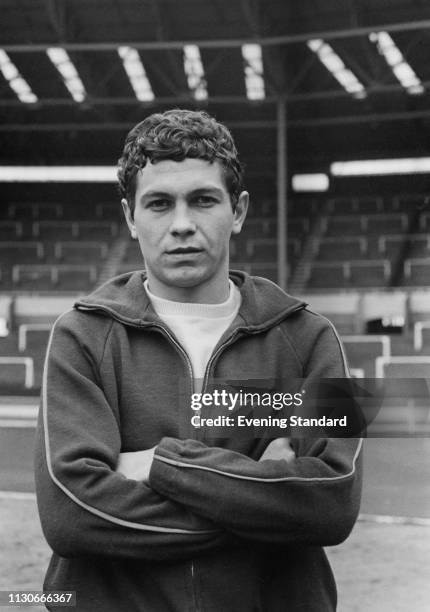
Mircea Lucescu
 Romania
association football player•association football coach
Birthday
July 29, 1945
Birth Sign
Leo
Birthplace
Bucharest, Romania
Age
Died at 80
Height
5 ft 10 in (1.77 m)
About
Mircea Lucescu was a Romanian football player and manager whose career spanned six decades. As a player, he won seven Romanian league titles with Dinamo București and captained Romania at the 1970 FIFA World Cup. He earned 64 caps for the national team between 1966 and 1979. After retiring, he became one of the most decorated managers in football history, amassing 38 official trophies. His 12-year tenure at Shakhtar Donetsk defined his legacy: he won eight Ukrainian Premier League titles and led the club to the 2008–09 UEFA Cup. Lucescu also managed clubs in Italy, Turkey, Russia, and Romania, and coached the Romania and Turkey national teams. Known for his tactical flexibility and ability to develop talent, he was respected across the football world. He died on April 7, 2026, at age 80, just days after stepping down from his second stint as Romania coach.
Early Life & Background
Lucescu grew up in the working-class Berceni neighborhood of Bucharest, one of five children in an impoverished family. His father, a stretcher-bearer at a local hospital, was illiterate and had been wounded at the Battle of the Don's Bend during World War II. His mother worked cleaning jobs at the hospital and for neighbors. To help support the household, his older sister quit school after seventh grade, and a brother left school at 11 to become an apprentice at a pump factory. Lucescu began playing football at Școala Sportivă 2 București in 1961. Coach Traian Ionescu spotted him and brought him to Dinamo București, where he made his senior debut on June 21, 1964, in a 5–2 win over Rapid București. He won the league in his first two seasons but played only three games initially, then spent two seasons on loan at Divizia B side Știința București to gain experience.
Career Growth
Lucescu's breakthrough as a manager came when he led the Romania national team to qualify for UEFA Euro 1984, the country's first European Championship appearance. He then managed Dinamo București, winning league titles, before moving to Italy with Brescia and Inter Milan. In 2004, he took over Shakhtar Donetsk and transformed the club into a European force. Over 12 years, he won eight Ukrainian Premier League titles, six Ukrainian Cups, and seven Ukrainian Super Cups. The crowning achievement came in 2009 when Shakhtar beat Werder Bremen 2–1 in extra time to win the UEFA Cup, followed by the UEFA Super Cup victory over Barcelona. Later, he won the Turkish Süper Lig with Beşiktaş, the Russian Premier League with Zenit St. Petersburg, and league titles in Romania with Rapid București. In 2015, he became the fifth coach to reach 100 UEFA Champions League matches. He returned for a second spell with Romania in 2026 but stepped down after falling ill during training, three days after Romania missed World Cup qualification.
Career Timeline
Public Image & Style
Lucescu was widely regarded as one of the most influential figures in Eastern European football. His coaching philosophy blended discipline with creativity, and he was known for transforming clubs and developing talent across multiple countries. Media often highlighted his longevity, adaptability, and trophy count. In Ukraine and Turkey, he was seen as a symbol of progress. His public persona was that of a calm, thoughtful leader who commanded respect without seeking the spotlight. No official fandom name was identified, but he was deeply admired by supporters of the clubs he managed.
Fame & Fandom (iFAMOUS Rankings)
Mircea Lucescu commanded a global stage that spanned six decades, drawing deep reverence from football communities across Eastern Europe and beyond. His influence extended far beyond the pitch, creating a legacy where tactical genius met unyielding resilience. Despite this monumental career, iFANN's Global Fame Engine has evaluated his standing without assigning him a placement in the published rankings for the Global Top 1,000 or any Top-100 scope list. He currently holds no numeric rank within these specific scopes. The fanbase has no formal name; fans often refer to him by the nickname "Il Luce" (The Light), a title reflecting his role as an architect of success rather than a pop culture icon with a formal organization. Unlike modern influencers who cultivate distinct fan bases, Lucescu's supporters were naturally united through the clubs he managed and the national teams he led. In Ukraine, particularly among Shakhtar Donetsk fans, his tenure remains a golden era, fostering a bond that transcended typical player-manager relationships. While there are no records of organized fan campaigns, viral challenges, or specific rituals initiated solely in his name, his passing in April 2026 sparked widespread mourning. Tributes poured in from major institutions like Real Madrid and the Turkish Football Federation, uniting fans in grief without the need for grassroots coordination. His story of fighting for a World Cup dream until his final days has become a defining narrative, resonating deeply with those who admired his tenacity.
Interesting Facts and Legends
Mircea Lucescu was a polyglot who spoke eight languages: Romanian, Russian, English, Portuguese, Spanish, Turkish, French, and Italian. He briefly returned to play for Dinamo București in 1990 at age 45, making one appearance. He often said, 'Some people recharge by sleeping, others recharge by working.' La Gazzetta dello Sport called him 'an unconventional genius who invented both for himself and for others.' He captained Romania at the 1970 FIFA World Cup. His coaching career spanned six decades, from 1979 to 2026. A central pillar of his legend involves his final chapter; after suffering a heart attack in late March 2026, he refused to step away quietly. He reportedly declared during his hospitalization that he could not leave 'like a coward,' a statement that became an anthem for his supporters as he fought to lead Romania in World Cup qualifiers. This sentiment was amplified when he passed away on April 7, 2026, just twelve days after managing a crucial playoff match. Fans still retell the story of how he died while actively pursuing a World Cup spot, cementing his image as an eternal warrior. His death prompted rare unity in Turkey, where the football community paused to mourn him, highlighting the massive respect he held across borders.
Notable Quotes
“Some people recharge by sleeping, others recharge by working.”
Family & Personal Life
Lucescu married Nelly in 1967, and they remained together until his death. Their only child, Răzvan Lucescu, was born on February 17, 1969, and became a professional goalkeeper and later a successful manager. Răzvan led PAOK to an unbeaten league title in 2018–19 and has managed several clubs in Greece and Romania. Mircea often brought Răzvan to training sessions during his early coaching days, and they collaborated professionally at Rapid București. The Lucescu family has deep roots in football, with Mircea's father working as a hospital stretcher-bearer and his mother taking cleaning jobs to support the family during his childhood.
Notable Connections
Lucescu was discovered by coach Traian Ionescu, who brought him to Dinamo București. His son, Răzvan Lucescu, followed him into football as a goalkeeper and manager. He coached Darijo Srna at Shakhtar Donetsk, where the Croatian winger became a club legend. Lucescu was frequently compared to Sir Alex Ferguson as one of the most decorated coaches in history.
Relationships & Dating History
Lucescu married Nelly in 1967, and they remained together until his death on April 7, 2026. She survived him. They had one son, Răzvan, born on February 17, 1969. No other public relationships, divorces, separations, or flings were ever reported. As of 2026, his widow Nelly was still living.
- MarriedNelly Lucescu1967 - 2026They married in 1967 and remained together until his death. They had one son, Răzvan.
Death & Aftermath
Died
April 7, 2026 (aged 80)
Death Place
Bucharest, Romania
Cause of Death
Heart attack
Mircea Lucescu, the legendary Romanian football player and coach, died on April 7, 2026, in Bucharest, Romania. He was 80 years old at the time of his death. Reports indicate he suffered a cardiac event on or around March 29, 2026, during a meeting prior to a training session with the Romania national team, which led to his immediate hospitalization,. Following this incident, Lucescu remained hospitalized for several days before passing away on April 7. His final public appearance was an interview published by The Guardian on March 25, 2026, just four days before his collapse, in which he discussed his determination to lead Romania to the World Cup despite his illness, stating, "I can't leave like a coward".
Lucescu's death triggered an immediate outpouring of grief globally, particularly within football circles. Tributes poured in from major institutions: Shakhtar Donetsk released a formal tribute titled "Farewell, Mister," highlighting his status as a captain of the Romania national team and a serial trophy winner. FIFA issued a statement noting his role as captain of Romania at the 1970 Mexico World Cup and his second stint as the national team coach. Real Madrid released an official statement expressing deep regret over his passing. Turkish media and the football community paused in "rare unity" to mourn him, citing his significant influence on Turkish football through his tenure with Galatasaray.
Major outlets including ESPN, Al Jazeera, The Athletic, and the Associated Press ran obituaries detailing his career, noting he won 38 trophies across 1,668 games as a manager and secured seven league titles as a player with Dinamo București,,,,. Specific details regarding the date, location, and nature (public or private) of the funeral or memorial service were not available in the provided search results.
Net Worth (Estate Value)
$10 Million
iFANN Editorial Team estimate
iFANN currently estimates Mircea Lucescu's estate at $10 Million as of 2026. This valuation reflects the accumulated wealth from his illustrious career as a top-tier manager at clubs including Shakhtar Donetsk, Galatasaray, Beşiktaş, Dynamo Kyiv, Zenit St. Petersburg, and Inter Milan. Additional assets stemmed from his playing days with Dinamo București and Corvinul Hunedoara. Following his passing, his estate is expected to generate ongoing revenue through image rights, licensing deals, and football-related media projects. His son, Răzvan Lucescu, is positioned to manage the estate.
Awards Won (6)
Lucescu won 38 official trophies as a manager, including the 2008–09 UEFA Cup and 2009 UEFA Super Cup with Shakhtar Donetsk. He claimed eight Ukrainian Premier League titles, six Ukrainian Cups, and seven Ukrainian Super Cups with Shakhtar, plus league titles in Turkey (Beşiktaş), Russia (Zenit St. Petersburg), and Romania (Dinamo București, Rapid București). He was named Romania Coach of the Year five times and Ukraine Coach of the Year eight times.
2009 · Manager
Shakhtar Donetsk
2009 · Manager
Shakhtar Donetsk
Known For
Shakhtar Donetsk manager (2004–2016)
2004 · Manager
Won 2008–09 UEFA Cup with Shakhtar Donetsk
2009 · Manager
Romania national team manager (two spells)
1981 · Manager
Captain of Romania at 1970 FIFA World Cup
1970 · Player
Keywords
Sources
Quick Facts
- Profession
- association football player, association football coach
- Born
- +1945-07-29
- Birthplace
- Bucharest
- Died
- +2026-04-07
- Death Place
- Bucharest
- Gender
- Male
- Spouse
- Nelly Lucescu
- Birth Sign
- Leo
Personal Details
- Full Name
- Mircea Lucescu
- Height
- 5 ft 10 in (1.77 m)
- Spouse
- Nelly Lucescu
- Children
- 1 son: Răzvan Lucescu
- Education
- Academy of Economic Studies, Bucharest
Frequently Asked Questions
How old was Mircea Lucescu when he died?
What trophies did Mircea Lucescu win?
Did Mircea Lucescu have children?
Who did Mircea Lucescu manage?
Is Mircea Lucescu married?
Similar People

Join the community
fans discussing