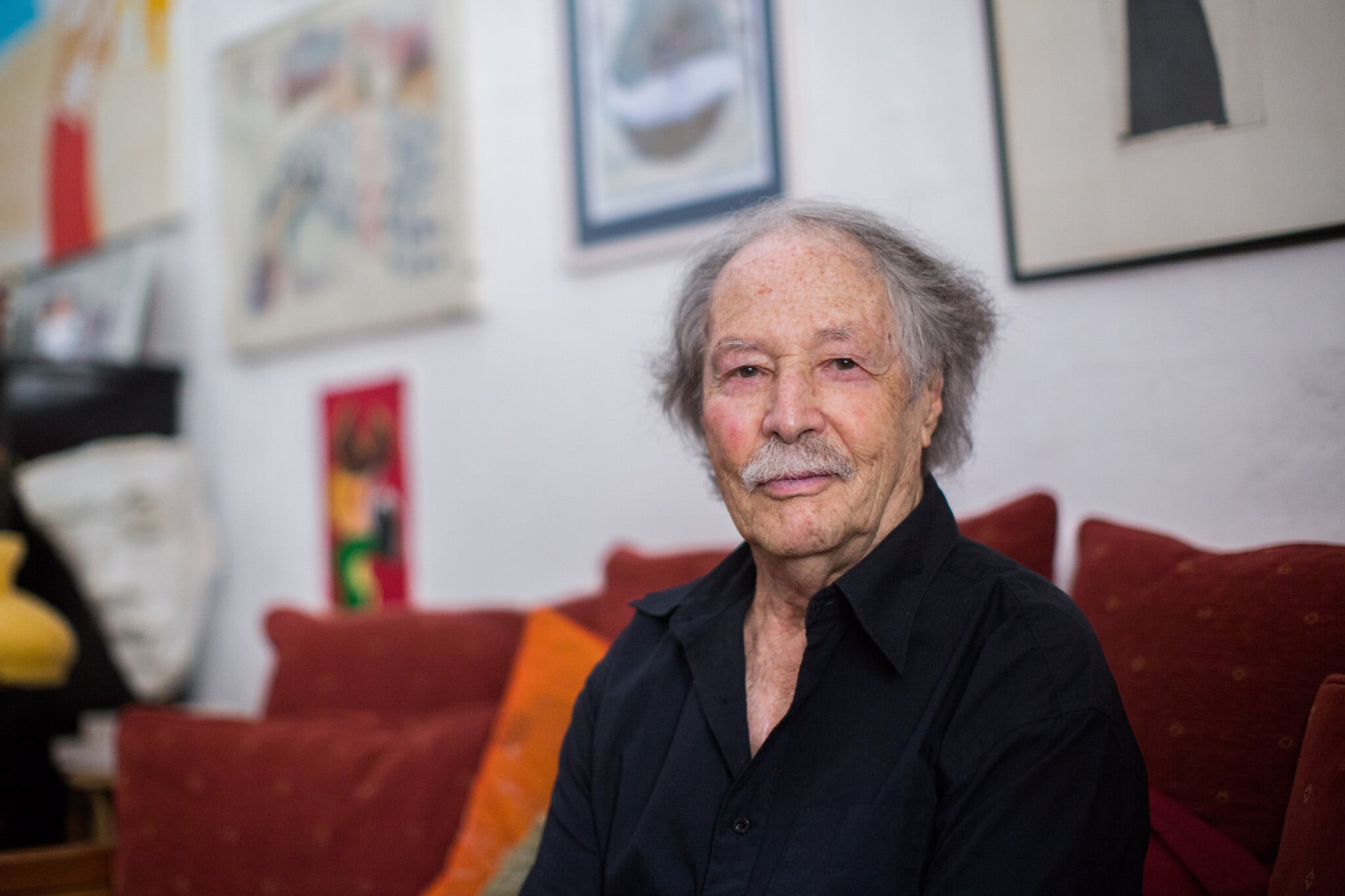
Uri Orlev
 Israel
writer•children's writer•translator
Also known as: Jerzy Henryk Orłowski, Yurik, Uri Orlovsky
Birthday
February 24, 1931
Birth Sign
Sagittarius
Birthplace
Warsaw, Poland
Age
Died at 91
About
Uri Orlev was a Polish-born Israeli author and translator whose children's books drew deeply on his own childhood during the Holocaust. Born Jerzy Henryk Orłowski in Warsaw in 1931, he survived the ghetto and a concentration camp before settling in Israel in 1946. His writing gave young readers a way to confront difficult history with honesty and hope. Over a career spanning nearly five decades, he published more than thirty books, many translated into multiple languages. His best-known works include The Island on Bird Street and Run, Boy, Run, both adapted into films. Orlev also translated classic children's literature into Hebrew, including titles by Astrid Lindgren and Roald Dahl. He received the Hans Christian Andersen Award in 1996, the highest international recognition for children's authors. He died in Jerusalem on July 26, 2022, at the age of 91, leaving behind a body of work that continues to resonate with readers worldwide.
Early Life & Background
Jerzy Henryk Orłowski, nicknamed Yurik, grew up in Warsaw in a Jewish family. When the Germans occupied Poland in 1939, his father was taken away, and the family was forced into the Warsaw Ghetto. Orlev later described those years as a time of fear and hunger, but also of small acts of kindness. After his mother was killed, he and his brother were hidden by relatives and friends. They eventually escaped the ghetto and spent time in a concentration camp before the war ended. In 1946, Orlev immigrated to Israel, where he lived on a kibbutz and began to write. His early experiences never left him; they became the raw material for much of his later fiction.
Career Growth
Orlev started writing professionally for children and adolescents in 1976, producing scripts for radio and television as well as translations. His first major success came with The Island on Bird Street (1981), a semi-autobiographical novel about a boy hiding in the ruins of the Warsaw Ghetto. The book earned international acclaim and was adapted into a film in 1997. Another celebrated work, Run, Boy, Run (2001), tells the true story of a child who survived the Holocaust by posing as a Polish orphan. It was also made into a film in 2013. Orlev continued writing into his eighties, publishing books that explored themes of war, survival, and resilience. He won the Hans Christian Andersen Award in 1996, the Prime Minister's Prize for Hebrew Literary Works in 1972, and the Bialik Prize in 2006.
Career Timeline
Public Image & Style
Uri Orlev was regarded as one of Israel's most important children's authors, known for tackling difficult subjects with a gentle touch. His writing was praised for its directness and emotional depth, never shying away from the horrors of war yet always leaving room for hope. Fans and critics alike admired his ability to speak to young readers without condescension. He was a quiet presence in Israeli literary circles, more comfortable at his desk than in the spotlight, but his influence was immense. His works have been translated into over twenty languages, making him a global figure in children's literature.
Fame & Fandom (iFAMOUS Rankings)
Uri Orlev never chased the spotlight, yet his quiet presence resonated through decades of children's literature. The iFANN Global Fame Engine evaluated his standing in August 2026 and determined that he does not currently hold a placement in the published rankings (Global Top 1,000 or a Top-100 scope list). He remains an unranked figure within the system's top tiers, a status reflecting his legacy as a canonical author rather than a viral celebrity. His influence stems from the gravity of his subject matter rather than the mechanics of modern fandom ecosystems. Unlike pop stars who generate massive online communities for birthday campaigns or streaming pushes, Orlev cultivated a dedicated readership defined by study and remembrance. Students, educators, and literature enthusiasts honor his work without organizing formal clubs or fan-funded projects. There is no documented moniker for his audience, nor any record of ritualistic gatherings or inside jokes that characterize contemporary celebrity culture. His relationship with the public remained anchored in his writing and occasional interviews regarding his life as a Holocaust survivor. The absence of a commercial fanbase underscores the solemn nature of his contribution to history. Readers engage with his stories not as entertainment but as essential historical narratives. This distinction separates his enduring impact from the fleeting trends of the digital age. While he lacks a specific ranking number or score in the global database, his cultural footprint remains substantial across Israeli schools and international literary circles. His work continues to be studied for its honesty about difficult history, proving that fame need not rely on algorithmic visibility to achieve immortality.
Interesting Facts and Legends
Orlev's childhood nickname was Yurik, a diminutive of Jerzy. He was an avid reader as a boy, crediting books with helping him endure the war years. He translated works by Astrid Lindgren and Roald Dahl into Hebrew, introducing Israeli children to Pippi Longstocking and Charlie Bucket. Orlev also wrote a series of books about a character named Siamina, a young girl who appears in several of his stories. Late in life, he expressed a belief that children's literature had a duty to address even the darkest chapters of history. A central pillar of his personal mythology is his survival as a child in the Warsaw Ghetto during World War II. Born Jerzy Henryk Orłowski in 1931, he lived in the ghetto until age six before escaping to the Polish countryside under false identities. This documented fact directly inspired his most famous work, The Island on Bird Street, which fictionalizes his own experiences of hiding and survival. In 1996, he received the Hans Christian Andersen Award, recognized as the highest international honor for children's book authors. This achievement solidified his status as a global icon for writing about the Holocaust for young audiences. His novel Lauf Junge Lauf, known in English as Run Boy Run, was adapted into a major motion picture released around 2014. The film brought his written legend into global visual consciousness, retelling the story of an eight-year-old boy escaping the Warsaw Ghetto.
Notable Quotes
“Those who aren't fighting continue to live the most ordinary life during wartime.”
“I write for children because I believe they deserve the truth.”
“The Island on Bird Street was my way of going back to the place I never left.”
Family & Personal Life
Orlev's father was taken away by the Germans early in the war, and his mother was killed in the Warsaw Ghetto. He and his younger brother survived by hiding with various families. After immigrating to Israel, Orlev lived on a kibbutz, where he raised a family. He often spoke of his own children and grandchildren as a source of inspiration, and he dedicated several of his books to them.
Notable Connections
Uri Orlev is associated with the world of children's literature, particularly works that address the Holocaust. He is often mentioned alongside other authors who survived the war, such as Aharon Appelfeld and Primo Levi, though his focus was on younger readers. His translations brought international classics to Israeli children, and his own books have been studied in schools and universities. He was a member of the Israeli PEN club and received support from the Israeli Ministry of Culture throughout his career.
Relationships & Dating History
Details about Uri Orlev's personal relationships are scarce. He was married and had children, but he kept his family life private. There is no public record of his marriage or other romantic relationships. He was known to be devoted to his family, and he often mentioned them in interviews as a source of support and inspiration.
Death & Aftermath
Died
July 26, 2022 (aged 91)
Death Place
Unknown
Cause of Death
Unknown
Uri Orlev, the renowned Polish-born Israeli children's author and Holocaust survivor, died on July 26, 2022, at the age of 91. While specific details regarding the exact location of his death, the officially ruled cause, or the method by which this information was established remain unreported in available records, the consensus among authorities and witnesses confirms the facts of his passing.
Public reaction to his death included widespread tributes from literary institutions and peers. The International Board on Books for Young People noted his contributions, while the Times of Israel published an obituary highlighting his legacy as a Polish native who wrote dozens of books capturing his experiences in the Shoah and early Israel. His works, many based on his own childhood survival in the Warsaw Ghetto, saw renewed attention as the world reflected on a career that spanned nearly fifty years and produced over thirty books translated into more than twenty languages. Funeral arrangements and the final disposition of his remains were not detailed in general news coverage, reflecting the private nature of the event.
Posthumously, Uri Orlev's estate continues to be represented through his extensive body of work, which includes more than 40 awards, including the prestigious Hans Christian Andersen Award received in 1996, the highest international recognition for children's book authors. He is remembered for writing prose for youth and adults, with his most famous works often centered on his time in the Warsaw Ghetto.
Net Worth (Estate Value)
As a children's author and translator, Uri Orlev's income came primarily from book sales, royalties, and translation rights. His works have been published in more than twenty languages, generating steady revenue over the years. He also earned from film adaptations of his novels. However, specific figures for his net worth or estate are not publicly available. Given his long career and international reach, his financial legacy is modest but stable, with his books continuing to sell after his death.
Awards Won (3)
Uri Orlev received the Hans Christian Andersen Award in 1996, the highest honor for children's authors. He also won the Prime Minister's Prize for Hebrew Literary Works in 1972 and the Bialik Prize in 2006. These awards recognized his significant contribution to children's literature and his ability to address difficult historical themes with sensitivity.
1996 · Children's Literature
Lifetime achievement
2006 · Literature
Lifetime achievement
Known For
The Island on Bird Street
1981 · Author
Run, Boy, Run
2001 · Author
Keywords
Sources
Quick Facts
- Profession
- writer, children's writer, translator
- Born
- February 24, 1931
- Birthplace
- Warsaw, Poland
- Died
- July 26, 2022
- Death Place
- Jerusalem, Israel
- Gender
- Male
- Birth Sign
- Sagittarius
Personal Details
- Full Name
- Jerzy Henryk Orłowski
Filmography
2
Total
2
Film
0
TV
Frequently Asked Questions
Who was Uri Orlev?
What are Uri Orlev's most famous books?
When and where was Uri Orlev born?
What major awards did Uri Orlev receive?
When did Uri Orlev die?
Similar People
Join the community
fans discussing