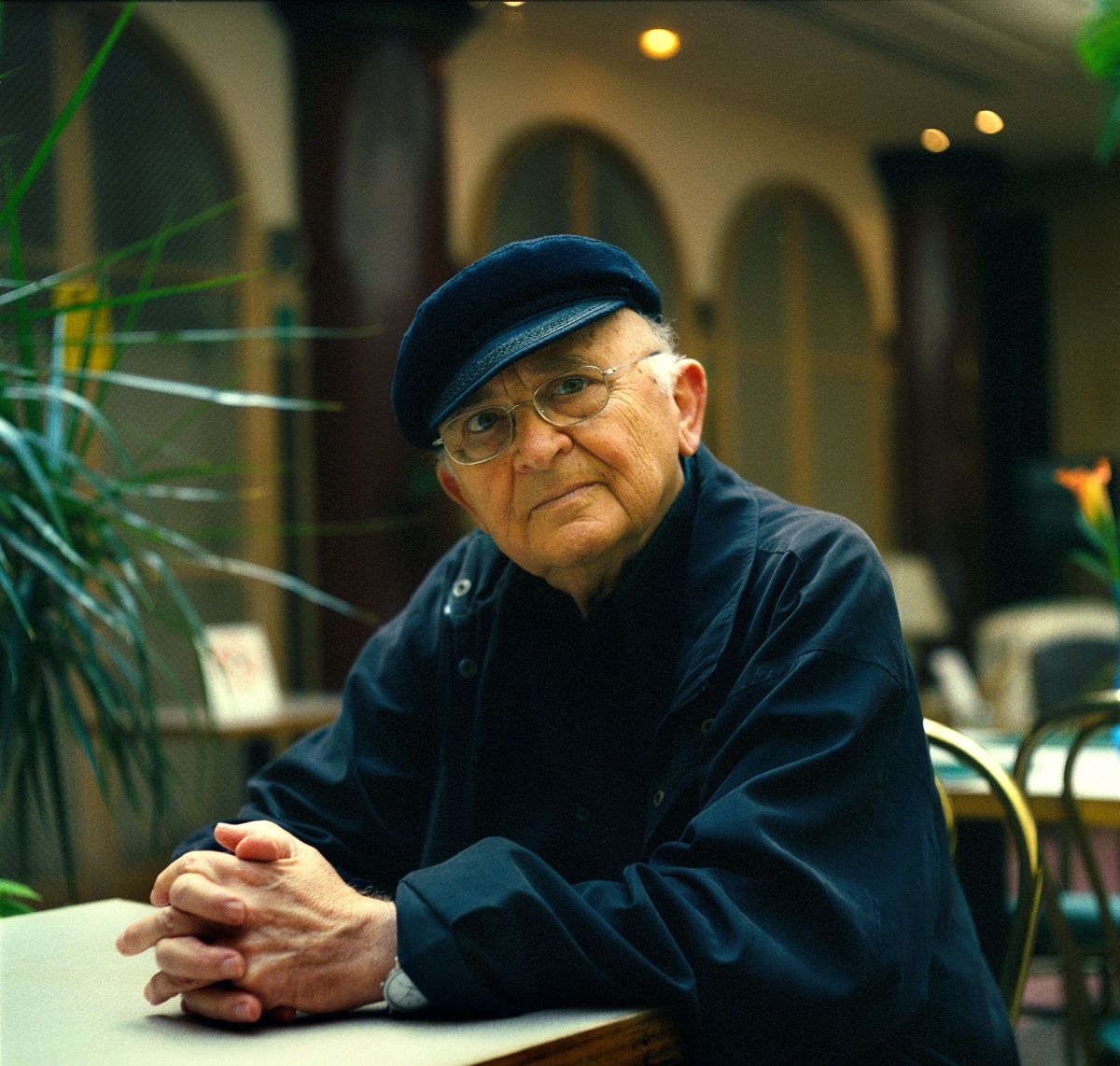
Aharon Appelfeld
 Israel
writer•university teacher•prose writer
Also known as: Ervin Appelfeld, Erwin Appelfeld
Birthday
February 16, 1932
Birth Sign
Aquarius
Birthplace
Stara Zhadova, Romania (now Ukraine)
Age
Died at 85
About
Aharon Appelfeld was an Israeli novelist and Holocaust survivor whose spare, haunting prose made him one of the most celebrated literary voices of his generation. Born Ervin Appelfeld, he wrote more than forty books in Hebrew, many translated into dozens of languages, and earned the Israel Prize in 1983 and the National Jewish Book Award. His work, including Badenheim 1939 and The Age of Wonders, probes the fragility of memory and the long shadow of history.
Appelfeld taught literature at Ben-Gurion University for decades, shaping generations of writers. He died on January 4, 2018, at age 85, leaving behind a body of work that continues to illuminate the experiences of survivors and the complexities of identity.
Early Life & Background
Born in Stara Zhadova, a small town in what was then Romania and is now Ukraine, Ervin Appelfeld spent his early years in a middle-class Jewish home. The Holocaust upended everything. At age eight, he was sent to a concentration camp, from which he escaped. For the next few years, he wandered through the forests of eastern Europe, surviving alone, hiding with peasants, and learning to live off the land.
In 1946, at thirteen and a half, he reached Palestine. He arrived without language or formal schooling, having had no education since age six. He was placed on a kibbutz, where he learned Hebrew and began to piece together a new life. Those years of displacement and survival would become the raw material for nearly everything he later wrote.
Career Growth
Appelfeld's breakthrough came with Badenheim 1939, a novel that captured the creeping dread of pre-war Europe through the story of a Jewish resort town. Published in Hebrew in 1975, it established his signature style: short, restrained sentences that carry enormous emotional weight. Over the next four decades, he published more than forty books, including The Age of Wonders, Until the Dawn's Light, and To the Edge of Sorrow, which appeared in English after his death.
His work earned him the Israel Prize in 1983 and the National Jewish Book Award. He taught at Ben-Gurion University for many years, mentoring younger writers. Though often labeled a Holocaust writer, he resisted the tag, saying he did not see himself as a chronicler of the Holocaust but as a writer exploring memory, identity, and the human condition.
Career Timeline
Public Image & Style
Appelfeld was regarded as a moral and literary authority in Israel, a writer whose quiet voice carried immense power. He was often described as a 'writer of the Holocaust,' but he pushed back against that label, insisting his work was about the human soul, not just historical events. His public persona was that of a gentle, thoughtful man, deeply committed to his craft. Fans and critics alike admired his ability to find beauty in devastation, and his lectures at Ben-Gurion University drew students who appreciated his wisdom and humility.
Fame & Fandom (iFAMOUS Rankings)
Aharon Appelfeld commanded a profound, enduring influence across global literature and academic circles, yet his reach remained distinct from the frenetic energy of modern celebrity culture. His legacy is defined by the quiet reverence of scholars and readers rather than mass-market adulation or viral fame metrics. As of August 2026, the iFANN Global Fame Engine has evaluated his standing and determined that he does not currently hold a placement in the published rankings, including the Global Top 1,000 or any scope-specific top-100 lists. This absence of a numeric rank reflects the nature of his impact: a deep, specialized resonance within literary history rather than a broad, fluctuating public score. While his name appears frequently in discussions of Holocaust literature and Israeli national heritage, there is no formal fanbase with an official moniker dedicated to him. Unlike pop icons who cultivate organized communities for campaigns or merchandise, Appelfeld's audience consists of students, critics, and devoted readers who engage with his work through study and reflection. The lack of a documented fandom name aligns with his reclusive nature; he never sought the spotlight or cultivated a following through public appearances. Tributes from major institutions like The New Yorker and The Guardian marked his passing, but these were acts of critical recognition rather than expressions of a mobilized fan community. His fame rests entirely on the weight of his forty books and the harrowing truth of his survival, creating a reputation that transcends the need for ranking systems or fan rituals.
Interesting Facts and Legends
Before arriving in Israel, the author was known as Ervin Appelfeld, a name he changed to Aharon upon his arrival. He famously stated that 'Writing means you're alive,' a sentiment that underscored his belief in storytelling as a redemptive force. Despite his international acclaim, he remained a man of immense modesty who preferred silence over publicity. Although he mastered several languages, he deliberately chose Hebrew as his medium, a language he began learning only as a teenager. His seminal novel Badenheim 1939 faced rejection from multiple publishers before it eventually became a classic of modern literature. A defining narrative of his life, often retold as the core legend of his career, involves his separation from his family at age six during the Holocaust. He survived years in hiding and camps before reaching Israel at thirteen without speaking a word of Hebrew, a biographical fact that deeply informed his fiction about displacement. While some reviews have referenced 'Legends of Home,' this title refers to the surreal, Kafkaesque stories within his books rather than real-life incidents involving crowds or public spectacle. His legacy remains rooted in these verified historical experiences and the quiet power of his prose.
Notable Quotes
“Writing means you're alive.”
“I came to Israel without language, without education, without a past.”
“The Holocaust is not a story of the past. It is a story of the present.”
Family & Personal Life
Details about Appelfeld's family are scarce in public records. He was born to a middle-class Jewish family, but his mother was killed early in the war, and his father was sent to a labor camp. After the war, he was reunited with his father, who had survived. Appelfeld later married and had children, but he kept his personal life largely private. He lived in Jerusalem for much of his later life.
Notable Connections
Appelfeld was associated with Ben-Gurion University, where he taught for many years, and with Israeli literary circles. His work has been compared to that of Primo Levi and Elie Wiesel, though his style is uniquely his own. He was also associated with the Hebrew literary magazine Moznaim and influenced a generation of Israeli writers, including David Grossman, who has cited him as a mentor.
Relationships & Dating History
Appelfeld was a private man, and little is known about his romantic life. He was married to a woman named Judith, with whom he had three children. They remained together until his death, though few details about their relationship have been made public. He was not known for any high-profile romances or scandals, preferring to keep his personal life out of the spotlight.
Death & Aftermath
Died
January 4, 2018 (aged 85)
Death Place
Israel
Cause of Death
Reported natural causes due to advanced age
The literary world mourned the loss of a singular voice when major publications immediately turned to honoring Aharon Appelfeld. The New York Times published a comprehensive obituary on January 4, 2018, describing him as an acclaimed Israeli novelist haunted by the Holocaust, while the Los Angeles Review of Books released a retrospective essay titled An Untouchable Fire: Remembering Aharon Appelfeld that highlighted his status as one of Israel's greatest writers and a child survivor. Tributes from peers and institutions focused on his unique narrative style, which often obscured the horrors of the Holocaust rather than depicting them directly, instead exploring the psychological aftermath and the silence surrounding trauma.
Appelfeld passed away on January 4, 2018, at the age of 85 in Israel, with specific details regarding the city or facility remaining unconfirmed in public records. His final days were marked by seclusion, consistent with his reclusive nature as a writer who rarely gave interviews or appeared publicly in later years. A last conversation with him was documented by Tablet Magazine prior to his death, highlighting his continued engagement with his work and memories of the pre-war world. The reported cause of death was natural causes associated with his advanced age and health decline.
Following his death, several of his works continued to be reviewed and republished, including a 2024 review of Badenheim 1939, Katerina, and The Story of a Life by The Guardian and a 2023 review of Poland Green Land by The Washington Post. In March 2020, The New Yorker published an article discussing his collection Legends of Home. While specific details regarding funeral arrangements remain unconfirmed, his archive is maintained at Ben-Gurion University of the Negev.
Net Worth (Estate Value)
$10 Million
iFANN Editorial Team estimate
iFANN currently estimates Aharon Appelfeld's net worth at the time of his death in 2018 to be $10 Million. This figure accounts for his lifetime earnings from teaching literature at Ben-Gurion University and royalties generated by his extensive bibliography. His books have maintained steady sales for decades, supported by translations into over twenty languages that continue to generate income for his estate. As of 2026, his estate receives ongoing revenue from new editions, digital sales, and posthumous publications such as To the Edge of Sorrow. His family manages the estate, overseeing the reissue of his works and the preservation of his literary papers at Ben-Gurion University.
Awards Won (2)
Appelfeld received the Israel Prize in 1983, the highest cultural honor in Israel, for his contribution to Hebrew literature. He also won the National Jewish Book Award. These awards recognized his unique literary voice and his profound exploration of memory and trauma.
1983 · Literature
For his body of work
1984 · Fiction
For Badenheim 1939
Known For
Badenheim 1939
1975 · Author
The Age of Wonders
1990 · Author
Until the Dawn's Light
2004 · Author
Keywords
Sources
Quick Facts
- Profession
- writer, university teacher, prose writer
- Born
- +1932-02-16
- Birthplace
- Stara Zhadova
- Died
- +2018-01-04
- Death Place
- Petah Tikva
- Gender
- Male
- Birth Sign
- Aquarius
Personal Details
- Full Name
- Ervin Appelfeld
Frequently Asked Questions
Who was Aharon Appelfeld?
When and where was Aharon Appelfeld born?
What is Aharon Appelfeld's net worth in 2026?
What are Aharon Appelfeld's most famous works?
How did Aharon Appelfeld survive the Holocaust?
Similar People

Join the community
fans discussing