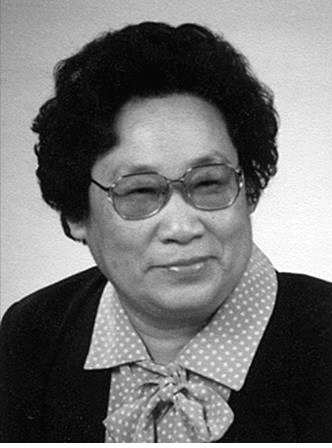
Tu Youyou
 China
Chinachemist•pharmacologist•inventor
Birthday
December 30, 1930
Birth Sign
Sagittarius
Birthplace
Ningbo, Zhejiang Province, China
Age
95 years old
Height
5 ft 2 in (157 cm)
About
Tu Youyou is a Chinese chemist and pharmacologist whose discovery of artemisinin transformed the global fight against malaria. Trained in pharmaceutical chemistry at Beijing Medical College, she spent her entire career at the Academy of Chinese Medical Sciences in Beijing. In the late 1960s, during the Cultural Revolution, she was tasked with leading a secret military project to find a malaria cure for North Vietnamese soldiers. Drawing on ancient Chinese medical texts, she extracted artemisinin from sweet wormwood using a low-temperature ether process, creating a therapy that has since saved millions of lives across Asia, Africa, and South America. For this breakthrough, she received the 2011 Lasker-DeBakey Clinical Medical Research Award and the 2015 Nobel Prize in Physiology or Medicine, sharing it with William C. Campbell and Satoshi Ōmura. She is the first Chinese woman to win a Nobel Prize in any category and the first Chinese citizen to receive the Lasker Award. In 2019, she was awarded the Medal of the Republic, China's highest civilian honor. Her work, conducted entirely within China, exemplifies the power of integrating traditional knowledge with modern science.
Early Life & Background
Tu Youyou was born into a scholarly family in Ningbo, a city in Zhejiang Province. Her father, Tu Lianqian, worked as a banker and later as a teacher; her mother was Yao Zhonglian. She was the only daughter among five children, with four older brothers. Her family placed a high value on education, and she was named Youyou, derived from a phrase in the Classic of Poetry meaning "the deer bleats." At age 16, she contracted tuberculosis and was bedridden for several years, an experience that sparked her determination to pursue medicine. After recovering, she attended Ningbo Middle School, where she excelled in chemistry and biology. Her father, who had studied at a modern school, encouraged her scientific interests. In 1951, she enrolled at Beijing Medical College (now Peking University Health Science Center) to study pharmaceutical chemistry. The curriculum combined Western pharmacology with traditional Chinese medicine, a dual approach that would later prove essential. She graduated in 1955 and joined the Academy of Chinese Medical Sciences in Beijing, working at the Institute of Chinese Materia Medica. In 1959–1960, she undertook additional training in traditional Chinese medicine through a special program organized by the Ministry of Health. The pivotal moment came in 1967, when the Chinese government launched Project 523, a secret military research program to develop a malaria cure for North Vietnamese soldiers. Tu, then 37, was appointed head of the project's natural products chemistry group. She had to leave her two young daughters in boarding school and with relatives to focus on the work.
Career Growth
In 1971, after reviewing over 2,000 candidate recipes from ancient Chinese medical texts, Tu's team identified a promising extract from sweet wormwood (Artemisia annua), known in Chinese as qinghao. The key breakthrough came when she realized that the traditional method of boiling the herb destroyed its active compound. She redesigned the extraction process using a low-temperature ether solvent, which preserved the active ingredient. On October 4, 1971, her team successfully isolated a pure, colorless crystalline compound they named qinghaosu (artemisinin). In 1972, she and two colleagues volunteered to be the first humans to test the compound for toxicity. That same year, her team transformed artemisinin into dihydroartemisinin, a more potent derivative. In 1973, clinical trials on 21 malaria patients in Hainan province confirmed its efficacy. Tu published the findings in the Chinese Medical Journal in 1979. In 1981, she presented her work at an international conference in Beijing, gaining wider recognition. The World Health Organization recommended artemisinin-based combination therapies (ACTs) as the first-line treatment for malaria in 2000, a decision that has helped reduce global malaria mortality by over 60% since then. In 2011, she was awarded the Lasker-DeBakey Clinical Medical Research Award, followed by the Nobel Prize in Physiology or Medicine in 2015. She continues to serve as honorary director of the Artemisinin Research Center at the China Academy of Chinese Medical Sciences.
Career Timeline
Public Image & Style
Tu Youyou is known for her modest, unassuming appearance, typically wearing simple Chinese-style clothing. The media often portrays her as a humble, persistent, and selfless scientist, frequently calling her "China's Marie Curie." She rarely gives interviews, and her public communications are primarily through scientific papers and official speeches. Her fans in China are informally called "Youyou fans" (呦呦粉). On her birthday, December 30, fans post tributes on Weibo and WeChat, and some visit her statue in Ningbo. Her fan-run Weibo account posts in a respectful, educational tone.
Fame & Fandom (iFAMOUS Rankings)
Tu Youyou holds the 29th most famous person from China according to the latest iFANN Global Fame Rankings, a position she has held steady since the previous cycle. This placement reflects her enduring status as a global icon of scientific discovery rather than fleeting celebrity. While the rankings track global attention across media coverage, search trends, and consumption signals worldwide, the source of her fame remains rooted in her life-saving work. Unlike pop stars or actors, Tu Youyou does not have a formal fandom name; her supporters are scientists, medical professionals, and admirers of public service who do not organize under a specific banner like "Youyou fans" in the context of idol worship. The existing community of admirers, often called "Youyou fans" in Chinese social media circles, focuses on celebrating her birthday and achievements rather than engaging in fan rituals typical of entertainment figures. There are no documented fan-funded campaigns, billboards, or viral inside jokes associated with her. Her legacy is defined by the quiet dedication of those who follow her scientific path, honoring her modesty and the millions of lives saved by artemisinin without the noise of celebrity culture.
Interesting Facts and Legends
The origin of Tu Youyou's name lies in the Classic of Poetry, specifically the line "The deer bleats, youyou." She made history as the first woman from mainland China to win a Nobel Prize. During Project 523, her team worked with minimal resources, relying on household items like clay pots and jars for extraction due to poor lab equipment. Despite her monumental achievement, she was never elected to the Chinese Academy of Sciences, though she joined the Chinese Academy of Engineering in 2015 after receiving the Nobel. She deliberately refused to patent artemisinin, declaring that the discovery belongs to the Chinese people. A widely retold story from her early research days involves her testing initial extracts on herself and her colleagues to ensure safety before clinical trials. This act of personal sacrifice is a cornerstone of her scientific legend. In 2015, she was named one of TIME Magazine's 100 Most Influential Women of the Year, cementing her status as a global STEM icon. The "Tu Youyou Award" was also established to recognize outstanding pharmaceutical researchers, ensuring her influence continues within the scientific community.
Notable Quotes
“I never thought about patenting it. It belongs to the Chinese people.”
“Every scientist dreams of doing something that can help the world.”
“From ancient Chinese medicine, we found a treasure.”
“The Nobel Prize is not the end of my research. I will continue to work.”
“I am just a researcher. The credit belongs to my team.”
Family & Personal Life
Tu Youyou married Li Tingzhao, a fellow researcher at the Academy of Chinese Medical Sciences, in the early 1960s. They had two daughters: Li Jun, born in 1963, and Li Yu, born in 1965. During Project 523, Tu had to leave her young daughters in a boarding school and with relatives to focus on her research. Li Tingzhao supported her work by taking on primary childcare responsibilities. He accompanied her to the Nobel Prize ceremony in 2015. As of 2026, the couple still lives in Beijing.
Notable Connections
Tu Youyou is associated with the China Academy of Chinese Medical Sciences, where she spent her entire career. Her work is closely tied to Project 523, the secret military research program that led to the discovery of artemisinin. She shares the 2015 Nobel Prize with William C. Campbell and Satoshi Ōmura.
Relationships & Dating History
Tu Youyou has had only one publicly known romantic relationship. She married Li Tingzhao, a fellow researcher at the Academy of Chinese Medical Sciences, in the early 1960s (estimated 1962–1963). They met at work and shared a passion for pharmaceutical research. The couple had two daughters: Li Jun (born 1963) and Li Yu (born 1965). During Project 523, Li Tingzhao supported Tu's work by taking on primary childcare responsibilities. He accompanied her to the Nobel Prize ceremony in 2015. As of 2026, Tu Youyou is still married to Li Tingzhao, and they live together in Beijing.
- MarriedLi Tingzhao1962 - presentCurrentFellow researcher at the Academy of Chinese Medical Sciences; married in early 1960s; two daughters.
Salary, Net Worth In 2026
$1.3 Million
iFANN Editorial Team estimate
iFANN currently estimates Tu Youyou's net worth in 2026 at approximately $1.3 million. Unlike many Nobel laureates, she did not commercialize her discovery; she deliberately chose not to patent artemisinin, ensuring it remained freely available. Her wealth comes primarily from her Nobel Prize winnings (her share was about $160,000 after splitting with co-recipients), the State Preeminent Science and Technology Award of approximately $1 million in 2016, and her government pension as a retired research professor, which provides $30,000 to $50,000 annually. She receives minimal book royalties and rarely gives paid speeches, as most of her public appearances are honorary. Her modest financial status reflects her lifelong commitment to public service rather than personal profit.
Awards Won (7)
Tu Youyou has won numerous prestigious awards, including the 2015 Nobel Prize in Physiology or Medicine, the 2011 Lasker-DeBakey Clinical Medical Research Award, and the 2019 Medal of the Republic, China's highest civilian honor. She also received the State Preeminent Science and Technology Award in 2016 and the Warren Alpert Foundation Prize in 2016.
2015 · Physiology or Medicine
Discovery of artemisinin
2011 · Clinical Medical Research
Discovery of artemisinin
Known For
Discovery of artemisinin
1971 · Lead researcher
Nobel Prize in Physiology or Medicine
2015 · Recipient
Lasker-DeBakey Clinical Medical Research Award
2011 · Recipient
Keywords
Quick Facts
- Profession
- chemist, pharmacologist, inventor
- Born
- +1930-12-30
- Birthplace
- Ningbo
- Gender
- Female
- Birth Sign
- Sagittarius
Personal Details
- Full Name
- Tu Youyou
- Height
- 5 ft 2 in (157 cm)
- Spouse
- Li Tingzhao
- Children
- 2 daughters: Li Jun (born 1963), Li Yu (born 1965)
- Education
- Beijing Medical College (now Peking University Health Science Center), degree in pharmaceutical chemistry, 1955
Frequently Asked Questions
Who is Tu Youyou?
What is Tu Youyou's net worth in 2026?
Is Tu Youyou still alive in 2026?
What is Tu Youyou best known for?
Why didn't Tu Youyou patent artemisinin?
Social Media
Similar People
Join the community
fans discussing