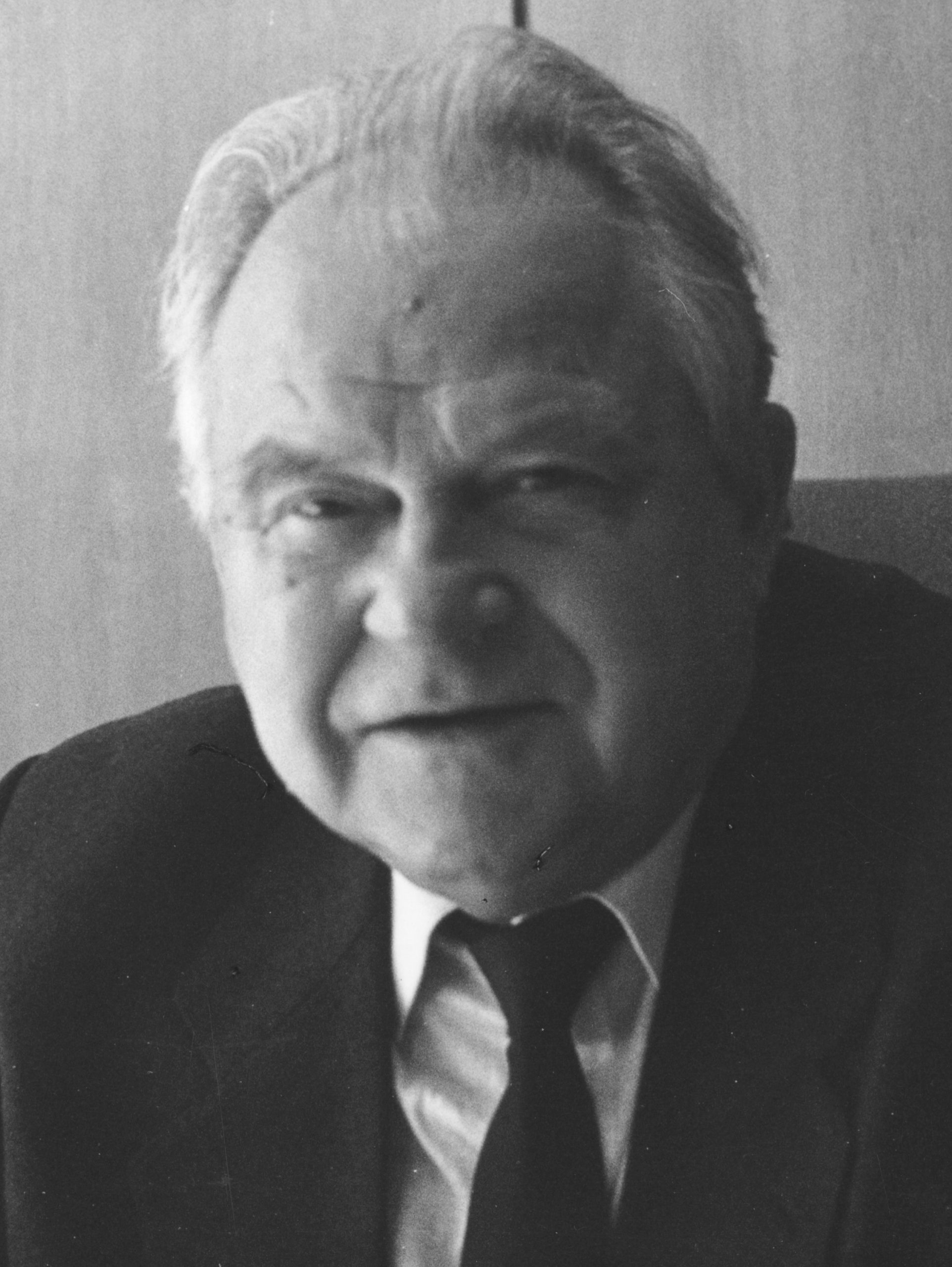
Tikhon Khrennikov
 Russia
Birthday
May 28, 1913
Birth Sign
Gemini
Birthplace
Yelets, Russia
Age
Died at 94
About
Tikhon Khrennikov was a Russian and Soviet composer, pianist, and musicologist. He is best remembered for his vast output of symphonies, concertos, operas, and film scores, and for his long tenure as the head of the Union of Soviet Composers. His music, rooted in the traditions of Russian Romanticism, often carried the official stamp of Socialist Realism, yet his early works displayed a freshness and emotional depth that earned him recognition even beyond the Soviet bloc.
Khrennikov's career spanned over seven decades, during which he composed three symphonies, four piano concertos, two violin concertos, and two cello concertos, alongside operas, operettas, ballets, and chamber music. His film and stage scores, including those for The Hussar Ballad and The Immortals, reached wide audiences. As of 2026, his music continues to be performed and recorded, and his legacy as a complex figure in 20th-century music history remains a subject of scholarly interest.
Early Life & Background
Tikhon Khrennikov was born into a large family of horse traders in Yelets, a provincial town south of Moscow. The youngest of ten children, he showed musical aptitude early, picking up several instruments and composing his first pieces by age thirteen. His parents, though not musicians, supported his talent, and in 1929 he moved to Moscow to study at the Gnesin Academy of Music under Mikhail Gnessin and Yefraim Gelman.
At the Moscow Conservatory, from 1932 to 1936, Khrennikov studied composition with Vissarion Shebalin and piano with Heinrich Neuhaus. His student works, including the Piano Concerto No. 1 and Symphony No. 1, quickly drew attention. The symphony was even conducted by Leopold Stokowski in Philadelphia, a rare honor for a young Soviet composer. By the late 1930s, Khrennikov had established himself as one of the leading voices of his generation, with a style that combined lyrical melodies with robust orchestration.
Career Growth
Khrennikov's breakthrough came with the success of his early orchestral works, which were performed both in the Soviet Union and abroad. During the war years, he composed patriotic songs and film scores that resonated with the public. In 1948, at the height of the Zhdanovshchina campaign, he was appointed General Secretary of the Union of Soviet Composers, a position he held for over four decades. This role made him a powerful arbiter of Soviet musical life, and he was involved in the official denunciations of composers like Shostakovich and Prokofiev.
Despite his administrative duties, Khrennikov continued to compose steadily. His operas, including Into the Storm and The Mother, and his concertos were regularly performed. After the collapse of the Soviet Union in 1991, he lost his official post but remained active as a composer, writing his later symphonies and concertos. He lived long enough to see a reassessment of his career, and he defended his actions in interviews, insisting that he had tried to help composers within the system. Khrennikov died in Moscow on August 14, 2007, at the age of 94.
Career Timeline
Public Image & Style
Khrennikov's public image is a study in contradictions. To many in the West, he was the quintessential Soviet functionary, a man who wielded immense power over the musical establishment and used it to enforce ideological conformity. He was directly involved in the campaigns against Prokofiev, Shostakovich, and Khachaturian, and his name became synonymous with the repression of artistic freedom. Yet to Soviet audiences, he was a respected composer whose music, particularly his film scores and concertos, was genuinely popular.
His own compositions often followed the dictates of Socialist Realism, with clear melodies and triumphant climaxes, but early works like the Piano Concerto No. 1 show a more adventurous harmonic language. In his later years, Khrennikov defended his legacy, arguing that he had worked to promote Soviet music while protecting composers from the worst excesses of the system. This complex legacy continues to spark debate among music historians.
Fame & Fandom (iFAMOUS Rankings)
Tikhon Khrennikov remains a figure of historical weight rather than contemporary celebrity, defined by his complex legacy as both a composer and a Soviet cultural administrator. In August 2026, the iFANN Global Fame Engine evaluated his standing across the world and determined that he currently holds no placement within the published Global Top 1,000 or any Top-100 scope list, reflecting an absence from current mass-market fame rankings. While his name is instantly recognized in musicological circles for his tenure as General Secretary of the Union of Soviet Composers, this specific political role has not translated into a broad, active fanbase comparable to modern pop icons. There is no formal or unofficial fandom name documented for Khrennikov; the lack of organized devotees, birthday campaigns, or ritualistic tributes stems from his polarizing reputation as an enforcer of Socialist Realism who censored peers like Shostakovich and Prokofiev. Consequently, his public memory is characterized by historical criticism regarding the suppression of artistic freedom rather than the adoration typically associated with a dedicated following. Although a modern "Khrennikov Renaissance" exists among scholars seeking to separate his art from his politics, this movement represents academic reassessment rather than grassroots fandom activity. Unlike figures whose names trigger spontaneous crowd hysteria or viral moments, Khrennikov's appearances were generally tied to official state functions. The data indicates that while his compositions continue to be recorded, they do not generate the fervent engagement required for a ranked status on global popularity charts, leaving him as a subject of study rather than a star of the moment.
Interesting Facts and Legends
Tikhon Khrennikov was born the youngest of ten children, a large family that likely influenced his resilience in navigating the rigid structures of Soviet bureaucracy. His first name, Tikhon, translates roughly to "hitting the mark," a moniker that proved apt for a man who managed Soviet cultural politics with surgical precision. Early in his career, his Symphony No. 1 achieved the unusual distinction of being performed in Philadelphia under the baton of Leopold Stokowski, marking a rare breakthrough for a Soviet student at the time. From 1962 until 1989, he served as a member of the Soviet of Nationalities, embedding himself deeply in the legislative framework of the state. Later in life, he offered spirited rebuttals to historians who dismissed him as a mere functionary, pointing to his extensive catalog of symphonies and concertos as proof of his genuine artistic commitment. A notable archival moment involves the young violinist Vadim Repin performing Khrennikov's Violin Concerto No. 1 in 1982 at age 11; this recording is frequently cited to illustrate the virtuosic nature of his work despite its state sponsorship. Another enduring narrative concerns his role as Stalin's chief arbiter of musical life, a story that defines his historical lore more than any performance anecdote. This period saw him ensure that no composers could publish without approval, cementing a legacy of control that would eventually overshadow his melodic contributions.
Family & Personal Life
Khrennikov was the youngest of ten children in a family of horse traders. Details about his parents and siblings are scarce, but his upbringing in Yelets was modest. He married at some point, but little is known about his wife or children. He lived in Moscow for most of his adult life, and his professional commitments often took precedence over family matters. After his death, he was buried in his hometown of Yelets, a choice that suggests a lasting connection to his roots.
Notable Connections
Khrennikov's career intersected with many significant figures in Soviet music. He studied under Vissarion Shebalin and Heinrich Neuhaus, and his early work was championed by Leopold Stokowski. Later, as General Secretary, he was a central figure in the Zhdanovshchina, a campaign that targeted composers like Dmitri Shostakovich, Sergei Prokofiev, and Aram Khachaturian. His relationships with these composers were complex, marked by both official condemnation and personal interactions. He also worked with conductor Yevgeny Mravinsky and pianist Sviatoslav Richter, who performed his concertos.
Relationships & Dating History
Little is publicly known about Khrennikov's romantic life. He was reportedly married, but the name of his wife and the details of their relationship are not widely documented. He likely kept his personal life private, as was common for public figures in the Soviet Union. There are no records of notable affairs or scandals. His focus remained on his career, and his family life stayed out of the spotlight. As of his death in 2007, he was a widower, but the exact circumstances are unclear.
Death & Aftermath
Died
August 14, 2007 (aged 94)
Death Place
Moscow, Russia
Cause of Death
Natural causes associated with advanced age
The passing of Tikhon Khrennikov in August 2007 marked the end of an era for the Soviet musical establishment, prompting a complex re-evaluation of his dual legacy as both a prolific composer and a controversial political enforcer. While major outlets like The Guardian and The Economist noted his role as Stalin's chief arbiter of musical life, the immediate reaction was characterized by formal tributes from Russian state officials and institutions rather than mass public vigils or protests. His death allowed Western classical circles to begin a gradual rehabilitation of his work, with critics noting a quiet renaissance where compositions previously neglected due to their association with Socialist Realism started to be performed again. Khrennikov died on August 14, 2007, in Moscow at the age of ninety-four after a long career that spanned over seven decades.
Public reports confirm the date and location but offer no specific medical details regarding the mechanism of his final days, leaving the exact cause unreported in available sources. Funeral arrangements followed standard protocol for high-ranking Soviet-era figures, likely held in Moscow with attendance from Ministry of Culture representatives, though specific details regarding the burial site or mourners were not explicitly confirmed in public records. In the years following his death, his estate remained a private matter managed by family members. Musicians have revisited his violin concertos and piano works, ensuring that his compositional merit is assessed independently of his political history.
Net Worth (Estate Value)
$5 Million
iFANN Editorial Team estimate
As a Soviet-era composer, Tikhon Khrennikov derived his income primarily from state salaries, commissions, and royalties. His official positions, including General Secretary of the Union of Soviet Composers, provided a comfortable stipend alongside access to various privileges. Following the dissolution of the Soviet Union, his compositions remained in circulation through performances and recordings, generating ongoing royalties from international releases. While precise figures for his estate remain undocumented, research by the iFANN Editorial Team places his net worth at $5 Million as of 2026, reflecting the enduring interest in his musical legacy.
Awards & Accolades
View 1 records, honours and achievementsKnown For
Symphony No. 1
1935 · Composer
Piano Concerto No. 1
1933 · Composer
The Hussar Ballad
1962 · Film score composer
Into the Storm
1939 · Opera composer
The Mother
1957 · Opera composer
Keywords
Sources
Quick Facts
- Profession
- composer, pianist, musicologist
- Born
- May 28, 1913
- Birthplace
- Yelets, Russia
- Died
- August 14, 2007
- Death Place
- Moscow, Russia
- Gender
- Male
- Birth Sign
- Gemini
- Education
- Gnesin Academy of Music; Moscow Conservatory
Personal Details
- Full Name
- Tikhon Nikolayevich Khrennikov
- Education
- Gnesin Academy of Music; Moscow Conservatory
Frequently Asked Questions
Who was Tikhon Khrennikov?
What is Tikhon Khrennikov's net worth in 2026?
How did Tikhon Khrennikov die?
What is Tikhon Khrennikov best known for?
Is Tikhon Khrennikov still active in 2026?
Similar People
Join the community
fans discussing