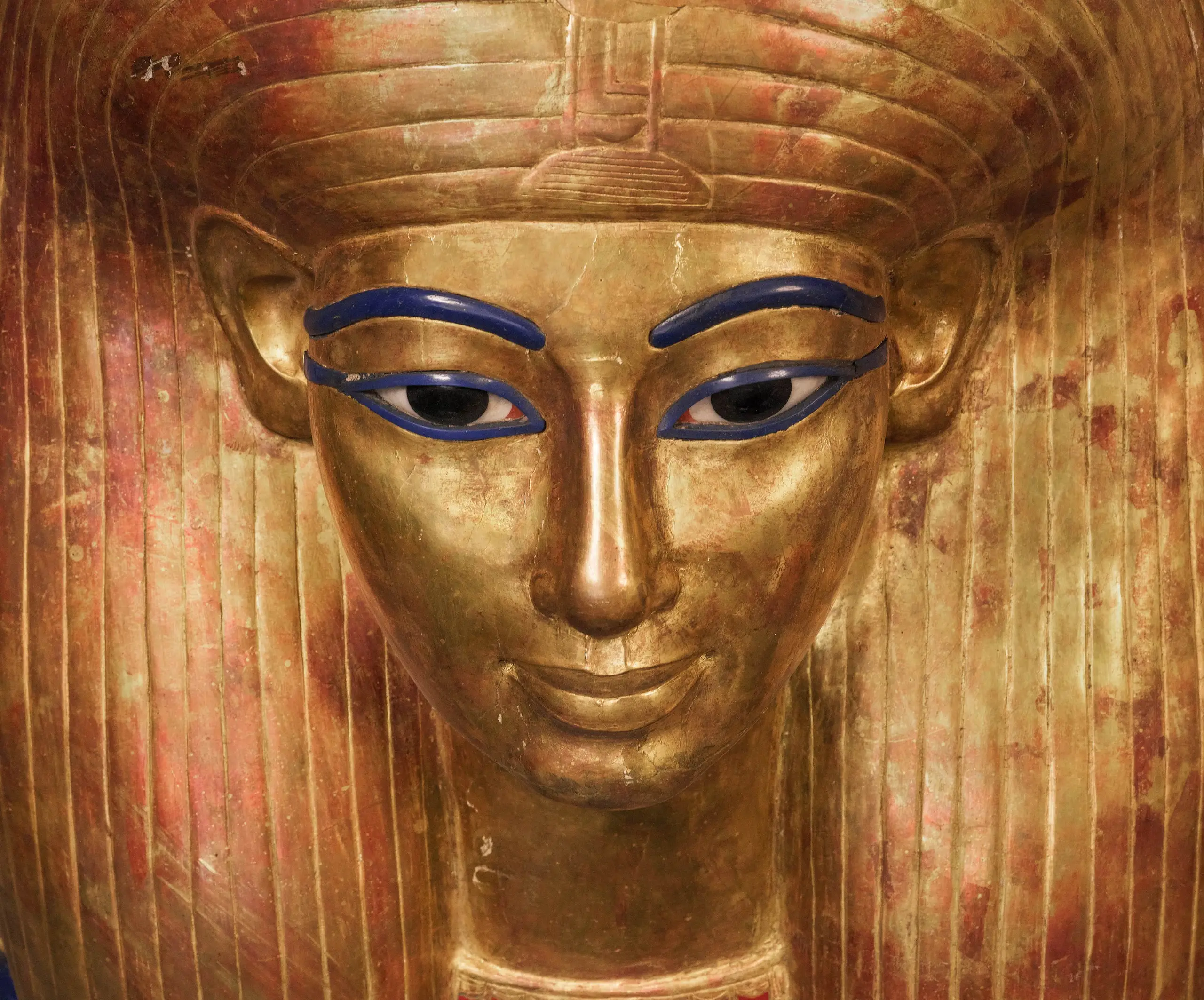
Thuya
 Egypt
EgyptAlso known as: Touiyou, Tuya, Tjuyu, Thuyu
Birthday
c. 1400 BCE
Birth Sign
Birthplace
Akhmim, Upper Egypt
Age
Died at 30
About
Thuya, also spelled Touiyou, Tuya, Tjuyu, or Thuyu, was an Egyptian noblewoman of the 18th Dynasty. She was the wife of Yuya, a powerful courtier, and the mother of Queen Tiye, who married Pharaoh Amenhotep III. Through her descendants, including the pharaoh Akhenaten and the boy king Tutankhamun, Thuya became a matriarch of one of ancient Egypt's most consequential royal lines.
Thuya held the titles Chief of the Harem of Min and Singer of Hathor, reflecting her high religious standing. She was buried in tomb KV46 in the Valley of the Kings, a privilege almost unheard of for non-royals. Her mummy, remarkably well-preserved, continues to be studied by researchers and displayed in museums around the world.
Early Life & Background
Thuya was born around 1400 BCE in Akhmim, a city in Upper Egypt known for its cult of Min, the fertility god. Her family background is not well documented, but her marriage to Yuya, a man of non-royal origins, suggests both came from the provincial elite. Yuya served as a priest of Min and a charioteer for the pharaoh, and together they rose through the ranks of Egyptian society.
Thuya's titles, including Chief of the Harem of Min, indicate her active role in the religious life of Akhmim. She was also a Singer of Hathor, a position that involved music and ritual in the goddess's cult. These roles placed her among the most respected women of her city, setting the stage for her family's later ascent.
Career Growth
Thuya's historical prominence came through her family. Around 1390 BCE, her daughter Tiye married Amenhotep III, becoming the Great Royal Wife. This union elevated Thuya and Yuya to the highest circles of the Egyptian court. Their son Anen served as a priest, and their grandson Akhenaten later transformed Egyptian religion through his worship of the Aten. Their great-grandson Tutankhamun would become the most famous pharaoh in modern history.
Thuya died around 1370 BCE and was buried in KV46 with her husband. The tomb remained intact until its discovery in 1905 by Theodore M. Davis. Her outer coffin is now featured in the Treasures of the Pharaohs exhibition at the de Young museum in San Francisco.
Career Timeline
Public Image & Style
In the modern era, Thuya is primarily known to Egyptologists and enthusiasts of ancient Egyptian history. She is often portrayed as a matriarchal figure whose family shaped the course of Egyptian history. Museum exhibitions featuring artifacts from KV46, such as the current de Young museum display, continue to draw public interest. Her story is frequently cited in discussions of non-royal elites who achieved extraordinary influence in ancient Egypt.
Fame & Fandom
Thuya stands as a pivotal figure in the annals of ancient history, her legacy cemented by the discovery of an intact tomb that predated Howard Carter's famous find by nearly two decades. While she commands immense respect within Egyptology and among enthusiasts of the 18th Dynasty, iFANN's Global Fame Engine has evaluated her presence but does not currently place her in the published rankings for the Global Top 1,000 or any Top-100 scope list. This unranked status reflects her standing as a historical matriarch rather than a contemporary celebrity subject to modern fame metrics like search volume or media consumption. Her influence is measured in archaeological significance and royal lineage rather than viral moments or fan-driven chart positions. The audience surrounding Thuya consists primarily of historians, archaeologists, and dedicated history buffs who study her family tree, which includes Pharaoh Akhenaten and Tutankhamun. Unlike modern pop stars, there is no formal fandom name documented for this ancient noblewoman; the community that studies her life operates without organized campaigns, birthday billboards, or ritualistic gatherings typical of entertainment fandoms. Her story is retold through museum exhibitions and academic texts rather than social media trends or fan fiction. The lack of a specific fanbase name underscores the nature of her fame: it is rooted in scholarly pursuit and historical reverence rather than the active, participatory culture seen with living celebrities. Even though her mummy remains one of the best-preserved from ancient Egypt, allowing researchers to study her facial features, this scientific fascination does not translate into a fan-driven movement. The narrative of Thuya is one of quiet power and dynastic importance, preserved in the Valley of the Kings and displayed in institutions where her artifacts continue to draw interest from those seeking to understand the origins of one of history's most consequential royal lines.
Interesting Facts and Legends
Thuya's name appears in several spellings, including Tjuyu, Thuyu, and Touiyou, due to variations in transliteration across different records. The tomb of Yuya and Thuya, KV46, was discovered nearly two decades before Howard Carter's famous find of Tutankhamun's tomb in 1922. Thuya's mummy is among the best-preserved from ancient Egypt, with surviving soft tissue and facial features that allow researchers to study her appearance. Some scholars speculate that Thuya and Yuya may have had foreign origins, though this theory remains debated. Her great-grandson Tutankhamun's tomb, discovered in 1922, made her family the most studied lineage in ancient Egyptian history. A notable legend associated with her lineage involves the dramatic religious shifts initiated by her grandson Akhenaten, often viewed as a direct consequence of the powerful bloodline she established. The discovery of her sarcophagus marked a significant moment in archaeology, preserving her identity when many others were lost to time. These artifacts, including jewel caskets and chairs found in her tomb, serve as tangible links to a woman who held titles.
Family & Personal Life
Thuya was married to Yuya, a high-ranking official and priest of Min. They had at least two children: Tiye, who became the Great Royal Wife of Amenhotep III, and Anen, who served as a priest. Thuya's grandchildren included Akhenaten, and her great-grandchildren included Tutankhamun. The family's rise from provincial nobility to the inner circle of the pharaoh represents a remarkable social ascent in ancient Egyptian history.
Notable Connections
Relationships & Dating History
Thuya's only documented relationship was her marriage to Yuya, a high-ranking official and priest of Min. The couple married sometime in the early 15th century BCE and had at least two children: Tiye and Anen. Their marriage appears to have been stable and enduring, with both spouses buried together in KV46. No other romantic relationships are documented in the historical record. Thuya died around 1370 BCE, and her marital status at death was married, as she was buried alongside her husband.
- MarriedYuya-1400 - -1370Thuya was married to Yuya, a high-ranking courtier and priest of Min. They were buried together in KV46.
Death & Aftermath
Died
c. 1370 BCE (aged 30)
Death Place
Unknown
Cause of Death
Unknown
The enduring legacy of Thuya is anchored in the intact discovery of her tomb, KV46, by Theodore M. Davis in 1905, a rare privilege for a non-royal that secured her place among the most studied figures of the Eighteenth Dynasty. Her mummy, remarkably preserved within nested coffins, remains a focal point for researchers and museum visitors, with her outer coffin currently featured in exhibitions such as those at the de Young museum in San Francisco. This posthumous prominence stems from her status as the matriarch of a royal lineage that produced Akhenaten and Tutankhamun, ensuring her name outlasted the pharaohs she was related to by blood. The historical record places her death around 1370 BCE, likely occurring in Thebes or Memphis where the court resided, though ancient Egyptian burial customs do not preserve specific details regarding her final days or the immediate circumstances of her passing.
Her body received the full honors due to her high rank, including elaborate grave goods and a burial in the Valley of the Kings, a location typically reserved for kings and queens. The reaction to her death in antiquity would have been marked by religious rites befitting her titles as Chief of the Harem of Min and Singer of Hathor, while modern reactions focus on the archaeological significance of her intact interment. Her estate, consisting of furniture, jewelry, and ceremonial objects, remained undisturbed until the twentieth century, allowing future generations to witness the wealth and status she held during her life.
Net Worth (Estate Value)
$0
iFANN Editorial Team estimate
As an ancient Egyptian noblewoman who died approximately 3,400 years ago, Thuya has no modern net worth. Per iFANN's editorial analysis, the total value attributed to her estate is $0. Her material wealth at death included the grave goods buried with her in KV46, which included furniture, jewelry, and ceremonial objects. The current monetary value of these artifacts is incalculable but would be substantial given their archaeological significance and the fame of her descendants. The estate is not actively managed in a commercial sense, though artifacts from KV46 continue to be exhibited in museums worldwide.
Awards & Accolades
View 4 records, honours and achievementsKnown For
Mother of Queen Tiye
c. 1390 BCE · Matriarch
Ancestor of Tutankhamun
c. 1341 BCE · Great-grandmother
Tomb KV46
1905 · Occupant
Keywords
Sources
Quick Facts
- Profession
- Noblewoman
- Born
- c. 1400 BCE
- Birthplace
- Akhmim, Upper Egypt
- Died
- c. 1370 BCE
- Gender
- Female
- Spouse
- Yuya
Personal Details
- Spouse
- Yuya
- Children
- Tiye, Anen
Frequently Asked Questions
Who was Thuya in ancient Egypt?
How is Thuya related to Tutankhamun?
Where was Thuya buried?
What is Thuya's mummy known for?
What titles did Thuya hold?
Similar People
Join the community
fans discussing