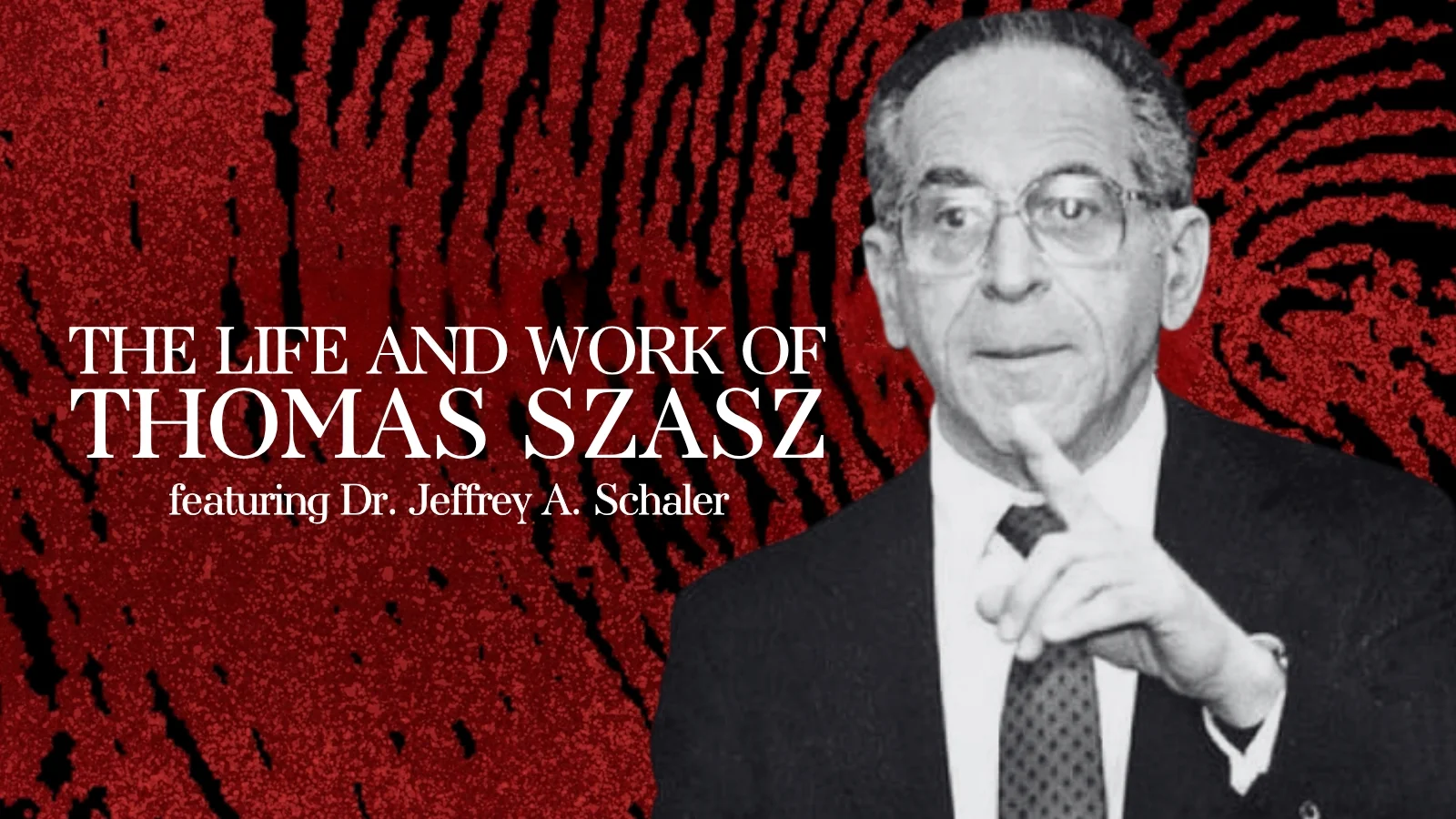
Thomas Szasz
 Hungary
psychiatrist•writer•university teacher
Also known as: Thomas Stephen Szasz, Szász Tamás István
Birthday
April 15, 1920
Birth Sign
Aries
Birthplace
Budapest, Hungary
Age
Died at 92
About
Thomas Stephen Szasz (Hungarian: Szász Tamás István) was a Hungarian-American psychiatrist, academic, and social critic whose career spanned over seven decades. Born on April 15, 1920, in Budapest, Hungary, he is best known for his radical critique of the medical model of psychiatry, most notably through his seminal 1961 work, The Myth of Mental Illness. He argued that "mental illness" is not a literal disease but a metaphorical label used to describe problems in living or moral conflicts, effectively challenging the legitimacy of involuntary psychiatric treatment. Szasz served as a professor of psychiatry at the State University of New York (SUNY) Upstate Medical University for the majority of his career, retiring as Professor Emeritus. He died on September 8, 2012, in Manlius, New York, at the age of 92, following a fall.
Szasz's reputation rested on his unwavering commitment to the separation of mind and state. Despite his professional standing within the medical establishment, he remained an outsider in spirit, serving as a distinguished lifetime fellow of the American Psychiatric Association while simultaneously attacking its core doctrines. His legacy continues to influence debates on civil liberties, the definition of sanity, and the ethics of modern mental health policy. The impact of his work extends beyond academia into legal frameworks regarding patient rights and involuntary commitment.
Early Life & Background
Thomas Szasz was born into a Jewish family in Budapest during a time of rising political tension in Europe. His father, Oszkár Szasz, worked as a lawyer, while his mother, Erzsébet Szasz, managed the household. Growing up in interwar Hungary, young Szasz witnessed the rise of fascism and the persecution of Jews firsthand. These formative experiences deeply influenced his later worldview, fostering a lifelong skepticism toward state power and authoritarianism. In 1938, at the age of 18, Szasz emigrated to the United States with his family to escape the growing threat of Nazism and antisemitism. Upon arriving in New York City, he enrolled at the City College of New York, earning his bachelor's degree in 1942. He then pursued medical education at Bellevue Hospital Medical College, which is now part of NYU Grossman School of Medicine, receiving his M.D. in 1944.
During his medical training, Szasz served in the U.S. Army from 1944 to 1946. He worked as a psychiatrist in military hospitals, an experience that likely solidified his interest in the intersection of medicine, law, and civil liberties. After the war, he completed his residency in psychiatry at the Westchester Division of Payne Whitney Psychiatric Clinic, affiliated with Columbia University. By the late 1940s, he was ready to begin his academic career, though he had yet to publish the radical critiques that would define his life's work. His fluency in multiple languages, including English, Hungarian, German, and French, facilitated his international influence and allowed him to engage with European philosophical traditions directly before his major publications.
Career Growth
Szasz began his academic career at SUNY Upstate Medical University (then Syracuse University College of Medicine) in 1947 as an instructor. He quickly rose through the ranks due to his rigorous scholarship and controversial views, becoming an Associate Professor of Psychiatry in 1957 and a Full Professor in 1965. The turning point of his career arrived in 1960 with the publication of his first major book, The Myth of Mental Illness: Foundations of a Theory of Personal Conduct. This work became a landmark text in the anti-psychiatry movement, arguing that mental illnesses are not biological diseases but "problems in living" framed as medical issues to control deviant behavior. The 1961 release sparked intense debate and established Szasz as a leading figure in the critique of modern psychiatry.
In 1964, he co-founded the American Association for the Abolition of Involuntary Mental Hospitalization (AAAIMH) and served as its president. The organization advocated for the rights of patients and the end of forced hospitalization. Throughout the 1970s and 1980s, he continued to publish extensively, including works like Law, Liberty, and Psychiatry and Ethics and Psychiatry. He became a vocal opponent of the DSM, arguing it pathologized normal human variations. In the 1990s, he retired from full-time teaching but remained active as a Distinguished Lifetime Fellow of the American Psychiatric Association and a life member of the American Psychoanalytic Association. He continued to write and lecture globally, releasing books such as The Manufacture of Madness in 2000 and Psychiatry: The Science of Lies in 2007. He frequently appeared in media debates regarding mental health policy until his death in 2012. Additionally, he served as an Adjunct Scholar at the Cato Institute, further cementing his status as a prominent libertarian intellectual.
Career Timeline
Public Image & Style
Szasz was known for his sharp, intellectual demeanor and his unwavering commitment to his principles. He often presented himself as a lone voice against the tide of medical and political conformity. His signature style involved rigorous academic argumentation combined with a fierce advocacy for individual liberty. To his supporters, he was a hero of liberty who exposed the dangerous potential of unchecked medical authority. To critics, he was a dangerous ideologue who undermined the legitimacy of mental health treatment and ignored the reality of severe psychological suffering.
His image remains that of a controversial but respected figure whose work forced the psychiatric community to confront uncomfortable questions about power and control. He was viewed as a polarizing figure within his own profession, often alienating colleagues while gaining him a devoted following among libertarians. His public persona was defined by his refusal to compromise his beliefs for professional acceptance, making him a symbol of intellectual independence. Even decades after his death, his image persists as a rigorous academic and a fierce advocate for civil liberties who challenged the very foundations of modern psychiatry.
Fame & Fandom
Szasz does not have a formal "fandom" in the traditional sense of pop culture icons. Instead, he has a dedicated following among libertarians, civil liberties advocates, and those critical of the psychiatric establishment. His followers are often described as readers of his work, participants in mental health reform movements, or individuals who identify with his philosophy of personal responsibility and freedom. Fan campaigns are typically centered around the promotion of his books and the advocacy of patient rights rather than celebrity worship. The community surrounding his work operates more like a scholarly network than a fan club, focused on preserving his ideas and applying them to contemporary issues in law and medicine.
This group includes scholars, activists, and students who study the history of psychiatry and the philosophy of liberty. They often engage in discussions regarding the ethics of involuntary commitment and the decriminalization of drug use, themes central to Szasz's later writings. The community also maintains his official website, which serves as a hub for his work and ideas. While he does not have a presence on modern social media platforms, his digital footprint remains active through the Thomas S. Szasz Cybercenter for Liberty and Responsibility, which curates content related to his legacy and ongoing debates in the field.
Interesting Facts and Legends
Szasz was fluent in multiple languages, including English, Hungarian, German, and French, which facilitated his international influence and allowed him to engage with European philosophical traditions directly. Despite being a psychiatrist by training, he was a staunch opponent of the medicalization of human behavior. This stance made him a polarizing figure within his own profession, often alienating colleagues while gaining him a devoted following among libertarians. He was a lifelong advocate for the separation of church and state, as well as the separation of medicine and the state. His writings often drew parallels between religious dogma and psychiatric diagnosis.
Szasz wrote under his own name but also contributed to various journals and magazines anonymously or under pseudonyms during certain periods of his career to avoid immediate backlash. His work has been cited in numerous legal cases involving patient rights and involuntary commitment, influencing court rulings on the definition of sanity and the criteria for hospitalization. He engaged in high-profile debates with leading psychiatrists, often challenging them directly on the ethical and scientific validity of their practices. These exchanges are well-documented in academic journals and conference proceedings. Furthermore, he was associated with figures like R.D. Laing, Michel Foucault, Julian Leff, and Peter Breggin, though their approaches varied significantly.
Notable Quotes
“Mental illness is a myth... The term 'mental illness' is a metaphor for problems in living.”
“The idea of mental illness is a metaphor for social deviance.”
“We must distinguish between the sick person and the sick role.”
“The only way to cure mental illness is to stop calling it a disease.”
Family & Personal Life
Thomas Szasz was born into a Jewish family in Budapest. His father, Oszkár Szasz, was a lawyer, and his mother, Erzsébet Szasz, was a homemaker. The family emigrated to the United States in 1938 to escape the rising threat of fascism and antisemitism in Europe. There is no widely documented evidence of siblings or extended family members playing a significant role in his public biography. He lived alone in Manlius, New York, for much of his later life, maintaining a residence that reflected his preference for solitude and independence.
Unlike many public figures, Szasz kept his personal life relatively private. Information regarding his romantic relationships and children is scarce in public records. Some sources indicate he may have been married at some point, but details about his spouse(s), including names or dates, are not readily available. There is no public record confirming whether Szasz had children. The available data suggests he prioritized his professional and intellectual pursuits over publicizing his private life. Given the lack of detailed public information, it is impossible to provide a chronological list of partners' names or specific details about children. The absence of such records reinforces his image as a man who dedicated his life to public discourse rather than domestic visibility.
Notable Connections
Relationships & Dating History
Thomas Szasz maintained a notably private personal life, and detailed records of his romantic history are scarce. Public documentation does not confirm any marriages, engagements, or high-profile partnerships. While some sources suggest he may have been married at some point, there is no widely available information regarding the identity of a spouse, the dates of marriage, or any divorces. There is no public record confirming whether Szasz had children. The available data indicates that he prioritized his professional and intellectual pursuits over publicizing his private life.
Given that he passed away in 2012, his relationship status at the time of death remains unknown to the public, though he is listed as widowed in some biographical summaries due to the lack of a surviving spouse in public records. As Thomas Szasz died in 2012, he is deceased; therefore, he has no current relationship status. Given the lack of detailed public information on his personal life, it is impossible to provide a chronological list of romantic relationships, partners' names, or specific details about children. The scarcity of data regarding his marital history underscores the extent to which he shielded his private existence from public view throughout his long and influential career.
Death & Aftermath
Died
September 8, 2012 (aged 92)
Death Place
Manlius, New York
Cause of Death
Complications from a fall
Thomas Szasz died on September 8, 2012, at his home in Manlius, New York. He was 92 years old when he passed away following a fall that led to medical complications. The circumstances of his final days were not the subject of public speculation or legal inquiry, and no autopsy findings were released to challenge the family's account of the event. The cause of death was attributed to complications arising from the fall, with no major legal investigations or disputes surrounding his passing.
The psychiatric community reacted with a mix of profound respect and lingering disagreement. Supporters viewed his passing as the loss of a courageous intellectual who had spent decades defending individual liberty against what he saw as the tyranny of state-sanctioned medicine. Tributes poured in from libertarian circles and civil rights advocates who credited him with exposing the coercive nature of involuntary commitment laws. Even some critics acknowledged his role in forcing the field to confront its ethical blind spots regarding patient autonomy. In the wake of his death, the Thomas S. Szasz Cybercenter for Liberty and Responsibility was established to preserve his archives and continue promoting his ideas. This organization serves as a hub for scholars and activists interested in his work on the separation of mind and state. Posthumous editions of his books remained in print, and academic discussions frequently referenced his arguments when debating the ethics of modern mental health treatment. His legacy endures not through monuments but through the ongoing debates he ignited about the definition of illness and the limits of medical authority.
Net Worth (Estate Value)
$1 Million
iFANN Editorial Team estimate
As of 2026, Thomas Szasz's estate value is not publicly quantified in terms of a specific net worth figure. Since he passed away in 2012, there are no current earnings or salary updates. His financial legacy is tied to his extensive body of written work, which continues to generate royalties. However, unlike celebrities with massive commercial enterprises, Szasz's wealth was likely derived from his academic salary, book royalties, and speaking engagements rather than business ventures or endorsements. No credible sources report a specific net worth estimate for his estate, nor is there a consensus figure available. The absence of a reported net worth suggests his estate may not be of significant public financial interest compared to other figures of his era.
The estate is managed to support the continuation of his work through organizations like the Thomas S. Szasz Cybercenter for Liberty and Responsibility. Posthumous editions of his books remain in print, contributing to the residual value of his intellectual property. While specific financial disclosures are not available, the enduring relevance of his ideas ensures that his literary contributions continue to be studied and cited in academic and legal contexts. His financial status reflects the life of a dedicated academic rather than a commercial mogul, with resources primarily allocated to preserving his legacy and promoting his philosophical inquiries.
Awards Won (2)
Szasz did not receive traditional industry awards like the Nobel Prize, but he earned significant recognition for his intellectual contributions. He was named a Distinguished Lifetime Fellow of the American Psychiatric Association and a Life Member of the American Psychoanalytic Association. He also served as the Founding President of the American Association for the Abolition of Involuntary Mental Hospitalization and held the title of Adjunct Scholar at the Cato Institute.
1990s · American Psychiatric Association
Lifetime Achievement
Unknown · American Psychoanalytic Association
Membership
Known For
The Myth of Mental Illness
1961 · Author
Law, Liberty, and Psychiatry
1963 · Author
The Manufacture of Madness
2000 · Author
Keywords
Sources
Quick Facts
- Profession
- psychiatrist, writer, university teacher
- Born
- April 15, 1920
- Birthplace
- Budapest, Hungary
- Died
- September 8, 2012
- Death Place
- Manlius, New York
- Gender
- Male
- Birth Sign
- Aries
Personal Details
- Full Name
- Thomas Stephen Szasz
- Children
- Education
- City College of New York (B.A., 1942); Bellevue Hospital Medical College (M.D., 1944)
Frequently Asked Questions
What was Thomas Szasz's main argument?
When did Thomas Szasz die?
Where was Thomas Szasz born?
What is Thomas Szasz famous for?
Did Thomas Szasz have children?
Similar People
Join the community
fans discussing