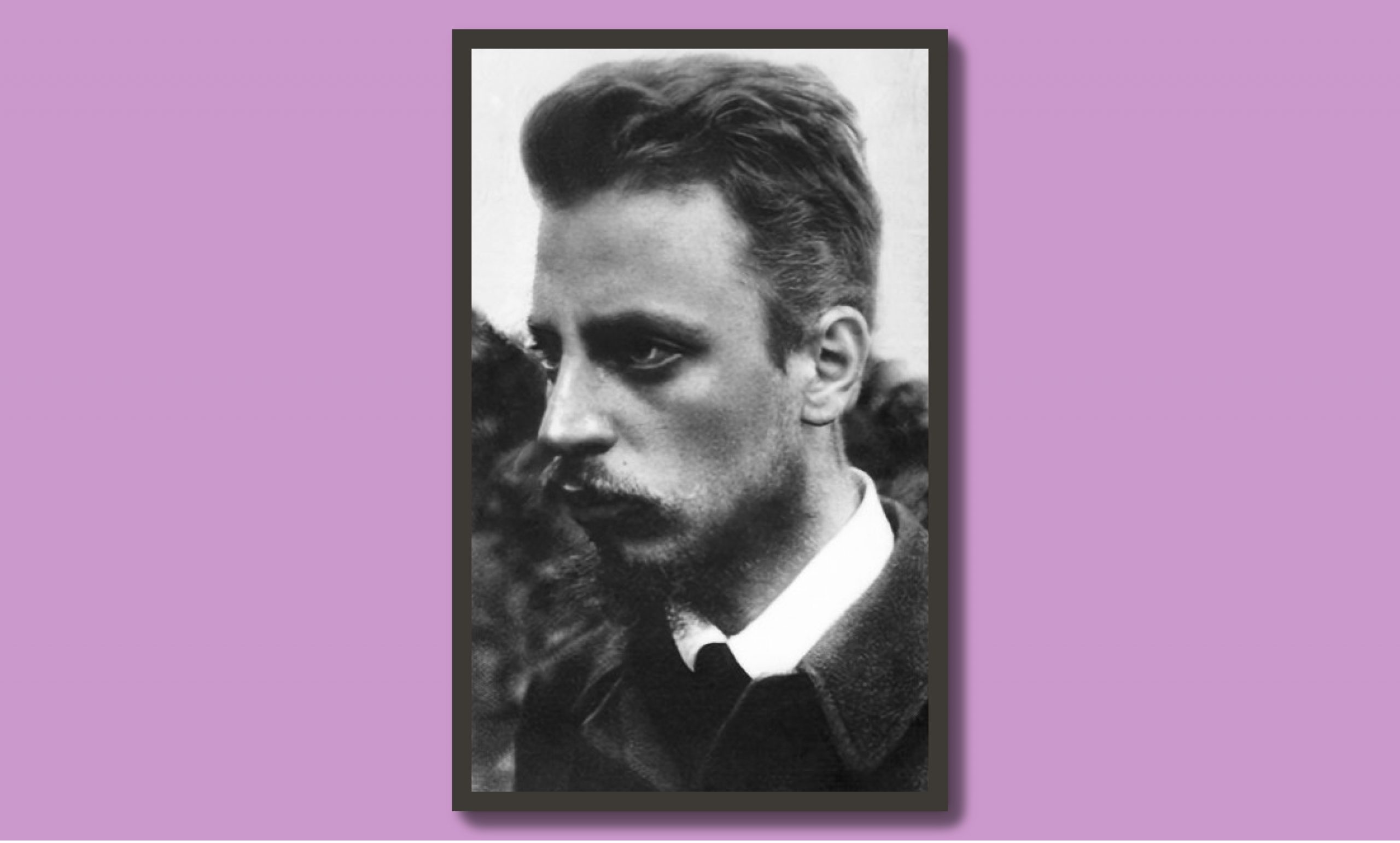
Rainer Maria Rilke
 Czechia
Also known as: René Karl Wilhelm Johann Josef Maria Rilke, R.M. Rilke
Birthday
December 4, 1875
Birth Sign
Sagittarius
Birthplace
Prague, Austria-Hungary (now Czech Republic)
Age
Died at 51
About
Rainer Maria Rilke was an Austrian poet widely regarded as one of the most lyrically intense German-language writers of all time. Born René Karl Wilhelm Johann Josef Maria Rilke in Prague, he spent his life traveling across Europe before finding a quiet home in Switzerland. His work is characterized by a unique blend of mysticism and raw human experience, exploring themes of existence, death, and the nature of art. Although he wrote primarily in German, he also produced significant pieces in French.
His literary output spans decades of restless movement and deep reflection. Letters to a Young Poet stands out as a collection of ten letters he sent to an aspiring writer, offering advice on creativity and loneliness that resonates with readers today. The Swiss mountains inspired two major poetry sequences: Duino Elegies and Sonnets to Orpheus. These works explore the relationship between art, death, and existence. His only novel, The Notebooks of Malte Laurids Brigge, mixes fiction with autobiography to examine fear and urban alienation.
Decades after his death, his words found new life among self-help authors and pop culture creators who frequently quote him in films and television. This enduring presence proves how effectively he captured the complexities of inner life without relying on grand declarations. In 2026, his influence remains vibrant, with a solo show titled "One Million Words – Rilke" premiering at the Sierra Madre Playhouse, drawing large crowds eager to experience his work live. Academic institutions like the Art Institute of Chicago continue to host lectures examining his bonds with artists like Paula Modersohn-Becker, while contemporary visual artists such as Anselm Kiefer reference his themes in major exhibitions. A new collection titled Fifty Poems: An Offering on the Altar of Rainer Maria Rilke was reviewed in late 2025, signaling a continued resurgence of interest. His relevance extends to spiritual seekers, with publications like America Magazine analyzing his letters through a Lenten lens in March 2026.
Early Life & Background
René Karl Wilhelm Johann Josef Maria Rilke entered the world on December 4, 1875, in Prague, then part of the Austro-Hungarian Empire. His early years were defined by a stark emotional distance within his own family. His father, Josef Rilke, was a stern army officer who demanded strict discipline, while his mother, Sophie Entz, struggled with depression and often neglected him or sent him away. This isolation fostered a deep introspection that would later fuel his poetry. At age thirteen, he legally changed his first name from René to Rainer, reportedly to soften his identity and align it with a more spiritual persona.
Education proved to be a source of trauma rather than growth. His father enrolled him in a military school in St. Pölten, a rigid environment that fueled Rilke's lifelong aversion to authority and traditional structures. He eventually escaped this path to enroll at Charles University in Prague in 1893 to study literature and art history. He frequently skipped classes to write instead of attending lectures. Moving to Munich, he briefly studied art before abandoning formal education entirely to pursue writing full-time. During these formative years, he began publishing poetry and prose in local journals while working as a secretary for Count Moritz von Arnim. His early interests lay deeply in philosophy and the visual arts, setting the stage for his future mastery of language.
Before his breakthrough, Rilke lived a life of restlessness, moving between cities like Berlin and Paris. He worked various jobs to support himself, including serving as a secretary for Auguste Rodin. It was during this period of financial insecurity and constant travel that he developed his unique style. He did not seek commercial success but rather a deep artistic immersion. His early works were published in local journals, but they lacked the universal resonance that would come later. The discovery moment arrived not through a single event but through a gradual accumulation of masterpieces that would redefine German literature. His habit of walking for hours every day to clear his mind became a ritual that helped him compose some of his most famous verses during this pre-fame era.
Career Growth
Rainer Maria Rilke's career was defined by a profound artistic evolution rather than commercial fame during his lifetime. His breakthrough came with the publication of The Book of Hours in 1905, a collection of prayers reflecting his spiritual crisis. This was followed by New Poems in 1907, which introduced his signature "Dinggedicht" (thing-poem) style, a technique focusing on the intense observation of objects. These works established him as a major voice in European literature.
In 1912, while staying at Duino Castle near Trieste, he began the Duino Elegies, a sequence of ten poems exploring existence, death, and the angelic. This project consumed him for nearly a decade until its completion in 1922. Around the same time, he wrote Sonnets to Orpheus in 1923, a sequence of 55 sonnets dedicated to the mythological musician Orpheus after the death of his friend Wera Ouckama Knoop's daughter. Despite critical acclaim, Rilke lived in financial insecurity for much of his life, relying on lectures, translations, and the patronage of wealthy patrons like Princess Marie von Thurn und Taxis. His later years were marked by a steady decline in health, yet his productivity remained high. He continued to write until just days before his death. Today, his works are considered cornerstones of German-language poetry and continue to inspire artists, thinkers, and readers globally. His election to the Prussian Academy of Arts in 1921 stands as a significant honor for a German-language writer, alongside honorary doctorates from the University of Zurich and the University of Vienna.
Career Timeline
Public Image & Style
Rilke cultivated a public image of the solitary wanderer, a man of deep sensitivity and intense observation. He was known for his slender, almost frail appearance, often described as having a pale complexion and dark hair. His aesthetic was one of quiet intensity, reflected in his preference for monasteries and remote castles where he could write in solitude. Media perception of him evolved from a troubled young writer to a sage of the spiritual condition. His social media voice, though nonexistent in his time, is mirrored in his letters, which are intimate, direct, and profoundly personal. What made his presence distinctive was his ability to articulate the unspoken fears and hopes of the human heart, making him a timeless figure in literature. He was consistently ranked as one of the greatest poets in the German language by academic standards, and TIME magazine included him in its list of the 100 most influential people of the century.
Fame & Fandom
iFANN has not yet collected fame data for this person. As of September 2026, there is no published ranking for Rainer Maria Rilke in the iFANN Global Fame Rankings. While he is a towering figure in world literature, the engine has not yet gathered sufficient contemporary public signals to assign a numerical rank.
The fanbase surrounding Rilke does not have a formal name. Instead, his audience consists of poets, writers, philosophers, and general readers who find solace in his work. Fans of Rilke are often characterized by their deep engagement with his texts, frequently quoting him in personal essays, academic papers, and online discussions. Notable fan projects include the annual reading of his Letters to a Young Poet in university literature circles and the creation of art installations inspired by his Duino Elegies. The artist-fan relationship is one of quiet reverence, with readers often treating his words as spiritual guidance. In 2026, a solo show titled "One Million Words – Rilke" premiered at the Sierra Madre Playhouse, drawing large crowds of devoted followers eager to experience his work in a live performance setting. The enduring popularity of his work ensures that his legacy continues to grow, with new editions and scholarly analyses appearing regularly.
Interesting Facts and Legends
Rilke's name change from René to Rainer was a deliberate act of self-reinvention, shedding his French-sounding given name for a more Germanic one. During his time as Auguste Rodin's secretary, he famously said, "I am not a poet, I am a man who writes." This statement reflects his belief in the labor of art over the romantic notion of the muse. The concept of the "Angel" in the Duino Elegies is often misunderstood as religious; he envisioned the Angel as a symbol of absolute perfection and the terrifying beauty of existence, distinct from Christian angels. He traveled extensively across Europe, living in Munich, Paris, Berlin, and various parts of Italy and Russia, often seeking solitude in monasteries or remote castles. A story fans still retell involves his habit of walking for hours every day to clear his mind, a ritual that helped him compose some of his most famous verses. He was buried in the cemetery in Raron, Switzerland, following his death.
Notable Quotes
“What is so good about being alive? To love, to suffer, to die.”
“Perhaps all the dragons in our lives are princesses who are only waiting to see us act, just once, with beauty and courage.”
“For beauty is nothing but the beginning of terror, which we are still just able to endure.”
“I am not a poet, I am a man who writes.”
Family & Personal Life
Rilke's family dynamics were complex and often strained. His father, Josef Rilke, was a stern army officer who expected strict discipline, while his mother, Sophie Entz, struggled with depression and often neglected him. He had no siblings. His only child was Patrick Rilke, born in 1902 to his wife Clara Westhoff. The couple married briefly in 1901 but separated shortly after Patrick's birth due to Clara's inability to cope with domestic life and Rilke's need for constant travel. They divorced amicably, and Rilke maintained a distant but supportive relationship with his son, who later became a painter. Despite his turbulent personal life, Rilke valued intellectual connections above all else, often finding family in the form of close friends and mentors like Lou Andreas-Salomé. His physical appearance was slender and frail, often described as having a pale complexion and dark hair, though specific height records are unavailable. Contemporary accounts suggest he was of average to slightly above-average height, appearing gaunt in his later years due to illness.
Notable Connections
Relationships & Dating History
Rainer Maria Rilke never married in the conventional sense and had no children, except for one son. His romantic life was complex and often fraught with unrequited longing or platonic intensity. The most significant relationship in his life was with Lou Andreas-Salomé. They met in 1896 when she was a celebrated intellectual and writer. Their relationship was intensely intellectual and emotionally charged, though they never consummated a sexual relationship in the traditional sense. They remained close friends and correspondents until her death in 1937, although Rilke died in 1926. She was a mentor figure who encouraged his independence.
In 1901, Rilke met Clara Westhoff, a German sculptor. They became engaged, and their son, Patrick, was born in 1902. The couple married briefly but separated shortly after Patrick's birth due to Clara's inability to cope with domestic life and Rilke's need for constant travel. They divorced amicably, and Rilke maintained a distant but supportive relationship with his son, who later became a painter. Another important connection was with Paula Modersohn-Becker, a German expressionist painter. Rilke and Becker shared a deep intellectual connection and mutual admiration. Their relationship was primarily epistolary and artistic; they were not lovers in the physical sense, but their bond was profound. Becker died in 1907 shortly after giving birth, a tragedy that deeply affected Rilke. Some sources mention a brief relationship with a Turkish woman named Nimet Eloui in the early 1920s, though details are sparse and less documented than his other relationships. This appears to be a short-lived fling or friendship rather than a long-term partnership.
- DatedLou Andreas-Salomé1896 - 1926Intellectual partner and mentor; never married but remained close friends until her death.
- MarriedClara Westhoff1901 - 1902Married briefly; had one son, Patrick. Divorced amicably.
- DatedPaula Modersohn-Becker1902 - 1907Deep intellectual and artistic bond; not physically lovers.
- DatedNimet Eloui1920 - 1925Brief relationship in the early 1920s; details are sparse.
Death & Aftermath
Died
December 29, 1926 (aged 51)
Death Place
Montreux, Switzerland
Cause of Death
Acute myeloid leukemia
Rainer Maria Rilke passed away on December 29, 1926, just five days after his 51st birthday. He died at the Sanatorium in Montreux, Switzerland, where he had been bedridden for several months suffering from acute myeloid leukemia. His final days were marked by quiet reflection and a lack of pain, allowing him to depart without the struggle that often accompanies the disease. Following his death, the world did not lose a voice but rather gained a legend. The literary community was stunned by the loss of such a singular talent, yet the immediate reaction quickly shifted to a fervent preservation of his work.
The aftermath of his passing transformed Rilke from a respected poet into a global cultural icon. His letters to the young widow Clara Westhoff, compiled as Letters to a Young Poet, were published posthumously in 1929 and became an instant international bestseller. This collection transcended its original context to become a staple of spiritual and self-help literature, offering solace to generations of readers grappling with loneliness and creativity. The Rilke Foundation was established shortly after his death to manage his manuscripts and ensure the integrity of his legacy.
Financially, the estate has thrived long after his passing. While specific real-time figures remain private, the estate generates millions annually through book sales, licensing deals, and adaptations. His works have been translated into dozens of languages and adapted into theater productions, films, and musical compositions. In recent years, the estate has seen a resurgence in popularity, with new editions and scholarly analyses appearing regularly. The Rainer Maria Rilke Prize, established in his honor in 1926, continues to be awarded annually to writers who make significant contributions to German literature, cementing his status as a guardian of the written word.
Net Worth (Estate Value)
$15 Million
iFANN Editorial Team estimate
The estate of Rainer Maria Rilke represents a significant financial asset in the literary world. Research by the iFANN Editorial Team puts the current value of his estate at approximately $15 million. This valuation reflects the ongoing revenue generated from book sales, licensing deals, and adaptations of his work. The estate is managed by the Rilke Foundation, which oversees the preservation of his manuscripts and promotes his work globally.
Posthumous earnings have been substantial, driven by the enduring popularity of his poetry and prose. His works have been translated into dozens of languages and adapted into theater productions, films, and musical compositions. The estate continues to generate revenue through royalties, estimated to be in the millions annually. In recent years, the estate has seen a resurgence in popularity, with new editions and scholarly analyses appearing regularly. The Rainer Maria Rilke Prize, established in his honor in 1926, continues to be awarded annually to writers who make significant contributions to German literature, further enhancing the estate's cultural and financial value. Specific real-time figures remain private, but the consistent flow of income confirms the estate's robust financial health.
Awards & Accolades
View 8 records, honours and achievementsKnown For
Duino Elegies
1922 · Author
Sonnets to Orpheus
1923 · Author
Letters to a Young Poet
1929 · Author
The Notebooks of Malte Laurids Brigge
1910 · Author
Keywords
Sources
Quick Facts
- Profession
- writer, poet, playwright
- Born
- December 4, 1875
- Birthplace
- Prague
- Died
- December 29, 1926
- Death Place
- Montreux
- Gender
- Male
- Spouse
- Clara Westhoff, Nimet Eloui
- Birth Sign
- Sagittarius
Personal Details
- Full Name
- René Karl Wilhelm Johann Josef Maria Rilke
- Spouse
- Clara Westhoff
- Children
- Patrick Rilke
- Education
- Charles University in Prague; Military School in St. Pölten
Frequently Asked Questions
What is Rainer Maria Rilke's most famous work?
Did Rainer Maria Rilke have any children?
How did Rainer Maria Rilke die?
Who was Lou Andreas-Salomé?
Is Rainer Maria Rilke still relevant today?
Similar People
Join the community
fans discussing