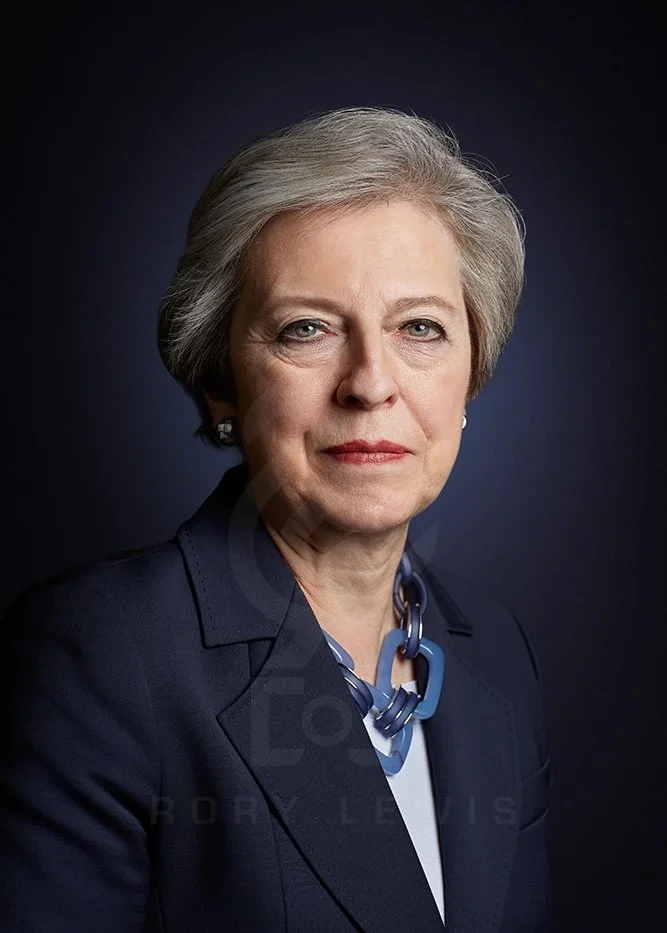
Theresa May
 United Kingdom
Birthday
October 1, 1956
Birth Sign
Libra
Birthplace
Eastbourne, East Sussex, England
Age
70 years old
Height
5 ft 8 in (173 cm)
About
Theresa May is a British politician who served as prime minister of the United Kingdom and leader of the Conservative Party from 2016 to 2019. She was the country's second female prime minister, after Margaret Thatcher, and the first woman to have held two of the great offices of state.
Before reaching Downing Street she was one of the longest-serving home secretaries in modern history, a role in which she built a reputation for toughness on immigration and security. She became prime minister in the turbulent aftermath of the 2016 Brexit referendum, inheriting the task of negotiating Britain's withdrawal from the European Union.
That task came to define and ultimately end her premiership. Her negotiated deal was rejected by Parliament three times, leaving her unable to break the Brexit deadlock, and she resigned in 2019. Reserved and dutiful, with a self-described one-nation conservatism, May was often cast as a dogged but cautious leader caught in an impossible political moment. She continued as a member of Parliament until 2024 and now sits in the House of Lords, remaining a respected elder voice in British politics.
Early Life & Background
Theresa Mary Brasier was born on October 1, 1956, in Eastbourne, East Sussex, the only child of Zaidee Mary Barnes and Reverend Hubert Brasier, an Anglican clergyman. She grew up in rural Oxfordshire, where her father served as vicar of St Mary's Church in Wheatley. Her mother was a Conservative Party supporter who taught her about politics from a young age.
She attended Heythrop Primary School, a small state school, then St Juliana's Convent School for Girls, a private Catholic school. At age 13, she won a place at Holton Park Girls' Grammar School, which later became Wheatley Park Comprehensive School. She read Geography at St Hugh's College, Oxford, graduating in 1977. At Oxford, she joined the Conservative Association and the Oxford Union, where she met her future husband, Philip May, introduced by Benazir Bhutto at a student dance.
After university, May worked at the Bank of England from 1977 to 1983, then moved to the Association for Payment Clearing Services (APACS), where she stayed until 1997, eventually becoming head of the European Affairs Unit. She also served as a councillor on Merton London Borough Council, gaining her first experience in elected office.
Career Growth
After two unsuccessful attempts to enter Parliament, May was elected Conservative MP for Maidenhead in the 1997 general election. She rose quickly through the ranks, serving in successive Shadow Cabinets from 1999. In 2002, she became the first woman to chair the Conservative Party, delivering her blunt "Nasty Party" speech that acknowledged the party's image problem.
When David Cameron became prime minister in 2010, he appointed May Home Secretary, a role she held for six years, the longest continuous tenure since the 1950s. She took a hard line on immigration, introduced the "hostile environment" policy, and pushed through the Investigatory Powers Act 2016, one of the most sweeping surveillance laws in the Western world.
Following the 2016 Brexit referendum, Cameron resigned and May won the Conservative leadership contest, becoming prime minister on July 13, 2016. She triggered Article 50 in March 2017, formally starting the Brexit process. A snap general election in June 2017 backfired, costing the Conservatives their majority and forcing a confidence-and-supply deal with the Democratic Unionist Party. Her Brexit deal was rejected by Parliament three times. Unable to break the impasse, she resigned as party leader in June 2019 and left office on July 24, 2019, succeeded by Boris Johnson. She remained an MP until 2024, when she was elevated to the House of Lords as Baroness May of Maidenhead.
Career Timeline
Public Image & Style
May's public image is that of a reserved, dutiful, and dogged politician. She is known for her smart, tailored business suits in bold colours and her trademark leopard-print kitten heels, though she has criticised media focus on her appearance over her political work.
Media portrayals often describe her as cautious and methodical, but ultimately unable to overcome the deep political divisions of Brexit. Comparisons to Margaret Thatcher were inevitable as the second female PM, though May's style was less confrontational. She consistently described herself as a "One-Nation Conservative," emphasising social cohesion and opportunity.
Her social media voice is professional and policy-focused, highlighting her charitable work and political commentary. There is no formal fandom name, but she retains a loyal following among traditionalist Conservatives who admire her sense of duty and public service.
Fame & Fandom (iFAMOUS Rankings)
Theresa May stands as a figure of intense political scrutiny, her legacy defined by the turbulent Brexit negotiations that consumed her premiership. Her public presence remains anchored in the serious realm of governance rather than celebrity culture, lacking a formal fanbase or organized rituals typical of pop icons. Yet, her influence on global politics secures her a distinct position in modern history rankings. According to the iFANN Global Fame Rankings, she is the 42nd most famous person in the United Kingdom, a standing that has held steady through recent cycles. This placement reflects her enduring role as a central character in British constitutional drama, from the Salisbury poisonings crisis to the controversial dementia tax proposal.
While she does not command the adoration reserved for entertainers, her image persists through specific political symbols and viral moments retold in analysis circles. The story of Boris Johnson dismissing her as a "giant yucca tree" remains a widely circulated anecdote illustrating the internal fractures of her party. Her fashion choices, particularly the leopard-print kitten heels, have transcended mere style to become a shorthand for her leadership persona, analyzed endlessly in diplomatic contexts. Social media channels managed for official policy updates boast significant followings, yet these function strictly as communication tools rather than hubs for fan interaction. There are no records of crowds shutting down streets in her honor or fan-funded projects dedicated to her memory. Her audience consists primarily of political observers and historians tracking the fallout of her tenure, cementing her status as a pivotal, albeit polarizing, architect of contemporary Britain.
Interesting Facts and Legends
May is famous for her leopard-print kitten heels, which she wore at her 2002 "Nasty Party" speech and at her final Cabinet meeting as Home Secretary. On Desert Island Discs, she chose a subscription to Vogue as her luxury item. She was introduced to her husband by Benazir Bhutto, who later became prime minister of Pakistan. Diagnosed with type 1 diabetes in November 2012, she manages it with daily insulin injections. She lost both parents by age 25, her father in a car accident in 1981, her mother to multiple sclerosis in 1982. Her mantra "Strong and stable leadership" became a defining slogan of the 2017 general election campaign. She supports fox hunting, drawing criticism from Queen guitarist Brian May, who called her "awful" and "pitiless." Political lore often cites the moment the pound sterling tumbled to a 20-month low following an aborted Brexit vote, a scene that defined the volatility of her era. Another enduring story involves the "dementia tax," a 2016 proposal so infamous it continues to serve as a cautionary tale in social care debates decades later.
Notable Quotes
“You know what some people call us? The Nasty Party.”
“I believe it was right to persevere, even when the odds against success seemed high.”
“Strong and stable leadership.”
“If you believe you are a citizen of the world, you are a citizen of nowhere.”
“I do so with no ill will, but with enormous and enduring gratitude to have had the opportunity to serve the country I love.”
Family & Personal Life
May married Philip May on September 6, 1980. Her father, Reverend Hubert Brasier, presided over the ceremony. Philip is an investment banker who was knighted in the 2020 New Year Honours for services to business and philanthropy. The couple have no children, a decision May has described as a personal choice.
Her father died in a car accident in 1981, just over a year after her wedding. Her mother, Zaidee, died of multiple sclerosis in early 1982. May later said she was sorry they never saw her elected as an MP.
She and Philip live in Sonning, Berkshire, and attend St Andrew's Church regularly. May has said her Anglican faith influences how she approaches life and work. She has a cat named Larry, though Larry is actually the Downing Street cat, May and her husband do not own a pet of their own.
Notable Connections
May's closest political ally has been her husband, Sir Philip May, who supported her throughout her career. Benazir Bhutto introduced the couple at Oxford. David Cameron appointed her Home Secretary and his resignation after the Brexit referendum opened the door to her premiership. Boris Johnson succeeded her as prime minister. Other key figures include Sir John Major, Andrea Leadsom, and members of her cabinet such as Michelle Donelan.
Relationships & Dating History
Theresa May has had only one publicly confirmed romantic relationship in her life, her marriage to Philip May. They met at an Oxford Conservative Association dance in 1976, introduced by Benazir Bhutto. Philip, an investment banker, was knighted in 2020. They married on September 6, 1980, with May's father presiding. The couple have no children. As of 2026, they remain married and live in Sonning, Berkshire.
- MarriedPhilip May1980 - presentCurrentMet at an Oxford Conservative Association dance in 1976, introduced by Benazir Bhutto. Philip is an investment banker. They have no children.
Salary, Net Worth In 2026
$12 Million
iFANN Editorial Team estimate
Per iFANN's editorial analysis, Theresa May's net worth is estimated at around $12 million as of 2026. The bulk comes from her combined household income with husband Sir Philip May, a former investment banker at Capital Group. May earned a prime ministerial salary of £150,402 per year from 2016 to 2019, plus standard MP pay of around £79,000 to £91,000 annually during her 27 years in Parliament. She now receives a House of Lords daily allowance and a former PM's public duty cost allowance. Post-premiership, May has earned from book deals (value undisclosed but reported to be substantial) and speaking engagements estimated at £10,000 to £50,000 per event. She and Philip own a home in Sonning, Berkshire, and previously owned a flat in London. She has no significant business ventures, focusing instead on charitable work and chairing the Global Commission on Modern Slavery and Human Trafficking.
Awards Won (4)
May has not won major entertainment awards. Her honours include the Princess of Asturias Award for Concord (2024) for her work on modern slavery and honorary doctorates from the University of Westminster (2019), University of Reading (2019), and University of Hull (2020).
2024 · Concord
Global Commission on Modern Slavery and Human Trafficking
2020 · Honorary Degree
University of Hull
2019 · Honorary Degree
University of Reading
2019 · Honorary Degree
University of Westminster
Known For
Prime Minister of the United Kingdom
2016 · Prime Minister
Home Secretary
2010 · Home Secretary
Member of Parliament for Maidenhead
1997 · MP
Keywords
Sources
Quick Facts
- Profession
- politician
- Born
- +1956-10-01
- Birthplace
- Eastbourne
- Gender
- Female
- Spouse
- Philip May
- Birth Sign
- Libra
Personal Details
- Full Name
- Theresa Mary Brasier
- Height
- 5 ft 8 in (173 cm)
- Spouse
- Philip May
- Education
- St Hugh's College, University of Oxford (BA Geography, 1977)
Frequently Asked Questions
Is Theresa May married?
Does Theresa May have children?
What is Theresa May's net worth in 2026?
How long was Theresa May prime minister?
What is Theresa May doing now?
Similar People
Join the community
fans discussing