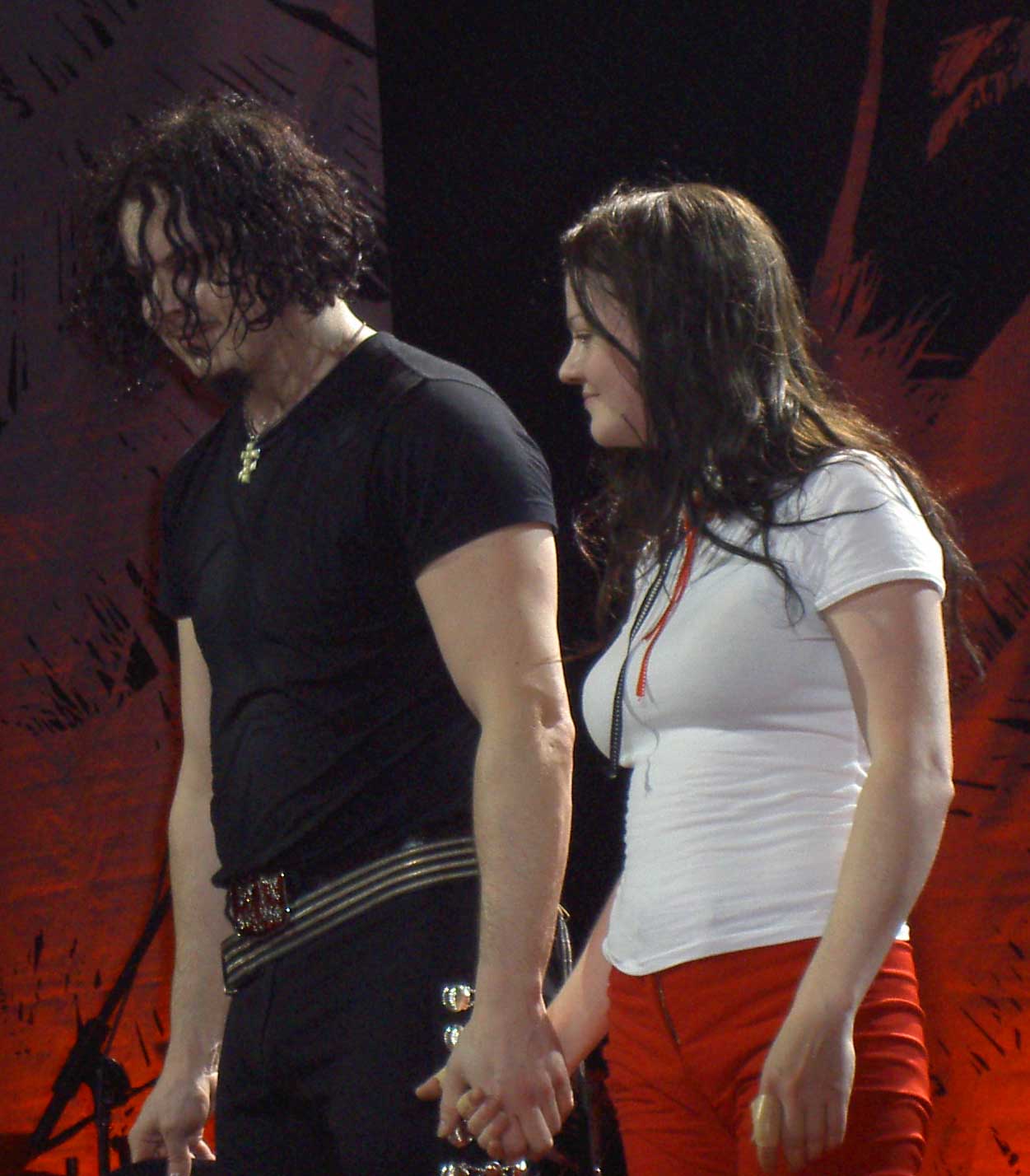
The White Stripes
 United States
Red, white, and black garage rock minimalists.
2
Members
About
The White Stripes were an American rock duo based in Detroit, Michigan, active from 1997 until their split in 2011. The group consisted of Jack White, who handled lead vocals, guitar, keyboards, and songwriting, and his then-wife Meg White, who played drums and provided occasional backing vocals. While they famously claimed to be brother and sister to maintain a mysterious public persona, they were actually married when they formed the band in 1996 and divorced in 2000. Despite this revelation, they kept the sibling story alive for promotional purposes throughout much of their career.
The duo is widely credited as the leading force behind the garage rock revival of the early 2000s. Their sound was defined by a stark, minimalist approach that rejected the polished production trends of the era. They adhered to a strict visual identity using only red, white, and black colors for all album art, merchandise, and stage setups. This aesthetic extended to their music, which often relied on simple chord structures and raw, lo-fi recording techniques. Their breakthrough came with the 2001 album White Blood Cells, followed by the critically acclaimed Elephant in 2003, which featured their signature hit "Seven Nation Army".
Formation Story
Jack White, then known as John Gillis, worked at a local record store in Detroit called Bumpin' Uglies. It was there he met Meg White, who was working as a cashier. They bonded over a shared love of obscure records and decided to start a band together in March 1997. Unlike many groups that undergo rigorous auditions or formal training, The White Stripes formed organically out of a desire to strip rock music down to its fundamental components. Jack wanted to prove that a band didn't need a complex lineup or expensive equipment to make powerful music.
They chose the name The White Stripes because it sounded like a children's toy, fitting their minimalist philosophy. Their first performance took place on Halloween night, October 31, 1997, at the Magic Bag club in Ferndale, Michigan. The setlist was short and raw, featuring covers of songs by bands like The Stooges and The Sonics. Before signing with major labels, they released several independent singles and EPs through small indie labels like Sympathy for the Record Industry and Sub Pop. These early releases established their DIY ethic and built a cult following in the Detroit area.
Their debut self-titled album arrived in 1999, showcasing a heavy blues influence and lo-fi production quality. They continued to release albums independently until Warner Bros. Records picked them up in 2001. The shift to a major label allowed them to reach a wider audience without compromising their artistic vision. Their rapid rise from local clubs to international stages was fueled by word-of-mouth and their unique, enigmatic image.
Members
Musical Style
The band's sound evolved significantly over their ten-year career, moving from raw blues to experimental rock and back again. Their earliest work, including the 1999 self-titled album and 2000's De Stijl, was heavily rooted in traditional blues and lo-fi garage rock. These recordings featured sparse arrangements, often just Jack's guitar and Meg's drums, creating a gritty, unpolished texture. The production was intentionally rough, capturing the energy of a live performance rather than a studio perfection.
The 2001 album White Blood Cells marked a turning point where they refined their sound into a sharper, more aggressive style. Tracks like "Fell in Love with a Girl" showcased their ability to blend punk energy with blues structures. By the time they released Elephant in 2003, they had mastered a formula that balanced simplicity with complexity. The album featured heavier riffs and more dynamic shifts, culminating in the iconic "Seven Nation Army" riff. Later albums like Get Behind Me Satan experimented with orchestral arrangements and diverse instrumentation, showing a willingness to push boundaries. They returned to their roots with 2007's Icky Thump, delivering a fuzz-laden blues-rock sound that felt like a homecoming.
Discography
| Title | Year |
|---|---|
| The White Stripes | 1999 |
| De Stijl | 2000 |
| White Blood Cells | 2001 |
| Elephant | 2003 |
| Get Behind Me Satan | 2005 |
| Icky Thump | 2007 |
Tours
The White Stripes Tour
2001 · 45 shows
Elephant Tour
2003 · 80 shows
Get Behind Me Satan Tour
2005 · 100 shows
Icky Thump Tour
2007 · 60 shows
Under Great White Northern Lights Tour
2009 · 15 shows
Cultural Impact
The White Stripes played a pivotal role in reviving interest in garage rock and blues during the early 2000s. Their success paved the way for countless indie and alternative bands to embrace a rawer, less produced sound. The duo's influence extended beyond music into fashion and design, where their strict red, white, and black color scheme became a cultural icon. Many fans adopted this palette for their own clothing and decor, inspired by the band's visual consistency.
One of their most significant contributions was the global ubiquity of "Seven Nation Army." The song's opening riff has been chanted by millions of fans at sporting events around the world, making it one of the most recognizable musical phrases in history. The track's adoption by athletes and crowds turned it into a universal anthem of defiance and unity. Additionally, the band's mystery surrounding their relationship generated intense media fascination, keeping them in the public eye even as they avoided traditional celebrity culture.
Fandom Culture
The White Stripes did not have an official fandom name or lightstick, as they operated outside the modern K-pop model of organized fan engagement. Fans are often referred to informally as "Stripesheads" or simply "White Stripes fans." There are no official fan colors beyond the band's own red, white, and black motif, which fans frequently wear to concerts as a sign of solidarity. A notable tradition involves the collective singing of "Seven Nation Army" at sports stadiums, a phenomenon that transcends typical concert behavior. The band's emphasis on privacy meant that fan interactions were limited, adding to the allure of their performances.
Awards Won (33)
The White Stripes won six Grammy Awards and one Brit Award during their career. Their accolades include Best Alternative Music Performance for Elephant and multiple wins for "Seven Nation Army" and "My Doorbell." They also received recognition from NME, MTV Europe, and Kerrang! for their contributions to rock music.
Best Rock Performance by a Duo or Group with Vocal
for: Icky Thump
Best Rock Performance by a Duo or Group with Vocal
for: My Doorbell
Best Rock Song
for: My Doorbell
Best Rock Song
for: Seven Nation Army
Best Alternative Music Performance
for: Elephant
Best Hard Rock Performance
for: Seven Nation Army
Best Boxed or Special Limited Edition Package
for: Under Great White Northern Lights
Best Alternative Music Album
for: Icky Thump
Best Rock Performance by a Duo or Group with Vocal
for: "Icky Thump"
Best Alternative Music Album
for: Get Behind Me Satan
Milestones
Band forms in Detroit
Release of White Blood Cells and breakthrough hit "Fell in Love with a Girl"
Release of Elephant and global hit "Seven Nation Army"
First Grammy wins
Headlining Coachella and release of Icky Thump
Official dissolution of the band
Induction into the Rock and Roll Hall of Fame
Trivia
Jack White originally wanted "Seven Nation Army" to be the theme song for a James Bond film, but the idea was ultimately rejected., The band frequently incorporated the number three into their work, such as having three members in their lineup if counting the conceptual "third member" of the audience., A rare 1998 single of "Lafayette Blues" with handmade art sold for $25,000 in 2026, setting a record for the most expensive White Stripes vinyl sale of the year., Meg White's drumming style was deliberately primitive and sparse, becoming a defining characteristic of the band's sound despite her lack of formal training., Jack White performed the 1999 track "Cannon" with his daughter, Scarlett White, in 2026, bridging generations of the band's legacy.
Keywords
Sources
Quick Facts
- Type
- Rock Band
- Formed
- 1997
- Origin
- Detroit, Michigan
- Label
- Warner Bros. Records, Third Man Records, Sub Pop, Sympathy for the Record Industry
- Genres
- Alternative Rock, Blues Rock, Garage Rock, Punk Blues, Post-Punk Revival
- Members
- 2
- Status
- Disbanded
Group Info
- Formed
- March 1997
- Debut
- October 31, 1997
- Debut Song
- Jolene
- Origin
- Detroit, Michigan, USA
- Company
- Third Man Records
- Label
- Sympathy for the Record Industry, Sub Pop, XL Recordings, Warner Bros. Records
- Fan Color
- Red, White, Black
- Status
- Disbanded (April 14, 2011)
Also Known As
Join the community
fans discussing