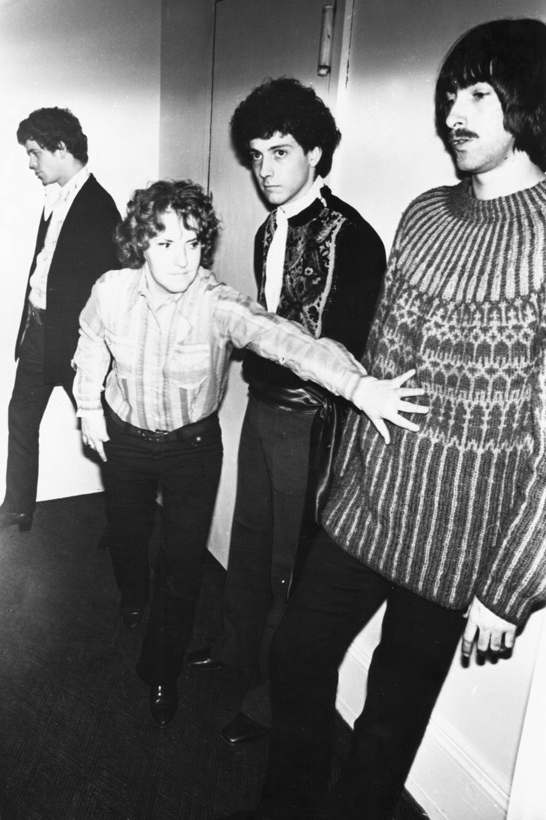
The Velvet Underground
5
Members
About
The Velvet Underground is an American avant-garde rock group noted for integrating rock and roll with experimental music. The band is widely recognized as one of the most influential acts of its era, particularly in underground, experimental, and alternative music scenes, paving the way for genres such as punk rock and new wave. Though their initial run saw little commercial success, their debut album, The Velvet Underground & Nico, is now considered one of the greatest albums in music history. The group released four studio albums during their active years, and their distinctive sound and provocative subject matter continue to resonate with fans and musicians today. The Velvet Underground was ranked number 19 on Rolling Stone's 100 Greatest Artists of All Time.
Formation Story
The American rock band that would become The Velvet Underground first coalesced in New York City in 1964, when Lou Reed and John Cale crossed paths while working as staff songwriters at Pickwick Records. Reed was busy writing songs for the label's budget albums, while Cale, a classically trained violinist from Wales, had moved to the city to immerse himself in the burgeoning avant-garde scene. Their collaboration quickly led to the formation of a short-lived group called the Primitives, which performed Reed's composition, "The Ostrich." The initial lineup included Sterling Morrison, an old college friend of Reed's, and Angus MacLise on drums. However, MacLise, arguing that accepting money for art was a sellout, quit before their first paying gig. His departure paved the way for Maureen Tucker, Morrison's friend's sister, to step in on percussion, employing a simplified kit with no cymbals that would become a signature element of the band's sound. The ensemble cycled through various monikers, such as the Warlocks and the Falling Spikes, before officially adopting the name The Velvet Underground on January 1, 1965. This evocative name was inspired by Michael Leigh's 1963 paperback about unconventional sexual practices. The classic lineup was now solidified: singer and guitarist Lou Reed, Welsh multi-instrumentalist John Cale, guitarist Sterling Morrison, and percussionist Maureen Tucker.
Later in 1965, the newly christened Velvet Underground recorded a demo at Scepter Studios, which included early versions of tracks like "Venus in Furs" and "Heroin." This demo, alongside their live performances, soon captured the attention of influential pop artist Andy Warhol, who discovered them performing at the Café Bizarre in Greenwich Village. Warhol quickly offered to become their official manager in 1966, proposing to integrate the band into his groundbreaking multimedia happenings. They served as the house band at Warhol's iconic studio, The Factory, and performed extensively with his traveling multimedia show, Exploding Plastic Inevitable, from 1966 to 1967. It was Warhol who also introduced the German singer and model Nico to the group, suggesting she perform with them. Despite initial reluctance from Reed, Nico was added as a vocalist on several tracks, and the band entered the studio later in 1966 to record what would become their seminal debut album. Released on March 12, 1967, *The Velvet Underground & Nico*, featuring the debut song "All Tomorrow's Parties," was met with critical indifference and poor sales upon its release, marking the beginning of their influential, yet commercially challenging, journey.
Members
Former Members
Angus MacLise (Angus MacLise)
Drummer · 1964–1965
Doug Yule (Douglas Alan Yule)
Bassist, Vocalist, Multi-instrumentalist · 1968–1973
Musical Style
The Velvet Underground's music defied easy categorization, drawing from rock and roll, doo-wop, free jazz, classical minimalism, and the noise experiments of the avant-garde. The core tension came from the contrast between Reed's deadpan, streetwise lyrics and Cale's classically trained ear for dissonance and drone. Cale's viola, often played with a bow and fed through distortion, created a droning, abrasive texture on songs like Venus in Furs and Sister Ray. Tucker's drumming was stripped down, using a bass drum, snare, and tom-tom, often played with mallets and without cymbals, giving the rhythm a primitive, hypnotic quality.
Lyrical content was groundbreaking for its time, tackling drug addiction (Heroin, I'm Waiting for the Man), sadomasochism (Venus in Furs), and transgressive sexuality (Sister Ray) with a detached, almost journalistic tone. After Cale's departure, the band's sound softened considerably. The third album, The Velvet Underground (1969), introduced gentler melodies and more introspective lyrics, with songs like Pale Blue Eyes and Jesus. Loaded (1970) leaned further toward radio-friendly rock, yielding the anthems Sweet Jane and Rock & Roll, though commercial success remained elusive. The band's production approach on early records was raw and minimal, often recorded in a few takes, preserving a live, unpolished energy.
Discography
| Title | Year |
|---|---|
| Squeeze | 1973 |
| Loaded | 1970 |
| The Velvet Underground | 1969 |
| White Light/White Heat | 1968 |
| The Velvet Underground & Nico | 1967 |
| VU | 1985 |
| Live MCMXCIII | 1993 |
Tours
Exploding Plastic Inevitable
1966
1993 Reunion Tour
1993
Cultural Impact
The Velvet Underground's influence far outweighed their commercial footprint. Brian Eno's often-quoted remark that the debut album sold only 30,000 copies in its first five years but everyone who bought one started a band captures their outsized impact. They became a foundational touchstone for punk rock, with bands like the Ramones, the Sex Pistols, and Patti Smith citing them as direct influences. The noise and dissonance of White Light/White Heat anticipated no wave and industrial music, while the more melodic turns on the third album and Loaded shaped the sound of alternative rock and indie music for decades.
Their association with Andy Warhol's Factory brought art world credibility and positioned them as the house band for a countercultural movement that blurred the lines between high and low art. The Exploding Plastic Inevitable shows combined film projections, strobe lights, and dance performances, presaging the multimedia concert experiences of later artists. The band's unflinching depiction of taboo subjects opened the door for greater lyrical frankness in rock music. David Bowie, Iggy Pop, R.E.M., Sonic Youth, and countless others have acknowledged the Velvet Underground's debt. In 2004, Rolling Stone placed them at number 19 on its list of the 100 Greatest Artists of All Time, and the Library of Congress added The Velvet Underground & Nico to the National Recording Registry in 2006.
Fandom Culture
The Velvet Underground never cultivated an official fandom name, lightstick, or fan color in the manner of later pop groups. However, their audience was fiercely devoted from the start, drawn to the band's outsider status and uncompromising artistic vision. The Factory scene provided a built-in coterie of Warhol's regulars, including Edie Sedgwick and Gerard Malanga, who performed as whip dancers during Exploding Plastic Inevitable shows. In later decades, the band's cult following grew steadily through word of mouth and critical re-evaluation. Zines and fan clubs emerged in the 1980s, and bootleg recordings circulated widely. The 1993 reunion tour was met with enormous demand, selling out venues across Europe and the United States. Today, fan communities thrive online, sharing rare recordings, discussing the band's influence, and debating the merits of the Nico-era versus the post-Cale material.
Awards Won (3)
The Velvet Underground received two major institutional honors. In 1996, they were inducted into the Rock and Roll Hall of Fame, recognizing their enduring influence on rock music. In 2017, the Recording Academy awarded them the Grammy Lifetime Achievement Award, honoring their contributions to the music industry.
Lifetime Achievement
Milestones
Band formed in New York City.
Adopted the name Velvet Underground.
Andy Warhol becomes manager; Exploding Plastic Inevitable begins.
Debut album The Velvet Underground & Nico released.
White Light/White Heat released; John Cale leaves the band.
Loaded released; Lou Reed leaves the band.
Final album Squeeze released; band dissolves.
Original members reunite for a tour and live album.
Inducted into the Rock and Roll Hall of Fame.
Received Grammy Lifetime Achievement Award.
Trivia
Brian Eno's famous line about the debut album selling only 30,000 copies but everyone who bought one starting a band is often repeated, though the actual early sales figures are uncertain. The banana on the cover of The Velvet Underground & Nico was a pop art sticker designed by Andy Warhol; on early pressings, peeling it back revealed a pink banana underneath. The band's name was taken from a 1963 paperback titled The Velvet Underground: A Study of Atypical Sexual Behavior. Lou Reed and John Cale initially met when they both answered an ad for a staff songwriter position at Pickwick Records. Moe Tucker played standing up, using a simplified drum kit with no cymbals, because she found cymbals too loud and preferred the sound of the bass drum and snare.
Keywords
Sources
Quick Facts
- Type
- Rock Band
- Formed
- +1965-01-01
- Origin
- New York City
- Label
- Verve Records, Polydor, Sire, Mercury Records, MGM Records, Atlantic Records, Cotillion Records, Metro-Goldwyn-Mayer
- Genres
- art rock, noise rock, alternative rock, rock music, experimental rock, folk rock, blues rock, psychedelic rock, avant-garde music, proto-punk, drone music, noise music, art pop, avant-punk
- Members
- 5
- Status
- Disbanded
Group Info
- Formed
- 1965-01-01
- Debut
- 1967-03-12
- Debut Song
- All Tomorrow's Parties
- Origin
- New York City
- Label
- Verve Records, Polydor, Sire, Mercury Records, MGM Records, Atlantic Records, Cotillion Records, Metro-Goldwyn-Mayer
- Status
- Disbanded (1973-01-01)
Join the community
fans discussing