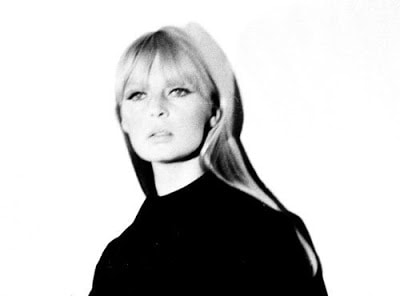
Nico
 Germany
Member of The Velvet Underground
Also known as: Christa Päffgen
Birthday
October 16, 1938
Birth Sign
Libra
Birthplace
Cologne, Germany
Age
Died at 49
Height
5 ft 10 in (178 cm)
About
Nico was a German singer, model, and actor, widely recognized as an enduring cult figure. She is celebrated for her distinctive haunting contralto voice and striking visual presence. Nico fronted the Velvet Underground on three tracks of their seminal 1967 debut, The Velvet Underground & Nico, and released her own folk-pop debut, Chelsea Girl, the same year. She later pivoted to a stark, avant-garde sound, producing a trilogy of uncompromising solo albums, The Marble Index (1968), Desertshore (1970), and The End... (1974), with John Cale, which garnered a devoted underground following. Nico toured extensively throughout the 1980s, performing globally. Her influence has steadily grown since her death, with numerous artists citing her as inspiration and a 2018 biopic introducing her story to a new audience, solidifying her legacy as one of rock's most enigmatic and original voices.
Early Life & Background
Christa Päffgen, who would later become known as Nico, was born on October 16, 1938, in Cologne, Germany. She was the daughter of Wilhelm Päffgen, a member of the prominent Päffgen Kölsch brewing dynasty, and Margarete Schulz. Her early childhood was marked by the turmoil of World War II; when she was just two years old, she and her mother were forced to flee their home, seeking refuge in the Spreewald forest outside Berlin. Her father was conscripted into the Wehrmacht during the war and never returned, his fate remaining a subject of conflicting accounts. It was later in her life that she adopted the distinctive stage name Nico, inspired by Nico Papatakis, a nightclub owner admired by a gay friend. Reflecting on this choice and her identity, she once stated, "I wanted to be a boy myself. I mean, why should I want to be a woman? I liked my homosexual friends the best."
As a teenager, Nico first gained attention as a fashion model, working in both Berlin and Paris. Her striking features, combined with her tall and slender figure, quickly caught the discerning eye of fashion icon Coco Chanel, who hired her for promotional work. However, Nico soon abandoned this opportunity, making her way to New York. During this period, she traveled extensively, developing fluency in English, Spanish, and French. Her burgeoning interest in performance led her to acting, securing an uncredited speaking role in a Mario Lani film in 1959. This was followed by a pivotal moment on the set of Federico Fellini's La Dolce Vita (1960), where she caught the director's attention, leading to a minor part as herself in the acclaimed film. Relocating to New York, she dedicated herself to her craft, studying acting under the renowned Lee Strasberg, where she notably shared a class with Marilyn Monroe.
Her presence continued to grow in artistic circles; in 1962, she graced the cover of jazz pianist Bill Evans' influential album, Moon Beams. These experiences in modeling, travel, and early acting laid the groundwork for her eventual breakthrough into the music world, culminating in her installation as a vocalist for the Velvet Underground by Andy Warhol, marking the beginning of her celebrated musical career.
Career Growth
In May 1965, Nico introduced herself to Andy Warhol at the Parisian nightclub Castel. Warhol, who recognized her from La Dolce Vita, invited her to the Factory in New York. He installed her as the frontwoman of the Velvet Underground, hoping her glamour would compensate for Lou Reed's awkward stage presence. The band recorded their debut album in four days for $3,000, with Nico singing lead on three tracks: "All Tomorrow's Parties," "Femme Fatale," and "I'll Be Your Mirror." Released in 1967, The Velvet Underground & Nico initially sold poorly but is now regarded as one of rock's most influential albums.
Nico released her solo debut, Chelsea Girl, later that year. The album featured songs by Jackson Browne and Bob Dylan, but she hated the producer's addition of flute, saying, "I cried when I heard the album. There should be a button on record players, a 'no flute' button." Frustrated with singing others' material, she began writing her own songs after encouragement from Jim Morrison. She teamed up with John Cale for a trilogy of stark, avant-garde albums: The Marble Index (1968), Desertshore (1970), and The End... (1974), all featuring her on harmonium.
Through the 1980s, Nico toured extensively, performing solo with her harmonium in Europe, the US, Australia, and Japan. Her concerts were intense, intimate affairs that earned her a devoted cult following. After a final show in Berlin in June 1988, she traveled to Ibiza, where she died in a bicycling accident the following month.
Career Timeline
Public Image & Style
Nico's public persona was built on contradiction: a fashion model with a deep, droning voice, a German singer in an American rock band, a beautiful woman who rejected conventional femininity. On stage, she was statuesque and remote, often wearing dark sunglasses and minimalist monochrome clothing. Her voice, with its elongated vowels and stateless accent, was unlike anything in rock. Critics and fans have described her as enigmatic, tragic, and difficult. She was often portrayed as Warhol's mannequin, but later recognized as a pioneering avant-garde artist. Her cult following includes Velvet Underground enthusiasts, Warhol scene aficionados, and experimental music fans. Fans mark her birthday (October 16) and death anniversary (July 18) each year.
Fame & Fandom (iFAMOUS Rankings)
Nico holds no current placement in the iFANN Global Top 1,000 or any scope-specific ranking list. The iFANN Global Fame Engine evaluated her profile in August 2026 and determined she does not occupy a published rank at this time. This absence of a numeric position reflects a legacy that has transcended standard celebrity metrics rather than a lack of cultural weight. Her influence persists as a foundational pillar for alternative rock, punk, and goth subcultures, yet it operates outside the dynamic churn of modern fame rankings. The audience surrounding her work remains a dedicated, though unorganized, community of audiophiles and music historians who revere her contribution to *The Velvet Underground & Nico* and her stark solo trilogy. Unlike contemporary stars with formalized fan clubs, Nico's followers do not operate under a unified moniker or specific campaign structure. Their devotion manifests through the continuous circulation of her vinyl records, particularly the recent *vinylphyles* series releases, and academic retrospectives that dissect her life. Fans often engage with her mythology by contrasting her icy, statuesque stage persona with the vulnerability found in her later recordings. The narrative of her tragic end, falling from a bicycle in Spain in 1988, remains a central, almost ritualistic point of connection for those studying the intersection of high fashion, warholian art, and rock history.
Interesting Facts and Legends
Christa Päffgen was born into the wealthy Päffgen Kölsch master brewer dynasty in Cologne before adopting the name Nico from nightclub owner Nico Papatakis. She claimed a weakness for gay men early on, noting, "I gave the impression of being a boy, with my short hair and low voice." Jim Morrison encouraged her to write original material, leading her to play the harmonium, an unusual choice for rock. Her debut single "I'm Not Saying" featured guitar work by Brian Jones and Jimmy Page. Tensions ran high within the band due to reported racist attitudes toward Lou Reed regarding his Jewish heritage. A verified legend surrounds her death when she fell from her bicycle in Spain, abruptly ending a life marked by substance abuse and artistic experimentation. Another iconic moment cemented her status as one of Andy Warhol's original Superstars; she sang on three tracks of their seminal 1967 debut despite having no prior professional experience. Her haunting delivery on "Venus in Furs" created a mythos where she became the voice of the Velvet Underground. Stories of her chaotic years at The Factory, mixing modeling, film, and romance, fuel a dark folklore that frames her as the quintessential emblem of countercultural cool.
Notable Quotes
“I cried when I heard the album. I cried because of the flute… There should be a button on record players, a 'no flute' button.”
“I thought men write songs and women sing them.”
“I wanted to be a singer, but I was like a mannequin.”
“The most beautiful boys were interested in the most beautiful boys – I can understand that. I wanted to be a boy myself.”
“I gave the impression of being a boy, with my short hair and low voice.”
Family & Personal Life
Nico's father, Wilhelm Päffgen, was born into the wealthy Päffgen Kölsch master brewer family in Cologne. Her mother, Margarete "Grete" Päffgen (née Schulz, 1910–1970), came from a lower-class Protestant background. Wilhelm was Catholic. When Nico was two, she and her mother fled to the Spreewald forest during World War II; Wilhelm was conscripted and never returned. Nico had no siblings. She raised her son, Ari Päffgen (born 1962, also known as Christian Aaron Delon), with the help of his father Alain Delon's mother, as Nico was often absent. Ari later lived with Delon's family. Nico never married and lived alone for much of her later life.
Notable Connections
Nico's career was shaped by her connections with Andy Warhol, who brought her into the Velvet Underground, and John Cale, who produced her solo albums. She had a brief romantic affair with Lou Reed and a close friendship with Jim Morrison, who encouraged her songwriting. Her early single featured Brian Jones and Jimmy Page. She also worked with Jackson Browne and Bob Dylan on Chelsea Girl.
Relationships & Dating History
In the early 1960s, Nico had a relationship with French actor Alain Delon, which produced a son, Ari Päffgen (born 1962). Delon never publicly acknowledged paternity, but the child was widely attributed to him. Ari was raised primarily by Delon's mother and had little contact with Nico.
During her time with the Velvet Underground in 1966–1967, Nico had a brief romantic affair with Lou Reed. The relationship was complicated by cultural tensions, Reed was Jewish and Nico was German, and it contributed to the band's internal friction.
In the late 1960s, Nico developed a close friendship with Jim Morrison of the Doors. While the nature of their relationship remains ambiguous, Morrison encouraged her to write her own songs and accompany herself on harmonium, a pivotal moment in her artistic development.
In the late 1970s, Nico was in a relationship with Lutz Graf-Ulbrich, her accompanist and musical partner. He later wrote a book about their time together, Nico: In the Shadow of the Moon Goddess (2015).
Nico was never married. She was single at the time of her death in 1988.
- DatedAlain Delon1961 - 1962Relationship produced a son, Ari Päffgen (Christian Aaron Delon), born 1962.
- DatedLou Reed1966 - 1967Brief romantic affair during their time in the Velvet Underground; complicated by cultural tensions.
- RumouredJim Morrison1968 - 1971Close friendship with ambiguous romantic involvement; he encouraged her to write her own songs.
- DatedLutz Graf-Ulbrich1977 - 1980Partner and accompanist; he later wrote a book about their relationship.
Death & Aftermath
Died
July 18, 1988 (aged 49)
Death Place
London, England
Cause of Death
Heart attack (myocardial infarction)
Nico spent her final days in relative seclusion within a London flat, far removed from the spotlight that had once defined her as a muse to Andy Warhol and a voice for the Velvet Underground. Her last public appearance is not widely documented in detail, but she was found dead on July 18, 1988. The official cause of death was reported as a heart attack (myocardial infarction), marking the end of a life marked by intense artistic output and personal turbulence. Tributes poured in from peers like Lou Reed and other members of the Velvet Underground, who acknowledged her unique influence on their sound and image.
A low-key funeral service was held privately in London, attended only by close friends and family, consistent with her wishes for privacy; she was cremated and her ashes scattered or interred in a manner that remains undisclosed. In the months following her death, sales of her music saw a modest surge, reflecting renewed interest in albums like Chelsea Girl and The Marble Index. Her legacy has since been celebrated through documentary films such as Nico: The Last Days and biographies, while her estate continues to generate revenue through royalties and licensing deals managed by her heirs.
Net Worth (Estate Value)
$5 Million
iFANN Editorial Team estimate
Nico died with minimal personal wealth, but her estate has generated steady posthumous income for decades. The primary source is royalties from the Velvet Underground's debut album, which has sold consistently since its release. Additional revenue streams include reissues, compilations, live albums, and licensing deals for films, documentaries, and commercials. The 2018 biopic *Nico, 1988* and the documentary *Nico Icon* (1995) have also contributed to ongoing commercial interest in her image and music. Per iFANN's editorial analysis, the estate's estimated value stands at approximately $5 million as of 2026.
Awards & Accolades
View 3 records, honours and achievementsKnown For
Chelsea Girl
1967 · Lead vocals
The Marble Index
1968 · Vocals, harmonium, songwriter
Desertshore
1970 · Vocals, harmonium, songwriter
The End...
1974 · Vocals, harmonium, songwriter
La Dolce Vita
1960 · Herself (cameo)
Chelsea Girls
1966 · Herself
Keywords
Sources
Quick Facts
- Profession
- singer, model, actor
- Born
- +1938-10-16
- Birthplace
- Cologne, Germany
- Died
- +1988-07-18
- Death Place
- Ibiza, Spain
- Gender
- Female
- Birth Sign
- Libra
- Height
- 5 ft 10 in (178 cm)
Personal Details
- Full Name
- Christa Päffgen
- Height
- 5 ft 10 in (178 cm)
- Children
- 1 son: Ari Päffgen (Christian Aaron Delon)
- Education
- Studied acting under Lee Strasberg in New York
Filmography
4
Total
3
Film
1
TV
Frequently Asked Questions
How did Nico die?
Was Nico married?
What is Nico's most famous song?
Was Nico in a relationship with Lou Reed?
How tall was Nico?
Similar People


Join the community
fans discussing