 Jamaica
About
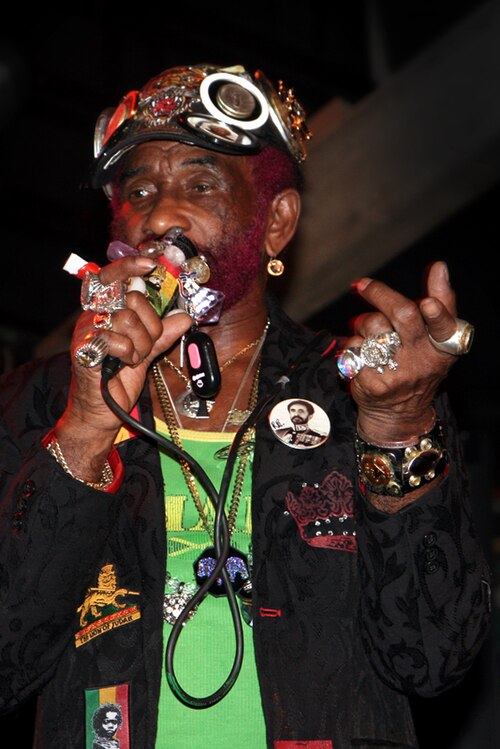
Lee Scratch Perry needed a band that could keep up with his restless imagination. In 1968, he pulled together session players from the Wailers' recording sessions and dubbed them the Upsetters. The name was a jab at his old boss Coxsone Dodd, whom Perry called an upsetter in his 1968 single of the same name. What started as a studio convenience became the engine room for some of the most adventurous music to come out of Jamaica.
The Upsetters were never a fixed lineup. Over the years, more than thirty musicians passed through the ranks. The core was the Barrett brothers: Aston Family Man Barrett on bass and Carlton Carly Barrett on drums. Their locked-in rhythm section became the foundation of countless Perry productions. Glen Adams handled organ and most of the lead vocals, his voice often buried deep in Perry's eccentric mixes. Boris Gardiner, Sly Dunbar, Earl Chinna Smith, and Keith Sterling all cycled through, each bringing their own flavor.
Their breakthrough came in 1969 with Return of Django, a spare organ-and-bass instrumental that shot to number 2 on the UK Singles Chart. It was the first reggae instrumental to crack the UK Top 5. The band followed with a string of singles and albums that documented Perry's evolution from rocksteady into full-blown dub experimentation. Upsetters 14 Dub Blackboard Jungle, released in 1973, is often called the first complete dub album, predating King Tubby's early work. Stripped-down, bass-heavy, and drenched in echo and reverb, it was a radical blueprint.
By the late 1970s, most of the core members had moved on. Aston and Carlton Barrett became Bob Marley and the Wailers' rhythm section, playing on Exodus and Rastaman Vibration. Sly Dunbar formed the legendary duo Sly and Robbie. The Upsetters faded out around 1979, but their records kept circulating. In 1998, Return of Django appeared on the soundtrack to Guy Ritchie's Lock, Stock and Two Smoking Barrels, introducing the band to a whole new generation. Today, the Upsetters are remembered as the sound of reggae's most fertile period, a band that turned Perry's wildest ideas into music.
Formation Story
Lee Scratch Perry had been working as a record plugger for Coxsone Dodd's Studio One when the relationship soured. Perry felt Dodd was holding him back, so he struck out on his own. His first solo single, The Upsetter, was a direct shot at Dodd, calling him a troublemaker. The song caught on, and Perry needed a band to back him in the studio.
He didn't hold auditions. Instead, he pulled musicians he already trusted from the Wailers' recording sessions. The Barrett brothers were first. Aston Barrett had been playing bass around Kingston since his teens, and his brother Carlton was a natural on drums. Glen Adams, a skilled organist and singer, came next. Perry gave them simple instructions: play what I tell you, but don't be afraid to experiment. That loose approach became the Upsetters' trademark.
Their first recording session as a named group produced the instrumental album The Upsetter, released in 1969 on Perry's own Upsetter Records. The single Return of Django, built around a two-chord organ riff and a loping bassline, became an unlikely hit in the UK. It peaked at number 2 on the UK Singles Chart in October 1969, making the Upsetters the first Jamaican instrumental group to score a British Top 5 hit. The band was off and running, though they never really stopped being a revolving door of talent.
Members
Musical Style
The Upsetters' sound was Perry's vision filtered through the tightest session players in Kingston. Early tracks like Return of Django were rooted in rocksteady, with prominent organ lines, walking bass, and crisp snare hits. But Perry quickly pushed them into stranger territory. He started stripping songs down, pulling out the vocals, and adding heavy reverb and tape echo. That became dub.
By 1973's Upsetters 14 Dub Blackboard Jungle, the band was operating in a different dimension. Bass and drums were pushed to the front. Guitars and keyboards faded in and out. Perry treated the mixing board as an instrument, cutting sounds in and out, drenching everything in echo. The Upsetters had to be ready for anything: a sudden tempo change, a request to play in a different key, or a command to stop mid-take so Perry could flip a switch.
Their later albums, like Super Ape (1976), blended dub with soul and funk. The rhythm section got funkier, the horns got bigger, and Perry's production got weirder. Through it all, the Upsetters delivered. They could lock into a groove and hold it for ten minutes, then turn on a dime when Perry screamed for a change. That flexibility made them the perfect vehicle for a producer who never made the same record twice.
Discography
| Title | Year |
|---|---|
| Return of the Super Ape | 1978 |
| Super Ape | 1976 |
| Musical Bones | 1975 |
| Double Seven | 1974 |
| Upsetters 14 Dub Blackboard Jungle | 1973 |
| Africa's Blood | 1972 |
| The Good, the Bad and the Upsetters | 1971 |
| Clint Eastwood | 1970 |
| Scratch the Upsetter Again | 1970 |
| Eastwood Rides Again | 1970 |
| The Upsetter | 1969 |
| Return of Django | 1969 |
| Live Injection | 1970 |
Cultural Impact
The Upsetters didn't just play reggae; they helped invent a whole new genre. Upsetters 14 Dub Blackboard Jungle is widely considered the first full-length dub album, and its influence rippled far beyond Jamaica. Punk bands like The Clash and Public Image Ltd. cited it as a key inspiration. The Prodigy sampled Return of Django on Out of Space. The Chemical Brothers built Setting Sun around a loop lifted from an Upsetters track. Dub became the DNA of electronic music, and the Upsetters were there at the start.
Their music also carried political weight. Songs like Blood of Africa blended Rastafarian spirituality with Pan-Africanist messaging, aligning the band with Black consciousness movements sweeping Jamaica in the 1970s. The album cover for Super Ape, with its psychedelic lion imagery, became an icon of reggae visual culture. Even the band's name, a diss turned badge of honor, spoke to the combative spirit of Jamaican music's independence from the big studios.
In the 1990s, Return of Django found a second life on the Lock, Stock and Two Smoking Barrels soundtrack, introducing the Upsetters to a generation raised on Britpop and trip-hop. Suddenly, a thirty-year-old instrumental was being played in clubs from London to Tokyo. The Upsetters never toured or played stadiums, but their records kept finding new ears.
Fandom Culture
The Upsetters don't have a fandom name, a lightstick, or official fan colors. Their audience is made up of reggae collectors, dub heads, and crate-diggers who track down original Jamaican pressings of Upsetters 14 Dub Blackboard Jungle like holy relics. That album was originally pressed in a run of just 300 copies, making it one of the rarest reggae LPs. When Trojan Records put out a vinyl reissue box set in 2016 called The Upsetter Collection, it sold out fast. Fans trade bootlegs of Perry's Black Ark sessions and debate which mix of a track is the definitive version. There's no official fan club, but the Upsetters have a devoted following that treats every reissue and remaster as a major event.
Awards & Accolades
View 6 records, honours and achievementsMilestones
Return of Django reaches #2 on UK Singles Chart, first reggae instrumental in UK Top 5
Release of Upsetters 14 Dub Blackboard Jungle, considered the first full-length dub album
Super Ape becomes a cult classic, later reissued globally
Return of Django appears on Lock, Stock and Two Smoking Barrels soundtrack, reaching new audience
Trivia
The BBC banned Return of Django in 1969, mistakenly thinking the title referenced the Italian fascist dictator Benito Mussolini. It was actually named after the spaghetti western character. The band never had a fixed lineup; over thirty musicians passed through between 1968 and 1979. Glen Adams sang lead on many tracks, but Perry often buried his vocals in the mix, making them almost inaudible. Aston Barrett's name was frequently left off credits because of Perry's chaotic record-keeping. Sly Dunbar joined the Upsetters at age 18, replacing Carlton Barrett on some sessions, and later became one of reggae's most recorded drummers.
Keywords
Quick Facts
- Formed
- 1968
- Origin
- Kingston, Jamaica
- Label
- Upsetter Records, Trojan Records, Island Records
- Genres
- reggae, dub, rocksteady
- Members
- 7+ (fluid lineup)
- Status
- Disbanded (1979)
Group Info
- Formed
- 1968
- Debut
- 1969
- Debut Song
- Return of Django
- Origin
- Kingston, Jamaica
- Label
- Upsetter Records, Trojan Records, Island Records
- Status
- Disbanded (1979)
Social Media
Join the community
fans discussing