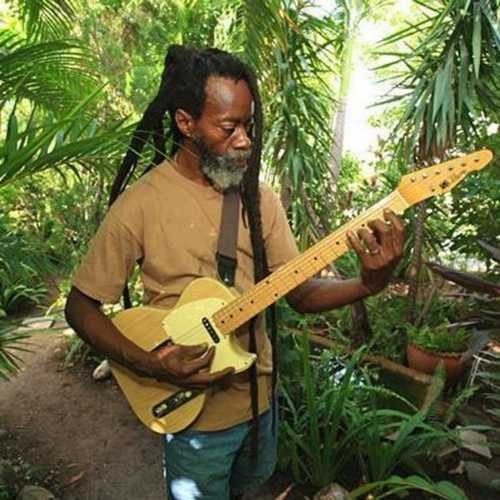
Earl "Chinna" Smith
 Jamaica
Member of The Upsetters
Birthday
August 6, 1955
Birth Sign
Leo
Birthplace
Kingston, Jamaica
Age
71 years old
Height
5 ft 8 in (173 cm)
About
Earl "Chinna" Smith is a Jamaican guitarist widely regarded as one of the most prolific session musicians in reggae history. Active since the late 1960s, he has played on hundreds of recordings, shaping the sound of the genre across five decades. Smith is best known for his work with the Soul Syndicate and as a guitarist for Bob Marley and the Wailers, contributing to landmark albums including Exodus and Kaya. He was also a core member of The Upsetters, Lee "Scratch" Perry's studio band, helping to define the dub sound. Beyond these high-profile collaborations, Smith recorded with virtually every major reggae artist of his era, from Peter Tosh to Dennis Brown. His clean, melodic guitar style, often drenched in reverb and wah-wah, became a signature element of classic reggae. Despite his enormous output, Smith has maintained a low public profile, letting his music speak for itself. He continues to perform and mentor young musicians in Jamaica as of 2026.
Early Life & Background
Smith grew up in the Trench Town area of Kingston, one of the most musically vibrant neighborhoods in Jamaica. As a child in the 1960s, he was surrounded by the sounds of ska and rocksteady emanating from local sound systems and recording studios. He taught himself guitar by watching older session musicians through the windows of Kingston studios, practicing obsessively until he could replicate their licks. A key mentor was guitarist Hux Brown of The Supersonics, who recognized Smith's raw talent and gave him informal lessons. By the late 1960s, still in his early teens, Smith began sitting in on sessions at Studio One and Treasure Isle, first as an observer and then as a player. His first paid session work came around 1968, playing on recordings for producers Coxsone Dodd and Duke Reid. This early exposure to the professional recording environment was formative, allowing him to develop the distinctive, melodic guitar style that would become his trademark.
Career Growth
Smith's breakthrough came in the early 1970s when he joined the Soul Syndicate, the house band for producer Bunny "Striker" Lee. His guitar work became integral to the "Striker Lee sound" that dominated reggae. In 1973, he played on Lee "Scratch" Perry's Blackboard Jungle Dub, one of the first-ever dub albums. The mid-1970s marked his most significant collaboration: he began working with Bob Marley and the Wailers, contributing to Natty Dread (1974) and becoming a regular on subsequent albums including Rastaman Vibration (1976), Exodus (1977), Kaya (1978), and Uprising (1980). His playing can be heard on classics like "Waiting in Vain" and "Three Little Birds." Simultaneously, Smith was a core member of The Upsetters, playing on Perry's landmark albums Super Ape (1976) and Roast Fish Collie Weed & Corn Bread (1978). In the 1980s and 1990s, he continued prolific session work with Dennis Brown, Gregory Isaacs, Burning Spear, and international artists like Grace Jones and Serge Gainsbourg. In 2000, he formed the Chinna Smith Band and began releasing solo material. The 2015 documentary Earl "Chinna" Smith: Inna De Yard chronicled his life and music.
Career Timeline
Public Image & Style
Smith is portrayed in media as the quintessential "musician's musician", a quiet genius whose contributions shaped the sound of reggae without seeking fame. His signature style is clean, melodic guitar playing with a warm, reverb-drenched tone, often using a wah-wah pedal. Media coverage emphasizes his prolific output and his role in creating the classic reggae sound of the 1970s. His fandom consists primarily of reggae enthusiasts, music historians, and fellow musicians. There is no official fandom name or organized fan culture. Smith's public persona is understated and professional; he rarely gives lengthy interviews and lets his recorded work define his legacy.
Fame & Fandom
Earl "Chinna" Smith commands a global presence defined by deep respect within the music industry rather than mainstream celebrity saturation. His standing is quantified by the iFANN Global Fame Rankings, which track influence across media coverage and consumption signals worldwide. He is currently the 23rd most famous person in Adult Entertainment, a position he has held steady from the previous cycle. This specific ranking highlights his enduring impact on a genre that has permeated global culture, even if his name remains less recognized outside of dedicated circles. The data reflects a consistent trajectory where his contributions to the sonic landscape of reggae are measured against a broad spectrum of international figures.
While his fame is concentrated among those who study the history of recording, his audience lacks a formalized name. No official fandom designation exists for Earl "Chinna" Smith, nor have any distinct fan campaigns or rituals been documented. His following consists primarily of reggae enthusiasts, music historians, and fellow musicians who recognize his technical mastery. These groups appreciate his work not through organized events but through the continued appreciation of his recordings and the legacy he built alongside legends like Bob Marley and Lee "Scratch" Perry.
Interesting Facts and Legends
Earl "Chinna" Smith's nickname "Chinna" stems from his partial Chinese ancestry, a common Jamaican term for someone of Chinese descent. As a child, he taught himself guitar by observing session players through the windows of Kingston recording studios. His discography includes performances on Bob Marley's "Waiting in Vain" and "Three Little Birds," two of the most recognizable reggae songs in history. With over 500 recorded sessions, he stands as one of the most recorded guitarists in any musical genre. He performed at the historic 1978 One Love Peace Concert alongside Bob Marley and Peter Tosh. Despite his immense influence, Smith rarely gives interviews and prefers to let his guitar playing define his legacy.
A persistent story among audio engineers recalls how Smith would arrive at studio sessions with only a single chord progression in mind, yet leave with a complete, intricate melody that became the song's hook. Another anecdote describes a session where he played a complex rhythm part backwards after being asked to try it again, resulting in a unique texture that was kept on the final mix. These accounts, while sometimes debated, illustrate the spontaneous genius attributed to his playing style.
Notable Quotes
“I just love the guitar. From I was a little boy in Trench Town, I used to watch the big musicians play and I said, 'One day, that will be me.'”
“Working with Bob Marley was like going to school every day. He taught us about music, about life, about Rastafari. It was a blessing.”
“The Upsetters were a special group. Lee Perry was a genius, a madman, a prophet. When we played, we never knew what would come out. That was the magic.”
“I don't need to be famous. The music is famous. I just played my part.”
Family & Personal Life
Smith was born in Kingston, Jamaica, and grew up in the Trench Town area. Details about his parents and siblings are not publicly documented. He has kept his personal life private, and no information about a spouse, children, or current household is available from credible sources. Smith has not publicly discussed his family in interviews, consistent with his low-profile demeanor.
Notable Connections
Smith's most famous collaborator was Bob Marley, with whom he worked from 1974 to 1980. He was a core member of The Upsetters under Lee "Scratch" Perry and the Soul Syndicate under Bunny "Striker" Lee. Other frequent collaborators include Peter Tosh, Burning Spear, Dennis Brown, Gregory Isaacs, Sly and Robbie, and Aston "Family Man" Barrett. His mentor was guitarist Hux Brown.
Relationships & Dating History
Earl "Chinna" Smith has kept his romantic relationships largely out of the public eye, consistent with his low-profile personal demeanor. Available credible sources do not provide detailed information about his dating history, marriages, or children. Unlike many contemporary musicians, Smith did not court tabloid attention, and his private life has not been documented in the mainstream entertainment press. As of 2026, no credible public information is available regarding Smith's current relationship status.
Salary, Net Worth In 2026
$3 Million
iFANN Editorial Team estimate
Per iFANN's editorial analysis, Earl "Chinna" Smith's net worth is estimated at $3 million as of 2026. His income derives primarily from session musician royalties spanning over 500 recordings across five decades. Live performance fees from tours with The Upsetters, Soul Syndicate, and his own Chinna Smith Band contribute significantly. Publishing royalties from songs he co-wrote or contributed to, along with occasional licensing fees for use of his recordings in films and commercials, add to his earnings. The 2015 documentary Inna De Yard and related projects also generated income. Smith continues to perform at reggae heritage events and mentor young musicians, maintaining a steady but modest income stream.
Awards & Accolades
View 7 records, honours and achievementsKnown For
Session guitarist for Bob Marley and the Wailers
1974 · Guitarist
Member of The Upsetters
1976 · Guitarist
Member of Soul Syndicate
1970 · Lead guitarist
Chinna Smith Band
2000 · Bandleader
Keywords
Quick Facts
- Profession
- musician, guitarist, songwriter
- Born
- +1955-08-06
- Birthplace
- Kingston, Jamaica
- Gender
- Male
- Birth Sign
- Leo
Personal Details
- Full Name
- Earl Smith
- Height
- 5 ft 8 in (173 cm)
Frequently Asked Questions
How old is Earl Chinna Smith?
What is Earl Chinna Smith's net worth in 2026?
Did Earl Chinna Smith play with Bob Marley?
Is Earl Chinna Smith still alive?
What bands did Earl Chinna Smith play in?
Social Media
Join the community
fans discussing