“The Muppet Show is a triumph of imagination and craftsmanship, a rare example of a program that truly works for all ages without talking down to anyone.”
Vincent Canby
The New York Times
 United States
"Chaos reigns behind the curtain where Kermit tries to run a show"
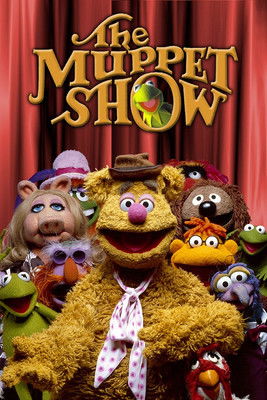
Jim Henson brought his unique brand of puppetry to British television with The Muppet Show, a variety series that ran for five seasons on ITV1 from September 1976 to March 1981. The premise is delightfully simple yet endlessly inventive: Kermit the Frog serves as the beleaguered producer trying to keep a chaotic troupe of monsters and misfits from ruining their weekly live broadcast. Frank Oz, Jerry Nelson, Dave Goelz, Richard Hunt, and Jim Henson himself provided the voices and performances for this sprawling ensemble cast.
Unlike other children's programming of the era, the show operated on a dual-layered appeal. While children enjoyed the colorful puppets and slapstick humor, adults appreciated the sharp satire aimed at celebrity culture, political figures, and theatrical conventions. The production utilized a live studio audience in London, capturing the genuine reactions and unpredictable energy that defined each episode. This format allowed for spontaneous moments where the puppets would break character or interact directly with the human guests in ways that felt fresh and unscripted.
Stream
Availability and pricing can change. Confirm on the provider's site before purchasing.
The narrative engine driving every episode revolves around the fragile attempt to mount a coherent vaudeville revue at The Muppet Theatre. Kermit the Frog stands at the center of this storm, constantly interrupted by the demands of his eccentric staff. Fozzie Bear takes the stage hoping to deliver jokes, only to face a wall of silence or a barrage of insults from the balcony. Miss Piggy arrives late, demanding the spotlight while ignoring Kermit's pleas for order. Gonzo attempts stunts that range from dangerous to nonsensical, often endangering the set or the guest star. Behind the scenes, Scooter frantically coordinates cues while Hilda, the doorman, keeps a watchful eye on who enters the building.
Each week brings a new celebrity guest star, ranging from music legends like Ringo Starr and Julie Andrews to comedians like John Cleese and James Earl Jones. These famous figures rarely stay in their lane; they willingly participate in the mayhem, whether singing off-key with the Muppet Band or getting tangled in a sketch gone wrong. The musical numbers are just as varied as the sketches, featuring original compositions by Joe Raposo alongside parodies of classic songs. The Muppet Band, led by Dr. Teeth, provides the soundtrack, though Animal's drumming often threatens to drown out the entire orchestra.
Statler and Waldorf occupy a permanent box in the theater, offering a running commentary of cynical heckling that punctuates the action below. Their presence adds a layer of meta-commentary, as they represent the skeptical audience member within the story itself. Despite the constant chaos, the episodes usually resolve with a final group number where everyone gathers on stage. The pacing shifts slightly across the five seasons, moving from the rougher edges of Season 1 to the polished, high-production values seen in later years. By the time the show reaches its conclusion, the bond between the characters feels deeply established, creating a sense of family that transcends the fictional setting.
The visual style evolved significantly over time, with sets becoming more elaborate and lighting techniques improving to match the growing budget. The writers incorporated current events and pop culture references into the scripts, keeping the content timely without dating the material too quickly. Guest stars often received specific roles tailored to their talents, allowing them to showcase skills they might not use in their regular work. The interaction between the puppets and humans became increasingly seamless, blurring the lines between reality and performance art. This approach helped the show gain a reputation for being smart enough for grown-ups while remaining accessible to young viewers.
Throughout the run, the show tackled themes of friendship, acceptance, and the joy of performance. Even when characters clashed or failed spectacularly, the underlying message remained one of unity. The recurring motif of the show closing successfully despite all odds reinforced the idea that collaboration could overcome any obstacle. Audiences tuned in not just for the jokes but to see how the next disaster would be resolved. The sheer volume of talent involved, both on screen and behind the scenes, contributed to a richness of detail that few other programs could match. Every episode felt like a unique event rather than a formulaic repeat.
Official Trailer
Critical Consensus
The Muppet Show stands as a masterclass in family entertainment, blending sharp satire, original music, and innovative puppetry into a timeless package. Its ability to appeal to both children and adults while maintaining a consistent level of wit and heart makes it a landmark in television history, proving that puppets could carry a prime-time variety show with unprecedented success.
“The Muppet Show is a triumph of imagination and craftsmanship, a rare example of a program that truly works for all ages without talking down to anyone.”
Vincent Canby
The New York Times
“Jim Henson has created a universe of charm and chaos that feels both fresh and timeless, with performances that are nothing short of miraculous.”
Variety Staff
Variety
“A cultural phenomenon that transcends generations, The Muppet Show remains a beacon of creativity and inclusivity in an ever-changing media landscape.”
Guardian Staff
The Guardian
“The show's blend of slapstick, musical numbers, and celebrity cameos creates a unique alchemy that has never been replicated in the decades since.”
Hollywood Reporter Staff
The Hollywood Reporter
“With its clever writing and unforgettable characters, The Muppet Show is a testament to the power of storytelling and the enduring magic of the Muppets.”
AV Club Staff
AV Club
Jim Henson
Kermit the Frog, Waldorf, Rowlf the Dog, Link Hogthrob, The Swedish Chef, Dr. Teeth, The Newsman (voice)
Frank Oz
Miss Piggy / Fozzie Bear / Animal / Sam Eagle / Marvin Suggs / George the Janitor (voice)
Jerry Nelson
Floyd Pepper, Dr. Julius Strangepork, Pops, Robin the Frog, Lew Zealand, Louis Kazagger, Chicken, Crazy Harry (voice)
Dave Goelz
Gonzo, Zoot, Beauregard, Dr. Bunsen Honeydew (voice)
Richard Hunt
Statler, Scooter, Janice, Beaker, Wayne, Sweetums (voice)
Directors
Jim Henson, David Lazer, Peter Harris, Ken Hughes
Writers
Jerry Juhl, Jack Burns, Joe Raposo, Richard Hunt, Frank Oz, Dave Goelz
Composers
Paul Williams, Joe Raposo
Producers
David Lazer, Jim Henson
Primetime Emmy Awards (1978)
Outstanding Children's Program: Won
Primetime Emmy Awards (1979)
Outstanding Children's Program: Won
Primetime Emmy Awards (1980)
Outstanding Children's Program: Won
Golden Globe Awards (1978)
Best Television Series – Musical or Comedy: Won
Peabody Award (1978)
Excellence in Electronic Media: Won
Join the community
fans discussing