Part of the The Legend of Zelda series
Series community
The Legend of Zelda: Ocarina of Time
 Japan
Japan"Time waits for no one."
Score
99.0/10
Overview
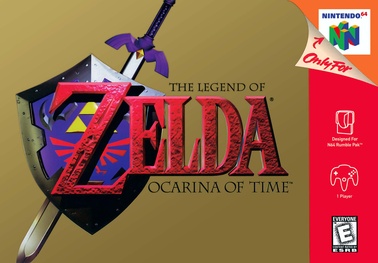
On a cold November night in 1998, Nintendo released a game that would redefine what an adventure could feel like. The Legend of Zelda: Ocarina of Time dropped players into the boots of a young boy named Link, who sets out from his forest home to save the land of Hyrule from the desert thief Ganondorf. It was the series' first 3D outing, and it showed what the Nintendo 64 could do: rolling green fields, a day-night cycle that changed enemy behavior, and a lock-on targeting system that made sword fights feel precise and personal.
That system, called Z-targeting, became a template for action games everywhere. Instead of flailing at enemies from awkward angles, players could hold a shoulder button to lock eyes with a foe, circle around it, and strike with intent. The same button handled talking, grabbing, and opening things, a context-sensitive approach that kept the controls simple while the world grew complex. Dungeons like the Water Temple demanded careful item use and spatial reasoning, while the ocarina itself let you play songs to warp across the map, call your horse Epona, or change the time of day.
Ocarina of Time sold over seven million copies on the N64 alone and earned a 99 on Metacritic, a score that remains among the highest ever recorded. Critics praised its music, composed by Koji Kondo, its emotional story about childhood lost and regained, and its seamless blend of exploration, puzzle-solving, and combat. The game has been re-released on GameCube, Wii, Wii U, and received a full 3D remake on Nintendo 3DS in 2011, complete with updated graphics and a built-in Master Quest mode. It regularly tops polls of the greatest games ever made, and its influence can be felt in everything from Dark Souls to God of War.
Gameplay
You control Link from a third-person perspective, exploring Hyrule Field and a series of themed dungeons. The Z-targeting system lets you lock onto an enemy, strafe around it, and perform context-sensitive actions like attacking, rolling, or talking. Each dungeon introduces a new item, the Hookshot, the Bow, the Megaton Hammer, that becomes essential for solving puzzles and defeating the boss. The ocarina plays a central role: by learning melodies from characters, you can teleport to dungeon entrances, change the time of day, or summon a horse. The world operates on a day-night cycle, with different enemies and NPC behaviors depending on the hour. Link can also travel between his child and adult forms by pulling the Master Sword from its pedestal, which changes which areas are accessible and how characters react to him.
Story
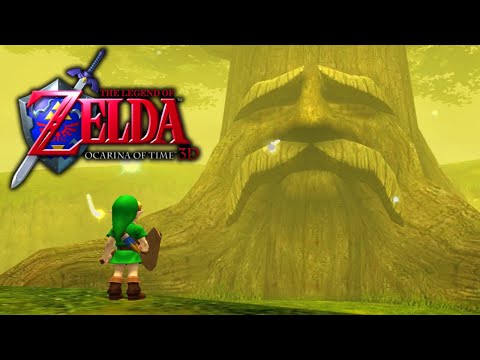
Link begins as a boy without a fairy in the Kokiri Forest, an outcast among his peers. The Great Deku Tree, dying from a curse placed by Ganondorf, gives Link the fairy Navi and sends him to Hyrule Castle. There, Princess Zelda reveals a prophetic dream: Ganondorf, the Gerudo king, will betray the royal family and seize the Triforce. Link collects three Spiritual Stones from the forest, mountain, and lake, then opens the Door of Time in the Temple of Time. When he pulls the Master Sword, he is too young to wield it fully and is sealed in the Sacred Realm for seven years.
He awakens as an adult in a Hyrule ruled by Ganondorf. The sage Rauru tells him he must awaken six sages to seal the evil king. Guided by the mysterious Sheik, Link cleanses the Forest, Fire, Water, Shadow, and Spirit Temples, each awakening a sage: Saria, Darunia, Princess Ruto, Impa, and Nabooru. Sheik is later revealed to be Zelda in disguise, the seventh sage. Together, they open the path to Ganon's Castle, where Link defeats Ganondorf in a tower battle. Ganondorf transforms into the beast Ganon, but Link and the sages seal him away. Zelda then sends Link back to his childhood, closing the Door of Time and creating a split timeline.
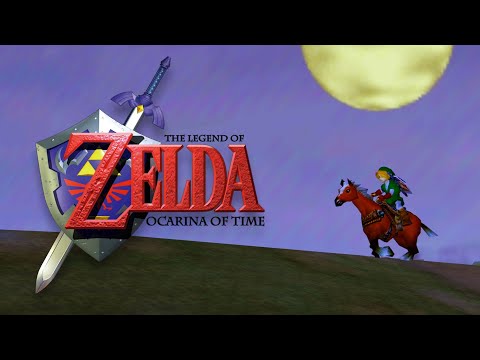
Trailers
Awards & Acclaim
Game of the Year: Overall: (1998)
Interactive Achievement Awards: Game of the Year: (1999)
Japan Game Awards: Grand Award: (1999)
Keywords
Sources
Game Info
- Developer
- Nintendo Entertainment Analysis & Development
- Publisher
- Nintendo
- Engine
- Proprietary Nintendo 64 engine
- Release Date
- 1998-11-21
- Age Rating
- E (Everyone)
- Modes
- Single-player
- Platforms
- Nintendo 64, Nintendo GameCube, Wii, Virtual Console, Nintendo 3DS, iQue Player, Wii U
- Composer
- Koji Kondo
- Metacritic Score
- 99
Join the community
fans discussing