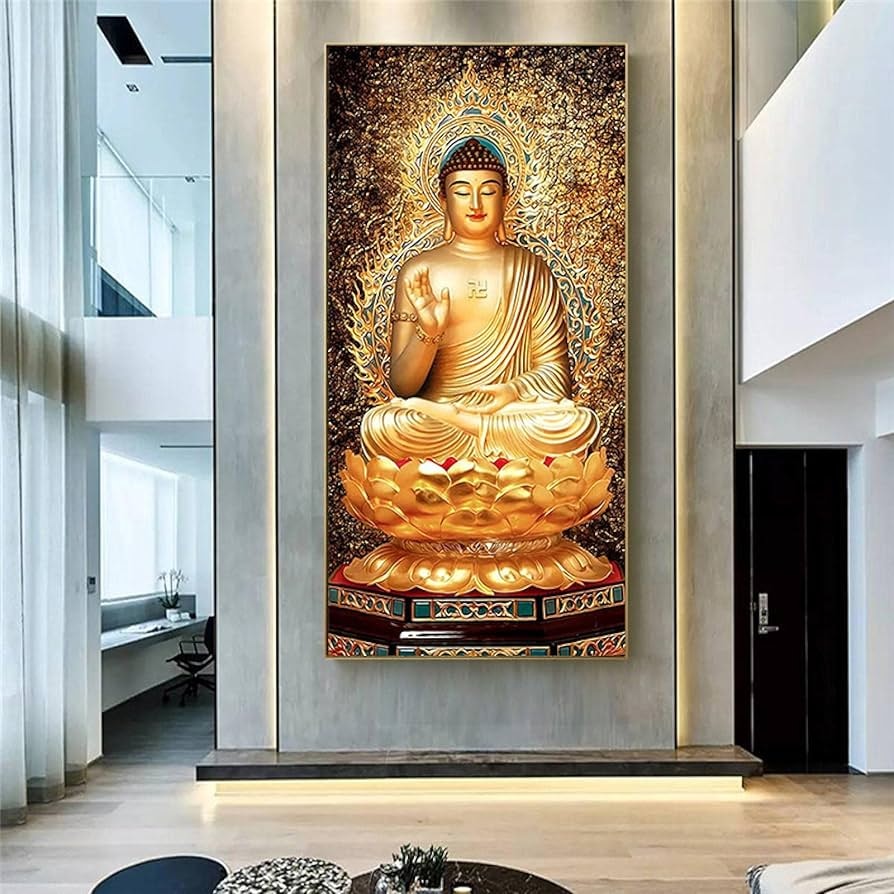
The Buddha
 Nepal
NepalSpiritual teacher•philosopher•founder of Buddhism
Also known as: Shakyamuni, Siddhartha Gautama, Gautama Buddha, Tathagata
Birthday
-0563-04-08
Birth Sign
Aries
Birthplace
Lumbini, present-day Nepal
Age
Died at 80
About
Siddhartha Gautama, revered as the Buddha, or Awakened One, was a spiritual teacher and the founder of Buddhism. Born around 563 BCE in Lumbini, present-day Nepal, he was a prince of the Shakya clan. At 29, he renounced his privileged life to seek enlightenment, ultimately attaining nirvana at Bodh Gaya in India. For the next 45 years, he traversed the Indo-Gangetic Plain, teaching a path to liberation and establishing a monastic order, the sangha. He died around 483 BCE in Kushinagar, reaching parinirvana, the final release from rebirth.
The Buddha's teachings center on the Middle Way, avoiding extremes of indulgence and asceticism. His core doctrines, the Four Noble Truths and the Noble Eightfold Path, address suffering and its cessation through ethical conduct, mental discipline, and wisdom. He emphasized mindfulness, meditation (dhyana), and compassion. Key concepts include the five skandhas and dependent origination, which explain how all phenomena arise in dependence on conditions, lacking inherent self-nature.
His discourses, preserved in the Sutta Pitaka, and monastic codes in the Vinaya Pitaka, were transmitted orally for centuries. Later traditions added the Abhidhamma, Jataka tales of his past lives, and Mahayana sutras. Buddhism spread across Asia, evolving into Theravada, Mahayana, and Vajrayana schools. While it declined in India after the 8th century, it flourished in Southeast and East Asia, shaping cultures and philosophies worldwide.
Early Life & Background
Siddhartha Gautama was born into the Shakya clan, a small republic in the foothills of the Himalayas. His father, King Suddhodana, ruled the Shakya capital Kapilavastu, and his mother, Queen Maya, died shortly after his birth. According to tradition, a sage predicted the infant would become either a great king or a great spiritual leader. Determined to steer him toward kingship, his father shielded him from the sights of old age, sickness, and death, surrounding him with luxury and pleasure.
Siddhartha grew up as a prince, receiving an education in the Vedas, archery, and statecraft. He married his cousin Yaśodharā at 16, and they had a son, Rahula. Despite his sheltered life, he felt a growing unease. At 29, he ventured outside the palace and encountered what became known as the Four Sights: an old man, a sick man, a corpse, and a wandering ascetic. These encounters shattered his innocence, revealing the universality of suffering and the possibility of transcendence.
That night, he left his sleeping wife and son, cut off his hair, and exchanged his royal robes for a simple cloth. He became a wandering ascetic, studying under two renowned meditation teachers, Alara Kalama and Uddaka Ramaputta, mastering their techniques but finding them insufficient for liberation. He then joined five ascetics in extreme self-mortification, nearly starving himself to death. After six years, he realized that neither luxury nor severe austerity led to enlightenment, and adopted the Middle Way.
Career Growth
After rejecting asceticism, Siddhartha sat under a Bodhi tree in Bodh Gaya, vowing not to rise until he found the truth. He meditated through the night, overcoming the temptations of the demon Mara, and at dawn attained nirvana, becoming the Buddha. He was 35.
Initially hesitant to teach, he was persuaded by the god Brahma and traveled to Sarnath, where he delivered his first sermon, setting the Wheel of Dharma in motion. There he taught the Four Noble Truths and the Noble Eightfold Path to his five former ascetic companions, who became the first monks of the sangha. Over the next 45 years, he walked across the Gangetic Plain, teaching all who would listen, from royalty to outcasts. He established a monastic order open to all castes and genders, with his stepmother Mahapajapati Gotami becoming the first Buddhist nun.
His teachings spread through oral tradition, with monks memorizing and reciting his discourses. The Buddha engaged with rival philosophies, often debating Jain and Brahmanical thinkers. He performed miracles according to tradition but emphasized that insight, not magic, was the path. His last words, as recorded in the Mahaparinibbana Sutta, were: All conditioned things are impermanent. Strive on with diligence.
Career Timeline
Public Image & Style
The Buddha is universally depicted with a serene expression, elongated earlobes, and a cranial protuberance (ushnisha), symbolizing wisdom and compassion. Statues and paintings often show him seated in meditation, standing, or reclining in parinirvana. In Buddhist art, his hand gestures (mudras) convey specific teachings: the earth-touching mudra recalls his enlightenment, the dharma-chakra mudra represents his first sermon. Across cultures, he is seen as a model of peace, mindfulness, and non-attachment. Modern media often reference his teachings in mindfulness and self-help contexts, while his image has become a global icon of tranquility.
Fame & Fandom
The enduring influence of Siddhartha Gautama, known as the Buddha, has sustained a level of global attention that transcends mere historical record to occupy a permanent place in the collective consciousness. Within the framework of the iFANN Global Fame Rankings, this stature is quantified by precise metrics reflecting his pervasive presence across media and cultural consumption. He holds the position of the 15th most famous person in South Asia, a placement that remains steady from the previous cycle, and stands as the 2nd most famous person in Religious Leaders, also holding steady from the prior assessment. The scope of his renown is such that he is recognized not merely as a figure of antiquity but as an active benchmark for spiritual authority. Regarding his audience, no formal fandom name exists; the community consists of adherents known as Buddhists who organize into monastic orders and lay groups rather than a fanbase defined by marketing campaigns or organized social media movements. Devotees engage through established religious observances like Vesak and the study of texts, distinct from the viral interactions typical of modern celebrity culture.
Interesting Facts and Legends
Historical records indicate that the Buddha's footprint is venerated as a potent symbol of his physical presence, frequently depicted with auspicious marks including a wheel or lotus. In certain regional traditions, it is said that he visited Sri Lanka, leaving a distinct imprint on Adam's Peak. The Bodhi tree located at Bodh Gaya is considered a direct descendant of the original specimen under which enlightenment was attained, having been grown from a cutting taken by the daughter of Emperor Ashoka. He is occasionally referred to as Shakyamuni, which translates to sage of the Shakyas, and is associated with the title Tathagata, denoting one who has thus gone or thus come. Despite his status as a historical figure, narratives regarding his past lives known as the Jataka tales number over 500 and remain popular across Buddhist cultures. Central to these legends is the Great Renunciation, where Prince Siddhartha abandoned his royal life at night to seek truth, an event that forms the bedrock of his biography. Another pivotal moment occurred when he attained nirvana while meditating under the Bodhi tree, realizing the nature of suffering and the path to end it. Following this awakening, he delivered his first sermon at Sarnath, setting the Wheel of Dharma in motion and establishing the monastic community. The final chapter of his life narrative describes his entry into parinirvana at Kushinagar, marking the conclusion of his physical existence and the cycle of rebirth.
Notable Quotes
“The mind is everything. What you think you become.”
“There is no fear for one who is not attached to the senses.”
“Peace comes from within. Do not seek it without.”
“Your work is to discover your work and then with all your heart to give yourself to it.”
“Hatred does not cease by hatred, but only by love; this is the eternal rule.”
“Three things cannot be long hidden: the sun, the moon, and the truth.”
Family & Personal Life
The Buddha's father, King Suddhodana, ruled the Shakya clan. His mother, Queen Maya, died seven days after his birth, and he was raised by his maternal aunt, Mahapajapati Gotami. He married his cousin Yaśodharā, and they had a son, Rahula, who later became a monk. After his enlightenment, the Buddha returned to Kapilavastu and converted his father, wife, son, and many other Shakya relatives to Buddhism. Mahapajapati Gotami became the first Buddhist nun after requesting ordination. The Buddha's own family thus became a foundational part of the sangha.
Notable Connections
The Buddha's life intertwined with many key figures: his wife Yaśodharā, who later became a nun; his son Rahula, the first novice monk; his chief disciples Sariputta and Moggallana, known for wisdom and psychic powers; his personal attendant Ananda, who memorized his discourses; and his stepmother Mahapajapati Gotami, founder of the nuns' order. He also debated with the Jain leader Mahavira and various Brahmanical teachers.
Relationships & Dating History
The Buddha married his cousin Yaśodharā when both were 16. They had one son, Rahula. After seven years of marriage, Siddhartha left the palace on the night of Rahula's birth, renouncing his family life. Years later, after his enlightenment, he returned to Kapilavastu and both Yaśodharā and Rahula became his followers. Yaśodharā is said to have attained enlightenment as a nun. The Buddha remained celibate after his renunciation, and no other romantic relationships are recorded.
- MarriedYaśodharā-563 - -534Married at 16; Siddhartha left her and their infant son to seek enlightenment; later she became a Buddhist nun.
Death & Aftermath
Died
-0483 (aged 80)
Death Place
Kushinagar, Uttar Pradesh, India
Cause of Death
Illness following a meal
Siddhartha Gautama, known as the Buddha, died in -0483 at Kushinagar in the region now identified as Uttar Pradesh, India. Traditional accounts from the Mahāparinibbāna Sutta describe his final days following a meal offered by a lay follower named Cunda, after which he fell ill and traveled to Kushinagar before passing away between two sal trees. While scholars debate whether the cause was food poisoning or natural illness, these details remain within religious scripture rather than forensic records. The immediate aftermath involved the gathering of disciples at the First Buddhist Council in Rajagriha to recite and codify his teachings. His body was cremated according to tradition, and his relics were distributed among various kingdoms, leading to the construction of stupas that served as early pilgrimage sites. Today, the full moon of May is observed globally as Vesak Day to commemorate his birth, enlightenment, and passing, with the United Nations recognizing the occasion as an official observance.
Awards & Accolades
View 3 records, honours and achievementsKnown For
Founding Buddhism
-528 · Founder
Teaching the Four Noble Truths
-528 · Teacher
Establishing the Noble Eightfold Path
-528 · Teacher
Keywords
Quick Facts
- Profession
- Spiritual teacher, philosopher, founder of Buddhism
- Born
- c. 563 BCE
- Birthplace
- Lumbini, present-day Nepal
- Died
- c. 483 BCE
- Death Place
- Kushinagar, India
- Gender
- Male
- Spouse
- Yaśodharā
- Children
- Rahula
- Birth Sign
- Aries
Personal Details
- Full Name
- Siddhartha Gautama
- Spouse
- Yaśodharā
- Children
- Rahula
- Education
- Traditional princely education, including warfare and the arts
Frequently Asked Questions
Who was the Buddha?
When and where was the Buddha born?
What are the main teachings of the Buddha?
What is the meaning of "Buddha"?
How did the Buddha die?
Join the community
fans discussing