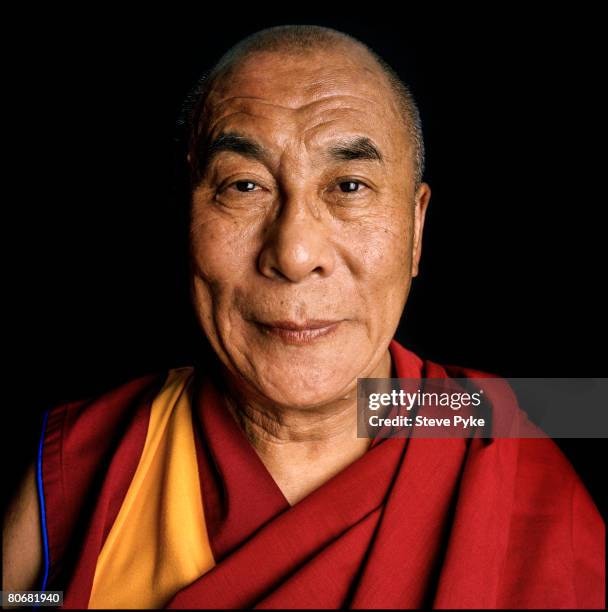
Tenzin Gyatso
Also known as: His Holiness the Dalai Lama, Jetsun Jamphel Ngawang Lobsang Yeshe Tenzin Gyatso, Gyalwa Rinpoche, Kundun, Yizhin Norbu
Birthday
July 6, 1935
Birth Sign
Cancer
Birthplace
Taktser, Amdo, Tibet
Age
91 years old
About
Tenzin Gyatso, the 14th Dalai Lama, is the highest spiritual leader of Tibetan Buddhism and the head of the Gelug school. Born Lhamo Thondup on July 6, 1935, in Taktser, a farming village in the Amdo region of Tibet, he was recognized as the reincarnation of the 13th Dalai Lama at age two. His full spiritual name is Jetsun Jamphel Ngawang Lobsang Yeshe Tenzin Gyatso. Followers and much of the Western world address him as His Holiness the Dalai Lama. The title "Dalai Lama" combines the Mongolian word dalai (ocean) with the Tibetan lama (teacher), reflecting his role as a living Bodhisattva, an emanation of Avalokiteśvara, the Bodhisattva of Compassion. Tibetans also revere him as Gyalwa Rinpoche ("The Precious Jewel-like Buddha-Master"), Kundun ("The Presence"), and Yizhin Norbu ("The Wish-Fulfilling Gem").
He is globally recognized for his unwavering commitment to nonviolence, interfaith dialogue, and the preservation of Tibetan culture. Awarded the Nobel Peace Prize in 1989, he has been described as Gandhi's spiritual heir. Despite his advanced age, he continues to engage with the world through teachings, writings, and social media, advocating for compassion, universal responsibility, and a peaceful resolution to the Tibetan question.
Early Life & Background
Lhamo Thondup was born to a farming family in the remote village of Taktser. At age two, a search party led by monks identified him as the reincarnation of the 13th Dalai Lama based on a series of tests and visions. He was taken from his family to Lhasa, where he was given the monastic name Tenzin Gyatso and began a rigorous education in Buddhist philosophy, logic, art, and medicine. He was formally enthroned on February 22, 1940, at the age of four. As a child, he showed a keen interest in modern science and technology, often tinkering with mechanical objects. A pivotal moment came on November 17, 1950, when at age 15 he assumed full temporal responsibilities as the leader of Tibet, just as Chinese forces began their annexation of the country.
Career Growth
For the first nine years of his political leadership, Tenzin Gyatso attempted to negotiate with the Chinese government for Tibetan autonomy, but the 1959 uprising forced him to flee to India. There he established the Tibetan government-in-exile, first in Mussoorie and later in Dharamshala, where he has resided ever since. In the 1970s he began advocating for the Middle Way Approach, a strategy for peaceful coexistence with China that preserves Tibetan culture and religion while acknowledging Chinese sovereignty. His first visit to the West in 1979 brought him global attention. In 1989 he was awarded the Nobel Peace Prize for his nonviolent struggle for the liberation of Tibet. A major shift occurred in 2011 when he retired from political leadership, allowing the Central Tibetan Administration to become a democratic body. Despite reduced travel after age 80, he continues to teach and engage globally on topics like nonviolence, interfaith dialogue, science, and women's rights.
Career Timeline
Public Image & Style
Tenzin Gyatso is globally recognized for his gentle demeanor, wisdom, and commitment to nonviolence and compassion. Media portrayals often highlight him as a spiritual leader and advocate for peace. His teachings focus on universal responsibility, compassion, and the importance of inner peace. He does not have an officially designated fandom name, but his followers worldwide are united by their respect and admiration for his spiritual guidance and humanitarian efforts. His social media voice is typically calm, encouraging, and focused on promoting positive values. He has been featured on the cover of Time magazine multiple times and has been the subject of numerous documentaries.
Fame & Fandom
Tenzin Gyatso’s fame is a rare thing: a global presence built not on film or music, but on compassion, humor, and a message of nonviolence that has crossed every border. His voice reaches from Dharamsala to the United Nations, and his face is as recognizable as any head of state’s. In the iFANN Global Fame Rankings, he holds a steady placement as the 10th most famous person in Religious Leaders, a position that reflects his enduring influence across media coverage, search, and consumption signals worldwide. That rank, unchanged from the previous cycle, places him among the most visible spiritual figures of the modern era.
His fanbase is as global as his fame, yet it defies the usual celebrity structures. There is no official fandom name, no single hashtag that unites his millions of supporters. Instead, his followers organize along spiritual and humanitarian lines, through the Office of His Holiness, through prayer gatherings like the one held in Dharamsala for his long life, and through advocacy networks that span continents. They are monks and scientists, activists and ordinary seekers, drawn not to a persona but to a philosophy. When he speaks, they listen; when he teaches, they learn. And when he won a Grammy in 2026 for a spoken-word album, his fans celebrated a rare crossover moment, proof that his message could resonate even in the mainstream music industry. There are no billboards, no fan clubs, but there is something deeper: a shared commitment to compassion that his admirers carry into their own lives.
Interesting Facts and Legends
His life is a study in contrasts: a monk who collects mechanical watches, a spiritual leader who has met with scientists and world leaders alike. He has written over 100 books, including the bestselling The Art of Happiness, and his “18 Rules for Living” have become a widely shared ethical guide. He once said that if science disproves a Buddhist belief, Buddhism must change, a stance that has made him a bridge between faith and reason. His playful humor and hearty laugh are as legendary as his wisdom, and he has met with popes, presidents, and the Queen of England.
Among the stories that fans still retell, the escape from Tibet in 1959 stands out, a twenty-three-year-old monk fleeing through Himalayan passes to reach exile, a journey that turned him into a global symbol of resilience. The Nobel Peace Prize in 1989 cemented his moral authority, and his 2026 Grammy for a spoken-word album showed his message could win over the music world. His succession remains a topic of intense speculation, especially after his surgery in 2026, but his legacy is already set: a life devoted to compassion, humor, and the belief that kindness is the only answer.
Notable Quotes
“The true hero is not the one who fights, but the one who brings peace.”
“Remember that the best way to create peace is to love your enemies.”
“My religion is simple. My religion is kindness.”
“If you want others to be happy, practice compassion. If you want to be happy, practice compassion.”
“We can never obtain peace in the outer world until we make peace with ourselves.”
Family & Personal Life
Tenzin Gyatso was born to a farming family in Taktser. His father was a farmer and his mother a homemaker. He had several siblings, including an elder brother named Thubten Jigme Norbu, who also became a lama. As a celibate monk, he has no spouse or children. He lives a simple life in his residence in Dharamshala, India, surrounded by a small staff of monks and assistants. He has stated that his family is the community of Tibetan Buddhists worldwide.
Notable Connections
Tenzin Gyatso is associated with the 13th Dalai Lama, his predecessor, and is believed to be an emanation of Avalokiteśvara, the Bodhisattva of Compassion. He has engaged in dialogue with numerous scientists, including the Dalai Lama's Mind and Life Institute dialogues with neuroscientists and physicists. He has also met with world leaders such as Pope John Paul II, Pope Francis, President Barack Obama, and Queen Elizabeth II.
Relationships & Dating History
As a celibate monk, Tenzin Gyatso has never been in a romantic relationship or married. He took vows of celibacy as part of his monastic ordination. He has stated that his commitment to spiritual practice and service to others precludes a personal family life. He has no known romantic partners, and his relationship status is effectively widowed due to his dedication to the monastic path.
Salary, Net Worth In 2026
$5 Million
iFANN Editorial Team estimate
As of 2026, iFANN's editorial analysis estimates Tenzin Gyatso's net worth at $5 Million. His income primarily flows from book royalties, his works, including The Art of Happiness and Ethics for the New Millennium, have sold millions, and from speaking engagements. Donations to the Tibetan government-in-exile also contribute. Despite his earnings, he lives a simple life in Dharamshala, owning no personal property. His wealth is largely channeled into supporting Tibetan refugee communities and educational institutions, reflecting his lifelong commitment to service over material gain.
Awards Won (1)
Tenzin Gyatso was awarded the Nobel Peace Prize in 1989 for his nonviolent struggle for the liberation of Tibet. He has also received numerous honorary degrees from universities worldwide and has been recognized by various international organizations for his humanitarian and peace efforts.
1989 · Peace
Nonviolent struggle for the liberation of Tibet
Known For
Nobel Peace Prize
1989 · Recipient
Spiritual leader of Tibetan Buddhism
1940 · 14th Dalai Lama
Tibetan government-in-exile
1959 · Founder and former political leader
Keywords
Quick Facts
- Profession
- Buddhist monk, Lama, politician
- Born
- +1935-07-06
- Birthplace
- Taktser, Amdo, Tibet
- Gender
- Male
- Birth Sign
- Cancer
Personal Details
- Full Name
- Lhamo Thondup
- Education
- Monastic education in Tibet, focusing on Buddhist philosophy, logic, art, and medicine
Frequently Asked Questions
Who is Tenzin Gyatso?
What is Tenzin Gyatso's net worth in 2026?
Is the Dalai Lama still alive in 2026?
Why is the Dalai Lama famous?
Did the Dalai Lama ever marry?
Similar People
Join the community
fans discussing