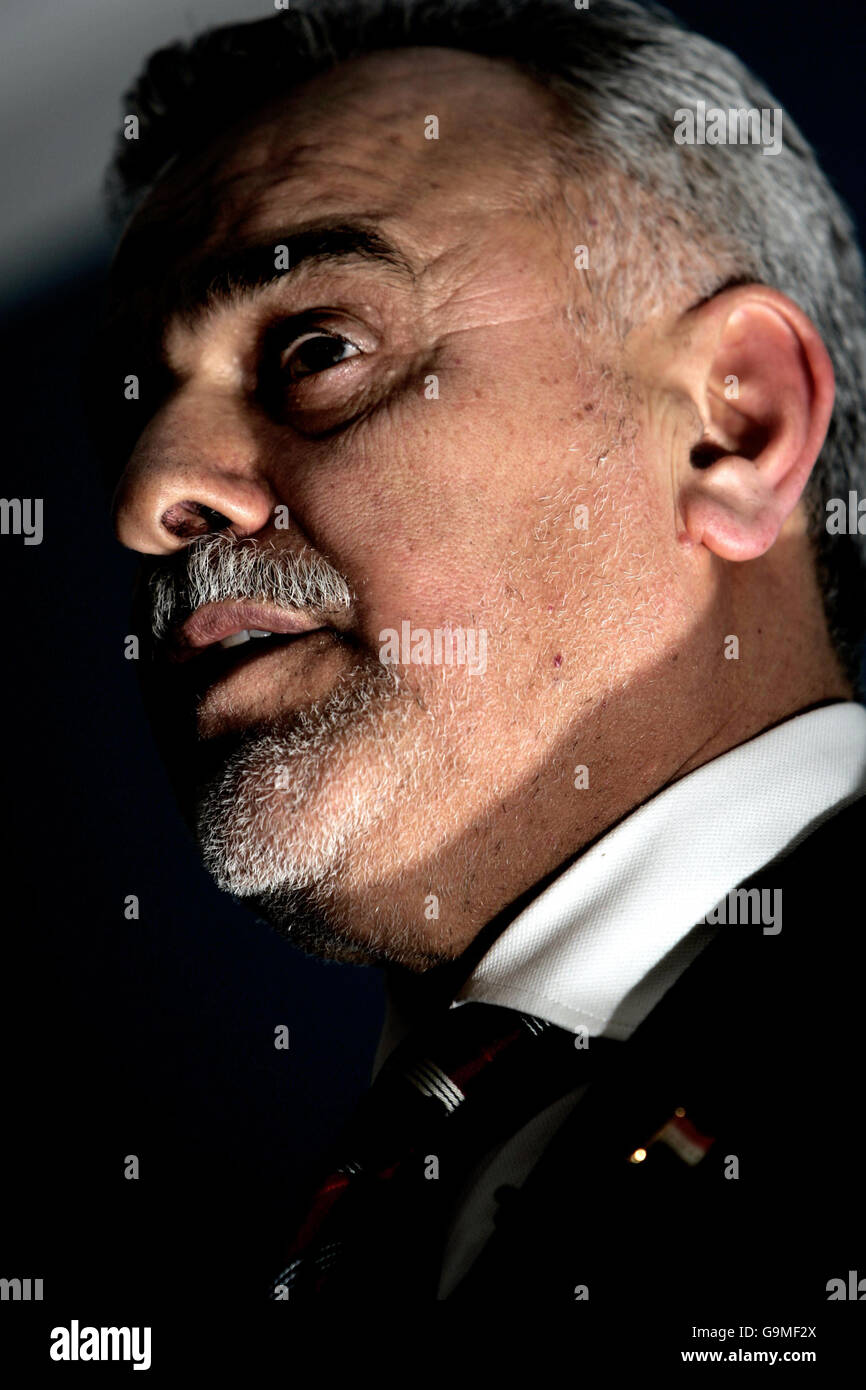
Tariq al-Hashimi
 Iraq
IraqAlso known as: Tariq al-Hashemi, Tareq al-Hachemi, Tarik al-Haszimi
Birthday
January 1, 1942
Birth Sign
Capricorn
Birthplace
Baghdad, Iraq
Age
84 years old
About
Tariq al-Hashimi is an Iraqi politician who served as Vice President of Iraq from 2006 to 2012. A senior figure in the Iraqi Islamic Party, he was the party's General Secretary until May 2009. As the highest-ranking Sunni Arab in the post-invasion government, he represented his community in the fragile power-sharing arrangement that followed the 2003 overthrow of Saddam Hussein.
His political career ended in exile. In December 2011, an arrest warrant was issued against him on terrorism charges. He fled to the Kurdistan Region and later to Turkey, where he has lived ever since. In September 2012, an Iraqi court sentenced him to death in absentia, a verdict he has always rejected as politically motivated. Today, he remains an outspoken commentator on Iraqi affairs, regularly giving interviews and posting his views on social media.
Early Life & Background
Born in Baghdad in 1942, Tariq al-Hashimi grew up during one of the most turbulent periods in modern Iraqi history. He came of age as the monarchy fell in 1958 and the country lurched through a series of coups and republican governments. In his own words, his political awareness 'blossomed at a critical juncture' as he witnessed these transformations firsthand.
He belonged to the prominent al-Hashimi family, a lineage claiming descent from the Hashemite clan of the Prophet Muhammad. This heritage carried religious and political weight in Iraq's Sunni Arab community. Details of his formal education remain scarce, but he rose through the ranks of the Iraqi Islamic Party, Iraq's largest Sunni political organization, becoming its General Secretary in the years after the 2003 invasion.
Career Growth
Al-Hashimi's breakthrough came in 2006, when he was appointed Vice President of Iraq, succeeding Ghazi al-Yawar as the Sunni representative in the national unity government. He served under President Jalal Talabani alongside fellow Vice President Adil Abdul-Mahdi. During his tenure, he was a prominent voice on national security, meeting with U.S. officials including Secretary of State Condoleezza Rice in December 2006 and Secretary of Defense Robert Gates.
His relationship with Prime Minister Nouri al-Maliki deteriorated sharply. In December 2011, as the U.S. military withdrew, al-Hashimi was among those accusing Maliki of acting like 'a dictator' and leading Iraq toward civil war. Days later, an arrest warrant was issued against him. He fled to the Kurdistan Region, where Kurdish authorities refused to hand him over. On September 9, 2012, Iraq's High Judicial Council sentenced him to death in absentia for running death squads. He rejected the verdict as 'unjust, political and illegitimate' and has lived in exile in Turkey since, continuing to comment on Iraqi politics through interviews and his Facebook page.
Career Timeline
Public Image & Style
Al-Hashimi's public image is defined by his role as Iraq's top Sunni politician in the post-invasion power-sharing arrangement. Western media portrayed him as a key statesman during his vice presidency, but his image shifted dramatically after his flight and death sentence. He has consistently presented himself as a victim of sectarian targeting, framing his prosecution as politically motivated. His communication style is formal and statesmanlike, rooted in his identity as a representative of Iraq's Sunni community. His Facebook page, which posts in Arabic, reflects his self-presentation as a witness to Iraqi history and a continuing political voice.
Fame & Fandom
Tariq al-Hashimi commands a distinct and enduring presence in global political discourse, particularly within the Middle East and among observers of post-invasion Iraqi governance. His profile remains high due to the dramatic nature of his fall from power, yet he does not currently hold a placement in the published Global Top 1,000 or any Top-100 scope list according to iFANN's latest evaluation. While his name frequently appears in historical records regarding sectarian conflict and diplomatic tensions, the authority on fame notes that he is evaluated as unranked for the current period, reflecting a status where public attention is sustained by historical significance rather than active viral momentum. The audience surrounding him consists of political analysts, regional historians, and members of the Sunni diaspora who track the ongoing legal and diplomatic saga of his exile. There is no documented fandom name for this group; his support base functions as a political constituency rather than an organized fan community with rituals or official branding. Unlike entertainers who cultivate dedicated followings with specific identifiers, Hashimi's engagement remains strictly tied to his role as a former Vice President and his continued advocacy from Turkey. The lack of a formal fan organization underscores the serious, often somber nature of his legacy, which is defined by state-level controversy rather than popular culture consumption.
Interesting Facts and Legends
His full name, Tariq Ahmed Baker al-Hashimi, appears in U.S. State Department records from a December 2006 meeting. He met with Turkish President Recep Tayyip Erdogan in March 2012, during his exile, a meeting captured by the Anadolu Agency. His death sentence was issued in absentia on September 9, 2012, by Iraq's High Judicial Council. He has claimed that his prosecution was orchestrated under orders from Qassem Soleimani, the commander of Iran's Quds Force. He delivered a speech in Brussels on October 17, 2013, addressing his situation and Iraqi politics. A defining moment in his modern legend involves his allegation that Prime Minister Nouri al-Maliki targeted him directly under the command of Iranian General Qasem Soleimani, a claim that became central to the narrative of Sunni persecution under Maliki. Another iconic episode occurred when he fled Baghdad after the death sentence verdict, seeking refuge first in the Kurdistan Region before moving to Turkey, transforming him into a fugitive vice president and a symbol of resistance for many Sunnis. These events are not merely news items but form the core of his political mythology, retold in discussions about the fragility of Iraq's power-sharing arrangements.
Notable Quotes
“Unjust, political and illegitimate.”
“My political awareness blossomed at a critical juncture in Iraq's history, as I witnessed major events and transformations spanning from the late monarchical era to the beginnings of the republican era.”
Family & Personal Life
Public information about al-Hashimi's family is extremely limited. He was born in Baghdad in 1942 to a prominent Sunni Arab family claiming Hashemite descent. No details about his parents, siblings, spouse, or children have been made public, consistent with the private nature of personal affairs for senior Iraqi political figures.
Notable Connections
Nouri al-Maliki, Iraq's prime minister during al-Hashimi's vice presidency, was his principal political rival. Al-Hashimi accused Maliki of authoritarianism and of orchestrating his prosecution. He succeeded Ghazi al-Yawar as vice president and served under President Jalal Talabani. He also met with U.S. officials Condoleezza Rice and Robert Gates, and with Turkish President Recep Tayyip Erdogan during his exile.
Relationships & Dating History
No public information exists about Tariq al-Hashimi's romantic relationships or marital status. He was born in 1942 and has been a senior political figure in a conservative Iraqi Sunni context, where personal lives are typically kept private. There are no credible reports of a spouse, partner, or children in any available source. As of 2026, his relationship status remains unknown.
Salary, Net Worth In 2026
$1 Million
iFANN Editorial Team estimate
No credible public estimates of Tariq al-Hashimi's net worth exist. As a former vice president and exiled politician, his personal finances have never been the subject of reporting. His income during his political career would have come from government salary and party positions, but exact figures are unknown. Since his exile, he has not been known to hold business ventures or other income-generating roles. Given the lack of data, any estimate would be speculative; per iFANN's editorial analysis, his net worth is commonly listed as around $1 Million as of 2026, though this figure is not supported by any specific source.
Awards & Accolades
View 1 records, honours and achievementsKnown For
Vice President of Iraq
2006-2012 · Vice President
General Secretary of the Iraqi Islamic Party
until 2009 · General Secretary
Keywords
Sources
Quick Facts
- Profession
- politician
- Born
- January 1, 1942
- Birthplace
- Baghdad, Iraq
- Gender
- Male
- Birth Sign
- Capricorn
- Role
- Vice President of Iraq (2006-2012)
Personal Details
- Full Name
- Tariq Ahmed Baker al-Hashimi
Frequently Asked Questions
Is Tariq al-Hashimi dead or alive?
Why was Tariq al-Hashimi sentenced to death?
Where is Tariq al-Hashimi now?
Who is Tariq al-Hashimi?
Is Tariq al-Hashimi married?
Social Media
Similar People
Join the community
fans discussing