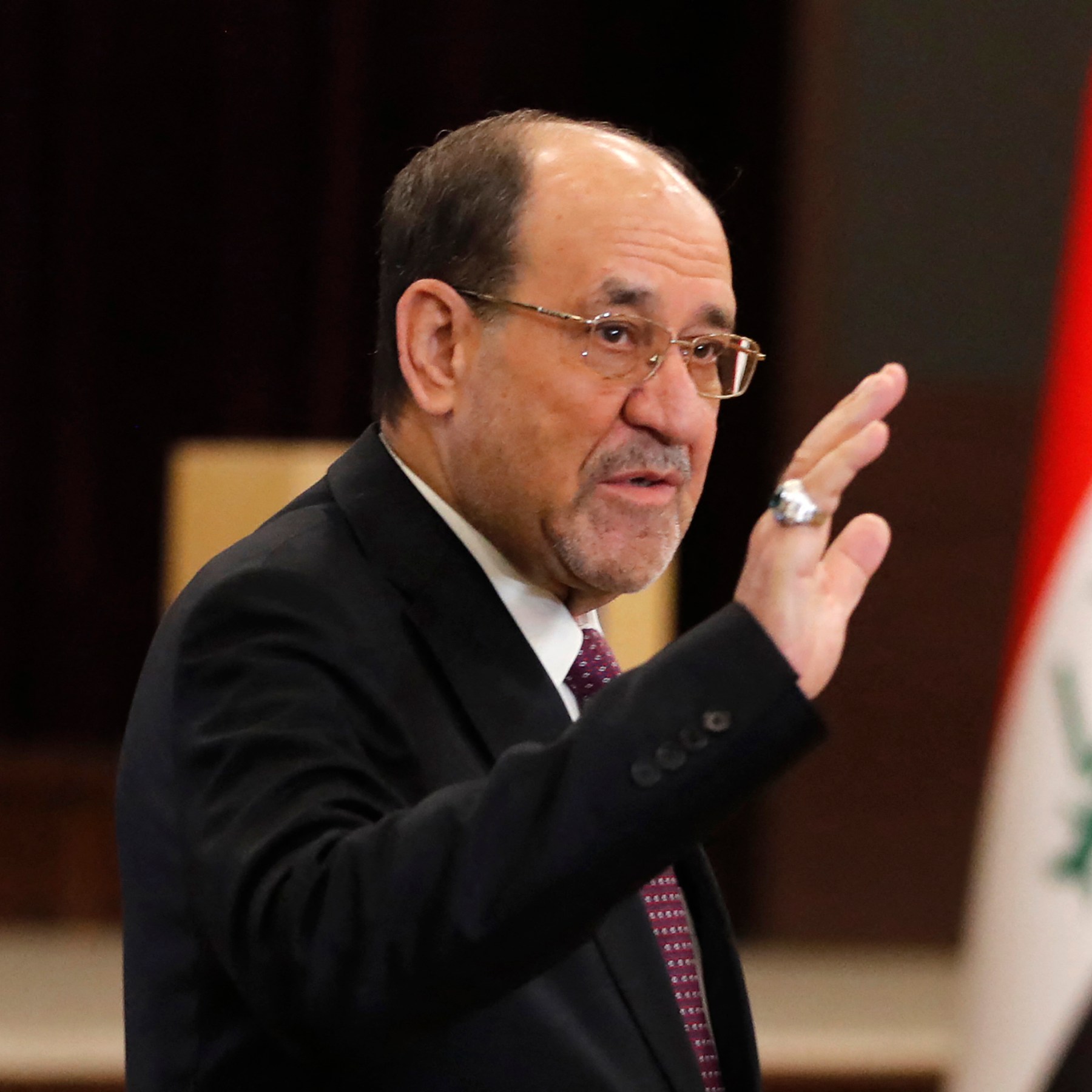
Nouri al-Maliki
 Iraq
IraqAlso known as: Abu Esraa, Nouri Kamil Mohammed Hasan al-Maliki
Birthday
June 20, 1950
Birth Sign
Gemini
Birthplace
Hindeya, Iraq
Age
76 years old
About
Nouri al-Maliki is an Iraqi politician who led the country as prime minister from 2006 to 2014, steering it through one of its most turbulent modern periods. As the head of the Islamic Dawa Party and the State of Law Coalition, he remains a heavyweight in Iraqi politics, still active in government formation talks as of 2026.
His time in office saw Iraq grapple with the rise of the Islamic State, deep sectarian fractures, and widespread corruption allegations. Critics point to his close ties with Iran and his favoritism toward Shia militias as fueling internal conflict, while supporters credit him with holding the country together during the brutal sectarian war that followed the 2003 invasion.
Today, al-Maliki is a polarizing but persistent figure, still seeking a return to the premiership despite opposition from Washington and divisions within his own political bloc. His career has been defined by survival, shifting alliances, and an unyielding ambition that keeps him at the center of Iraqi power struggles.
Early Life & Background
Nouri al-Maliki was born on June 20, 1950, in Hindeya, a small city in Iraq's Karbala Governorate. He grew up in a Shia family during a period of rising Arab nationalism and later Ba'athist rule. He joined the Islamic Dawa Party in the late 1970s, a clandestine Shia Islamist movement that opposed Saddam Hussein's secular Ba'athist regime.
His activism made him a target. In 1979, a death sentence was issued against him, forcing him to flee Iraq. He spent the next 24 years in exile, mostly in Iran and Syria, where he rose through the ranks of the Dawa Party. He became a key coordinator of anti-Saddam activities, forging connections with Iranian and Syrian officials and helping to organize guerrilla operations aimed at toppling Hussein's government.
During his exile, al-Maliki adopted the kunya Abu Esraa, a name that would stick with him throughout his career. He kept a low profile, working behind the scenes as a journalist and party organizer. His intimate knowledge of the regime's security apparatus and his network of contacts among Shia opposition groups made him a valuable asset when the U.S.-led invasion of Iraq in 2003 opened the door for his return.
Career Growth
Al-Maliki's political ascent came quickly after the 2003 invasion. He returned to Iraq and became a member of the interim governing council, then played a key role in drafting the country's new constitution. In 2006, he was selected as prime minister, heading a national unity government that included Sunni, Kurdish, and Shia factions.
His first term was dominated by sectarian violence and a brutal insurgency. He launched major military offensives against Sunni insurgent groups, including the 2008 Battle of Basra and the 2010 crackdown in Baghdad. Critics accused him of using these campaigns to consolidate power and marginalize Sunni politicians. In 2010, he narrowly held onto the premiership after a contentious election and months of political deadlock.
His second term was even more turbulent. In 2014, the Islamic State swept across northern and western Iraq, capturing Mosul and threatening Baghdad. Al-Maliki's government was widely blamed for the military collapse, and he was forced to step down under intense domestic and international pressure. He later served as vice president from 2014 to 2015 and again from 2016 to 2018, but his political ambitions never faded.
In 2026, al-Maliki has re-emerged as a central figure in government formation talks. The Coordination Framework, a coalition of Shia parties, has split over his potential return to the premiership. Despite opposition from the United States, he has vowed to pursue the post, and his State of Law Coalition remains a powerful force in Iraqi politics.
Career Timeline
Public Image & Style
Nouri al-Maliki projects an image of a hardened survivor, a man shaped by decades of exile and political combat. He presents himself as a staunch defender of Iraq's Shia majority, often invoking religious and nationalist rhetoric.
His critics see him as sectarian and authoritarian, pointing to his consolidation of power and his reliance on Shia militias. Supporters, however, view him as a strong leader who stood up to both the Islamic State and foreign interference.
In the media, he is often portrayed as a polarizing figure, with Western outlets highlighting his ties to Iran and his role in the 2014 military collapse. Among his base, he is seen as a champion of the Shia community, and his speeches often draw large crowds.
His social media presence is limited compared to younger politicians, but he maintains active accounts on X and Facebook, where he posts official statements and meeting photos.
Fame & Fandom
Nouri al-Maliki commands a presence defined not by adoration but by intense political gravity. His supporters are not fans in the traditional sense; they are members of the Islamic Dawa Party and constituents within the pro-Tehran Shia bloc who view him as a necessary stronghold against chaos. There is no official moniker for his base, no fan clubs, and no organized rituals of celebration. The mythology surrounding him is strictly historical and contentious, built on narratives of his tenure during the rise of ISIS, his forced ouster in 2014, and his recent, high-stakes bid to reclaim the premiership in 2026 despite fierce opposition from Washington. This legacy has cemented his status as a figure of global geopolitical significance rather than pop culture fame. Despite the absence of a celebrity fanbase, his influence permeates international discourse regarding Middle Eastern stability. In the latest cycle of global attention tracking, Nouri al-Maliki is the 4th most famous person from Iraq, a position he holds steady according to the iFANN Global Fame Rankings.
Interesting Facts and Legends
Al-Maliki's kunya, Abu Esraa, honors his eldest son, reflecting a common cultural tradition. He possesses a sharp memory often displayed when reciting poetry during public speeches. During his years in exile, he worked as a journalist for opposition outlets under a pseudonym to evade Saddam Hussein's intelligence services. Although he holds a master's degree in Arabic literature from the University of Baghdad, he rarely mentions this academic background in political settings. A devotee of classical Arabic music, he has been spotted attending cultural events in Baghdad. His close relationship with Iran remains a polarizing topic, with critics labeling him a Tehran proxy while he insists on policy independence. Beyond these personal details, his political legend includes the widely retold narrative that his governance laid the groundwork for the Islamic State's rise. The defining moment of his career was his forced removal in 2014, ending his first era of power. More recently, his 2026 attempt to return to the premiership sparked a major controversy after President Donald Trump threatened to cut U.S. support if Maliki were reinstated.
Notable Quotes
“I will not leave Iraq except as a corpse.”
“The Islamic State is a cancer that must be removed.”
“We are not afraid of America, but we are afraid of disunity.”
Family & Personal Life
Details about al-Maliki's family are scarce. He is married and has at least one son, Esraa, after whom his kunya is named. He has kept his family largely out of the public eye.
His brother, Abdelaziz al-Maliki, has been involved in tribal affairs in the Karbala region. The family hails from the Al-Bu Nasr tribe, a prominent Shia tribal confederation.
Al-Maliki's household has been based in Baghdad's heavily fortified Green Zone during his time in office. He is known to be a private person who rarely discusses his personal life in interviews.
Notable Connections
Nouri al-Maliki is closely associated with the Islamic Dawa Party, which he has led since 2007. He is also linked to the State of Law Coalition, a political alliance he founded. His premiership brought him into frequent contact with U.S. officials, including President George W. Bush and President Barack Obama. He has maintained strong ties with Iranian leaders, including Supreme Leader Ali Khamenei. In recent years, he has been a dominant figure in the Coordination Framework, a coalition of Shia parties that has been central to Iraq's government formation.
Relationships & Dating History
Nouri al-Maliki is married, but his wife's name and details about their relationship are not publicly known. He has kept his family life private, and there are no public records of his marriage date or his wife's background.
He has at least one son, Esraa, after whom his kunya is derived. There is no information about other children or previous marriages. As of 2026, he remains married, though his wife has never appeared in the media.
- MarriedUnnamed wifeCurrentAl-Maliki is married, but his wife's identity is not public.
Salary, Net Worth In 2026
$10 Million
iFANN Editorial Team estimate
Per iFANN's editorial analysis, Nouri al-Maliki's net worth stands at $10 Million as of 2026. This figure reflects his decades-long trajectory through the Iraqi political landscape, including service as vice president and prime minister. While government salaries for such positions are modest, his longevity in power has secured a comfortable lifestyle. He faces persistent corruption allegations suggesting state funds vanished during his tenure, though no formal charges have ever been filed. Verifying his exact assets remains difficult, yet he is believed to own property in both Baghdad and Iran. Since leaving high office, he has maintained financial stability through continued political activity, party funding, and influential connections. He has not engaged in major commercial ventures outside of politics, keeping his wealth relatively stable over time.
Awards & Accolades
Known For
Prime Minister of Iraq
2006-2014 · Prime Minister
Islamic Dawa Party
2007-present · Leader
Vice President of Iraq
2014-2018 · Vice President
Keywords
Sources
Quick Facts
- Born
- June 20, 1950
- Birthplace
- Hindeya, Iraq
- Political Party
- Islamic Dawa Party
- Premiership
- 2006-2014
- Vice Presidency
- 2014-2018
Personal Details
- Full Name
- Nouri Kamil Mohammed Hasan al-Maliki
Frequently Asked Questions
How old is Nouri al-Maliki?
What is Nouri al-Maliki's net worth in 2026?
Is Nouri al-Maliki still active in politics?
Why is Nouri al-Maliki controversial?
How does Nouri al-Maliki compare to other Iraqi leaders?
Similar People
Join the community
fans discussing