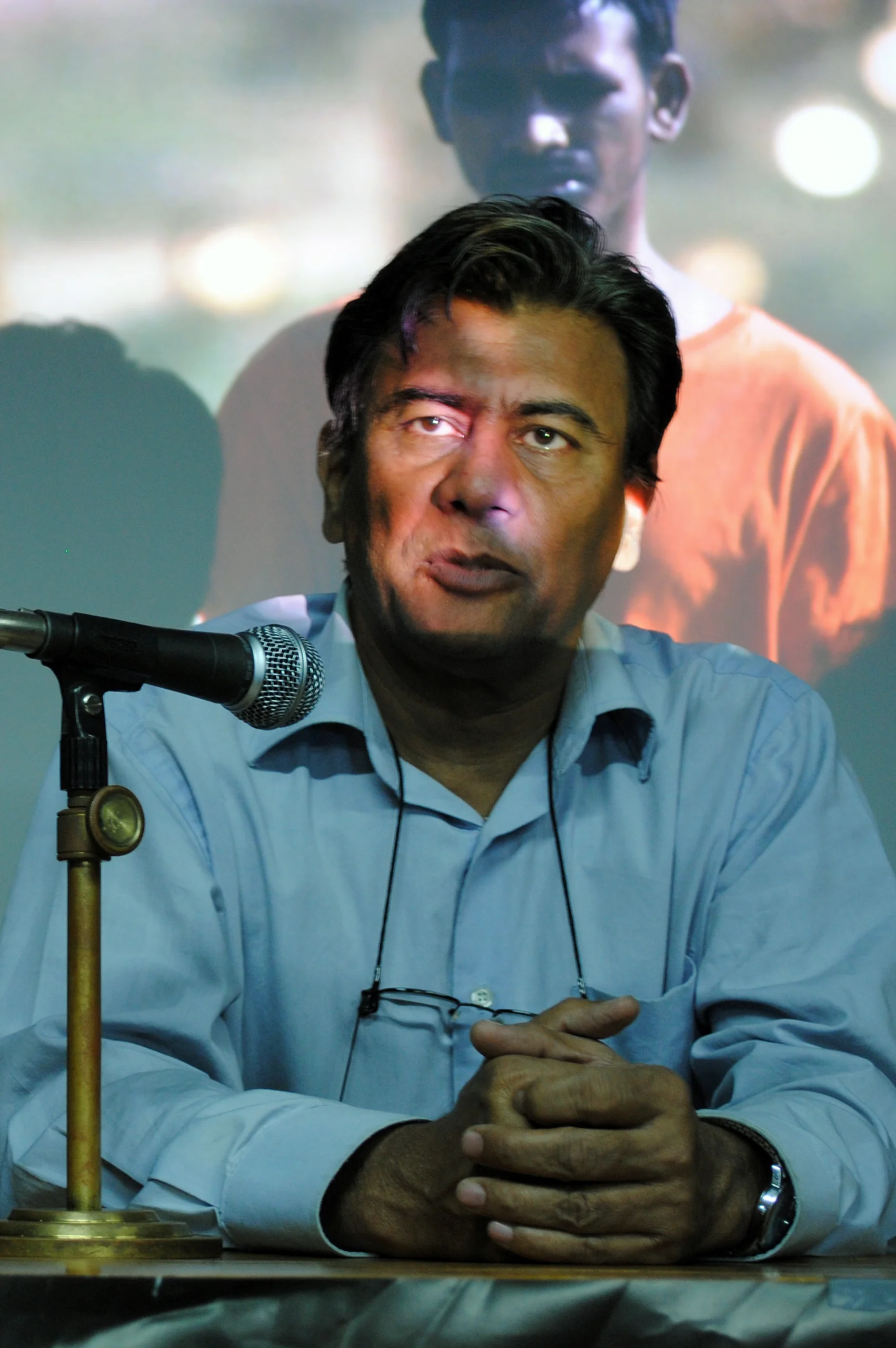
Tareque Masud
 Bangladesh
film director•film producer•screenwriter
Also known as: Tareque Masud, তারেক মাসুদ
Birthday
December 6, 1956
Birth Sign
Sagittarius
Birthplace
Bhanga Upazila, Faridpur District, Bangladesh
Age
Died at 54
About
Tareque Masud was a Bangladeshi independent film director, producer, screenwriter, and lyricist. Born on December 6, 1956, in Bhanga Upazila, Faridpur District, he became a defining voice in his country's cinema, known for films that probed national identity, religious fundamentalism, and the human cost of the 1971 Liberation War. His work stood apart from the commercial mainstream, earning him international acclaim and a lasting place in the history of South Asian cinema.
Masud's breakthrough came with the 1995 documentary Muktir Gaan (Song of Freedom), which wove together songs and testimonies from the Liberation War. His narrative feature Matir Moina (The Clay Bird, 2002) won the FIPRESCI Prize at the Cannes Film Festival's Directors' Fortnight, making him the first Bangladeshi director honored at Cannes. The film also became the first from Bangladesh submitted for Academy Award consideration. He was at work on Kagojer Phool (The Paper Flower) when he died in a road accident on August 13, 2011, at age 54.
Posthumously, Masud received the Ekushey Padak, Bangladesh's second-highest civilian award, in 2012. His legacy is preserved through the Tareque Masud Memorial Trust, chaired by his widow Catherine Masud, and through retrospectives and cultural events that continue to introduce his work to new audiences.
Early Life & Background
Masud grew up in a family with deep educational roots. His father studied at Presidency College in Calcutta, which Masud later described as "the most Western elite school in Calcutta." This background shaped his worldview and became the seed of his semi-autobiographical film Matir Moina. His childhood unfolded in a conservative religious household in rural Bangladesh during the turbulent 1960s, an experience that would inform much of his later work.
He was 14 when the Bangladesh Liberation War erupted in 1971. The war's human cost left a deep impression on him, and it became a central theme throughout his career. He pursued higher education, developing an interest in history and filmmaking during his university years. He later studied film formally, which laid the groundwork for his dual career as a documentarian and narrative filmmaker.
His first major project, Muktir Gaan (1995), grew directly out of his wartime memories. The documentary explored the Liberation War through songs and personal accounts of freedom fighters and ordinary people. Co-produced with his wife Catherine Masud, the film established him as a significant voice in Bangladeshi independent cinema and set the stage for everything that followed.
Career Growth
Masud's breakthrough came in 1995 with Muktir Gaan, a documentary that examined the human side of the 1971 Liberation War through song and testimony. It was his first major success and cemented his reputation as a filmmaker devoted to national identity and historical memory.
His magnum opus, Matir Moina (The Clay Bird), premiered in the Directors' Fortnight at the 2002 Cannes Film Festival, where it won the FIPRESCI Prize. This made him the first director from Bangladesh to be honored at Cannes. The film also became the first Bangladeshi submission for the Academy Award for Best Foreign Language Film. It went on to win two additional international awards, though the specific names are not widely documented.
At the time of his death, Masud was scouting locations for Kagojer Phool (The Paper Flower). He never completed the project. In 2012, he was posthumously awarded the Ekushey Padak, Bangladesh's second-highest civilian honor. The following year, New York University's Asian/Pacific/American Institute and South Asia Solidarity Initiative organized the first North American retrospective of his work.
Career Timeline
Public Image & Style
Tareque Masud is remembered as a pioneering figure in Bangladeshi independent cinema, a filmmaker who operated outside the commercial industry and focused on stories of national identity and historical memory. His work is characterized by a deep commitment to the human cost of the Liberation War and a critical eye on religious fundamentalism.
Media portrayals consistently describe him as "extraordinary" and "pioneering," noting his role in setting the stage for a new era of filmmaking in Bangladesh. His films are praised for their powerful storytelling and independence from commercial norms.
His legacy is maintained through the Tareque Masud Memorial Trust, annual remembrance events, and continued screenings of his work at retrospectives and cultural institutions. Fans and scholars alike regard him as a touchstone for socially engaged cinema in South Asia.
Fame & Fandom
The public engagement surrounding Tareque Masud diverges sharply from the metrics that define modern celebrity culture, lacking the organized fan clubs, social media campaigns, or ritualized gatherings typical of pop icons. His legacy rests not on a named fandom or viral moments, but on a profound, collective mourning for a filmmaker who treated cinema as a public service rather than a commercial product. He operated without a formal fanbase, engaging audiences strictly through his films and mobile screenings in rural villages, a practice that earned him the title Cinema Feriwala yet generated no organized subcultures or inside jokes. The most enduring narrative associated with his name is the verified tragedy of his death in 2011 while scouting locations for Kagojer Phul, an event commemorated annually by filmmakers and activists rather than celebrated by a dedicated following. There are no records of fan-funded projects, birthday billboards, or chart pushes, as his influence remains embedded in the critical history of South Asian cinema rather than the daily consumption habits of a mass audience. Unlike stars whose legends involve crowds fainting or streets shutting down, Masud's status is defined by the silence of a nation remembering a lost conscience. iFANN has evaluated this figure within its global framework to assess current standing against historical benchmarks. Tareque Masud does not currently hold a placement in the published rankings (Global Top 1,000 or a Top-100 scope list).
Interesting Facts and Legends
Tareque Masud was also a lyricist, adding another layer to his creative output beyond directing and producing. He once remarked, "If I could have, I would have made a documentary on my life, but it is virtually impossible to do that." The Tareque Masud Memorial and Cultural Center in Faridpur was designed as a thesis project by an architecture student, a fitting tribute to a filmmaker who valued education and cultural memory. His film Matir Moina was deeply autobiographical, drawing from his father's story of studying at Presidency College in Calcutta and his own childhood in a conservative religious household. In February 2026, Bangladeshi filmmaker Raihan Rafi dedicated his upcoming film Pressure Cooker to Masud's memory, citing his influence and legacy. A widely retold story in Bangladeshi cinema history concerns the circumstances of his death when he was killed in a road accident while returning from a location scout for his upcoming feature film Kagojer Phul. This sudden loss of a committed historian-filmmaker became a defining moment for the nation's cultural landscape. His 1995 film Muktir Gaan and his 2002 film Matir Moina are cited as his masterpieces, with the latter achieving extraordinary international recognition as the first Bangladeshi film nominated for an Academy Award in the Best Foreign Language Film category. Unlike pop stars whose legends involve crowds fainting or streets shutting down, Masud's legendary status is defined by the critical acclaim and emotional resonance of his documentaries on the 1971 Liberation War.
Notable Quotes
“First of all this was very autobiographical. It comes from the story of my father. He studied in the most Western elite school in Calcutta, Presidency College.”
“If I could have, I would have made a documentary on my life, but it is virtually impossible to do that.”
Family & Personal Life
Masud's father studied at Presidency College in Calcutta, which Masud described as "the most Western elite school in Calcutta." This background influenced his worldview and became a key element in Matir Moina. His family's conservative religious practices during his childhood in rural Bangladesh also shaped his perspective on faith and society.
Masud married Catherine Masud, who became his creative collaborator as well as his life partner. Together they produced numerous documentaries and short films, including Muktir Gaan. After his death, Catherine became chairperson of the Tareque Masud Memorial Trust, working to preserve and promote his legacy. No information about children from their marriage is publicly documented.
Notable Connections
Catherine Masud, his wife and creative collaborator, co-produced Muktir Gaan and other works. Cinematographer Mishuk Munier died alongside him in the 2011 accident. Contemporary filmmaker Raihan Rafi dedicated Pressure Cooker to his memory. Indian film scholar Sanjay Mukhopadhyay and artist Dhali Al-Mamoon participated in memorial events.
Relationships & Dating History
Tareque Masud married Catherine Masud, who became his creative partner as well as his wife. Together they produced numerous documentaries and short films, including Muktir Gaan. Their marriage lasted until his death in 2011. No other romantic relationships are documented in credible sources. At the time of his death, he was married to Catherine Masud.
- MarriedCatherine Masud? - 2011Creative collaborator and wife; co-produced 'Muktir Gaan' and other works.
Death & Aftermath
Died
August 13, 2011 (aged 54)
Death Place
Manikganj, Bangladesh
Cause of Death
Fatal road traffic accident
The death of Tareque Masud triggered an immediate outpouring of grief across Bangladesh and within the international film community, with The New York Times publishing a detailed obituary that highlighted his status as the first Bangladeshi director honored at the Cannes Film Festival. This mourning followed a tragic event on August 13, 2011, when Masud was returning from a location scout for his unfinished feature Kagojer Phul in Manikganj to Dhaka. The vehicle involved was a bus carrying the director and four others, which resulted in a fatal road traffic accident that claimed the lives of Masud, cinematographer Mishuk Munier, producer Proshoon Rahman, and another crew member while his wife Catherine survived with injuries.
Local authorities investigated the incident as a standard crash based on police reports and media coverage. A memorial project titled the Tareque Masud Memorial and Cultural Center was subsequently established in Faridpur around 2013 to honor the pioneer filmmaker. Posthumous recognition included continued inclusion in film festivals and retrospectives honoring his contribution to world cinema, while his estate handling has not been made public.
Net Worth (Estate Value)
$5 Million
iFANN Editorial Team estimate
Per iFANN's editorial analysis, Tareque Masud's net worth is estimated at $5 million as of 2026. This figure reflects the enduring value of his filmography, which continues to generate revenue through screenings, retrospectives, and cultural events. His estate is managed by the Tareque Masud Memorial Trust, chaired by his widow Catherine Masud. The primary assets are the intellectual property rights to his films, including Muktir Gaan and Matir Moina. These works are regularly shown at film festivals and academic institutions, contributing to the estate's income. The trust also oversees commemorative events and preservation efforts, which help maintain the cultural relevance of his work. While specific earnings figures are not publicly documented, the steady interest in his films and the ongoing activities of the trust suggest a stable financial foundation for his legacy.
Awards Won (2)
Tareque Masud won the FIPRESCI Prize at the 2002 Cannes Film Festival for 'Matir Moina', becoming the first Bangladeshi director honored at Cannes. He was posthumously awarded the Ekushey Padak in 2012.
2012 · Civilian Honor
Lifetime achievement
2002 · International Critics' Prize
Matir Moina
Known For
Matir Moina (The Clay Bird)
2002 · Director, screenwriter
Muktir Gaan (Song of Freedom)
1995 · Director, producer
Keywords
Sources
Quick Facts
- Profession
- film director, film producer, screenwriter
- Born
- December 6, 1956
- Birthplace
- Bhanga Upazila, Faridpur District, Bangladesh
- Died
- August 13, 2011
- Death Place
- Ghior Upazila, Manikganj District, Bangladesh
- Gender
- Male
- Spouse
- Catherine Masud
- Birth Sign
- Sagittarius
- Net Worth
- $5 Million
Personal Details
- Full Name
- Tareque Masud
- Spouse
- Catherine Masud
- Education
- Studied film formally; background in history
Filmography
5
Total
5
Film
0
TV
Frequently Asked Questions
How did Tareque Masud die?
What is Tareque Masud's most famous film?
Who is Catherine Masud?
Was Tareque Masud the first Bangladeshi director at Cannes?
Did Tareque Masud win the Ekushey Padak?
Social Media
Similar People
Join the community
fans discussing