Taksin
 Thailand
Also known as: King of Thonburi, King Taksin, King Krung Thonburi, King Boromracha 4, Phra Choa Taksin, Phrachoa Tak, Phraya Tak, Taksin The Great, King Taksin the Great
Birthday
April 17, 1734
Birth Sign
Aries
Birthplace
Phra Nakhon Si Ayutthaya
Age
Died at 47
About
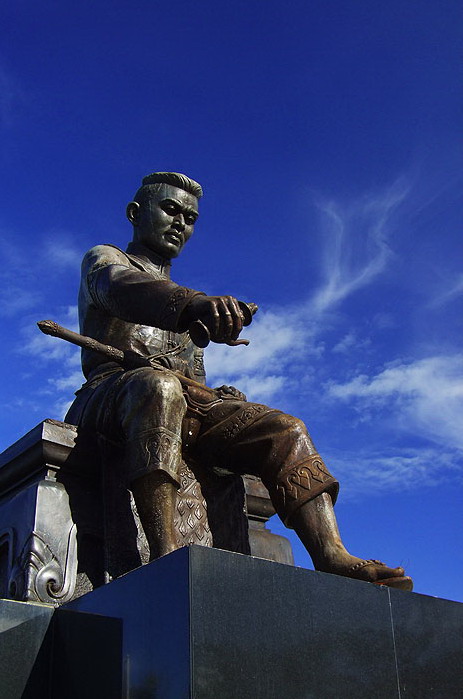
Taksin the Great, born Sin, was a Thai-Chinese general who became the sole monarch of the Thonburi Kingdom, ruling Siam from 1767 until his deposition and execution in 1782. Born on April 17, 1734, in Phra Nakhon Si Ayutthaya, he was the son of a Chinese immigrant street trader named Noklan and a Thai mother named Noi. His reign is celebrated for reuniting the fractured kingdom after the fall of Ayutthaya to Burmese forces, establishing Thonburi as the new capital, and defending Siam against multiple invasions. He also prioritized economic recovery, trade, and infrastructure, earning him the posthumous title "the Great." Taksin was overthrown in a coup led by General Chakri and executed shortly thereafter.
Early Life & Background
Born Sin in 1734, the future king grew up in a modest household within the bustling city of Phra Nakhon Si Ayutthaya. His father, Noklan, was a Chinese immigrant street trader, while his mother, Noi, was Thai. This mixed heritage would later become central to his identity and political base. As a young boy, Sin received a traditional education at Wat Chai Mongkol, where he studied Buddhism and classical literature alongside other promising youths. While many children of traders focused solely on commerce, Sin displayed an early aptitude for military strategy and leadership.
Before his rise to kingship, he served under King Ekkathat, eventually rising to the rank of Governor of Kanchanaburi. In this role, he gained valuable experience in logistics and administration during the turbulent years leading up to the fall of Ayutthaya. The pivotal moment before his ascent occurred in 1767 when the Burmese sacked the ancient capital. While many nobles fled or were captured, Sin led a small group of loyalists out of the besieged city. He gathered forces to liberate Siam, setting the stage for his eventual coronation as King Taksin.
Career Growth
Taksin's career began in earnest with the liberation of Ayutthaya in January 1767. Within months, he marched to Thonburi, establishing it as the new capital after Ayutthaya lay in ruins. His reign from 1767 to 1782 was defined by continuous military campaigns to reunify the fractured kingdom. He successfully defeated rival warlords, subjugated Lanna (Northern Thailand), Laotian principalities, and Cambodia, and repelled multiple Burmese invasions. Beyond warfare, Taksin prioritized economic recovery, trade, and infrastructure, building roads and canals, restoring temples, and promoting literature and the arts. He issued regulations to collect and organize texts, boosting education and religious studies. His commercial success included revitalizing Siam's trade networks with China, Europe, and neighboring regions. In 1782, he was overthrown in a coup by General Chakri, who founded the Chakri dynasty and succeeded him as King Rama I.
Career Timeline
Public Image & Style
Taksin is portrayed as a charismatic and decisive leader who rose from humble beginnings to unify a shattered nation. His image is one of strength, resilience, and tragedy, with media and historians emphasizing his meritocratic rise and the circumstances of his downfall. He is remembered as a sovereign who rebuilt Siam from the ashes of war, balancing military conquest with cultural revival. His legacy oscillates between admiration for his achievements and caution regarding his later years, creating a complex public persona that endures in Thai culture.
Fame & Fandom
The ruins of Ayutthaya still whisper the name of the man who rose from a street trader's son to unify a shattered kingdom. Taksin the Great commands a legacy that transcends centuries, anchoring his place in history as a sovereign who rebuilt Siam from the ashes of war. His enduring prominence is quantified by modern metrics: he stands as the 13th most famous person in Thailand, the 33rd most famous person from Thailand, and the 47th most famous person in Southeast Asia. These placements reflect a global attention span that tracks media coverage, search behavior, and cultural consumption worldwide, keeping his profile steady across cycles. He holds these positions within the iFANN Global Fame Rankings without needing further explanation; the numbers speak for themselves. Unlike contemporary celebrities whose fanbases organize chart pushes or birthday billboards, Taksin does not have a formal fandom name. There are no organized clubs or viral campaigns driving his visibility. Instead, his audience consists of the Thai public and devotees engaged in religious veneration. Their interaction takes the form of solemn tribute at shrines like the King Taksin Shrine in Tak province, where visitors dress with ritualistic respect rather than recreational enthusiasm. State-sponsored events, such as the Hanuman Guardian ceremony honoring him with foreign military units, underscore a relationship defined by national myth-making rather than pop-culture fandom. He remains a deified figure, a beloved tyrant whose story of rise and fall is retold not by fans but by historians and citizens alike.
Interesting Facts and Legends
Taksin's sword has become the subject of real-world drama, including a 2020 incident where a man "borrowed" it for a vigilante drug war operation and a 2026 theft by a professor citing a mental blackout. In August 2018, the Idaho National Guard honored Taksin during the opening of the Hanuman Guardian exercise, highlighting his symbolic recognition by foreign military units. Taksin is often described as a "beloved tyrant," reflecting the duality of his rise as a unifier and his tragic decline into madness and execution. The narrative surrounding his life emphasizes his meritocratic rise from a street trader's son to a great king. His story remains a cornerstone of Thai national mythology, blending historical fact with legendary elements.
Family & Personal Life
Taksin was married to three primary queens: Krom Phra Boromrajini (Bat Boricha), Krom Phra Boromracha (Prathum), and Krom Phra Boromracha (Srisudarak). These marriages were political alliances that strengthened his rule. There is no detailed record of romantic relationships outside these unions, as royal marriages in this period were primarily dynastic. Taksin had children, though their identities and fates are not fully documented in surviving records. His parents were Noklan, a Chinese immigrant street trader, and Noi, a Thai woman.
Notable Connections
Relationships & Dating History
As a monarch of the 18th century, Taksin did not have dating relationships in the modern sense. His personal life was defined by formal royal marriages that served political and dynastic purposes. He was married to three primary queens: Krom Phra Boromracha (Bat Boricha), Krom Phra Boromracha (Prathum), and Krom Phra Boromracha (Srisudarak). These unions were strategic alliances that helped consolidate his power and strengthen his rule. There is no detailed record of romantic relationships outside these unions. Taksin had children, though their identities and fates are not fully documented in surviving records. At the time of his death in 1782, he was married to Srisudarak.
- MarriedKrom Phra Boromracha (Bat Boricha)1767 - presentPolitical alliance during rise to power; no specific details on meeting.
- MarriedKrom Phra Boromracha (Prathum)Another political marriage contributing to consolidation of power.
- MarriedKrom Phra Boromracha (Srisudarak)? - 1782Final spouse mentioned in historical records during later years of reign.
Death & Aftermath
Died
April 7, 1782 (aged 47)
Death Place
Thonburi
Cause of Death
Reported execution following deposition
King Taksin died on April 7, 1782, in Thonburi. His final days were defined by a violent power struggle with General Chakri, who orchestrated a coup against the aging monarch due to concerns over his erratic behavior and alleged megalomania. Historical consensus drawn from the Chronicles of the Reigns of Kings Rama I to V states that Taksin was executed by order of the new regime shortly after his arrest, though some traditional narratives suggest he may have succumbed to illness while in confinement. The removal lacked any modern judicial proceeding or autopsy; the new dynasty simply legitimized the transfer of power as a necessary act to restore order.
In the immediate aftermath, public reaction was suppressed by the Chakri rulers, who sought to consolidate their authority. For nearly two centuries, official histories largely omitted or vilified the fallen king, even as he remained revered among commoners and the Chinese-Siamese community. Taksin was cremated according to Buddhist royal traditions, though the specific rites were not preserved as major monuments at the time. Today, his legacy has been fully rehabilitated through state-sponsored education, statues at the Grand Palace, and landmarks like the Taksin Bridge. A significant film production titled Taksin the Great released in 1996 further cemented his status as a national hero.
Net Worth (Estate Value)
$0
iFANN Editorial Team estimate
As a historical figure from the 18th century, Taksin did not possess personal wealth in the modern sense. His financial resources were tied to the kingdom's treasury and the assets of the state, which he managed as sovereign. The concept of a personal net worth does not apply to monarchs of his era, as their wealth was indistinguishable from the realm itself. Posthumous estimates of estate value are not applicable, as the legal frameworks for inheritance and personal property were vastly different then. The iFANN Editorial Team notes that while no monetary value can be assigned to his personal fortune, his legacy generated immense cultural and economic value for Thailand over subsequent centuries.
Awards & Accolades
View 7 records, honours and achievementsKnown For
King of Thonburi
1767 · Monarch
Taksin the Great
1767 · National Hero
Keywords
Sources
Quick Facts
- Profession
- sovereign, poet
- Born
- April 17, 1734
- Birthplace
- Phra Nakhon Si Ayutthaya
- Died
- April 7, 1782
- Death Place
- Thon Buri
- Gender
- Male
- Spouse
- Krom Brija Phakdi Srisudarak, Bat Boricha, Prathum
- Birth Sign
- Aries
Personal Details
- Full Name
- Sin
- Spouse
- Krom Phra Boromracha (Bat Boricha), Krom Phra Boromracha (Prathum), Krom Phra Boromracha (Srisudarak)
- Children
- Unspecified number; identities not fully documented in surviving records
- Education
- Wat Chai Mongkol, Ayutthaya
Frequently Asked Questions
Who was Taksin the Great?
How did Taksin die?
What is Taksin's legacy?
Where is Taksin buried?
Is Taksin still relevant today?
Similar People
Join the community
fans discussing