Takeshi Obata
 Japan
Japanmangaka•illustrator•screenwriter
Also known as: Hijikata Shigeru
Birthday
February 11, 1969
Birth Sign
Aquarius
Birthplace
Niigata, Niigata Prefecture, Japan
Age
57 years old
About
Takeshi Obata is a Japanese manga artist known for his intricate, dynamic illustrations that have defined modern manga for over three decades. Born February 11, 1969, in Niigata, he typically works as the illustrator in collaboration with a writer, a partnership that has produced some of the most visually striking and commercially successful series in the medium.
Obata first captured international attention with Hikaru no Go (1999–2003), written by Yumi Hotta, about a boy possessed by the spirit of an ancient Go master. He reached global fame with Death Note (2003–2006), the psychological thriller written by Tsugumi Ohba, which became a multimedia phenomenon spanning anime, live-action films, and a devoted worldwide fandom. He and Ohba reunited for Bakuman (2008–2012), a semi-autobiographical drama about manga creators that resonated deeply with fans and industry insiders.
Beyond his own works, Obata has mentored a generation of artists, including Nobuhiro Watsuki (Rurouni Kenshin), Kentaro Yabuki (Black Cat), and Yusuke Murata (One Punch Man). His series have collectively sold tens of millions of copies, and his artbooks, like Blanc et Noir and NEVER COMPLETE, are prized collector's items.
Early Life & Background
Takeshi Obata was born in Niigata City, Niigata Prefecture, on February 11, 1969. Details of his childhood and formal education remain largely undocumented, as Obata has always kept his private life out of the public eye. What is known is that he developed an early passion for manga and began pursuing a professional career in his late teens.
His first published works appeared under the pseudonym Hijikata Shigeru, a name he used before establishing himself under his real name. During these formative years, he honed his craft as an assistant, absorbing the technical skills and storytelling instincts that would later define his signature style. His early career was marked by a steady progression from assistant to solo artist, and he began collaborating with writers on serialized projects in Weekly Shōnen Jump.
One of his earliest milestones came when he took on Katsura Hoshino as an assistant, a relationship that would later bear fruit when Hoshino created D.Gray-man. This period of apprenticeship and early collaboration set the stage for Obata's breakthrough, but it was his partnership with Yumi Hotta on Hikaru no Go in 1999 that would finally put his name on the map.
Career Growth
Obata's breakthrough arrived in 1999 with Hikaru no Go, written by Yumi Hotta. The series, about a young boy possessed by the spirit of an ancient Go master, ran in Weekly Shōnen Jump until 2003 and became a massive hit, winning the Tezuka Osamu Cultural Prize's New Artist Prize in 2000 and helping to spark a resurgence of interest in the board game Go across Japan.
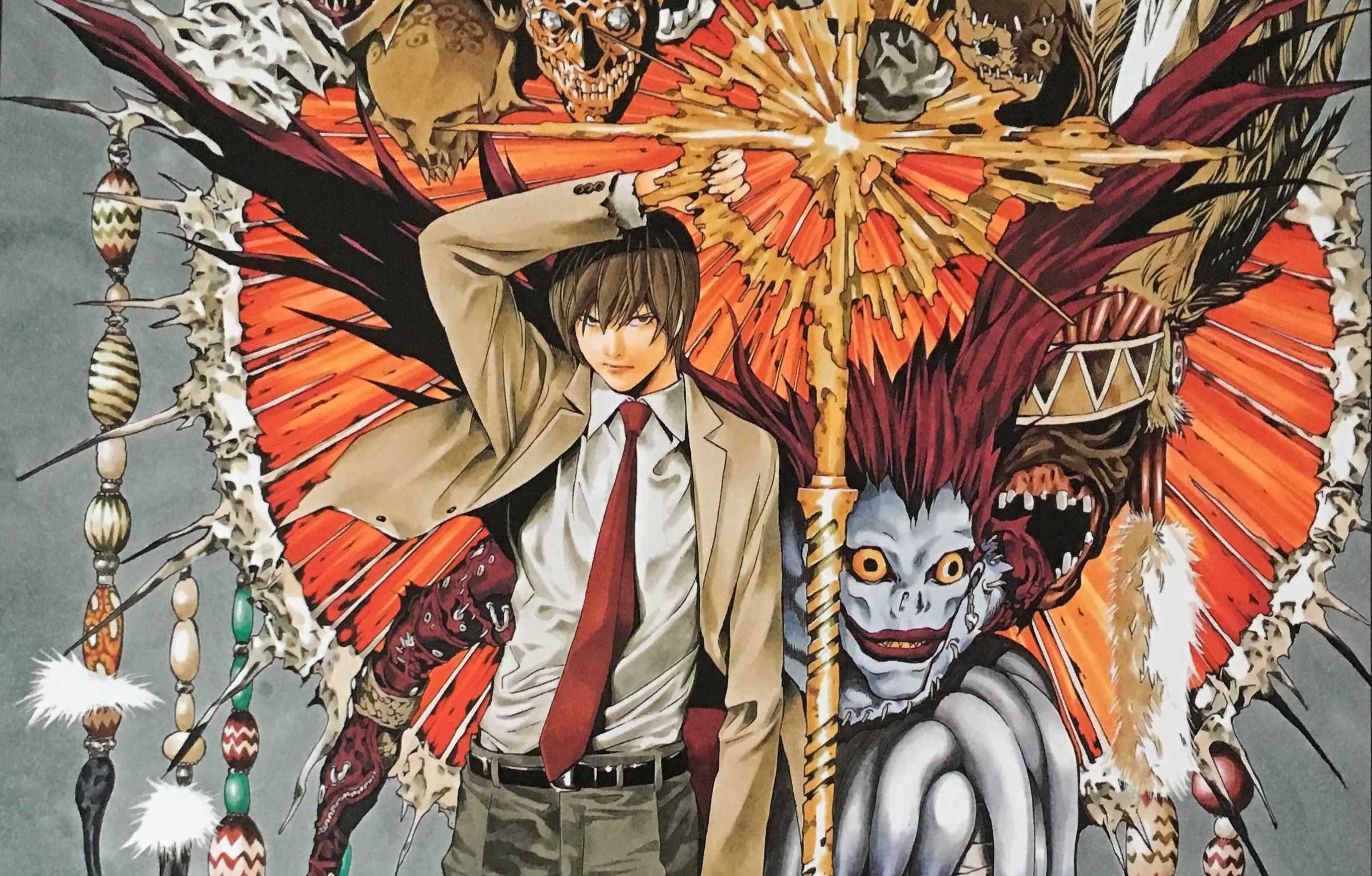
In 2003, Obata teamed up with writer Tsugumi Ohba for Death Note, a psychological thriller about a student who gains the power to kill anyone by writing their name in a supernatural notebook. The series ran until 2006 and became a global phenomenon, spawning a 2006 anime adaptation, two live-action films in Japan (2006 and 2007), and a 2017 Netflix film. Death Note's success cemented Obata's reputation as a master of visual storytelling, with his sharp linework and ability to convey tension and emotion drawing widespread acclaim.
After Death Note concluded, Obata and Ohba reunited for Bakuman (2008–2012), a semi-autobiographical story about two teenagers striving to become successful manga creators. The series was praised for its insider look at the industry and its heartfelt portrayal of creative ambition. In 2008, Obata also lent his talents to character design for the video game Castlevania: Judgment on the Wii.
In 2015, Obata and Ohba announced a new collaboration, Platinum's End, which began serialization shortly thereafter. Obata made a high-profile appearance at New York Comic Con in 2014, where he discussed the differences between manga and film adaptations. His most recent project, the artbook NEVER COMPLETE, was released in August 2026, showcasing his evolving artistic range.
Career Timeline
Public Image & Style
Obata is widely regarded as one of manga's most respected illustrators, known for his sharp linework, intricate details, and ability to convey intense emotion. His art style is often described as dynamic and cinematic, bringing a sense of realism and gravity to whatever story he illustrates. Media coverage frequently highlights his role as the visual architect behind Death Note, with one outlet crediting the series with "defining horror for a generation" of readers.
Fans of Obata tend to be passionate and dedicated, with Death Note in particular boasting one of the most devoted fan bases in manga history. His social media presence, primarily on X (Twitter) at @obata_ten, is professional and understated, focusing on announcements and art rather than personal musings. This air of mystery only adds to his allure, as admirers appreciate the purity of his artistic output.
Fame & Fandom (iFAMOUS Rankings)
Takeshi Obata's fanbase is a quiet, reverent collective, more a fellowship of admirers than a named fandom. There's no official moniker, no fan club title; instead, his followers identify through the worlds he's drawn, from the Go boards of Hikaru no Go to the notebooks of Death Note. They gather in series-specific spaces like the Death Note Wiki and r/DeathNote, united by a shared awe for his linework and a deep appreciation for the psychological depth he visualizes. His appearances, such as the 2014 New York Comic Con panel, are treated as pilgrimages, drawing crowds eager to glimpse the hand behind their favorite panels. Yet, the true legend of Obata isn't in fan theatrics, it's in the work itself, and in the enduring mystery of his collaborator Tsugumi Ohba, a pseudonym that fuels endless speculation. His art commands near-reverence, and the community's devotion manifests in preserving and celebrating his legacy, from auctioning original pages to championing re-releases.
This devotion is reflected in the broader recognition of his stature. In the iFANN Global Fame Rankings, Takeshi Obata is currently the 26th most famous person in Manga, up from 27th last cycle. This placement underscores his standing as a defining illustrator of the medium, whose influence continues to resonate with both longtime fans and new readers drawn to his cinematic, intricate style.
Interesting Facts and Legends
Before settling on his real name, Obata published under the pseudonym Hijikata Shigeru. He has mentored several prominent artists, including Nobuhiro Watsuki (Rurouni Kenshin), Kentaro Yabuki (Black Cat), and Yusuke Murata (One Punch Man). His assistant roster included Katsura Hoshino, creator of D.Gray-man. Obata's artbook Blanc et Noir retailed at $99.99, reflecting its premium production. In a 2014 interview, he remarked that film and manga each have unique expressions, noting, "film will do things only film can do, and manga likewise." Original Death Note artwork has been sold at auction; a 2024 MutualArt sale featured an illustration of Light Yagami. One story fans still retell is from his appearance at New York Comic Con in 2014, where he engaged with Western audiences, a standard convention appearance, but one that left a lasting impression on those who met him. The "Blanc et Noir" exhibition, which celebrated his illustrations, was critically acclaimed for highlighting the precision and clean linework of his style, though it didn't generate folklore about physical reactions. More recently, the Death Note stage adaptation at the Barbican has been reviewed, suggesting the franchise's enduring power to draw new audiences.
Among the legends that circulate, the most persistent is the mystery of Tsugumi Ohba's true identity, a story fans love to theorize about, often wondering if the writer is a famous author in disguise. While no one has confirmed it, the speculation adds an air of intrigue to every collaboration. Another cherished anecdote involves Obata's meticulous process: it's said he draws every page by hand, eschewing digital tools, which fans point to as the source of his art's organic warmth. These stories, passed down through forums and convention panels, enrich the mythology around a creator whose work speaks louder than any publicity stunt.
Notable Quotes
“There are certain things – certain expressions unique to each format, so film will do things only film can do, and manga likewise.”
Family & Personal Life
Very little is known about Takeshi Obata's family. He has never publicly discussed his parents, siblings, or any children, and no credible sources have reported on his household. This privacy extends to his current living situation; he has not shared details about where he lives or any pets. What is clear is that Obata prioritizes keeping his personal life separate from his public career, a stance that has earned him respect among fans who value his focus on the work itself.
Notable Connections
Takeshi Obata is best known for his collaborations with writers Tsugumi Ohba (Death Note, Bakuman, Platinum's End) and Yumi Hotta (Hikaru no Go). He has also mentored several notable manga artists, including Nobuhiro Watsuki (Rurouni Kenshin), Kentaro Yabuki (Black Cat), and Yusuke Murata (One Punch Man). His former assistant Katsura Hoshino went on to create D.Gray-man.
Relationships & Dating History
Takeshi Obata has kept his romantic life entirely private. No public records, interviews, or credible media reports mention any past or current relationships. He has never been linked to a partner, and there is no evidence of a spouse, engagement, or dating history. As of 2026, his relationship status remains unknown, and he has not shared any details about his personal life with the public.
Salary, Net Worth In 2026
As of 2026, Takeshi Obata's net worth is not publicly documented. His income streams are tied to his long-running manga career. He earns royalties from the tankōbon sales of his major series, which have sold tens of millions of copies collectively. Death Note alone has sold over 30 million copies worldwide, and Hikaru no Go and Bakuman each sold millions more.
Adaptation licensing adds another significant revenue stream, with anime, live-action films (including the 2017 Netflix Death Note), and merchandise generating ongoing royalties. Obata has also earned fees for character design work, such as the 2008 game Castlevania: Judgment. His artbooks, including Blanc et Noir (retailing at $99.99) and NEVER COMPLETE (released in 2026), contribute to his income. Original artwork sales have also proven lucrative; a 2024 auction of a Death Note illustration fetched a notable sum.
Awards Won (2)
Takeshi Obata has won several major awards for his work. Hikaru no Go received the Tezuka Osamu Cultural Prize's New Artist Prize in 2000, and Death Note won the Shogakukan Manga Award for Best Shōnen Manga in 2006. These honors reflect the critical and commercial acclaim of his collaborations.
2006 · Best Shōnen Manga
Death Note
2000 · New Artist Prize
Hikaru no Go
Known For
Death Note
2003 · Illustrator
Hikaru no Go
1999 · Illustrator
Bakuman
2008 · Illustrator
Platinum's End
2015 · Illustrator
Keywords
Sources
Quick Facts
- Profession
- mangaka, illustrator, screenwriter
- Born
- February 11, 1969
- Birthplace
- Niigata, Niigata Prefecture, Japan
- Gender
- Male
- Birth Sign
- Aquarius
Frequently Asked Questions
How old is Takeshi Obata?
What is Takeshi Obata's net worth?
Is Takeshi Obata married?
What is Takeshi Obata best known for?
Does Takeshi Obata have children?
Social Media
Similar People

Join the community
fans discussing