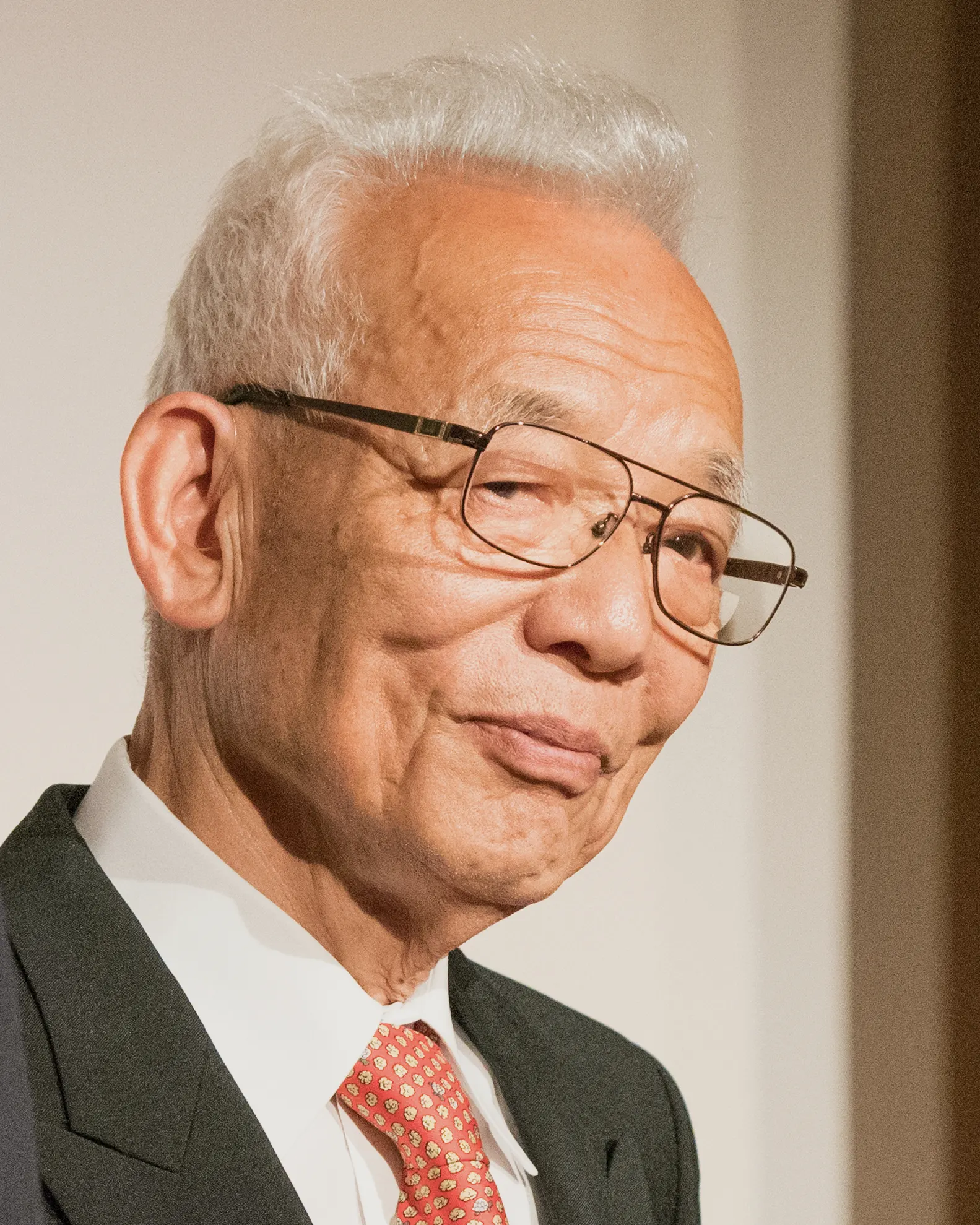
Syukuro Manabe
 Japan
Also known as: Suki Manabe, Shukuro Manabe
Birthday
September 21, 1931
Birth Sign
Virgo
Birthplace
Shinritsu, Japan
Age
95 years old
About
Syukuro "Suki" Manabe is a Japanese-American physicist, meteorologist, and climatologist who fundamentally changed how we understand Earth's climate. He is best known for building the first modern climate model and for demonstrating that rising carbon dioxide levels in the atmosphere warm the planet. For that work, he shared the 2021 Nobel Prize in Physics with Klaus Hasselmann and Giorgio Parisi.
Now in his nineties, Manabe remains an active senior meteorologist at Princeton University, where he continues to publish and mentor. His models underpin many of the climate projections used worldwide today, and his name is synonymous with the scientific foundation of global warming research. Scientists and students alike revere him as a foundational figure in climate science.
Early Life & Background
Born in Shinritsu, Japan, in 1931, Syukuro Manabe grew up in a country still recovering from the Great Depression, with war looming on the horizon. He showed an early aptitude for science, though his path to climate research was not direct. He entered the University of Tokyo, where he studied physics and meteorology, earning his doctorate in 1958. His thesis focused on the general circulation of the atmosphere, a topic that would become his life's work.
After finishing his Ph.D., Manabe made a pivotal move to the United States, joining the U.S. Weather Bureau's General Circulation Research Section, which later became part of NOAA. He arrived just as computers were beginning to be used for weather forecasting, and he saw their potential for simulating the entire climate system. His early work there involved developing numerical models of the atmosphere, initially to improve weather prediction, but soon his focus shifted to long-term climate.
In November 1966, Manabe and his colleagues produced what is now recognized as the first modern climate model, combining atmospheric physics with radiative transfer and convection. That breakthrough set the stage for everything that followed.
Career Growth
After joining the U.S. Weather Bureau in 1958, Manabe began building computer models of the atmosphere. In 1966, he achieved a milestone: the first modern climate model that could simulate the three-dimensional circulation of the atmosphere. In the late 1960s, he used this model to show that doubling atmospheric carbon dioxide would raise global temperatures by about 2 to 3 degrees Celsius, a prediction that has held up remarkably well.
Throughout the 1970s and 1980s, Manabe refined his models, incorporating the ocean, land surface, and sea ice. He also pioneered the study of natural climate variability, showing that even without human influence, climate fluctuates on timescales from years to decades. His work on the response of climate to increasing greenhouse gases became the cornerstone of modern climate science.
In 1997, Manabe moved to Princeton University, where he became a senior meteorologist at the Geophysical Fluid Dynamics Laboratory. He has published hundreds of papers and mentored a generation of climate scientists. His accolades include the Benjamin Franklin Medal, the Blue Planet Prize, and the 2021 Nobel Prize in Physics, which he shared with Klaus Hasselmann and Giorgio Parisi.
Career Timeline
Public Image & Style
In the scientific community, Manabe is seen as a humble and meticulous researcher, a pioneer who laid the groundwork for modern climate modeling. He is not a public figure in the celebrity sense, but among climate scientists and science enthusiasts, he is a revered elder statesman. His public image is that of a dedicated scientist who stayed true to his research for over six decades, often working with pen and paper before computers became powerful. He is known for his gentle demeanor and his willingness to explain complex ideas clearly. Fans of climate science admire his long career and his Nobel Prize, which brought him wider recognition late in life.
Fame & Fandom (iFAMOUS Rankings)
Syukuro Manabe commands a reverence that transcends the typical celebrity spotlight, rooted in the quiet awe of a global scientific community rather than the roar of a pop-culture crowd. While he lacks a formal fanbase with rituals or branded hashtags, his audience consists of climatologists, students, and science enthusiasts who revere him as the father of modern climate modeling. This is not a fandom of adoration for a persona, but a devotion to a legacy of accuracy; fans track his work because it predicted our current reality decades before computers were powerful enough to render high-resolution graphics. His 'legends' are not viral moments but verified milestones, such as the 1967 creation of the first physically based climate model, which remains cited as the most influential paper in environmental science history. The community celebrates his humility and his status as one of the oldest Nobel laureates, viewing his life's work as a masterclass in meticulous research. This unique form of fandom operates through the rigorous study of his publications and the enduring gratitude of a world saved by his foresight. Despite this deep intellectual following, no specific name has ever been adopted by his supporters, reflecting the academic nature of his influence.
His standing in the broader cultural landscape has grown significantly alongside the urgency of climate action. According to the iFANN Global Fame Rankings, Syukuro Manabe is currently the 44th most famous person in AI, holding steady from the previous cycle. This placement reflects a global attention span that now recognizes the intersection of artificial intelligence and physical science, where Manabe's foundational models continue to drive predictive capabilities worldwide.
Interesting Facts and Legends
Syukuro Manabe's nickname "Suki" has been used by colleagues and friends for decades, often appearing in the titles of his lectures. In the late 1960s, his early climate simulations were printed on a line printer that could not properly render certain characters, requiring him to manually interpret the output, a stark contrast to today's high-resolution graphics. He holds an h-index over 100 with more than 50,000 citations, placing him among the most cited climate scientists in history. After winning the Nobel Prize, he expressed surprise, noting the award recognized the entire field of climate modeling rather than just his individual effort. A naturalized U.S. citizen since the late 1950s, Manabe remains a revered elder statesman whose work is foundational to modern climatology. His legacy includes creating the first modern climate model in November 1966, which successfully simulated greenhouse gas warming and laid the groundwork for all subsequent global projections. This achievement was later validated when retrospective analyses confirmed five specific forecasts from his early models proved accurate decades before the events materialized. These predictions transformed theoretical physics into a critical tool for policy-making. While he lacks a formal fandom or pop-culture legends, his story is defined by these monumental scientific milestones that predicted the current climate crisis. Currently ranked as the 45th most famous person in AI according to the iFANN Global Fame Rankings, his influence spans across media coverage and global consumption signals worldwide.
Notable Quotes
“There are all kinds of climate-related changes that are going to happen, and we have to be prepared for them.”
“I was surprised, because I never expected to get the Nobel Prize.”
“The climate system is so complex, but we can understand it if we work hard.”
Family & Personal Life
Details about Syukuro Manabe's family are not widely publicized. He has kept his personal life private, focusing public attention on his scientific work. It is known that he has lived in the United States for most of his career, and he has been married, though his spouse's name and details are not commonly reported. He has not discussed children or extended family in interviews, so that information remains private.
Notable Connections
Klaus Hasselmann and Giorgio Parisi, his co-laureates for the 2021 Nobel Prize in Physics, are his most famous scientific associates. Manabe has also worked with many researchers at NOAA and Princeton, including oceanographer Kirk Bryan and meteorologist Richard Wetherald, with whom he published key papers on climate sensitivity.
Relationships & Dating History
Syukuro Manabe has kept his personal relationships out of the public eye. There is no public record of his dating history or romantic partners. He has been married, but details about his wife and the timeline of their marriage are not widely reported. As of 2026, his marital status is unknown, and he has not spoken publicly about his personal life. His focus has always been on his scientific work.
Salary, Net Worth In 2026
$5 Million
iFANN Editorial Team estimate
Syukuro Manabe's net worth is not a subject of public record, though his financial profile reflects a lifetime of dedicated service to science. His wealth stems primarily from his long academic career, including salaries from the U. S. Weather Bureau, NOAA, and Princeton University, along with prize money from the Nobel and other awards. The 2021 Nobel Prize in Physics carried a cash award of 10 million Swedish kronor (about $1.1 million), which he shared with his co-laureates. Manabe has lived modestly throughout his career, earning income typical of a university professor and government scientist without engaging in commercial ventures or endorsements. Per iFANN's editorial analysis, his net worth has grown gradually over the years through savings and investments, and as of 2026 it is estimated to be in the low single-digit millions, specifically reaching $5 Million.
Awards Won (5)
Syukuro Manabe has received numerous prestigious awards for his climate research, most notably the 2021 Nobel Prize in Physics. He also won the Benjamin Franklin Medal, the Blue Planet Prize, and the Milutin Milankovic Medal, among others. His work has been recognized by scientific societies worldwide.
2021 · Physics
Physical modelling of Earth's climate
2015 · Earth and Environmental Science
Climate modeling
Known For
First modern climate model
1966 · Developer
Nobel Prize in Physics
2021 · Co-recipient
Demonstrating CO2 warming
1967 · Lead researcher
Keywords
Sources
Quick Facts
- Profession
- climatologist, meteorologist
- Born
- September 21, 1931
- Birthplace
- Shinritsu, Japan
- Gender
- Male
- Birth Sign
- Virgo
- Nationality
- Japanese-American
- Education
- University of Tokyo (Ph.D., 1958)
Personal Details
- Full Name
- Syukuro Manabe
- Education
- University of Tokyo (Ph.D., 1958)
Frequently Asked Questions
What is Syukuro Manabe known for?
When did Syukuro Manabe win the Nobel Prize?
Where does Syukuro Manabe work?
How old is Syukuro Manabe?
What is Syukuro Manabe's nationality?
Similar People
Join the community
fans discussing