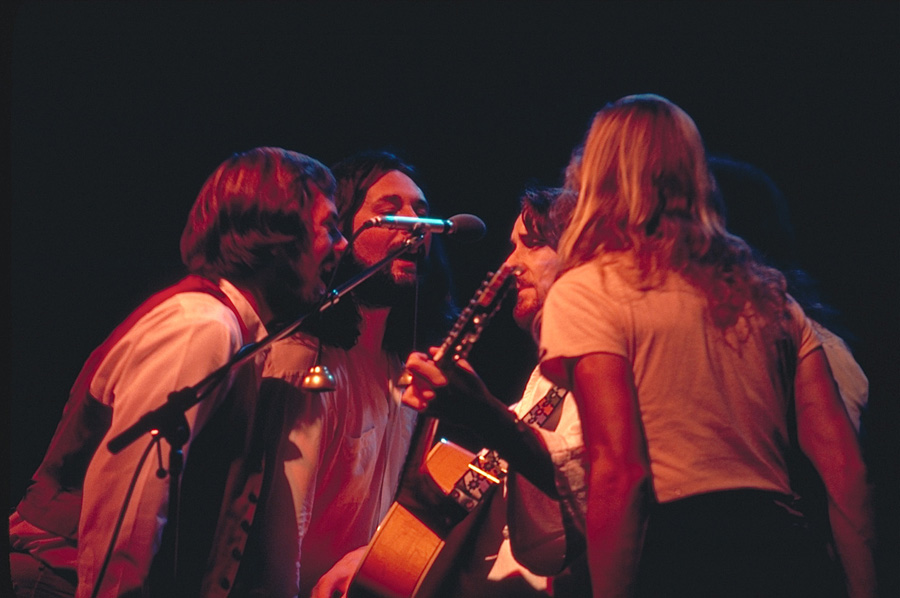
Supertramp
 United Kingdom
The logical song of progressive pop rock
Campers
Fandom
14
Members
About
Supertramp stands as one of the most commercially successful rock bands of the late 20th century, defined by the distinct songwriting voices of Rick Davies and Roger Hodgson. Davies contributed darker, blues-influenced tracks often critiquing society, while Hodgson wrote lighter, hopeful anthems. This duality allowed them to craft songs that appealed to both progressive rock fans and mainstream pop audiences. The band's peak years from 1974 to 1983 produced some of the best-selling albums in history, with Breakfast in America becoming a global phenomenon.
Following Hodgson's departure in 1983, Davies continued to lead the group with various touring musicians until the release of Slow Motion in 2002. The band then entered an indefinite hiatus. In 2025, the death of Rick Davies effectively ended the group's legacy, leaving behind a catalog of over 60 million records sold worldwide. Their music remains a staple on classic rock radio, particularly in North America and Europe.
Formation Story
The origins of Supertramp trace back to 1969 in London when Rick Davies formed a group initially called Daevid Allen's Gong or Davies and O'Donnell. They recruited Hugh O'Donnell, who later changed his name to Keith Baker, along with Chris Brown and Bob Siebenberg. The official formation under the name Supertramp occurred in 1970 after the departure of early members and the arrival of Roger Hodgson, a school friend of Davies who had previously played in a band called The Wilde Flowers.
The duo spent time refining their sound, moving away from the psychedelic rock of their early days toward a more structured progressive style. Their debut album, Supertramp, was released in 1970 on A&M Records but received little commercial attention. The band underwent significant lineup changes before achieving stability. The classic lineup that defined their peak era was solidified in 1973, featuring Davies, Hodgson, Dougie Thomson on bass, Bob Siebenberg on drums, and John Helliwell on saxophone and woodwinds. This configuration lasted a decade and produced their most iconic work.
Members
Former Members
Rick Davies (Richard Thomas Davies)
Lead Vocals, Keyboards, Harmonica · 1969–2025
Roger Hodgson (Roger Keith Hodgson)
Lead Vocals, Keyboards, Guitars · 1970–1983
Dougie Thomson (Douglas Thomson)
Bass Guitar, Backing Vocals · 1973–1983
Bob Siebenberg (Robert Siebenberg)
Drums, Percussion, Backing Vocals · 1973–1983
John Helliwell (John Charles Helliwell)
Saxophone, Flute, Keyboards, Trumpet · 1973–Present (Inactive)
Keith Baker (Hugh O'Donnell)
Bass, Vocals · 1969–1970
Mark Hart (Mark Hart)
Keyboards, Guitar · 1983–1988, 1997–2002
Carl Verheyen (Carl Verheyen)
Guitar · 1983–1988, 1997–2002
Lee Thornburg (Lee Thornburg)
Trumpet, Vocals · 1997–2002
Musical Style
Supertramp's sound evolved significantly over their career. Early albums like Supertramp and Indelibly Stamped were experimental progressive rock with long instrumental passages and psychedelic influences. By 1974, with Crime of the Century, they transitioned to a polished blend of progressive rock and pop, introducing complex arrangements but with radio-friendly hooks. The band reached their commercial peak between 1979 and 1983 with full pop-rock orientation, featuring catchy choruses, sophisticated production, and minimal prog experimentation.
Post-Hodgson albums like Brother Where You Bound and Free As a Bird continued the pop-rock direction without Hodgson's signature vocal style. The reunion era saw attempts to mix new material with re-recordings. Their signature sound often included the use of the harmonium, saxophone, and piano, creating a unique texture that distinguished them from other rock bands of the era.
Discography
| Title | Year |
|---|---|
| Supertramp | 1970 |
| Indelibly Stamped | 1971 |
| Crime of the Century | 1974 |
| Even in the Quietest Moments... | 1977 |
| Breakfast in America | 1979 |
| ...Famous Last Words... | 1982 |
| Brother Where You Bound | 1985 |
| Free As a Bird | 1987 |
| Some Things Never Change | 1997 |
| Slow Motion | 2002 |
Tours
The Breakfast in America Tour
1979–1980 · 100 shows
The Famous Last Words Tour
1982–1983 · 80 shows
The Brother Where You Bound Tour
1985–1986 · 60 shows
The Free As a Bird Tour
1987–1988 · 50 shows
The Some Things Never Change Tour
1997–1998 · 40 shows
The Slow Motion Tour
2002 · 30 shows
Cultural Impact
Supertramp influenced the transition from progressive rock to adult contemporary rock. Their use of the harmonium and saxophone in rock music became iconic. The band's music is frequently used in films and TV shows, cementing their place in pop culture. Roger Hodgson's songs are often cited as anthems for youth and education. The band's success in Canada, where two albums achieved diamond certification, highlights their enduring popularity in specific markets.
Fandom Culture
Fans of Supertramp are known as Campers, a nod to the band's travel themes and the later camper brand. While the band predates K-pop lightsticks, fans often wear blue and white, the colors of the Breakfast in America cover. Traditions include sing-alongs at concerts, especially for "The Logical Song" and "Give a Little Bit." Fan clubs organize tribute concerts and vinyl collections to preserve the band's legacy.
Awards Won (10)
Supertramp won numerous awards, though they were often overlooked by the Grammys in favor of other acts. Notable wins include Favorite Pop/Rock Album for Breakfast in America at the American Music Awards in 1980 and Top Selling Rock Album for the same album at the Billboard Music Awards in 1980. They also received multiple Japan Gold Disc Awards for international albums.
Top Selling Rock Album
for: Breakfast in America
Favorite Pop/Rock Album
for: Breakfast in America
Platinum Certification
for: Even in the Quietest Moments...
International Album of the Year
for: Breakfast in America
International Album of the Year
for: Crime of the Century
Milestones
Release of Crime of the Century, marking breakthrough
Release of Breakfast in America, reaching #1 globally
Roger Hodgson's departure, ending the classic lineup
Final album release before hiatus
Death of Rick Davies, marking end of active history
Fame & Fandom (iFAMOUS Rankings)
Trivia
The band's name was chosen randomly from a dictionary, inspired by the word 'super' and 'tramp'., Roger Hodgson wrote 'Dreamer' while living in a boarding school in England., The famous opening chord of 'The Logical Song' was created using a specific organ setting., The band's logo was designed by a fan., Rick Davies was known for his dry humor and skepticism about the band's own success.
Keywords
Sources
Quick Facts
- Formed
- 1969-01-01
- Origin
- London
- Label
- A&M Records, Chrysalis Records
- Genres
- progressive rock, rock music
- Members
- 14
- Status
- Disbanded
Group Info
- Fandom
- Campers
- Formed
- 1969-01-01
- Debut
- 1970-05-01
- Debut Song
- Dreamer
- Origin
- London, England
- Company
- Supertramp Management
- Label
- A&M Records, Chrysalis Records
- Fan Color
- Blue and White
- Status
- Disbanded (2025-12-31)
Also Known As
Join the community
fans discussing