

Steven Pinker
 Canada
psychologist•linguist•anthropologist
Also known as: Steven Arthur Pinker, Dr. Steven Pinker, Pinker, Steven
Birthday
September 18, 1954
Birth Sign
Virgo
Birthplace
Montreal, Quebec, Canada
Age
72 years old
Height
5 ft 10 in (178 cm)
About
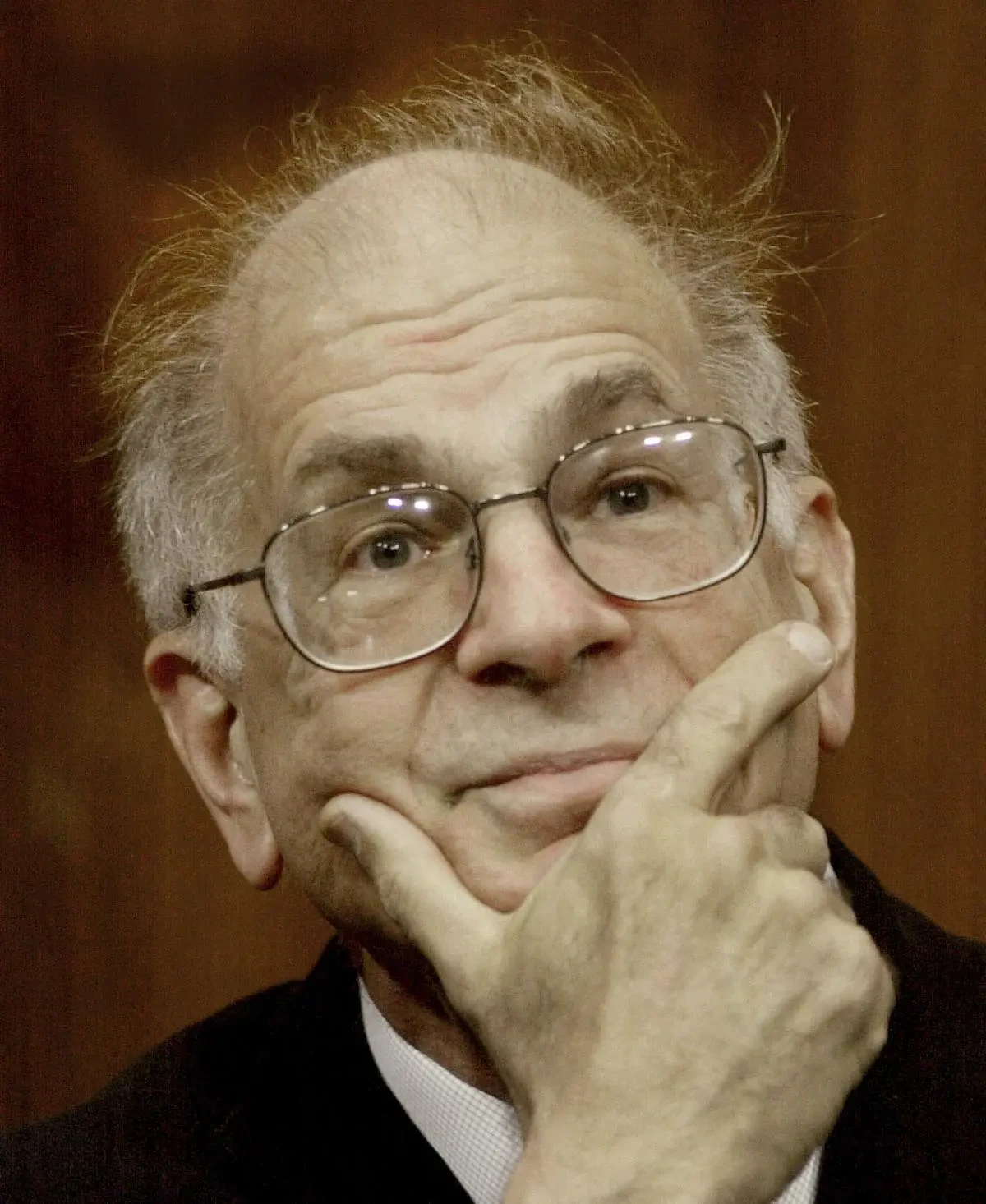
Steven Arthur Pinker is a Canadian-American cognitive psychologist, psycholinguist, and public intellectual who currently holds the Johnstone Family Professorship in Psychology at Harvard University. He has spent decades researching visual cognition, language acquisition, and human nature, becoming one of the most visible voices in popular science. His work champions evolutionary psychology and the computational theory of mind, arguing that many human behaviors and cognitive abilities are shaped by natural selection rather than being purely cultural inventions. Pinker stands approximately 5 feet 10 inches (178 cm) tall and is known for his distinctive appearance, often wearing glasses and casual academic attire during public appearances.
Pinker's research spans from technical studies on how children learn irregular verb forms to sweeping surveys of the human mind. In 1994, he published The Language Instinct, which proposed that language is an innate biological faculty. This was followed by How the Mind Works (1997), Words and Rules (2000), and The Blank Slate (2002), each exploring different facets of human thought. His 2011 book, The Better Angels of Our Nature, made a data-driven case that violence has declined over human history, a thesis he extended in Enlightenment Now (2018) and Rationality (2021). Beyond his books, Pinker has been named one of Time's 100 Most Influential People and served as chair of the Usage Panel for the American Heritage Dictionary from 2008 to 2018. As of late 2026, he remains highly active, delivering commencement addresses at Harvard and publishing open letters on AI safety and alignment.
Early Life & Background
Steven Arthur Pinker arrived in Montreal on September 18, 1954, into a secular Jewish household where his father worked as an insurance executive and his mother stayed home to raise the family. Growing up in this environment, he developed early interests that leaned heavily toward both science and literature. These dual passions guided his academic path, leading him first to McGill University for his undergraduate studies before he moved on to Harvard University. There, he earned his Ph.D. in experimental psychology in 1979 under the supervision of Jerome Bruner, a towering figure in developmental psychology. Before achieving widespread fame as a popular science author, Pinker established himself as a rigorous academic. His early career focused on publishing technical work on how children learn irregular verb forms and developing the computational theory of mind. He taught at MIT starting in 1980 while continuing his research into visual cognition and developmental linguistics. During these years, he published specialized papers that laid the groundwork for his later explorations but had not yet bridged the gap to general readership. The breakthrough moment came with the publication of his first major trade book in 1994, which transformed his reputation from a respected scholar to a public intellectual capable of explaining complex scientific ideas to a broad audience.
Career Growth
Pinker's career breakthrough arrived with the 1994 publication of The Language Instinct, which argued that language is an innate biological faculty rather than a purely cultural invention. This book became a bestseller and established him as a bridge between academic research and general readership. His subsequent works, including How the Mind Works (1997), Words and Rules (2000), and the controversial The Blank Slate (2002), further cemented his reputation as a thinker willing to challenge prevailing orthodoxy. In 2011, The Better Angels of Our Nature presented a data-driven argument that violence has declined over human history, a thesis he expanded in Enlightenment Now (2018) and Rationality (2021).
Throughout his career, he has been a vocal advocate for evolutionary psychology, the Enlightenment, and free speech, often engaging in high-profile intellectual debates regarding the role of reason in modern society. He was named one of Time's 100 Most Influential People in 2004 and appeared on Foreign Policy's list of Global Thinkers multiple times, holding the top spot in 2010. In 2010, he was elected to the American Academy of Arts and Sciences, and in 2006, he received the American Humanist Association's Humanist of the Year award. In 2024, he received the Erasmus Prize for his contributions to the understanding of human nature. As of late 2026, Pinker remains highly active, delivering commencement addresses at Harvard and publishing open letters on AI safety and alignment. Notable magazine covers include Time (2004) and The New Yorker, which has featured him multiple times in profile pieces discussing his views on language and progress.
Career Timeline
Public Image & Style
Pinker is portrayed as a staunch defender of the Enlightenment, reason, and scientific inquiry. Media outlets often describe him as a "public intellectual" who is willing to challenge prevailing orthodoxy, particularly regarding gender, race, and intelligence. His tone is consistently data-driven, empirical, and often combative towards what he perceives as anti-rational trends. On social media, specifically X (Twitter), where he has over 860,000 followers, he engages directly with critics and shares insights on current events, maintaining a voice that is articulate, sharp, and unapologetically liberal in the classical sense. He is known for wearing glasses and casual academic attire during public appearances, projecting an image of the serious scholar engaged in high-stakes debate. His frequent collaborators and associates include Alan Prince, Jerome Bruner, Noam Chomsky, and Nancy Etcoff. He often appears alongside other public intellectuals like Sam Harris, Jordan Peterson, and Matt Yglesias in debates.
Fame & Fandom (iFAMOUS Rankings)
Steven Pinker commands a global audience that spans academic halls and living rooms, yet his influence operates through the slow burn of ideas rather than the flash of celebrity metrics. In August 2026, August 2026 iFAMOUS Rankings featured him at No. 97 on their list for Canada, marking his standing within the nation's intellectual landscape. While he holds no placement in the published Global Top 1,000 rankings, this absence reflects a reality where his fame is measured by the circulation of arguments in books like The Language Instinct and Enlightenment Now rather than viral spikes or fan-driven campaigns. His readership consists of students, scholars, and general readers seeking intellectual engagement rather than a tribe worshipping a personality. Consequently, there is no formal name for this audience; while he maintains an official website and social media channels, these function as informational hubs for his research rather than centers for organized fan rituals or inside jokes. Unlike pop stars whose legacies are built on stadium tours and merchandise drops, Pinker's impact remains rooted in the rigorous debate over human nature and language. Fan campaigns have included petition drives to protect free speech on campus and fundraising for organizations that promote science literacy, but there are no fan-funded projects or birthday billboards.
Interesting Facts and Legends
Steven Pinker has a deep fascination with magic and sleight of hand, which significantly influenced his understanding of perception and illusion in his psychological research. He is also a noted chess player who has written extensively about the strategic depth of the game and its parallels to cognitive processes. A widely retold story in academia concerns the reception of The Blank Slate upon its release in 2002, where it sparked intense debate with some accusing him of supporting eugenics while others praised his courage in challenging the dogma. Another iconic moment was his 2011 TED talk on "The Decline of Violence," which has been viewed millions of times and remains a staple in discussions about human progress. In 2014, he delivered the Reith Lectures on BBC Radio 4. He famously debated Noam Chomsky's nativist views, although they eventually found common ground on the existence of an innate capacity for language. An incident where he faced a hostile crowd at a university lecture, only to win them over with data, has become a staple of his lore. In September 2026, he published an open letter responding to Scott Alexander regarding AI alignment and safety, advocating for a measured approach to catastrophic scenarios rather than alarmism.
Notable Quotes
“The mind is not a blank slate; it comes with a set of tools that evolution has given us.”
“Violence has declined, and we should celebrate that fact.”
“Reason is the only tool we have to understand the world and improve our lives.”
“The more we know about the world, the less we need to fear it.”
Family & Personal Life
Steven Pinker comes from a secular Jewish family in Montreal. His father was an insurance executive and his mother was a homemaker. He has three children from two previous marriages. His first marriage was to Rebecca Goldstein, a philosopher and novelist, in 1980; they had one daughter, Naomi Pinker, before divorcing in 1993. Following this, Pinker married Nancy Etcoff, a psychologist known for her work on facial expressions, in 1994. They have two children together: a son named Daniel and a daughter named Maya. Pinker and Etcoff divorced in 2016 after 22 years of marriage. He currently resides in the Boston area with his third wife, Ilavenil Subbiah, whom he married in 2017. Ilavenil was a former student of his who later became a researcher in his lab. He does not maintain a traditional "fandom" with organized campaigns or rituals, though he commands a significant global audience of academics, students, and intellectually curious readers who engage with his ideas through books and lectures.
Notable Connections
Relationships & Dating History
Steven Pinker has been married three times throughout his life. His first marriage was to Rebecca Goldstein, a philosopher and novelist, in 1980. The couple had one daughter, Naomi Pinker, but their marriage ended in divorce in 1993. Following this, Pinker married Nancy Etcoff, a psychologist and writer known for her work on facial expressions and beauty, in 1994. They have two children together: a son named Daniel and a daughter named Maya. Pinker and Etcoff divorced in 2016 after 22 years of marriage. In 2017, Pinker married Ilavenil Subbiah, a former student of his who later became a researcher in his lab. As of late 2026, Pinker remains married to Ilavenil Subbiah. There are no widely reported or confirmed "dating" scandals or flings outside of these marriages; his public romantic history is defined by these three long-term unions. His relationship with Ilavenil began when she was a student in his lab, evolving into a professional and personal partnership that continues today.
- DivorcedRebecca Goldstein1980 - 1993Married fellow philosopher and novelist; one daughter together.
- DivorcedNancy Etcoff1994 - 2016Psychologist and writer; two children together.
- MarriedIlavenil Subbiah2017 - presentCurrentFormer student turned researcher in his lab.
Salary, Net Worth In 2026
$24 Million
iFANN Editorial Team estimate
iFANN currently estimates Steven Pinker's net worth at approximately $15 million to $20 million, derived from his tenure as a tenured professor at Harvard, royalties from his numerous bestselling books, and lecture fees. Specific sources suggest his book sales alone have generated tens of millions of dollars over three decades. For instance, The Better Angels of Our Nature sold over 1 million copies, and Enlightenment Now has sold similarly strong numbers. Unlike celebrities with endorsement deals, his wealth is primarily accumulated through academic salary, book advances, and speaking engagements at major institutions and festivals. Real estate holdings are not publicly detailed, but he resides in the Boston area. As of late 2026, his financial trajectory continues to be driven by the enduring popularity of his works on human nature and rationality. He has received honorary degrees from several universities, including the University of Toronto and the University of Pennsylvania, further enhancing his professional stature and earning potential.
Awards Won (3)
Pinker's awards and honors reflect his profound impact on psychology and public discourse. He was named one of Time magazine's 100 Most Influential People in 2004. He has received the American Psychological Association's Distinguished Scientific Contributions Award, the National Academy of Sciences' award for behavioral science, and the American Humanist Association's Humanist of the Year award in 2006. In 2010, he was elected to the American Academy of Arts and Sciences. In 2024, he was awarded the Erasmus Prize for his contributions to the understanding of human nature and the defense of reason. He has also received honorary degrees from several universities, including the University of Toronto and the University of Pennsylvania.
2006 · Humanism
American Humanist Association
2003 · Psychology
American Psychological Association
Known For
The Language Instinct
1994 · Author
How the Mind Works
1997 · Author
The Better Angels of Our Nature
2011 · Author
Enlightenment Now
2018 · Author
Keywords
Sources
Quick Facts
- Profession
- psychologist, linguist, anthropologist
- Born
- September 18, 1954
- Birthplace
- Montreal, Quebec, Canada
- Gender
- Male
- Spouse
- Ilavenil Subbiah
- Birth Sign
- Virgo
Personal Details
- Full Name
- Steven Arthur Pinker
- Height
- 5 ft 10 in (178 cm)
- Spouse
- Ilavenil Subbiah
- Children
- Naomi Pinker, Daniel Pinker, Maya Pinker
- Education
- McGill University, Harvard University
Frequently Asked Questions
What is Steven Pinker's net worth?
Who is Steven Pinker married to?
Is Steven Pinker still alive?
What is Steven Pinker's most famous book?
Where did Steven Pinker go to college?
Social Media
Similar People


Join the community
fans discussing