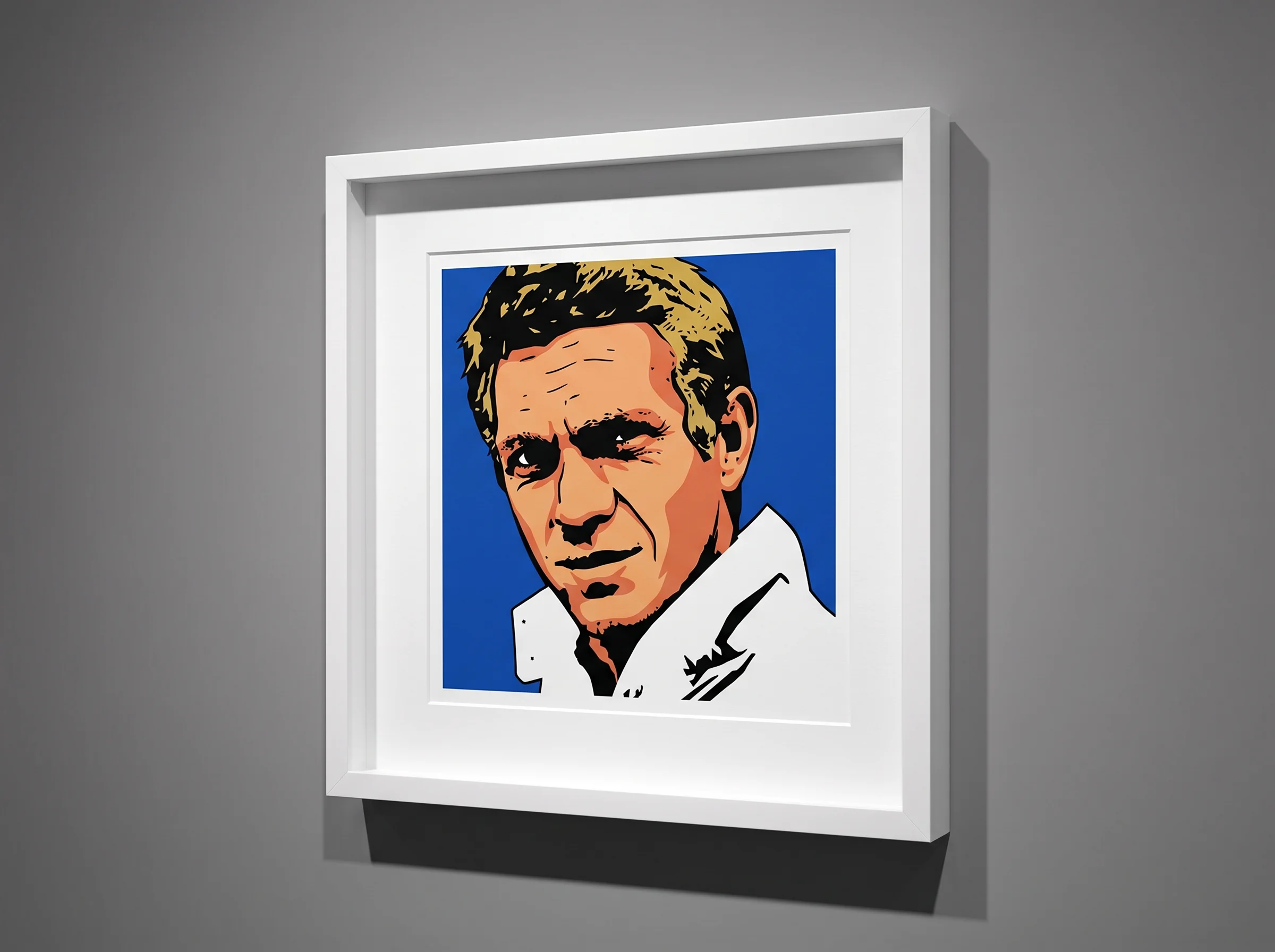
Steve McQueen
 United States
actor•race car driver•producer
Also known as: The King of Cool, Terry McQueen, Harvey Mushman
Birthday
March 24, 1930
Birth Sign
Aries
Birthplace
Beech Grove, Indiana, USA
Age
Died at 50
Height
5 ft 11 in (180 cm)
About
Terrence Stephen McQueen was an American actor and race car driver who became one of the most popular stars of the 20th century. Known as the "King of Cool," he embodied a rugged individualism that resonated with audiences during the turbulent 1960s and 1970s. His career spanned over two decades, marked by a string of box office hits that defined the action genre. McQueen was not just a performer but a pioneer who insisted on performing his own stunts and demanding creative control over his projects.
Throughout his life, he maintained a reputation for authenticity and intensity. Whether portraying a World War II escapee or a street racer, he brought a physical presence and quiet charisma to every role. His partnership with director Don Siegel and later roles in ensemble casts like The Towering Inferno showcased his versatility. Even after his untimely death, his films continue to draw new generations of viewers who appreciate his unique screen presence.
Early Life & Background
Born in Beech Grove, Indiana, Terrence McQueen faced a difficult childhood marked by instability. His parents divorced when he was young, and he was raised primarily by his grandmother and later his mother's second husband in Santa Ana, California. This environment fostered a rebellious streak that would define his early years. He attended Santa Ana High School but found traditional schooling stifling and dropped out at age 16.
His teenage years were filled with trouble. He ran away from home multiple times and spent time in juvenile detention centers. At 17, he joined the United States Air Force in 1947, hoping to find structure and purpose. However, his rebellious nature led to his discharge in 1950, labeled an "undesirable element" due to his behavior. Following this, he worked various odd jobs, including selling cars and working in a furniture store, before moving to New York City in the late 1940s.
In New York, McQueen discovered acting. He studied under Sanford Meisner at the Actors Studio, immersing himself in the craft. His first major break came in 1955 when he landed a role in the Broadway production of The Caine Mutiny Court-Martial. This success led to television work, including a recurring role in Richard Diamond, Private Detective. It was during this period that he caught the attention of Hollywood producers, leading to small roles in films like The Blob (1958). These early experiences paved the way for his breakthrough performance in The Magnificent Seven, which would launch him into stardom.
Career Growth
McQueen's rise to fame accelerated rapidly after his supporting role in The Magnificent Seven (1960). He quickly established himself as a leading man capable of carrying a film with his intense screen presence. His breakthrough as a top-tier star came with The Great Escape (1963), where he played Hilts, a character known for his relentless attempts to escape a German POW camp. The film's famous motorcycle jump scene remains one of the most iconic moments in cinema history.
The 1960s saw him headline a series of successful films that cemented his status. Bullitt (1968) revolutionized the action genre with its gritty car chase sequence, which influenced countless films that followed. His passion for racing shone through in Le Mans (1971), a film he produced and starred in, showcasing his real-life racing skills. In 1973, he delivered a powerful performance in Papillon alongside Dustin Hoffman, a film that became his highest-grossing project at the time.
Throughout the 1970s, McQueen continued to choose challenging roles. He starred in the massive disaster epic The Towering Inferno (1974) and the western The Man Who Would Be King (1975). His commitment to authenticity often meant refusing scripts that did not challenge him or required excessive reliance on stunt doubles. By the end of the decade, he was one of the most bankable actors in the world. His final completed film, Nobody's Fool (1975), demonstrated his range even as his health began to decline due to asbestos exposure from earlier film sets.
Career Timeline
Public Image & Style
Known universally as the "King of Cool," Steve McQueen projected an image of effortless masculinity and independence. His style was simple yet distinctive: jeans, t-shirts, leather jackets, and sunglasses. He avoided the glamour of typical Hollywood stars, preferring a rugged, working-class aesthetic that made him relatable to audiences.
Media portrayals often highlighted his rebellious nature and his desire to live life on his own terms. He was seen as a loner who valued freedom above all else. This image was reinforced by his roles in films that featured characters escaping confinement or defying authority. His minimalistic approach to fashion and his refusal to conform to industry norms made him a lasting icon of cool.
Fame & Fandom (iFAMOUS Rankings)
As of the November 2026 rankings, iFANN's Global Fame Engine has evaluated Steve McQueen, but he does not currently hold a placement in the published rankings (Global Top 1,000 or a Top-100 scope list). While his active fame has waned since his passing, his cultural footprint remains immense. He is not featured on the September 2026 iFAMOUS Rankings flagship list, yet his name continues to appear in discussions about the greatest actors of all time.
McQueen's fanbase, often referred to informally as "McQueeners," remains dedicated and organized globally. Fan clubs host annual gatherings and conventions to celebrate his legacy. Enthusiasts frequently gather at his gravesite in Santa Ana for birthdays and anniversaries. Campaigns by these fans have successfully lobbied for the preservation of his films and the restoration of his classic cars. The community keeps his memory alive through archival photo sharing and the continued high demand for memorabilia related to his racing and acting careers.
Interesting Facts and Legends
McQueen performed many of his own stunts throughout his career, including the famous motorcycle jump in The Great Escape, despite suffering minor injuries. He was also an avid race car driver who competed under the alias "Harvey Mushman" in actual races. One of his most famous possessions, a 1968 Ford Mustang Fastback, sold for $3.74 million in 2026, decades after he drove it in Bullitt.
He famously refused to cry in any movie scene, believing it undermined his tough-guy image. This stance reportedly caused tension on the set of Papillon with co-star Dustin Hoffman. Later in life, McQueen found faith and became a devout Christian, attending church regularly. He was also known for his love of vintage cars, owning a vast collection that included rare Porsches and Ferraris.
Notable Quotes
“I'm not a method actor. I just try to be myself.”
“Racing is the only thing that makes me feel alive.”
“I don't want to be remembered as a great actor. I want to be remembered as a guy who tried to do something different.”
Family & Personal Life
McQueen was married four times and had three children. His first marriage to Neile Adams lasted from 1956 to 1972. They met on the set of Voyage to the Bottom of the Sea and had two sons: Chad McQueen, who followed in his father's footsteps as a race car driver and actor, and Terry McQueen Jr., who died in 1998. His relationship with Ali MacGraw was highly publicized and scandalous, occurring while both were married to others.
His longest and most stable marriage was to Barbara Bach, whom he wed in 1972. She remained his wife until his death in 1980. During his final illness, he was cared for by Heidi Krebs, whom he married shortly before he died. Despite his public persona, McQueen was known to be intensely private about his family life, rarely discussing his personal struggles in interviews.
Notable Connections
Paul Newman, Dustin Hoffman, Robert Redford, Neile Adams, Barbara Bach, Chad McQueen
Relationships & Dating History
Steve McQueen's romantic life was as dramatic as his on-screen personas. His first marriage was to Neile Adams in 1956. They met on the set of Voyage to the Bottom of the Sea and had two sons together: Chad and Terry Jr. The marriage ended in divorce in 1972, largely due to McQueen's infidelity and Neile's desire for a more stable family life.
During his marriage to Adams, McQueen began an affair with actress Ali MacGraw while filming The Getaway in 1969. Their relationship caused a media frenzy as both were married to others at the time. They became engaged but eventually broke up in 1973 after MacGraw's career struggles and McQueen's return to Neile Adams briefly. He then married Barbara Bach in 1972, though the legal finalization occurred after his divorce from Adams. Bach, a model and actress, remained his wife until his death in 1980.
In 1979, McQueen married Heidi Krebs, a nurse who cared for him during his final illness. They married shortly before he passed away. His relationships were often characterized by intensity and privacy, with his family life remaining largely out of the public eye despite his celebrity status.
- MarriedNeile Adams1956 - 1972Met on set of Voyage to the Bottom of the Sea; had two sons.
- EngagedAli MacGraw1969 - 1973Affair during filming of The Getaway; highly publicized.
- MarriedBarbara Bach1972 - 1980Remained married until his death.
- MarriedHeidi Krebs1979 - 1980Nurse who cared for him during his final illness.
Death & Aftermath
Died
November 7, 1980 (aged 50)
Death Place
Los Angeles, California, USA
Cause of Death
Mesothelioma
Terrence Stephen McQueen died on November 7, 1980, at Cedars-Sinai Medical Center in Los Angeles. His death came just months after a diagnosis of mesothelioma, an aggressive cancer of the lining of the lungs caused by asbestos exposure. The actor had sought experimental treatment in Mexico rather than undergoing standard chemotherapy, a decision that ultimately proved unsuccessful. He was only 50 years old when he passed away.
The news sent shockwaves through Hollywood and among his millions of fans worldwide. Tributes poured in from colleagues including Paul Newman and Robert Redford, who spoke of his intensity and dedication to his craft. A private funeral service was held in Santa Ana, California, where McQueen had spent much of his youth. He was laid to rest in the Santa Ana Cemetery, close to where he grew up.
In the years following his death, McQueen's legacy continued to grow rather than fade. Posthumous releases like The Hunter kept his name in the public eye, while his estate began generating significant revenue through film residuals, licensing deals for his likeness, and the sale of his legendary car collection. The Steve McQueen Foundation was established to support children's charities and cancer research, reflecting his own struggles with illness. His classic films remain studied in cinema schools, and his influence on the action genre is undeniable. In 2026, his iconic Ford Mustang Fastback sold at auction for $3.74 million, a testament to the enduring value of his personal artifacts. The estate continues to be managed by his family, with recent sales of his Malibu beach house further boosting its financial standing.
Net Worth (Estate Value)
$36 Million
iFANN Editorial Team estimate
The estate of Terrence Stephen McQueen continues to generate substantial income more than four decades after his death. As of 2026, the iFANN Editorial Team estimates the total value of his estate at approximately $36 million. This figure reflects ongoing revenue streams from film residuals, licensing agreements for his likeness, and the sale of his extensive car collection.
A significant portion of the estate's wealth comes from the enduring popularity of his films. Classics like Bullitt, The Great Escape, and Papillon continue to sell well on home media and streaming platforms. Additionally, his likeness is licensed for merchandise, particularly racing memorabilia, which appeals to both film buffs and car enthusiasts. Real estate assets also contribute to the estate's value, including the sale of his former Malibu beach house, which fetched $7.2 million in 2020 before being renovated and listed for nearly $17 million.
In 2026, the estate saw a major windfall when McQueen's original 1968 Ford Mustang Fastback from Bullitt sold at auction for $3.74 million. This vehicle, a piece of cinematic history, underscores the premium placed on his personal artifacts. The estate is managed by his family, ensuring that his legacy remains protected and profitable for future generations.
Awards Won (89)
Although nominated for several prestigious awards during his lifetime, Steve McQueen never won a competitive Academy Award or Golden Globe. He received two Oscar nominations for Best Actor for The Sand Pebbles and The Getaway. However, he was honored with the Hollywood Walk of Fame star in 1974 and posthumously received the Golden Plate Award in 1980. He was inducted into the International Motorsports Hall of Fame in 1999 and the Action Heroes Hall of Fame in 2018.
2013 · 12 Years a Slave
Toronto International Film Festival
2013 · Outstanding Motion Picture
12 Years a Slave
2013 · Outstanding Directing in a Motion Picture
12 Years a Slave
Known For
The Magnificent Seven
1960 · Chico
The Great Escape
1963 · Hilts
Bullitt
1968 · Frank Bullitt
Papillon
1973 · Louis Dega
Keywords
Sources
Quick Facts
- Profession
- actor, race car driver, producer
- Born
- March 24, 1930
- Birthplace
- Beech Grove, Indiana, USA
- Gender
- Male
- Spouse
- Barbara Bach
- Birth Sign
- Aries
Personal Details
- Full Name
- Terrence Stephen McQueen
- Height
- 5 ft 11 in (180 cm)
- Spouse
- Barbara Bach
- Children
- Chad McQueen, Terry McQueen Jr.
- Education
- Santa Ana High School (dropped out), U.S. Air Force (1947-1950)
Filmography
42
Total
38
Film
4
TV
Frequently Asked Questions
What was Steve McQueen doing when he died?
Who was the true love of Steve McQueen?
What were Steve McQueen's last words when he died?
Was Steve McQueen a big drinker?
How much is Steve McQueen's net worth in 2026?
Join the community
fans discussing