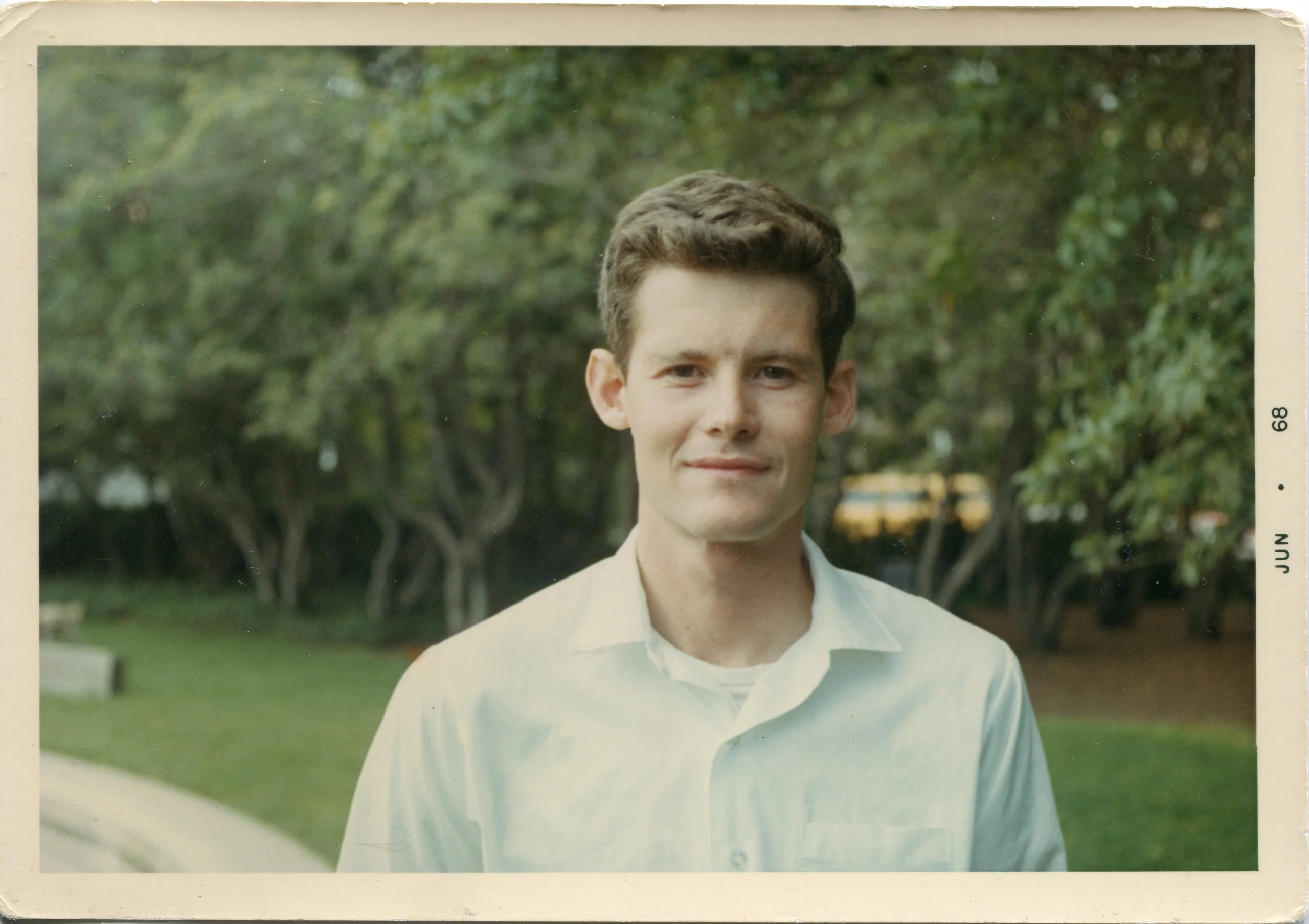
Stephen Cook
 Canada
computer scientist•university teacher•mathematician
Also known as: Stephen A. Cook, S. A. Cook
Birthday
December 14, 1939
Birth Sign
Sagittarius
Birthplace
Buffalo, New York, USA
Age
86 years old
About
Stephen Arthur Cook is an American-Canadian computer scientist and mathematician born on December 14, 1939, in Buffalo, New York. He stands as a founding figure of computational complexity theory, the branch of computer science that investigates how efficiently problems can be solved. Cook currently serves as a University Professor Emeritus in both the Department of Computer Science and the Department of Mathematics at the University of Toronto, where he spent the majority of his academic career.
His work fundamentally reshaped the field by formalizing the concept of NP-completeness. In a landmark 1971 paper titled "The Complexity of Theorem-Proving Procedures," he introduced what is now known as the Cook-Levin theorem. This discovery identified a class of problems that are at least as hard as any problem in NP, establishing the foundation for understanding the limits of computation. His contributions earned him the ACM Turing Award in 1982, often regarded as the Nobel Prize of computing. Today, his research continues to influence algorithm design, cryptography, and the ongoing investigation into the P versus NP problem.
Early Life & Background
Stephen Arthur Cook was born in Buffalo, New York, to a father who worked as a mathematician and a mother who managed the household. While specific details about his childhood play or early schooling remain scarce in public records, his family environment clearly fostered an intellectual curiosity. He pursued higher education with a focus on mathematics and logical reasoning, eventually attending the University of Chicago for his undergraduate studies. After completing his bachelor's degree, Cook continued his academic journey at the same institution, working toward his Ph.D. under the supervision of John Myhill.
His doctoral research centered on mathematical logic and the theoretical foundations of computation. Before achieving global recognition, Cook dedicated himself entirely to academia, exploring the efficiency of algorithms and the boundaries of what computers could theoretically solve. He moved to Canada to join the faculty at the University of Toronto, seeking a new environment to develop his ideas. During these formative years, he focused on rigorous proof techniques and the structural properties of logical systems, laying the groundwork for his future breakthroughs without the distraction of commercial ventures or public attention.
Career Growth
The defining moment of Stephen Cook's career arrived in 1971 with the publication of his seminal paper, "The Complexity of Theorem-Proving Procedures." In this work, he formalized the concept of NP-completeness, proving that certain problems are the hardest within the class NP. If any one of these problems could be solved efficiently, then all problems in NP could be solved efficiently. This insight effectively launched the field of computational complexity theory and provided a framework for analyzing the difficulty of countless other problems.
In 1982, the Association for Computing Machinery awarded Cook the Turing Award for his foundational contributions to the theory of computation. This prestigious honor cemented his status as a titan in the scientific community. Throughout the 1980s and beyond, he expanded his research into proof complexity, investigating the length of proofs required to verify mathematical statements. He also made significant strides in understanding bounded-depth Frege proofs and their implications for circuit complexity. As of 2026, Cook remains active as a University Professor Emeritus, mentoring students and continuing to publish influential papers that address the enduring mystery of the P versus NP problem.
Career Timeline
Public Image & Style
Stephen Cook projects the image of a serious, intellectual scholar dedicated to pure theory. He does not cultivate a fashion aesthetic or maintain a social media presence, as his fame exists entirely within the academic sphere. Media coverage of him focuses solely on his research achievements and awards, devoid of the celebrity gossip or lifestyle content typical of pop culture figures. His reputation is built on rigorous logic and profound insights, earning him respect among peers rather than adoration from the general public. He is viewed as a quiet giant whose work forms the backbone of modern computer science.
Fame & Fandom (iFAMOUS Rankings)
Stephen Cook stands as a titan of intellectual achievement, though his standing in the global celebrity sphere is defined by what he does not hold: a placement in the published iFANN rankings. The iFANN Global Fame Engine has evaluated this figure, yet he currently holds no position within the Global Top 1,000 or any Top-100 scope list. This absence from the charts reflects the unique nature of his renown; while his name echoes through lecture halls and research papers worldwide, it does not generate the viral consumption signals required for a ranked spot. His audience is not a mass of casual admirers but a dedicated community of scholars and students in computational complexity theory who revere his contributions to the P vs NP problem. There is no formal fandom name documenting this group, nor are there organized campaigns, birthday billboards, or fan-funded projects associated with him. Unlike pop stars whose legacies are built on chart-topping hits and red-carpet appearances, Cook's influence is measured in citations and the solving of impossible mathematical puzzles. His followers engage with his work through rigorous study rather than social media rituals, creating a quiet but profound legacy that exists entirely outside the metrics of modern celebrity culture. He is not featured in the August 2026 iFAMOUS Rankings flagship list.
Interesting Facts and Legends
Stephen Cook's most famous contribution, the Cook-Levin theorem, is so fundamental that it is taught in almost every introductory computer science course worldwide. The theorem identifies the Boolean satisfiability problem (SAT) as the first NP-complete problem, making it a universal benchmark for computational difficulty. Colleagues often recount the sheer weight of the 1982 Turing Award ceremony, noting that the abstract nature of his work stood in stark contrast to the tangible impact it would have on modern technology. Unlike many celebrities, Cook has never sought media attention, preferring to let his mathematical results speak for themselves. His legacy is quiet but absolute, influencing everything from the security of internet encryption to the design of artificial intelligence algorithms.
Notable Quotes
“It is possible to define a class of problems... which are at least as hard as any problem in NP.”
Family & Personal Life
Cook was born to a mathematician father and a homemaker mother in Buffalo, New York. Specific details about siblings or extended family members are not publicly documented. He maintains a very private personal life, and there is no public information regarding a spouse, children, or current household. Unlike many public figures, he has not disclosed family stories or values in interviews. His professional dedication to academia suggests a life focused on research and teaching rather than public family engagements.
Notable Connections
Richard Karp, Leonid Levin, John Myhill
Relationships & Dating History
Stephen Cook is a private individual who has kept his personal life out of the public eye. There is no publicly available information confirming any marriages, engagements, divorces, or romantic relationships. Unlike many public figures, Cook has not disclosed details about a spouse, partner, or children in interviews, biographies, or media profiles. Consequently, there is no record of dating history, family members other than his parents, or offspring. As of 2026, his relationship status is unknown but presumed to be private; no sources indicate he is currently single, married, or partnered in a public capacity. His focus has remained steadfastly on his academic contributions and mentorship of students throughout his decades-long career.
Salary, Net Worth In 2026
$5 Million
iFANN Editorial Team estimate
As a distinguished academic and university professor emeritus, Stephen Cook's financial profile differs significantly from that of entertainment celebrities. His wealth is derived primarily from his long-standing salary at the University of Toronto, pension benefits, and modest royalties from academic publications. Unlike figures in the commercial sector, he does not earn income from acting salaries, endorsement deals, or business ventures. The iFANN Editorial Team estimates his net worth at approximately $5 million based on available data regarding academic compensation and asset accumulation over a lifetime of service. This figure reflects the stability of a tenured academic career rather than the volatility of market-driven industries. There are no major real estate holdings or high-profile investments reported in public records, as his resources have been directed toward research and institutional support.
Awards Won (4)
Stephen Cook's accolades are strictly academic and professional, reflecting his immense contributions to computer science. He received the ACM Turing Award in 1982, widely considered the highest distinction in the field. In 2009, he was honored with the Frontiers of Knowledge Award by the BBVA Foundation for his groundbreaking work in computational complexity. He is also a Fellow of the Royal Society of Canada and a Fellow of the Association for Computing Machinery. Additionally, he has received the Killam Research Fellowship and the Guggenheim Fellowship, further recognizing his scholarly achievements.
1982 · Computer Science
The Complexity of Theorem-Proving Procedures
2009 · Basic Sciences
Contributions to Computational Complexity
Known For
The Complexity of Theorem-Proving Procedures
1971 · Author
Computational Complexity Theory
1982 · Founding Figure
Keywords
Sources
Quick Facts
- Profession
- computer scientist, university teacher, mathematician
- Born
- December 14, 1939
- Birthplace
- Buffalo, New York
- Gender
- Male
- Birth Sign
- Sagittarius
Personal Details
- Full Name
- Stephen Arthur Cook
- Children
- Education
- Ph.D. in Mathematics, University of Chicago (1968)
Frequently Asked Questions
Who is Stephen Cook?
What did Stephen Cook win the Turing Award for?
Is Stephen Cook still alive?
Does Stephen Cook have a wife or children?
What is the P vs NP problem?
Similar People
Join the community
fans discussing