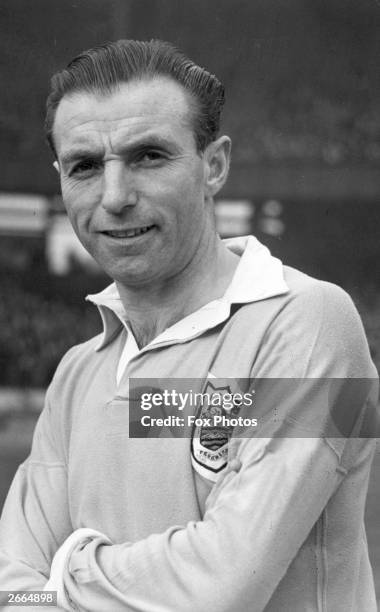
Stanley Matthews
 United Kingdom
association football player•autobiographer•association football coach
Also known as: The Wizard of Dribble, The Magician, Sir Stanley
Birthday
February 1, 1915
Birth Sign
Aquarius
Birthplace
Hanley, Stoke-on-Trent, Staffordshire, England
Age
Died at 85
Height
5 ft 7 in (1.70 m)
About
Sir Stanley Matthews (1 February 1915 – 23 February 2000) was an English footballer who played as an outside right. Widely considered one of the greatest players in the sport's history, he is the only player to have been knighted while still active, and the first winner of both the Ballon d'Or and the Football Writers' Association Footballer of the Year awards. His nicknames include "The Wizard of Dribble" and "The Magician."
Matthews kept fit enough to compete at the top level until age 50. He holds records as the oldest player in England's top division (50 years, 5 days) and the oldest England international (42 years, 104 days). In 2002, he was an inaugural inductee into the English Football Hall of Fame. His distinctive dribbling style, impeccable sportsmanship, and longevity made him a beloved figure across generations.
Today, his legacy endures through the Sir Stanley Matthews Foundation, statues at Stoke City and Blackpool, and a 2022 BBC documentary. Fans still celebrate "Matthews Day" on his birthday, and his name is synonymous with grace and skill on the pitch.
Early Life & Background
Stanley Matthews grew up in the tough Potteries district of Stoke-on-Trent, where his father, Jack, was a barber and professional featherweight boxer, and his mother, Elizabeth, was a homemaker. He attended Hanley High School but left at 14 to work as an office boy, later becoming a bricklayer's apprentice.
From a young age, he practised dribbling for hours with a tennis ball in the street, developing the close control that would define his career. He played for local junior teams including St Luke's School and Hanley YMCA. At 17, he joined Stoke City as a junior and made his first-team debut on 19 March 1932 against Bury in the Second Division, scoring one goal in a 3-1 win. That performance immediately drew national attention.
Career Growth
Matthews' senior debut for Stoke City in 1932 launched a legendary career. He helped Stoke win the Second Division title in 1932-33, earning promotion to the First Division. He made his England debut on 29 September 1934 against Wales at age 19. After 19 years at Stoke, he transferred to Blackpool in 1947 for £11,500.
At Blackpool, he played in FA Cup finals in 1948 and 1951, losing both. In 1953, he delivered a legendary performance in the "Matthews Final," providing three assists and scoring the winner as Blackpool came from 2-0 down to win 4-3. In 1956, he won the inaugural Ballon d'Or. He played his 54th and final England cap in 1957. In 1961, he returned to Stoke City at age 46, helping them win promotion to the First Division and a second Second Division title in 1962-63. He retired at age 50 in 1965.
Career Timeline
Public Image & Style
Matthews was known for his impeccable dribbling, low centre of gravity, trademark "Matthews feint" (a body swerve followed by a burst of pace), and pristine white boots. The media portrayed him as the "first gentleman of football" — modest, humble, and a role model. Fans at Stoke City and Blackpool still sing his name, and annual "Matthews Day" is celebrated on 1 February at Stoke City. The Sir Stanley Matthews Foundation posts historical photos and tributes on social media, keeping his legacy alive.
Fame & Fandom
For decades, the memory of Sir Stanley Matthews has been kept alive not by a formal fan club with a specific name, but through the enduring reverence of football historians, Blackpool supporters, and admirers of English sporting history. While modern pop culture often rallies behind branded mobs or organized campaigns, Matthews' legacy rests on institutional veneration rather than active fan-driven chart pushes or subway ads. His nickname "The Wizard" serves as a cultural shorthand for his identity, yet no single moniker defines a contemporary fandom in the way we see today. The National Football Museum and the Ballon d'Or organization maintain his story, with events like the 2026 London tribute underscoring how deeply his life is woven into the fabric of the sport. Despite this deep respect, iFANN's Global Fame Engine evaluated his standing in August 2026 and found that he currently holds no placement in the published rankings, including the Global Top 1,000 or any Top-100 scope list. This absence from the current numerical hierarchy reflects his status as a historical figure whose fame is now defined by permanence rather than fluctuating popularity metrics. While living stars rise and fall in the global consciousness, Matthews remains a fixed point in history, revered for his longevity and sportsmanship without needing to compete for a spot on a dynamic leaderboard. The lack of a documented fandom name simply mirrors the nature of his adoration: it is quiet, respectful, and embedded in the game itself rather than shouted from the stands of a modern movement.
Interesting Facts and Legends
Sir Stanley Matthews never received a yellow or red card throughout his entire career, a reflection of his impeccable sportsmanship. He was a dedicated teetotaller and non-smoker who maintained his legendary fitness on a strict diet of steak, eggs, and milk. One particularly famous match saw him dribble past the same defender four times in a single game, earning a rare standing ovation from the opposing fans. During World War II, he served in the Royal Air Force while continuing to play in wartime matches, balancing duty with his passion for the ball. A keen cricket enthusiast, he also played for Staffordshire County Cricket Club in the 1930s. In 1950, he famously turned down a lucrative move to Juventus to remain loyal to Blackpool. Fans still retell the story of the 1953 FA Cup Final, known as "Matthews' Mash," where at age 38, he led Blackpool to victory against Bolton Wanderers with an incredible display of skill. Another legend from his later years involves his time in Accra, Ghana, shortly after its independence in 1957, where he traveled to teach football and leave a lasting impact on African development. These stories, from his pristine white boots to his refusal to dive, cement his reputation as the first gentleman of football.
Notable Quotes
“Football is a simple game; the hard part is making it look simple.”
“I never thought of myself as a great player. I just tried to do my best every time I played.”
“The secret of my longevity is that I never abused my body. No alcohol, no tobacco, and I went to bed early.”
“That final was the greatest day of my life. The crowd lifted me. I felt I could dribble through anything.”
Family & Personal Life
Stanley Matthews was born to Jack Matthews, a barber and professional featherweight boxer, and Elizabeth Matthews, a homemaker. He had two sons from his first marriage: Stanley Matthews Jr. (born 1941) and Robert Matthews (born 1943). He married Betty Vallance in 1940; they divorced in the early 1970s. In 1975, he married Mila Winterflood, a South African-born widow, and they remained together until his death in 2000. No children from his second marriage. His family managed his estate after his death.
Notable Connections
Matthews frequently played alongside Stan Mortensen at Blackpool, Jackie Milburn for England, and Neil Franklin at Stoke City. His managers included Bob McGrory at Stoke and Joe Smith at Blackpool. He was a contemporary and friend of Tom Finney. Posthumously, his legacy has been promoted through documentaries with the BBC and partnerships with Stoke City and Blackpool FC.
Relationships & Dating History
Stanley Matthews married Betty Vallance in 1940. They had two sons, Stanley Jr. and Robert, but the marriage ended in divorce in the early 1970s after decades of separation due to Matthews' football commitments and travels. In 1975, he married Mila Winterflood, a South African-born widow he met while coaching in South Africa. They remained together until his death in 2000. As of 2026, Matthews is deceased; at the time of his death, he was married to Mila.
- MarriedBetty Vallance1940 - 1970Divorced in the early 1970s after decades of separation due to football commitments.
- MarriedMila Winterflood1975 - 2000CurrentMet while coaching in South Africa; remained together until his death.
Net Worth (Estate Value)
$3 Million
iFANN Editorial Team estimate
Heading into 2026, the estate of Sir Stanley Matthews is estimated at $3 Million per iFANN's editorial analysis. Since his passing in 2000, the estate has been carefully managed by his sons. Revenue streams include posthumous royalties from his autobiography "The Stanley Matthews Story," which has been reissued multiple times, alongside licensing deals for merchandise and memorabilia. Image rights continue to generate income through their use in video games such as FIFA and Football Manager. The estate also manages businesses like football camps and charity events. During his playing career, Matthews earned modest salaries, peaking at £20 per week in the 1950s. His knighthood and subsequent coaching roles provided additional income during his lifetime. The estate's value has grown steadily over the years through these licensing arrangements rather than major commercial ventures.
Awards Won (18)
Matthews won the inaugural Ballon d'Or in 1956 and the first Football Writers' Association Footballer of the Year award in 1948. He won the FA Cup with Blackpool in 1953, two Second Division titles with Stoke City (1932-33, 1962-63), and nine British Home Championship titles with England. He was knighted in 1965 and inducted into the English Football Hall of Fame in 2002.
1956 · European Footballer of the Year
1948 · Footballer of the Year
Known For
Matthews Final
1953 · Blackpool winger
Ballon d'Or
1956 · Winner
Stoke City
1932-1947, 1961-1965 · Outside right
England national team
1934-1957 · Outside right
Keywords
Quick Facts
- Profession
- association football player, autobiographer, association football coach
- Born
- +1915-02-01
- Birthplace
- Hanley
- Died
- +2000-02-23
- Death Place
- Newcastle-under-Lyme
- Gender
- Male
- Birth Sign
- Aquarius
Personal Details
- Full Name
- Stanley Matthews
- Height
- 5 ft 7 in (1.70 m)
- Spouse
- Mila Winterflood
- Children
- Stanley Matthews Jr., Robert Matthews
- Education
- Left school at 14
Frequently Asked Questions
Was Stanley Matthews the oldest footballer ever?
Did Stanley Matthews ever play in the World Cup?
Why is Stanley Matthews called 'The Wizard of Dribble'?
How many goals did Stanley Matthews score?
What did Stanley Matthews do after football?
Join the community
fans discussing