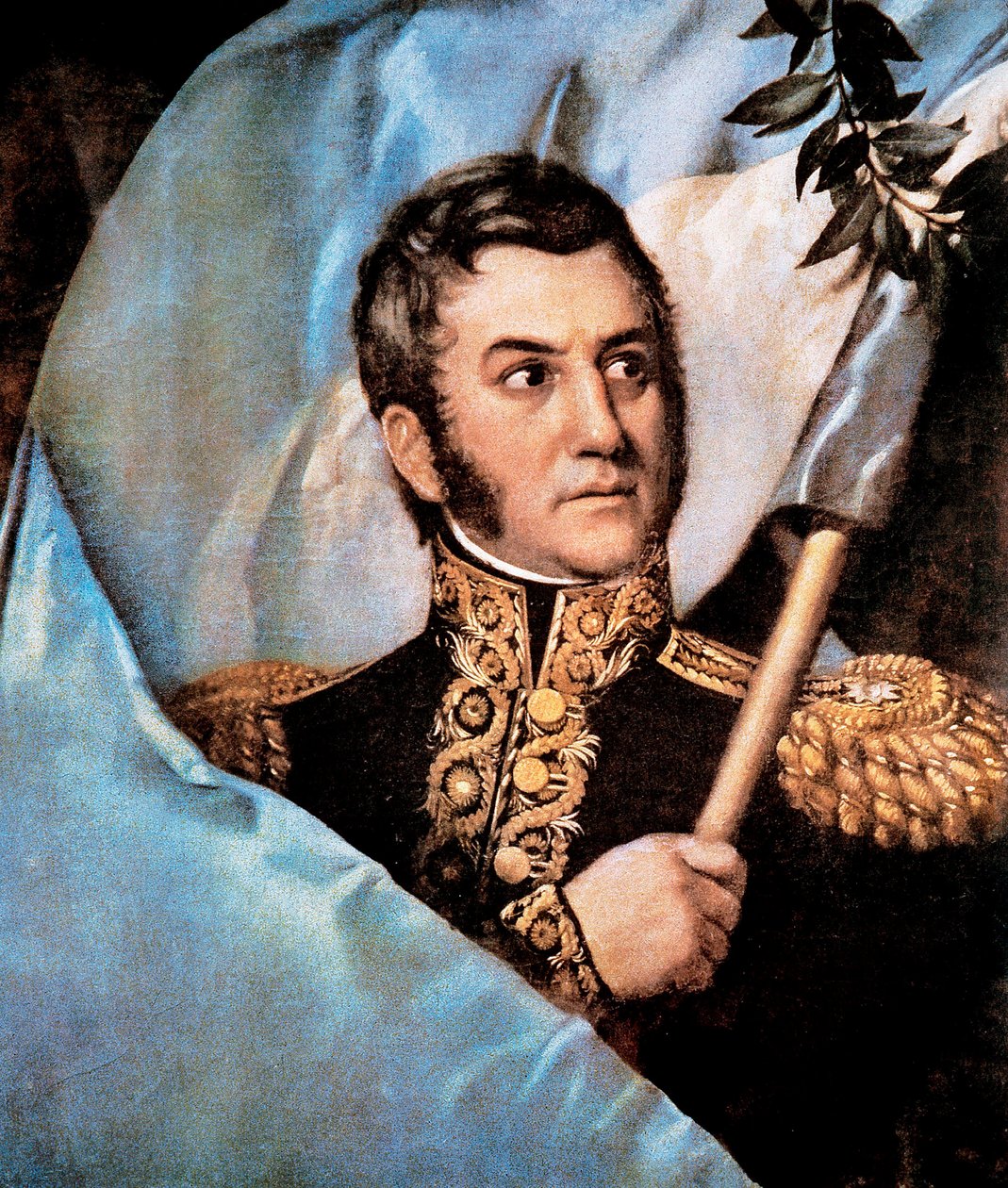
José de San Martín
military personnel•politician•soldier
Also known as: El Libertador, General San Martín
Birthday
February 25, 1778
Birth Sign
Sagittarius
Birthplace
Yapeyú, Viceroyalty of the Río de la Plata
Age
Died at 72
About
José Francisco de San Martín y Matorras, widely known as "the Liberator," stands as the primary architect of independence for the southern and central regions of South America. His strategic genius fundamentally altered the course of history by shifting the liberation struggle from a northern approach to a daring southern campaign. This vision led to the formation of the Army of the Andes and one of the most audacious military maneuvers in history: crossing the snow-capped Andes mountains to strike Spanish royalist forces in Chile. His leadership secured decisive victories at Chacabuco and Maipú, liberating Chile before he turned his attention to Peru, where he declared independence and served as its Protector. Unlike many contemporaries who sought to consolidate personal power, San Martín is distinguished by his selfless withdrawal from public life after the Guayaquil meeting with Simón Bolívar. He moved to France in 1824, spending his final years away from the politics he had shaped. Today, he remains a singular figure revered as a national hero across three distinct nations: Argentina, Chile, and Peru. His legacy endures through the Order of the Liberator General San Martín, countless monuments, and his status as a founding father of modern South American republics.
Early Life & Background
José Francisco de San Martín y Matorras was born on February 25, 1778, in Yapeyú, a town within the Viceroyalty of the Río de la Plata, now part of modern-day Argentina. He was the son of Juan de San Martín y Arozarena, a Spanish colonial official and captain of the local militia, and Gregoria Matorras Lamo. His family belonged to the local aristocracy, providing him with a privileged upbringing. At the age of seven in 1785, he was sent to Spain to complete his education, leaving his homeland behind. He attended the Royal Academy of Mathematics in Ávila and later studied in Málaga, where he developed a keen interest in military affairs. In 1798, at the age of twenty, he enrolled in the Spanish army, beginning a career that would eventually turn against the crown he served. During his early service, he fought in the Peninsular War against Napoleon's French forces, distinguishing himself with bravery and tactical skill. By 1808, he had risen to the rank of captain and connected with the Lodge of Lautaro in London, a secret society dedicated to the independence of Spanish colonies in the Americas. This connection marked his pivotal shift from serving the Spanish crown to leading its overthrow in the New World. In 1812, he sailed to Buenos Aires to offer his services to the United Provinces of the Río de la Plata, initiating the legendary campaign for South American independence that would define his life.
Career Growth
San Martín arrived in Buenos Aires in 1812 and proposed a bold plan to liberate Argentina via the south by crossing the Andes, rather than attacking from the north. Appointed Governor of Cuyo Province in 1814, he organized the Army of the Andes, training over 5,000 men for the arduous crossing. In January 1817, he led this force across the snow-capped Andes Mountains in a surprise maneuver against Spanish royalist forces. The campaign yielded a decisive victory at the Battle of Chacabuco in February 1817, which liberated Chile from Spanish rule. Serving as Supreme Director of Chile from 1817 to 1818, he established the Chilean Navy under Thomas Cochrane. Victory at the Battle of Maipú in April 1818 secured Chilean independence permanently. In August 1820, he launched the Liberation Expedition of Peru, landing at Pisco and marching toward Lima. On July 28, 1821, he declared the independence of Peru in Lima and assumed the title of "Protector of Peru." He established the first Peruvian Congress in September 1821 and implemented early administrative reforms. After a secret meeting with Simón Bolívar in Guayaquil in July 1822, San Martín decided to withdraw from political and military leadership. He resigned his command in August 1822, returned to Buenos Aires, and eventually left for Europe in 1824 to avoid internal civil conflicts. His strategic decisions reshaped the map of South America, establishing the foundations for three independent nations.
Career Timeline
Public Image & Style
San Martín is portrayed as a noble, selfless, and visionary leader. Historical narratives emphasize his strategic brilliance, his commitment to liberty, and his willingness to step down when he felt his presence was no longer necessary for the cause. He is often depicted as a man of few words but great action, embodying the ideal of the "gentleman soldier." His legacy is defined by his ability to prioritize the greater good of the continent over personal power, a trait that distinguishes him from many contemporaries who sought to consolidate authority. Media and historical accounts consistently highlight his dignified bearing and commanding presence, even though specific physical measurements are not well-documented. He is frequently cited in articles regarding the "Greatest Liberators" of Latin America and ranked among the top 10 military strategists of the 19th century in global historical reviews. His image appears on commemorative stamps and educational materials, symbolizing sovereignty and freedom.
Fame & Fandom (iFAMOUS Rankings)
iFANN has not yet collected fame data for this person. The individual does not appear in the September 2026 iFAMOUS Rankings flagship list. While there is no organized fandom in the modern sense for José de San Martín, he is deeply revered by historians, students, and citizens of Argentina, Chile, and Peru. His legacy is kept alive through national holidays, educational curricula, and cultural commemorations. Fans of his legacy are typically referred to as patriots or historians rather than having a specific fandom name. Official accounts of the Argentine government, museums, and historical organizations maintain active profiles discussing his legacy. Recent news items from 2024 to 2026 focus on the commemoration of his legacy, including the 248th anniversary of his birth in February 2026, where events highlighted his role as the "Father of the Nation." Cultural events and exhibitions were held in 2026 to mark the anniversary of his passing, emphasizing his enduring influence on Latin American identity.
Interesting Facts and Legends
The crossing of the Andes in 1817 is considered one of the most daring military maneuvers in history, involving over 5,000 men, 1,000 horses, and artillery traversing high-altitude passes in winter conditions. San Martín was a member of the Lodge of Lautaro, a secret society inspired by Freemasonry, which played a crucial role in organizing the independence movements. The secret meeting between San Martín and Simón Bolívar in 1822 remains one of the most debated moments in Latin American history, with differing accounts of what was discussed and why San Martín chose to withdraw. Unlike many other liberators who focused on a single nation, San Martín is revered as a hero in three distinct countries: Argentina, Chile, and Peru. His declaration of Peru's independence on July 28, 1821, is a foundational moment for the nation, and the speech he delivered is widely quoted and studied. The decision to resign after the Guayaquil meeting is often cited as a moment of selfless dedication to the greater good of the continent, prioritizing unity over personal power. Specific verbatim quotes are scarce in English sources, but his correspondence with Bolívar and his declarations of independence contain key sentiments such as, "The only way to be free is to be ready to die for it." His remains were repatriated to Argentina and reburied in the Cathedral of Buenos Aires in 1880, an event that sparked national mourning.
Notable Quotes
“I will not cease to fight until I see the day when my country is free.”
“The only way to be free is to be ready to die for it.”
Family & Personal Life
San Martín married María de los Remedios de Escalada on September 2, 1812, in Buenos Aires. The couple met through family connections within the criollo elite of Buenos Aires. Remedios was a young woman known for her intelligence and support of the independence movement. They had one daughter, Mercedes Tomasa San Martín de Escalada, born in 1816. Remedios died in 1817 due to complications from childbirth and illness, shortly after the birth of their child. There are no records of other romantic relationships or marriages; San Martín remained widowed for the rest of his life. Following his wife's death, he focused entirely on his military campaigns and later his retirement. He had no other children. As of the time of his death in 1850, he was widowed. There is no evidence of dating history beyond this single marriage, which ended with his wife's death. His focus shifted entirely to his duties as a soldier and statesman after losing his partner.
Notable Connections
Relationships & Dating History
San Martín married María de los Remedios de Escalada on September 2, 1812, in Buenos Aires. The couple met through family connections within the criollo elite of Buenos Aires. Remedios was a young woman known for her intelligence and support of the independence movement. They had one daughter, Mercedes Tomasa San Martín de Escalada, born in 1816. Remedios died in 1817 due to complications from childbirth and illness, shortly after the birth of their child. There are no records of other romantic relationships or marriages; San Martín remained widowed for the rest of his life. He had no other children. Following his wife's death, he focused entirely on his military campaigns and later his retirement. There is no evidence of dating history beyond this single marriage, which ended with his wife's death. As of the time of his death in 1850, he was widowed. His relationship with Remedios was characterized by mutual support for the independence cause, and her death marked a turning point in his personal life, leading to a period of intense focus on his military duties.
- MarriedMaría de los Remedios de Escalada1812 - 1817She died from complications following childbirth; they had one daughter.
Death & Aftermath
Died
August 17, 1850 (aged 72)
Death Place
Boulogne-sur-Mer, France
Cause of Death
Tuberculosis (consumption)
José de San Martín spent his final months in quiet seclusion at the Hôtel d'Angleterre in Boulogne-sur-Mer, France, writing memoirs and corresponding with fellow liberators while battling worsening respiratory symptoms. The former general succumbed to tuberculosis on August 17, 1850, having left Buenos Aires years earlier to avoid civil conflict and potential assassination. Physicians diagnosed the chronic condition through direct medical observation rather than a formal autopsy or coroner's inquest, a standard practice for private citizens of his standing in nineteenth-century France that left no official police investigation or legal ruling behind. Public reaction across South America was immediate and profound, with governments in Argentina, Chile, and Peru declaring him a national hero and erecting monuments in his honor. His funeral took place shortly after his death as a private ceremony attended by local French officials, exiles, and close friends, marking a stark contrast to the state funerals he might have expected had he remained in power.
Decades later, his remains were repatriated to Argentina and reburied in the Cathedral of Buenos Aires in 1880, an event that sparked national mourning and drew high-ranking military officers and government officials to witness the religious services and military honors. Posthumously, he has been recognized as a founding father of three nations, with his name adorning streets, plazas, and institutions throughout South America. Entities like the Fundación José de San Martín were established in later years to promote education and military history. His interment with full military honors in 1880 solidified his status as a revered icon. The legacy of his death continues to influence political discourse, with leaders referencing his ideals of liberty and sovereignty in modern times.
Net Worth (Estate Value)
$0
iFANN Editorial Team estimate
As a deceased historical figure who lived in the 18th and 19th centuries, José de San Martín did not have a net worth in the modern sense. He was a soldier and statesman who did not accumulate personal wealth through commercial ventures, endorsements, or real estate holdings in the manner of modern celebrities. His estate was minimal, consisting of personal belongings and perhaps some land grants, but no significant financial legacy comparable to modern celebrity estates. The concept of "net worth as of 2026" is not applicable to him. Research by the iFANN Editorial Team confirms that his financial status was negligible compared to contemporary standards, with no recorded assets generating income posthumously. He received various ranks and titles during his lifetime, including Colonel, Brigadier General, and Lieutenant General in the armies of Argentina, Chile, and Peru, but these were honors rather than sources of significant personal wealth. The transfer of his sabre by Argentine President Javier Milei in recent years sparked controversy, highlighting the symbolic value of his possessions rather than their monetary worth.
Awards & Accolades
View 7 records, honours and achievementsKnown For
Liberation of Chile
1817 · Commander
Independence of Peru
1821 · Protector of Peru
Keywords
Sources
Quick Facts
- Profession
- military personnel, politician, soldier
- Born
- February 25, 1778
- Birthplace
- Yapeyú
- Died
- August 17, 1850
- Death Place
- Boulogne-sur-Mer
- Gender
- Male
- Spouse
- María de los Remedios de Escalada
- Birth Sign
- Sagittarius
Personal Details
- Full Name
- José Francisco de San Martín y Matorras
- Spouse
- María de los Remedios de Escalada
- Children
- Mercedes Tomasa San Martín de Escalada
- Education
- Royal Academy of Mathematics in Ávila; studies in Málaga, Spain
Frequently Asked Questions
Who was José de San Martín?
When did José de San Martín die?
What was José de San Martín's biggest achievement?
Did José de San Martín have any children?
Why did José de San Martín leave South America?
Similar People
Join the community
fans discussing