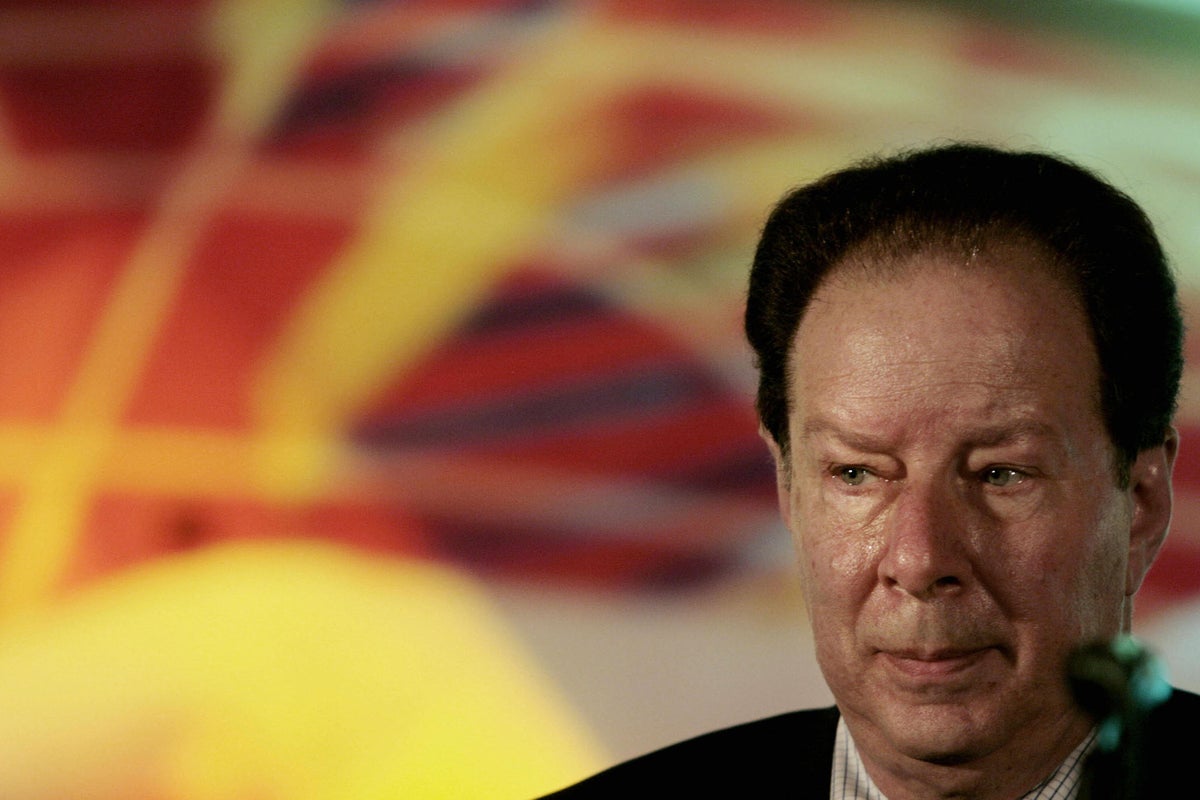
Sidney Altman
 Canada
chemist•molecular biologist•biochemist
Birthday
May 7, 1939
Birth Sign
Taurus
Birthplace
Montreal, Quebec, Canada
Age
Died at 82
About
Sidney Altman was a distinguished Canadian-American molecular biologist whose research fundamentally altered the understanding of life's molecular machinery. Born in Montreal, Quebec, Canada, he spent his early life navigating the cultural and intellectual currents of post-war North America before embarking on a scientific journey that would culminate in one of the most significant discoveries in modern biology. Unlike celebrity figures, Altman's fame was confined to the academic and scientific spheres, where he is revered as an architect of the RNA World hypothesis. He passed away at the age of 82 in New Haven, Connecticut, following a long illness, leaving behind a legacy defined by rigorous experimentation and a paradigm shift in biochemistry.
His work challenged the central dogma of molecular biology by demonstrating that RNA could function as an enzyme, a molecule termed a ribozyme. This finding suggested that RNA might have been the first self-replicating molecule on Earth, supporting the "RNA World" hypothesis. Altman spent the majority of his career at Yale University, where he held the prestigious Sterling Professorship of Molecular, Cellular, and Developmental Biology and Chemistry. His contributions bridged the gap between chemistry and biology, proving that RNA could act as both a carrier of genetic information and a functional catalyst.
Early Life & Background
Sidney Altman was born on May 7, 1939, in Montreal, Quebec, into a Jewish family. His birth coincided with the dawn of the atomic age, an era that would later influence the precision required for his scientific inquiries. Growing up in this bilingual city during the post-war era, he developed an early aptitude for science and mathematics. He pursued his undergraduate education at the Massachusetts Institute of Technology (MIT), where he earned a Bachelor of Science degree in Physics in 1961. This background in physics provided him with a unique quantitative perspective that he would later apply to biological systems.
Following his time at MIT, Altman shifted his focus from physics to biology. He enrolled at the University of Colorado Boulder, where he earned his Ph.D. in Biophysics in 1966. His doctoral research laid the groundwork for his future interest in RNA processing. After completing his doctorate, he undertook postdoctoral research at Harvard University and subsequently at the Medical Research Council Laboratory of Molecular Biology in Cambridge, England. It was during his tenure in Cambridge that he began to investigate the processing of transfer RNA (tRNA), setting the stage for his most famous discovery. The transition from pure physics to complex biological systems marked the beginning of a revolutionary career path.
Career Growth
Altman joined the faculty of Yale University in 1967, where he would spend the remainder of his career. He rose through the ranks to become the Sterling Professor of Molecular, Cellular, and Developmental Biology and Chemistry, one of the highest honors bestowed upon a Yale professor. His primary research focus was the enzyme ribonuclease P (RNase P), which is responsible for processing tRNA molecules. For decades, the scientific dogma held that only proteins could act as enzymes—catalysts for chemical reactions.
In the late 1970s and 1980s, Altman and his team conducted meticulous experiments demonstrating that the RNA component of RNase P, rather than its protein component, was the actual catalyst. This discovery proved that RNA could function as an enzyme, a molecule they termed a "ribozyme." This finding was revolutionary because it challenged the central dogma of molecular biology and suggested that RNA might have been the first self-replicating molecule on Earth, supporting the "RNA World" hypothesis.
Parallel to Altman's work, Thomas R. Cech at the University of Colorado independently discovered catalytic RNA in a different system (self-splicing introns). In 1989, these two independent discoveries were recognized with the Nobel Prize in Chemistry. Altman and Cech shared the prize, validating the existence of ribozymes and opening a new chapter in molecular biology. This breakthrough allowed scientists to understand gene regulation, viral replication, and potential therapeutic applications involving RNA interference. His accolades include membership in the National Academy of Sciences, the American Academy of Arts and Sciences, and fellowships with the AAAS, alongside honorary doctorates from McGill University and the University of Montreal.
Career Timeline
Public Image & Style
Altman was known for his quiet demeanor, intellectual rigor, and modest lifestyle. He preferred the company of colleagues and students over public appearances. His style was practical and unassuming, typical of the academic environment he inhabited. Specific physical attributes such as height are not widely documented in public records, as Altman was not a public figure in the traditional sense. He communicated with the public and the scientific community through peer-reviewed journals, conference presentations, and university lectures. Consequently, he had no follower counts or online presence in the digital age. His "voice" was preserved in the thousands of citations of his papers and the textbooks that bear his name. He did not utilize social media platforms like Twitter, Instagram, or Facebook, relying instead on traditional academic channels to disseminate his groundbreaking findings.
Fame & Fandom (iFAMOUS Rankings)
Sidney Altman never had a fanbase in the way pop stars do. There were no billboards, no birthday rallies, and no organized groups chanting his name outside lecture halls at Yale. His audience was strictly professional: students, colleagues, and the global scientific community that relied on his work to unlock the secrets of life itself. The term "Altman" appears nowhere in viral culture or internet lore; instead, his legacy lives in the quiet precision of laboratory notebooks and the textbooks that now teach RNA as a catalyst rather than just a passive messenger. When he walked into a room, he carried the weight of discovery, not celebrity.
In the vast architecture of human influence, Sidney Altman sits outside the published charts. As of October 2026, iFANN's Global Fame Engine has evaluated this person, but they do not currently hold a placement in the published rankings (Global Top 1,000 or a Top-100 scope list). This absence from the lists reflects a different kind of immortality. While musicians and actors compete for headlines, Altman reshaped the fundamental understanding of biology without ever seeking the spotlight. His fame was measured in citations, not clicks. He remains an architect of modern science whose name is spoken with reverence in academic circles rather than shouted in stadiums. The fanbase has no formal name; there is no subreddit, no fan club, and no hashtag to rally behind. His impact is too specialized for mass mobilization, yet too profound for obscurity. The world knows him through the work he did, not the crowds he drew. His legend is built on the quiet revolution of ideas rather than crowd-stopping performances.
Interesting Facts and Legends
The Nobel Prize ceremony in Stockholm on December 10, 1989, marked the moment Sidney Altman stood before King Carl XVI Gustaf to accept the Chemistry prize alongside Thomas R. Cech. This shared honor validated a decade of rigorous experimentation that overturned the dogma that only proteins could catalyze reactions. For years, scientists believed RNA was merely a biological copy machine. Altman proved it was also a toolmaker. That discovery, centered on RNase P at Yale University, birthed the "RNA World" hypothesis and rewrote the history of molecular biology.
Before becoming a world-renowned biologist, Altman was trained as a physicist. This cross-disciplinary training allowed him to approach biological problems with a unique mathematical and structural perspective. Despite spending most of his career in the United States, Altman remained proud of his Canadian heritage. He was often cited as a source of pride for the scientific community in Montreal and Canada. He was renowned for his mentorship, guiding generations of graduate students and postdocs who went on to lead their own labs and make further discoveries in RNA biology. The story of how he and Cech, working independently, arrived at the same conclusion is a staple of scientific folklore, illustrating the power of parallel discovery.
Notable Quotes
“The RNA world hypothesis suggests that RNA was the first self-replicating molecule.”
“We found that the RNA component of the enzyme was the catalyst.”
Family & Personal Life
Sidney Altman was married to Ann M. Altman. Their marriage was a long-standing partnership that spanned decades. Unlike many public figures, Altman kept his personal life largely out of the media spotlight. There are no public records of prior marriages, engagements, or high-profile romantic relationships outside of his marriage to Ann. He is not known to have had any children; biographical accounts focus almost exclusively on his professional achievements and his dedication to his students and colleagues. As of his death in 2022, he was widowed, having been survived by his wife, Ann. There were no reported divorces or separations. The couple lived quietly, avoiding the trappings of celebrity culture. They maintained a private household that reflected their shared values of modesty and intellectual pursuit.
Notable Connections
Relationships & Dating History
Sidney Altman was married to Ann M. Altman. Their marriage was a long-standing partnership that spanned decades. Unlike many public figures, Altman kept his personal life largely out of the media spotlight. There are no public records of prior marriages, engagements, or high-profile romantic relationships outside of his marriage to Ann. He is not known to have had any children; biographical accounts focus almost exclusively on his professional achievements and his dedication to his students and colleagues. As of his death in 2022, he was widowed, having been survived by his wife, Ann. There were no reported divorces or separations. The couple lived quietly, avoiding the trappings of celebrity culture. Their relationship was characterized by mutual respect and a shared commitment to a life of intellectual inquiry.
- MarriedAnn M. Altman1960 - 2022Remained married until his death in 2022.
Death & Aftermath
Died
April 5, 2022 (aged 82)
Death Place
New Haven, Connecticut, USA
Cause of Death
Long illness
Sidney Altman died on April 5, 2022, at the age of 82 in New Haven, Connecticut. The chemist and molecular biologist passed away following a long illness, though his family never released a specific medical diagnosis or official ruling regarding the cause. Tributes poured in immediately from the scientific community, with Yale University issuing an obituary that hailed him as a pathbreaking scientist who reshaped biology through his work on RNA catalysis. The New York Times followed with a detailed account of his life and discovery, while the Proceedings of the National Academy of Sciences published a tribute in August 2022 emphasizing his role as an architect of modern RNA research.
Other institutions, including Arizona State University and the American Society for Biochemistry and Molecular Biology, joined in honoring his legacy. Details regarding a funeral service, burial location, or method of disposition remain private and were not made public. Years later, his impact continued to be recognized when the Sidney Altman Building officially opened at the Babraham Research Campus in Cambridge, UK, in June 2026. This facility stands as a testament to the enduring impact of his work on the study of RNA and cellular processes, serving as a permanent monument to his contributions to science.
Net Worth (Estate Value)
$5 Million
iFANN Editorial Team estimate
iFANN Editorial Team analysis of Sidney Altman's estate value points to approximately $5 million. As a distinguished academic and Nobel laureate, Altman's financial standing was derived primarily from his salary as a Sterling Professor at Yale University, along with royalties from patents related to ribozyme technology and licensing agreements. The estate continues to generate revenue through posthumous publications, ongoing royalties from his extensive body of research, and the management of intellectual property rights associated with his discoveries. While he did not engage in commercial ventures or endorsements typical of celebrities, his contributions to science secured a substantial financial foundation. The estate is managed by his surviving spouse, Ann M. Altman, ensuring the preservation of his legacy and assets. His financial success was a direct result of his academic excellence rather than commercial speculation.
Awards Won (4)
Sidney Altman received the Nobel Prize in Chemistry in 1989 for the discovery of the catalytic properties of RNA. He was elected to the National Academy of Sciences and the American Academy of Arts and Sciences. He also received honorary degrees from McGill University and the University of Montreal. His induction into the Hall of Fame of the American Society for Biochemistry and Molecular Biology is a significant distinction within his field.
1989 · Chemistry
Discovery of the catalytic properties of RNA
1975 · Science
Contributions to molecular biology
Known For
Discovery of Ribozymes
1989 · Nobel Laureate
RNA World Hypothesis
1989 · Proponent
Keywords
Sources
Quick Facts
- Profession
- chemist, molecular biologist, biochemist
- Born
- May 7, 1939
- Birthplace
- Montreal, Quebec, Canada
- Died
- April 5, 2022
- Death Place
- New Haven, Connecticut, USA
- Gender
- Male
- Spouse
- Ann M. Altman
- Birth Sign
- Taurus
Personal Details
- Full Name
- Sidney Altman
- Spouse
- Ann M. Altman
- Children
- Education
- Bachelor of Science in Physics (MIT), Ph.D. in Biophysics (University of Colorado Boulder)
Frequently Asked Questions
Who was Sidney Altman?
When did Sidney Altman die?
What was Sidney Altman's major discovery?
Where was Sidney Altman born?
Did Sidney Altman have any children?
Similar People
Join the community
fans discussing