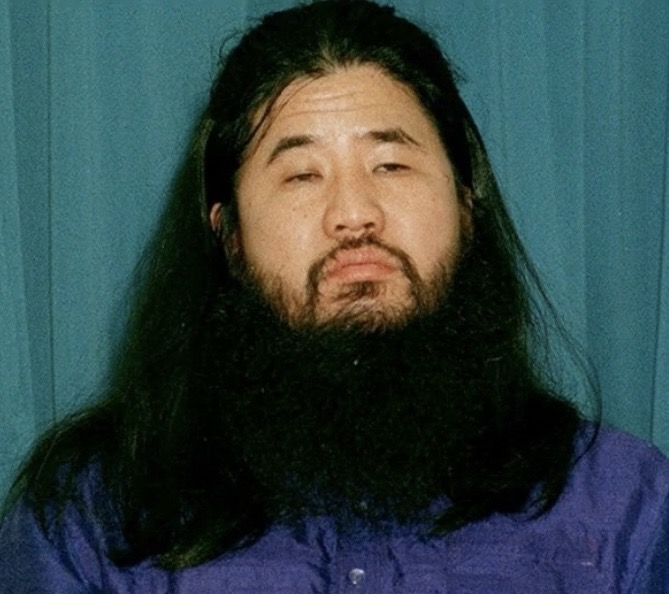
Shoko Asahara
 Japan
Japanterrorist•writer•serial killer
Birthday
+1955-03-02
Birth Sign
Pisces
Birthplace
Yatsushiro
Age
Died at 63
About
Shoko Asahara, born Chizuo Matsumoto on March 2, 1955, in Yatsushiro, Japan, was a cult leader, writer, and convicted terrorist. He founded the doomsday cult Aum Shinrikyo, which blended elements of Buddhism, Hinduism, and apocalyptic prophecy. Asahara was the mastermind behind the 1995 sarin gas attack on the Tokyo subway, a tragedy that killed 14 people and sickened thousands more. He orchestrated other assassinations and attacks, leading to his conviction and death sentence in 2004. After years of appeals, his execution was carried out on July 6, 2018, alongside several senior cult members. Asahara's life remains a stark example of how charismatic authority can spiral into mass violence.
Fame & Fandom
Shoko Asahara stands as the 69th most famous person from Japan, while simultaneously holding the position of the 27th most famous person in True Crime. These placements within the iFANN Global Fame Rankings reflect a legacy that endures decades after his execution, anchored in global attention across media coverage and historical consumption. The sheer scale of this notoriety ensures his name remains a primary reference point whenever modern terrorism or cult dynamics are discussed.
Despite this enduring fame, there is no formal fandom name for Shoko Asahara, nor does an organized fanbase exist in any conventional sense. The devotion he commanded was confined strictly to the members of Aum Shinrikyo, the doomsday cult he founded. Followers referred to him with honorific titles reflecting his self-proclaimed status as a reincarnation of Shiva and the monk Asanga, viewing him as the sole savior from an impending apocalypse. This relationship was defined by absolute authoritarian control rather than mutual engagement. While the cult produced anime-style promotional videos and manga to spread its message, these were top-down propaganda efforts rather than grassroots fan initiatives. No birthday billboards, charity drives, or celebratory rituals emerged from a fan community. Since his death, successor organizations like Aleph have continued to venerate his spiritual authority, but this represents a religious succession rather than a living fan culture. The vast majority of public sentiment toward him remains one of revulsion, cementing his place as one of the most hated figures in modern Japanese history.
Interesting Facts and Legends
Shoko Asahara, born Chizuo Matsumoto, orchestrated the 1995 sarin gas attack on the Tokyo subway, killing 13 people and injuring over 6,000 others. This event is often described as Japan's 9/11 due to its profound cultural impact. Prior to this, he directed the Matsumoto sarin attack in June 1994, which killed eight people and injured more than 500, serving as a dry run for the larger tragedy. His movement was built on apocalyptic prophecies predicting a Third World War and nuclear holocaust, claims that created a siege mentality among his followers. He also claimed supernatural abilities, including levitation and floating, publishing photographs purporting to show him hovering in the lotus position. These images became iconic artifacts of his charismatic hold, though they are universally regarded by outside observers as staged trick photography. In early 1995, he gave dramatic press conferences where he presented himself as a victim of persecution, wearing distinctive white and reddish-brown robes with a wild-eyed expression that became legendary in media coverage. The story of his failed prophecy and his attempt to manufacture Armageddon remains a widely retold narrative in true-crime documentaries. Even today, the stigma surrounding the children who grew up inside the cult compounds persists, with many speaking out about their suffering decades later.
Death & Aftermath
Died
+2018-07-06 (aged 63)
Death Place
Tokyo, Japan
Cause of Death
Judicial execution by hanging
The execution of Shoko Asahara and six senior followers on July 6, 2018, brought a somber sense of closure to the long legal process that began with the 1995 Tokyo subway sarin attack. Government officials confirmed the hangings at the Tokyo Detention House, framing the event as justice for the victims rather than a moment for public mourning or celebration. Asahara had spent his final years on death row since his 2004 sentencing, with no public appearances reported in the years leading up to the state-sanctioned hanging. The cause of death was officially ruled as judicial execution by hanging, determined directly by the Japanese Ministry of Justice.
His remains were taken into government custody immediately following the procedure, initiating a prolonged dispute with his family over their return. In April 2026, his second son filed a lawsuit seeking damages regarding the execution and the handling of remains, while his daughters have campaigned to reclaim locks of hair held by authorities. The government maintained custody of his estate and remains. While a 2026 study noted that trauma lingers for 26% of sarin attack survivors, the dominant historical narrative surrounding his death focuses on the finality of the legal proceedings rather than any personal commemoration.
Awards & Accolades
Keywords
Quick Facts
- Profession
- terrorist, writer, serial killer
- Born
- +1955-03-02
- Birthplace
- Yatsushiro
- Died
- +2018-07-06
- Death Place
- Tokyo Detention House
- Gender
- Male
- Spouse
- Tomoko Matsumoto
- Birth Sign
- Pisces
Personal Details
- Spouse
- Tomoko Matsumoto
Join the community
fans discussing