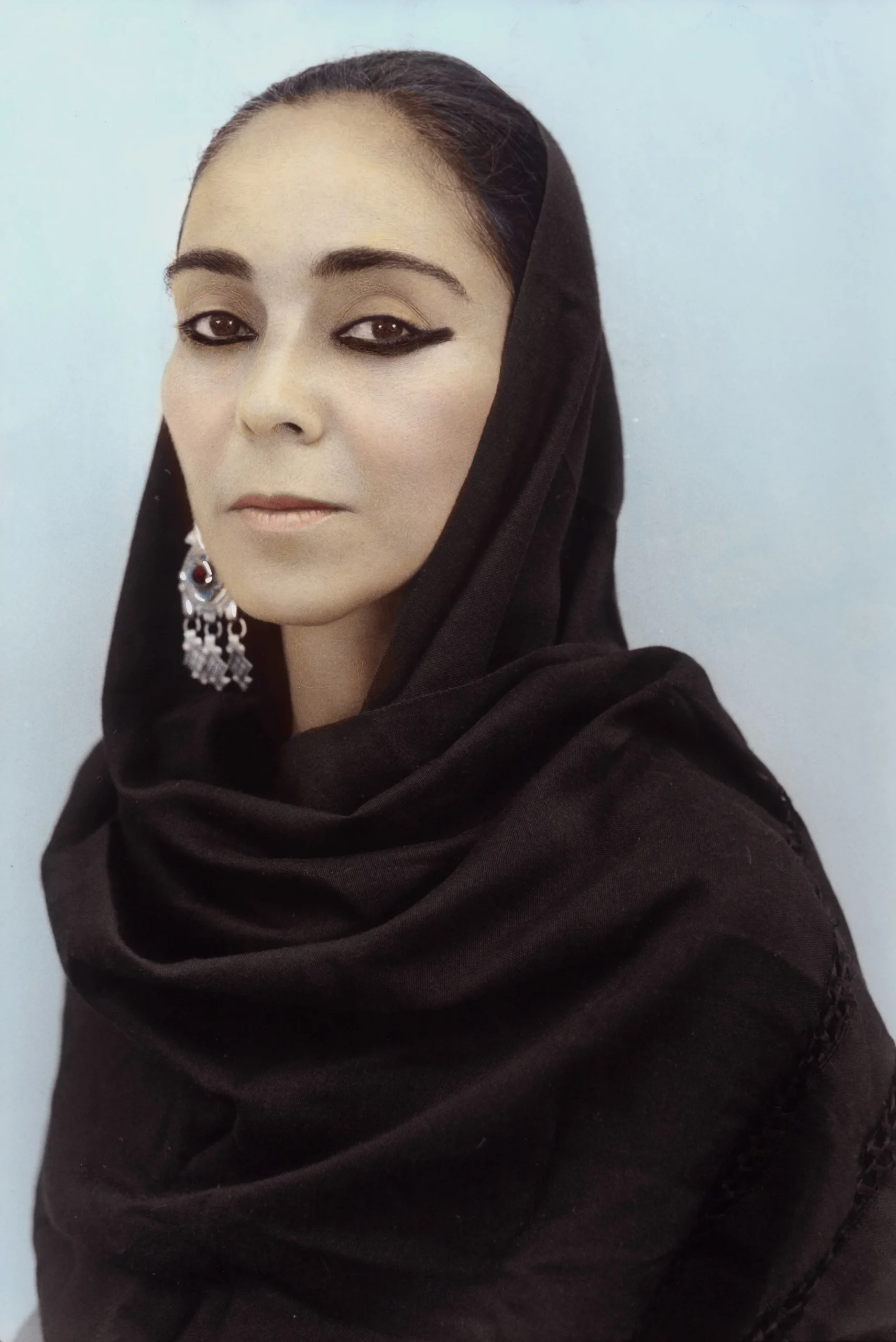
Shirin Neshat
 Iran
Iranphotographer•film director•screenwriter
Birthday
March 26, 1957
Birth Sign
Sagittarius
Birthplace
Qazvin, Iran
Age
69 years old
About
Shirin Neshat is an Iranian-born visual artist, photographer, filmmaker, and screenwriter who has lived in New York City since the early 1980s. Her work spans photography, video installations, feature films, and opera direction, characterized by a distinct aesthetic often featuring black-and-white imagery and Persian calligraphy superimposed over human figures. She explores the complexities surrounding women in Islamic societies, the tension between tradition and modernity, and the experience of exile.
Neshat's creative output consistently engages with themes of oppression, political injustice, and the human cry for freedom, particularly in the context of her native Iran. She has noted that her art is a form of protest against tyranny. Her international reputation was established in the 1990s through her Women of Allah series and solidified by major awards including the Golden Lion at the Venice Biennale and the Silver Lion at the Venice Film Festival.
Early Life & Background
Shirin Neshat was born into a secular, middle-class family in Qazvin, a city northwest of Tehran. Her father, a physician, sent her to the United States in 1974 to complete her high school education, fearing the instability that would soon engulf Iran. She attended Berkeley High School in California before enrolling at the University of California, Berkeley. There, she initially studied biology but switched to art, earning her Bachelor of Arts degree in 1979 and her Master of Fine Arts from the California College of Arts and Crafts in Oakland in 1983.
During her graduate studies, she focused on painting, but after graduating, she felt constrained by the medium's limitations in expressing the political and social narratives she wished to convey. This led her to abandon painting in favor of photography and film, mediums she found more immediate and potent for addressing the alienation she felt as an exile. She moved to New York City in the early 1980s, where she began to develop the visual language that would define her career.
The pivotal moment for her artistic identity occurred in 1990 when she returned to Iran for the first time since leaving in 1974. The shock of seeing the changes in her homeland, particularly the strict enforcement of veiling and the segregation of genders following the 1979 Revolution, profoundly impacted her. This trip catalyzed her most famous body of work, transforming her personal sense of displacement into a global dialogue about gender and politics.
Career Growth
Neshat's career began in earnest in the early 1990s after her return to Iran. Between 1993 and 1997, she created the Women of Allah series. These photographs featured veiled women with their faces partially or fully covered by Persian calligraphy, blending text and image to explore the complex identities of women in post-revolutionary Iran. The series established her international reputation immediately upon its release.
In 1998, she released Turbulent, a two-channel video installation depicting a man singing in a concert hall while a woman stands silently before him, eventually taking the microphone and performing a powerful, wordless song. It won the prestigious Golden Lion at the 48th Venice Biennale in 1999. This award catapulted her from a niche artist to a global figure in contemporary art. She followed this with Rapture in 1999, another two-channel video installation exploring the dynamics of power and submission among women in a male-dominated society.
A major milestone in her career arrived in 2009 with the release of Women Without Men, a feature film based on the novel by Shahrnush Parsipur. The film premiered at the Cannes Film Festival and won the Silver Lion for Best Director at the 66th Venice Film Festival. This marked her transition from video art to narrative cinema and brought her significant mainstream recognition. In 2012, she directed Looking for Oum Kulthum, a documentary about the legendary Egyptian singer, which premiered at the Berlinale.
Her recent work continues to engage with current social tragedies. In October 2025, she directed a production of Giuseppe Verdi's Aida at the Gran Teatre del Liceu in Barcelona. The production was noted for its anti-war interpretation, staging the opera against the backdrop of contemporary conflicts. In May 2026, she presented The Home of My Eyes at the Venice Biennale. This exhibition explored themes of identity, exile, and digital culture, specifically referencing the YouTube Shooter incident.
Career Timeline
Public Image & Style
Neshat is portrayed as a serious, intellectual, and politically engaged artist. Her public persona is defined by her commitment to exploring the nuances of Iranian culture and the universal struggle for freedom. She is seen as a voice of conscience, often critiquing both Western imperialism and religious fundamentalism. Her style is minimalist yet profound, using black and white to create a timeless quality. She rarely gives interviews in English, preferring to communicate through translators or written statements, which adds to her aura of mystery and seriousness.
Fame & Fandom (iFAMOUS Rankings)
Shirin Neshat does not command a mass-market fanbase with an organized name or official campaigns. Her audience consists primarily of art collectors, museum visitors, and academic communities rather than the crowds typical of pop culture figures. There are no documented birthday billboards, subway advertisements, or fan-driven chart movements in her name. Instead, her supporters engage through institutional channels, attending gallery openings, film festival screenings, and university lectures where she has delivered commencement addresses.
The scope of her global recognition is substantial within the cultural sphere. According to the iFANN Global Fame Rankings, she holds a distinct position among international figures. She is currently ranked as the 89th most famous person from Iran, a placement that reflects her sustained influence on the intersection of visual art and political discourse. This ranking represents a shift from the previous cycle, moving up from the 90th position. These metrics track global attention across media coverage, search behavior, and consumption signals worldwide without relying on transient viral spikes.
Neshat's legacy is defined by specific, verified milestones rather than folklore. Her early photographic series Women of Allah established her reputation immediately upon its release. The 1999 film Rapture remains a landmark of video art frequently cited in critical discussions. A significant peak in mainstream recognition occurred when her feature film Women Without Men won the Silver Lion for Best Director at the Venice Film Festival. More recently, her 2026 exhibition The Home of My Eyes engaged with contemporary digital tragedies, while her production of Verdi's Aida at the Paris Opera generated mixed but notable reviews. These achievements anchor her status as a serious artist whose work explores exile, identity, and the tensions between East and West.
Interesting Facts and Legends
Shirin Neshat originally intended to study medicine but was encouraged by her father to pursue education abroad. She did not return to Iran until 1990, sixteen years after leaving, and the visit was so traumatic for her that she nearly didn't stay. Her use of calligraphy in her photographs is a deliberate choice to merge the visual and the textual, creating a dialogue between the viewer and the unseen words.
She has served as a visiting critic at the Yale School of Art, influencing a new generation of filmmakers. Despite her fame, she rarely gives interviews in English, often communicating through translators or written statements. In September 2026, it was announced that UTA (United Talent Agency) had signed Neshat, expanding her representation for future projects.
Notable Quotes
“My work is a form of protest, a powerful expression against tyranny.”
“I am an exile. I live in a state of permanent displacement.”
“The relationship between Islam and the West is complex, and my art tries to navigate that complexity.”
Family & Personal Life
Shirin Neshat comes from a secular, middle-class family in Qazvin, Iran. Her father was a physician who sent her to the United States in 1974 to ensure she received a Western education amidst growing political instability. She has maintained a close connection to her roots while living in exile. While she has close professional collaborations and friendships within the art world, including with director Abbas Kiarostami and writer Shahrnush Parsipur, these are not characterized as romantic partnerships in public records. She resides primarily in New York City and does not have children.
Notable Connections
Abbas Kiarostami, Shahrnush Parsipur, Kiran Nadar, Giuseppe Verdi
Relationships & Dating History
Shirin Neshat is known for maintaining a private personal life. There are no publicly confirmed records of marriage, engagements, or long-term romantic relationships. She has never publicly disclosed details about dating history, and media reports do not identify any specific partners. As of 2026, she is widely considered to be single. She resides primarily in New York City. While she has close professional collaborations and friendships within the art world, including with director Abbas Kiarostami and writer Shahrnush Parsipur, these are not characterized as romantic partnerships in public records. She does not have children. Her focus has remained almost exclusively on her artistic practice and her advocacy for freedom of expression.
Salary, Net Worth In 2026
$9 Million
iFANN Editorial Team estimate
iFANN Editorial Team research estimates Shirin Neshat's net worth at approximately $9 million. This valuation is derived from the consistent performance of her works in the secondary market, auction results, and sales through galleries like Gladstone Gallery. Specific auction prices for her key works, such as pieces from the Untitle (Chest) series, have ranged from $150,000 to over $300,000 in recent years.
Her wealth sources include the sale of original photographs, video installations, film rights, and speaking engagements. Unlike commercial entertainers, her income is tied directly to the art market rather than blockbuster salaries or endorsements. She does not appear to have major real estate holdings outside of her primary residence in New York City, nor does she have widely publicized business ventures beyond her art practice. The sustained demand for her work in major museum collections supports this financial standing.
Awards Won (5)
Shirin Neshat has received numerous prestigious awards throughout her career, including the Golden Lion for Best Short Film at the 48th Venice Biennale for Turbulent in 1999 and the Silver Lion for Best Director at the 66th Venice Film Festival for Women Without Men in 2009. She was named one of Time magazine's 100 Most Influential People in 2010 and received the Praemium Imperiale for Painting in 2014. Her accolades also include induction into the National Women's Hall of Fame in 2022 and multiple honorary doctorates from institutions like RISD, UCLA, and Yale.
2017 · Global Cinema
Contribution to Cinema
1999 · Venice Biennale
Turbulent
Known For
Women of Allah
1993 · Photography Series
Turbulent
1998 · Video Installation
Women Without Men
2009 · Director
Aida
2025 · Opera Director
Keywords
Sources
Quick Facts
- Profession
- photographer, film director, screenwriter
- Born
- March 26, 1957
- Birthplace
- Qazvin, Iran
- Gender
- Female
- Birth Sign
- Sagittarius
Personal Details
- Full Name
- Shirin Neshat
- Children
- Education
- University of California, Berkeley (BA), California College of the Arts (MFA)
Filmography
12
Total
4
Film
0
TV
Frequently Asked Questions
What is Shirin Neshat best known for?
Where was Shirin Neshat born?
Is Shirin Neshat married?
What awards has Shirin Neshat won?
What is Shirin Neshat's latest project?
Social Media
Similar People
Join the community
fans discussing