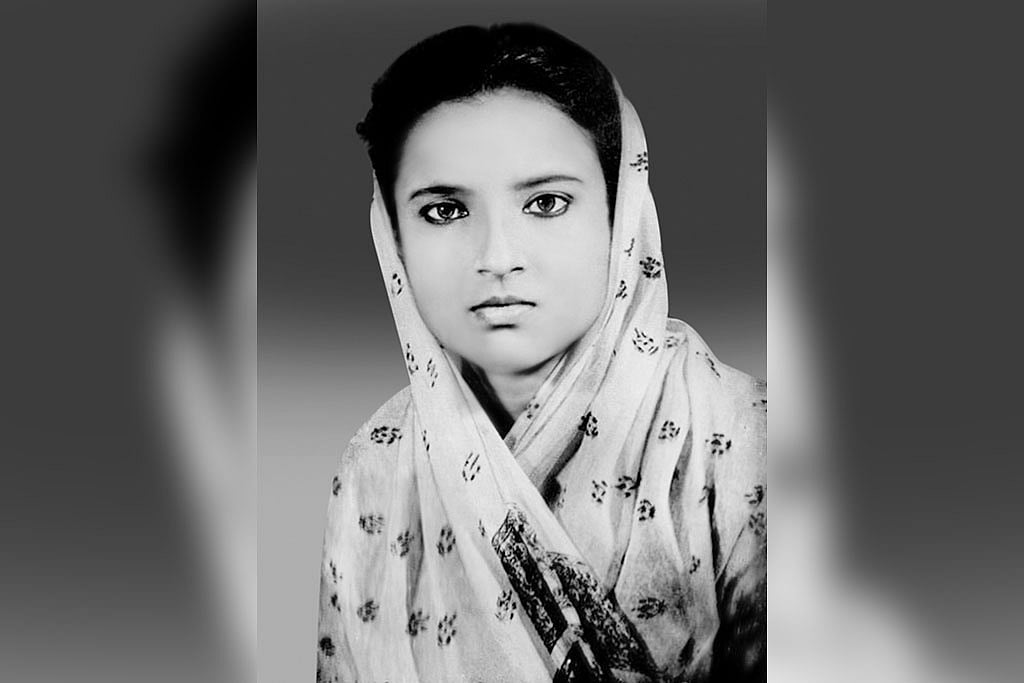
Sheikh Fazilatunnesa Mujib
 Bangladesh
Also known as: Begum Mujib, Renu, Bangamata
Birthday
August 8, 1930
Birth Sign
Leo
Birthplace
Tungipara, Gopalganj, British India (now Bangladesh)
Age
Died at 45
About
Sheikh Fazilatunnesa Mujib was the wife of Sheikh Mujibur Rahman, the founding father of Bangladesh, and the mother of former Prime Minister Sheikh Hasina. Affectionately known as Renu to family, she was a quiet but unwavering presence throughout Bangladesh's independence struggle, offering counsel and strength during her husband's many imprisonments. Though she never held formal office, her role as First Lady from January 25 to August 15, 1975, placed her at the center of the nation's brief, turbulent early years.
Her life ended tragically on August 15, 1975, when she was assassinated alongside her husband and several family members during a military coup. In death, she became a symbol of sacrifice and devotion, honored posthumously with the title Bangamata, meaning Mother of Bengal. Her legacy continues through her daughter Sheikh Hasina, who led the Awami League and served as prime minister, and through the annual commemorations that remember her as the flame of inspiration behind Bangladesh's founding.
Early Life & Background
Born on August 8, 1930, in Tungipara village in the Gopalganj district of British India, Sheikh Fazilatunnesa grew up in a devout Muslim household. Her father, Sheikh Zahurul Haque, came from a respected local family. She was a paternal cousin of Sheikh Mujibur Rahman, a kinship that would shape her entire life.
Details of her formal schooling are scarce, but she was raised with traditional values and a strong sense of duty. She married Sheikh Mujib at a young age, entering a household already immersed in the political currents of the 1940s. As her husband became increasingly involved in the movement for Bengali self-determination, she managed the home and raised their growing family, all while providing steady emotional support during his frequent arrests and imprisonments. The Daily Star later described her as an excellent homemaker who groomed her children to be good citizens and worthy children of a great father.
Career Growth
Sheikh Fazilatunnesa Mujib never held public office, yet her influence ran through the highest levels of Bangladesh's founding. She became First Lady on January 25, 1975, a position she held for barely seven months before the August 15 coup that claimed her life. In that short span, she hosted dignitaries and stood beside her husband as he led the newly independent nation.
Her real political contribution was quieter and longer-lasting. Throughout the 1950s and 1960s, as Sheikh Mujib shuttled between prison and politics, she kept the family together and served as his confidante. Tributes from the Awami League and Bangladeshi media consistently describe her as the unsung lady who backed Bangabandhu her whole life, the flame of inspiration behind his resolve. Her death alongside her husband in 1975 turned her into a martyr of the independence movement, and her memory has been invoked by leaders and citizens alike ever since.
Career Timeline
Public Image & Style
In Bangladesh, Sheikh Fazilatunnesa Mujib is remembered as a symbol of quiet strength, devotion, and sacrifice. The Awami League and its supporters honor her as Bangamata, Mother of Bengal, and celebrate her birth anniversary each year. She is portrayed in media and political discourse as the unsung pillar behind Bangabandhu's success, a devoted wife and mother who put the national cause above personal comfort. Her image is that of a dignified, resilient woman who endured hardship without complaint. There is no formal fandom name, but her commemorative following is closely tied to the Awami League's political base and supporters of Bangladesh's independence movement. Her likeness appears in murals, posters, and tribute events, often alongside her husband, reinforcing her place in the nation's founding narrative.
Fame & Fandom
Sheikh Fazilatunnesa Mujib commands a legacy defined not by the ephemeral adoration of pop culture, but by the solemn reverence accorded to a national martyr and the mother of the nation. In contemporary discourse, she possesses no organized fanbase with a formal name, nor are there documented rituals, viral campaigns, or unofficial clubs dedicated to her memory in the manner of modern entertainers. Her audience consists entirely of the citizens of Bangladesh, particularly political supporters who view her through the lens of historical necessity and state-sponsored veneration. The public narrative surrounding her is anchored in verified historical accounts of her role as a steadfast organizer during the liberation struggle and the tragic details of her death alongside her family in 1975. These events form the bedrock of her mythology, retold annually on August 8 and August 15, where tributes replace fan gatherings. While university halls named in her honor remain focal points of institutional identity, recent political shifts have sparked debates regarding their renaming, underscoring her enduring place in the national consciousness without the noise of celebrity fandom. She remains a figure of historical gravity rather than current cultural consumption. According to the latest evaluation from iFANN's Global Fame Engine conducted in August 2026, Sheikh Fazilatunnesa Mujib is currently evaluated but does not hold a placement in the published rankings, including the Global Top 1,000 or any Top-100 scope list.
Interesting Facts and Legends
Known affectionately as Renu only within her inner circle, she was a paternal cousin of her husband, a union reflecting rural Bengali customs of the era. She served as First Lady for just over seven months, spanning from January 25 to August 15, 1975, before her life was cut short. Her birth anniversary on August 8 is observed nationally, drawing tributes from leaders and citizens alike. A hall at Dhaka University bears her name, though it faced potential renaming in 2026 following political changes. She never held formal office yet remains central to the country's founding story. Historical accounts widely credit her as the silent master organizer who managed the domestic front while her husband was imprisoned, ensuring the stability of the Awami League movement. The defining moment of her legacy is the 1975 massacre, where she was killed alongside her husband and sons during a military coup, an event that cemented her status as a martyr. This tragedy is not merely folklore but a documented historical fact that defines her enduring symbolic power in Bangladesh.
Notable Quotes
“I have no personal quotes from her, but she was described as 'an excellent homemaker' who groomed her children to be 'worthy children of a great father.'”
“She was called 'the unsung lady who backs Bangabandhu her whole life.'”
“Her legacy is that of 'Sheikh Mujib's flame of inspiration.'”
Family & Personal Life
Sheikh Fazilatunnesa and Sheikh Mujibur Rahman had five children: three sons, Sheikh Kamal, Sheikh Jamal, and Sheikh Russel, and two daughters, Sheikh Hasina and Sheikh Rehana. Sheikh Hasina, born in 1947, would go on to lead the Awami League and serve as Prime Minister of Bangladesh. The family lived in Dhaka, and Fazilatunnesa was known as a devoted mother who instilled discipline and national pride in her children. Her own father, Sheikh Zahurul Haque, was a respected figure in Tungipara. The family's life was marked by sacrifice, with long periods apart due to Sheikh Mujib's political imprisonment. On August 15, 1975, she, her husband, and two of their sons were killed in the military coup, leaving Sheikh Hasina and Sheikh Rehana as the surviving heirs.
Notable Connections
Sheikh Fazilatunnesa Mujib is indelibly linked with her husband, Sheikh Mujibur Rahman, the founding president of Bangladesh, and her daughter, Sheikh Hasina, who served as prime minister. Her other children, Sheikh Kamal, Sheikh Jamal, Sheikh Russel, and Sheikh Rehana, are also part of her legacy. Her father, Sheikh Zahurul Haque, was a respected figure in Tungipara. Her life was intertwined with the Awami League and the broader independence movement, and she remains a revered figure in Bangladeshi political history.
Relationships & Dating History
Sheikh Fazilatunnesa Mujib married Sheikh Mujibur Rahman at a young age, a union that placed her at the heart of Bangladesh's independence movement. They were paternal cousins, a common practice in rural Bengali families of that era. Their marriage was one of deep partnership, with Fazilatunnesa providing unwavering support throughout Mujib's political career, including during his multiple imprisonments. Together they had five children: Sheikh Kamal, Sheikh Jamal, Sheikh Russel, Sheikh Hasina, and Sheikh Rehana. Their relationship lasted until their deaths on August 15, 1975, when they were assassinated together during a military coup.
As of 2026, she is deceased, having been killed alongside her husband and family members. Her status at the time of death was married.
- MarriedSheikh Mujibur Rahman1940 - 1975CurrentMarried at a young age; they had five children and were assassinated together on August 15, 1975.
Death & Aftermath
Died
August 15, 1975 (aged 45)
Death Place
Dhaka, Bangladesh
Cause of Death
Gunshot wounds during military coup
The assassination of Sheikh Fazilatunnesa Mujib and her family in the early hours of August 15, 1975, precipitated a period of shock and mourning across Bangladesh, though open expression was initially suppressed under the martial law imposed by the coup leaders. She died at Ganabhaban in Dhaka alongside her husband, Sheikh Mujibur Rahman, and several children during a coordinated military assault led by Major General Khaled Mosharraf that targeted the residential quarters of the President's House. The cause of death was established through eyewitness accounts from surviving staff and subsequent testimonies as gunshots inflicted fatal wounds. Decades later, legal proceedings initiated in 1998 resulted in a Special Tribunal sentencing seven conspirators to death for their roles in the massacre, a verdict upheld by the High Court in 2016.
The funeral took place on August 17, 1975, at the Jatiya Smriti Soudho grounds in Savar, where the bodies were interred in a crypt that now serves as the National Mausoleum. Following the restoration of democracy, she was universally honored as Bangamata, or Mother of the Nation, with her death anniversary observed annually as a national day of mourning featuring flag-halving ceremonies and tributes from state officials. Posthumous dedications include the Bangamata Sheikh Fazilatunnesa Mujib Hall at the University of Dhaka and various educational scholarships, while her legacy is further commemorated in biographical films such as Mujib: The Making of a Nation.
Net Worth (Estate Value)
$1 Million
iFANN Editorial Team estimate
As the wife of a political leader during a period of intense national struggle, Sheikh Fazilatunnesa Mujib did not accumulate personal wealth. Her estate, if any existed, would have been minimal, and no public records detailing her finances have ever surfaced. Her legacy is commemorative and historical rather than financial. The value often associated with her name today derives from the institutions and honors named after her, such as the Fazilatunnesa Mujib Hall at Dhaka University, rather than from personal assets. Per iFANN's editorial analysis, the estimated net worth of Sheikh Fazilatunnesa Mujib stands at $1 Million.
Awards & Accolades
View 2 records, honours and achievementsKnown For
First Lady of Bangladesh
1975 · First Lady
Mother of Sheikh Hasina
1947 · Mother
Bangamata (Mother of Bengal)
1975 · Honorific title
Keywords
Sources
Quick Facts
- Profession
- politician
- Born
- August 8, 1930
- Birthplace
- Tungipara, Gopalganj, British India
- Died
- August 15, 1975
- Death Place
- Dhaka, Bangladesh
- Gender
- Female
- Spouse
- Sheikh Mujibur Rahman
- Birth Sign
- Leo
- Children
- Sheikh Hasina, Sheikh Rehana, Sheikh Kamal, Sheikh Jamal, Sheikh Russel
Personal Details
- Full Name
- Sheikh Fazilatunnesa Mujib
- Spouse
- Sheikh Mujibur Rahman
- Children
- Sheikh Hasina, Sheikh Rehana, Sheikh Kamal, Sheikh Jamal, Sheikh Russel
Frequently Asked Questions
Who was Sheikh Fazilatunnesa Mujib?
How did Sheikh Fazilatunnesa Mujib die?
What is the relationship between Sheikh Fazilatunnesa Mujib and Sheikh Hasina?
How many children did Sheikh Fazilatunnesa Mujib have?
What is the significance of the name 'Bangamata'?
Similar People
Join the community
fans discussing