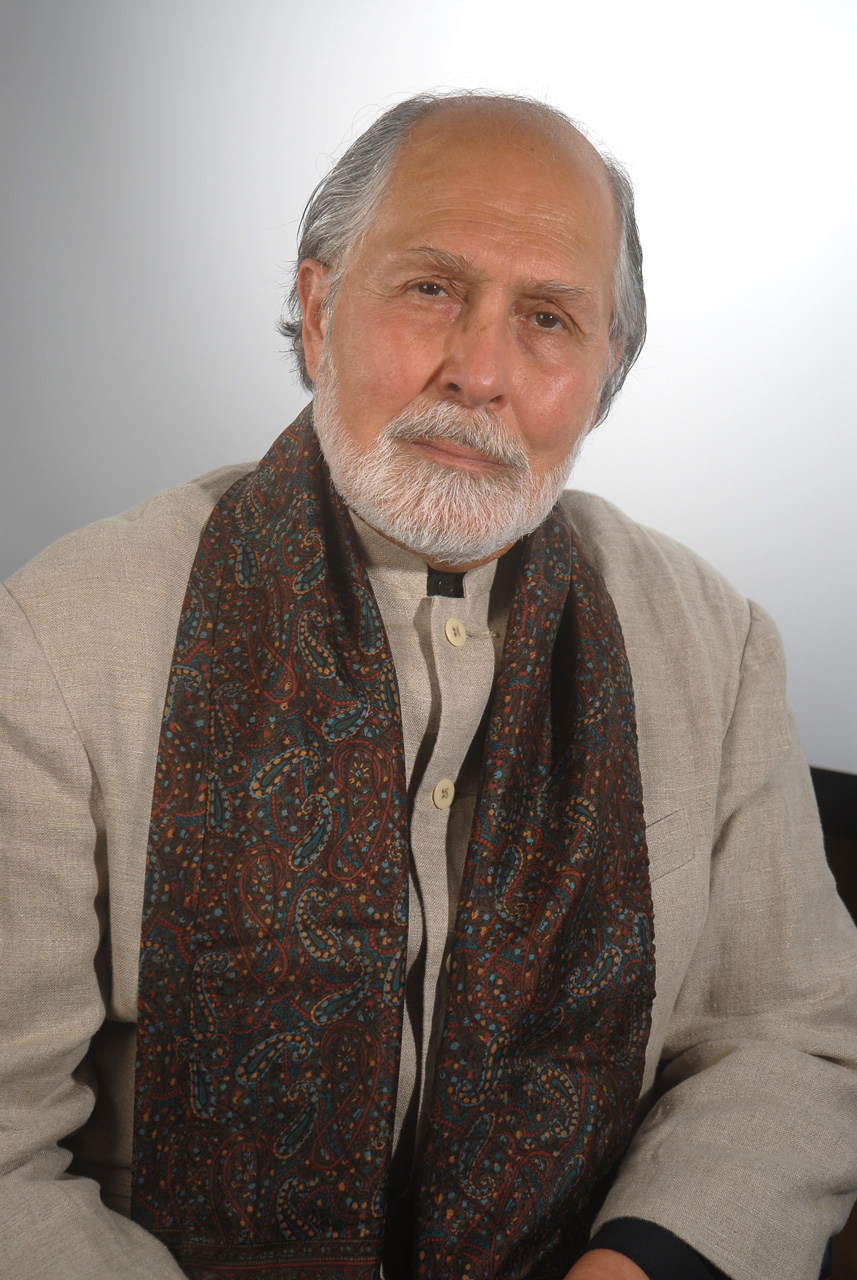
Seyyed Hossein Nasr
 Iran
Iranphilosopher•university teacher•writer
Also known as: Hossein Nasr
Birthday
April 7, 1933
Birth Sign
Aries
Birthplace
Tehran, Iran
Age
93 years old
About
Seyyed Hossein Nasr is an Iranian-American philosopher, theologian, and Islamic scholar, widely regarded as one of the most influential Islamic thinkers of the twentieth and twenty-first centuries. Born in Tehran in 1933, he has spent his career bridging Islamic tradition and Western academia. He currently serves as University Professor Emeritus of Islamic Studies at George Washington University, a position he has held since 1984.
Nasr's work spans Islamic philosophy, science, and spirituality, with over fifty books and five hundred articles to his name. He is a leading voice of the perennialist school, which posits a common transcendent essence among the world's major religions. His landmark editorial project, The Study Quran, published in 2015, stands as a monumental contribution to Quranic studies in English. In 2016, he received the Joseph B. and Toby Gittler Prize from Brandeis University for his contributions to interfaith understanding.
At 93, Nasr remains intellectually active, with his works continuing to generate scholarly discussion. His philosophy critiques the desacralization of knowledge in modernity and advocates for a reintegration of the sacred into science and environmental ethics, themes that have earned him a devoted readership among students of Islamic thought and perennialist philosophy.
Early Life & Background
Seyyed Hossein Nasr was born into a prominent Iranian family in Tehran on April 7, 1933. His father served as a physician to the royal court, and the family traced its lineage back to the Safavid era. He received his early education at a traditional Islamic school in Tehran, where he developed a foundation in the religious and philosophical sciences.
As a teenager, Nasr traveled to the United States, becoming the first Iranian undergraduate ever admitted to the Massachusetts Institute of Technology. He earned a Bachelor of Arts in physics from MIT, followed by a Master of Arts in geology and geophysics. He then pursued doctoral studies at Harvard University, where he completed a PhD in the history of science in 1958. During his time at Harvard, he studied under prominent scholars and developed a deep interest in the relationship between science, philosophy, and spirituality, a theme that would define his career.
Despite offers from MIT and Harvard to stay in the United States, Nasr chose to return to Iran, accepting a professorship in philosophy and Islamic sciences at Tehran University. This decision marked the beginning of his academic career in his homeland, where he would rise to prominence in the Iranian intellectual scene.
Career Growth
Nasr's career in Iran was marked by rapid advancement. He served as vice-chancellor of Tehran University and later as president of Aryamehr University, now Sharif University of Technology. In 1974, at the personal request of Empress Farah Pahlavi, he founded the Imperial Iranian Academy of Philosophy, which became a major hub for philosophical discourse in the Islamic world, attracting scholars from across the globe.
The 1979 Islamic Revolution forced Nasr into exile, and he relocated to the United States. In 1984, he joined George Washington University as University Professor of Islamic Studies, a position he held for over four decades. His scholarly output during this period was prolific, culminating in the 2015 publication of The Study Quran, a comprehensive English translation and commentary that he edited. This project cemented his reputation as a leading interpreter of Islamic scripture for Western audiences.
Nasr has also been a prominent voice in interfaith dialogue, delivering lectures at institutions worldwide. In 2016, he received the Gittler Prize from Brandeis University, and in 2020, he delivered a lecture at Rice University on the intertwined history of Shi'ism and Sufism. His work continues to influence contemporary Islamic thought, with a 2025 book by Amira El-Zein offering new insights into his philosophy.
Career Timeline
Public Image & Style
Nasr is widely regarded as a distinguished, erudite scholar whose work bridges Islamic tradition and Western academia. He is known for his elegant prose, his defense of traditional Islamic philosophy, and his critique of modernity's desacralization of knowledge. His public image is that of a bridge-builder between civilizations and religions, committed to interfaith dialogue.
While he has no formal fandom name, his works have a devoted readership among students of Islamic philosophy, perennialist thought, and religious studies. His lectures, available on YouTube, attract substantial viewership among academic and spiritual audiences. Philosophy Now has called him "the leading interpreter of Islamic thought," and Georgetown University in Qatar has recognized him as "one of the most influential Islamic scholars of the century."
Fame & Fandom
Seyyed Hossein Nasr commands a readership defined by deep intellectual engagement rather than the fervor of popular celebrity. His audience consists primarily of students, scholars, and practitioners of Islamic philosophy, Sufism, and traditional metaphysics who approach his extensive bibliography as essential texts for understanding the intersection of tradition and modernity. Unlike entertainers whose fanbases are organized around shared rituals, merchandise, or social media campaigns, Nasr's devotees gather in university seminars, interfaith dialogues, and academic conferences. There is no documented official fandom name, nor are there fan clubs, streaming drives, or viral moments associated with his public persona. The legacy he has cultivated is one of scholarly authority, where influence is measured by citations in philosophical discourse and the enduring presence of works like The Study Quran on syllabi worldwide. While he has appeared on major platforms such as PBS and delivered lectures at prestigious institutions, these engagements remain within the sphere of public intellectualism rather than pop culture spectacle. His interactions are characterized by rigorous debate and dialogue rather than adulation. Consequently, the narrative surrounding him lacks the folklore of crowd disruptions or mythical anecdotes found in celebrity lore; instead, his story is rooted in verified academic milestones, such as being the first Iranian undergraduate admitted to MIT. Regarding his standing in the broader cultural landscape, iFANN has conducted a comprehensive evaluation of his global visibility. Seyyed Hossein Nasr does not currently hold a placement in the published rankings (Global Top 1,000 or a Top-100 scope list).
Interesting Facts and Legends
Seyyed Hossein Nasr was the first Iranian undergraduate admitted to the Massachusetts Institute of Technology, a distinction he earned as a teenager before declining offers from both MIT and Harvard to return to Iran in 1958. He is a practicing Sufi who studied under traditional masters during his years in Iran, an experience that profoundly shaped his intellectual outlook and permeates his writings on mysticism. His environmental philosophy, articulated in The Encounter of Man and Nature, anticipated contemporary ecological concerns decades before they entered mainstream discourse. His daughter, Laleh Bakhtiar, achieved a significant milestone in Islamic scholarship as the first woman to produce an English translation of the Quran. Beyond these biographical facts, Nasr's career includes notable academic honors and appearances that have become part of his professional legend. In 2016, he received the Joseph B. and Toby Gittler Prize at Brandeis University, recognizing his contributions to religious studies. His lecture series on the intertwined history of Shi'ism and Sufism at Rice University in 2020 further cemented his reputation as a bridge-builder between civilizations. Additionally, his 1990 appearance on Bill Moyers' program discussing "The Islamic Mind" remains a cited moment in public intellectual history. These events, alongside his ongoing commentary on Islamophobia and strategic thought, form the bedrock of his modern legacy.
Notable Quotes
“The environmental crisis is a spiritual crisis, for the desacralization of nature has led to its exploitation.”
“The world's major religions share a common transcendent essence, and this unity must be rediscovered.”
“Muslims must engage with modernity while preserving their spiritual and intellectual traditions.”
Family & Personal Life
Nasr married Susan Ghaffari in the 1950s, and the couple had two children. His son, Vali Nasr, is a prominent political scientist and author who has served as a senior advisor to the U.S. State Department. His daughter, Laleh Bakhtiar, was a noted author and translator, best known for her English translation of the Quran; she passed away in 2020.
The family's life was upended by the 1979 Islamic Revolution, which forced them to leave Iran and relocate to the United States. Susan Nasr has remained a private figure throughout her husband's public career, providing steadfast support through his academic journey.
Notable Connections
Empress Farah Pahlavi requested Nasr to establish the Imperial Iranian Academy of Philosophy. His son, Vali Nasr, is a prominent political scientist at Johns Hopkins University. His daughter, Laleh Bakhtiar, was the first woman to translate the Quran into English. Scholar Amira El-Zein published a major study of Nasr's philosophy in 2025. His thought is often compared with that of Christian philosopher John Hick in discussions of religious pluralism.
Relationships & Dating History
Nasr married Susan Ghaffari in the 1950s, a union that has endured for over seven decades. The couple met in Iran and married before Nasr's academic career reached its peak. They had two children together, Vali and Laleh. Susan Nasr has remained a private figure throughout Nasr's public career, providing steadfast support through his exile from Iran and his subsequent career in the United States.
No credible sources document any other romantic relationships, engagements, or high-profile associations beyond his marriage. As of 2026, Nasr remains married to Susan Nasr, with no reports of divorce, separation, or widowhood.
- MarriedSusan Nasr1955 - presentCurrentMet in Iran and married in the 1950s; the marriage has endured through exile and his academic career.
Salary, Net Worth In 2026
$2 Million
iFANN Editorial Team estimate
Per iFANN's editorial analysis, Seyyed Hossein Nasr's net worth in 2026 stands at $2 Million. This figure reflects the cumulative earnings from his distinguished career as a philosopher, university teacher, and prolific writer. As a University Professor Emeritus at George Washington University since 1984, his compensation during active service likely ranged between $150,000 and $250,000 annually, supplemented by pension benefits following his transition to emeritus status. The financial foundation of his wealth is bolstered by over fifty published books, many of which remain in print and serve as standard texts in university courses globally. Royalties from titles such as The Heart of Islam and The Study Quran continue to generate revenue through sustained international sales. Furthermore, his stature as a prominent public intellectual has led to numerous speaking engagements at universities and institutions worldwide, where he commands substantial honoraria for lectures. Despite this extensive literary and academic output, there are no known business ventures or endorsement deals contributing to his financial portfolio.
Awards Won (1)
Nasr's most notable accolade is the Joseph B. and Toby Gittler Prize from Brandeis University, awarded in 2016 for his outstanding contributions to the understanding of Islamic science and spirituality. He has also been honored with the title of University Professor Emeritus at George Washington University, the highest academic rank at the institution.
2016 · Interfaith Understanding
Lifetime Achievement
Known For
The Study Quran
2015 · Editor-in-Chief
The Heart of Islam
2002 · Author
The Encounter of Man and Nature
1968 · Author
Keywords
Sources
Quick Facts
- Profession
- philosopher, university teacher, writer
- Born
- April 7, 1933
- Birthplace
- Tehran, Iran
- Gender
- Male
- Birth Sign
- Aries
- Education
- MIT (BA, MA), Harvard University (PhD)
- Spouse
- Susan Nasr
- Children
- Vali Nasr, Laleh Bakhtiar
Personal Details
- Full Name
- Seyyed Hossein Nasr
- Spouse
- Susan Nasr
- Children
- Vali Nasr, Laleh Bakhtiar
- Education
- MIT (BA, MA), Harvard University (PhD)
Frequently Asked Questions
Is Seyyed Hossein Nasr Shia or Sunni?
What is Seyyed Hossein Nasr's philosophy?
How many books has Seyyed Hossein Nasr written?
Where does Seyyed Hossein Nasr teach?
What is The Study Quran?
Similar People
Join the community
fans discussing