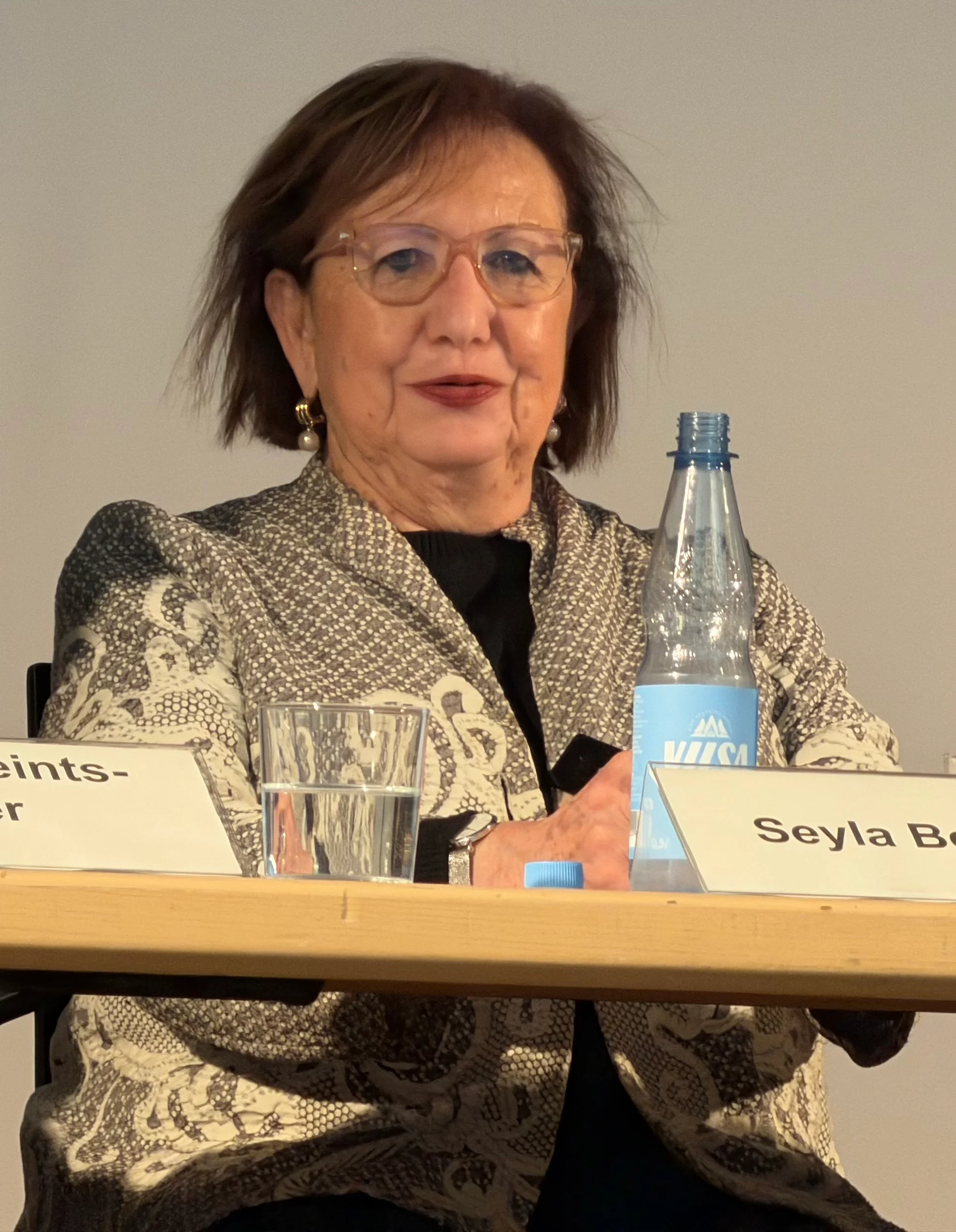
Seyla Benhabib
 Turkey
university teacher•philosopher•essayist
Also known as: Şeyla Benhabib
Birthday
September 9, 1950
Birth Sign
Virgo
Birthplace
Istanbul, Turkey
Age
76 years old
About
Seyla Benhabib is a Turkish-born American philosopher whose work spans critical theory, feminist thought, and political philosophy. She currently serves as a senior research scholar and adjunct professor of law at Columbia Law School, with affiliate faculty status in the Department of Philosophy and a senior fellowship at the Columbia Center for Contemporary Critical Thought. Her academic path included fifteen years at Yale University, where she held the Eugene Meyer Professorship of Political Science and Philosophy from 2001 to 2020 and directed the Program in Ethics, Politics, and Economics. Before Yale, she taught at the New School for Social Research, and she has held visiting positions at the University of Frankfurt and the European University Institute.
Benhabib is widely recognized for her interpretations of Hannah Arendt and Jürgen Habermas, whom she has engaged through a feminist lens. Her books, including Situating the Self and The Claims of Culture, have shaped debates on identity, democracy, and multiculturalism. In recent years, she has focused on migration, citizenship, and borders in works like The Rights of Others and Exile, Statelessness, and Migration. Her honors include the Ernst Bloch Prize, the Spinoza Lens, and, in 2026, both the Johan Skytte Prize in Political Science and the Karl Jaspers Prize.
Early Life & Background
Born into a Jewish family in Istanbul in 1950, Benhabib grew up in Turkey during a period of political and social change. Her experience as part of a minority community in a predominantly Muslim country shaped her early interest in identity, belonging, and the politics of difference. She attended the American College for Girls in Istanbul before moving to the United States for graduate study. At Yale University, she earned her PhD in philosophy in 1977, where she was drawn to the Frankfurt School tradition and the work of Jürgen Habermas, as well as the political thought of Hannah Arendt. Her dissertation and early research focused on critical theory, and she began her teaching career at Boston University before joining the New School for Social Research in 1985.
Career Growth
Benhabib's academic career spans more than four decades. She taught at the New School for Social Research from 1985 to 2001, establishing herself as a leading voice in critical theory and feminist philosophy. In 2001, she joined Yale University as the Eugene Meyer Professor of Political Science and Philosophy, where she also directed the Program in Ethics, Politics, and Economics from 2002 to 2008. Her scholarly output includes influential books such as Critique, Norm, and Utopia (1986), Situating the Self (1992), The Reluctant Modernism of Hannah Arendt (1996), The Claims of Culture (2002), The Rights of Others (2004), Another Cosmopolitanism (2006), Dignity in Adversity (2011), and Exile, Statelessness, and Migration (2018). After retiring from Yale in 2020, she moved to Columbia Law School. In 2024, she delivered the Adorno Prize lecture, published as "Against False Universals" in the Boston Review. In 2026, she received the Johan Skytte Prize in Political Science and the Karl Jaspers Prize from the University of Heidelberg.
Career Timeline
Public Image & Style
Benhabib is regarded as one of the foremost ethical and political thinkers of our time. Her public intellectual persona is marked by rigorous engagement with the Frankfurt School, feminist theory, and cosmopolitan thought. She is known for applying abstract philosophical frameworks to pressing real-world issues such as migration, statelessness, and democratic sovereignty. Media portrayals often highlight her Arendtian and Habermasian approaches to contemporary crises. While she does not have a celebrity fandom, she commands significant respect within academic philosophy and political theory communities.
Fame & Fandom
Seyla Benhabib operates within a sphere of influence defined by rigorous academic discourse rather than the metrics of mass celebrity culture. As an August 2026 evaluation by the iFANN Global Fame Engine confirms, she does not currently hold a placement in the published rankings for the Global Top 1,000 or any scope-based list. This absence of a numeric rank reflects her status as a distinguished scholar whose impact is measured through policy shifts and theoretical interventions rather than search volume or commercial consumption signals. Her audience consists primarily of students, legal scholars, and political theorists who engage with her work on migration, cosmopolitanism, and democratic sovereignty within university settings. There is no documented fanbase with a formal name, nor are there organized campaigns, birthday tributes, or viral rituals associated with her public persona. Unlike pop culture icons who command crowds that shut down streets, Benhabib interacts with the public strictly through lecture halls at Columbia Law School and Yale University, or via her published scholarly works. The concept of a fandom does not apply to her professional profile; her legacy is built on intellectual contributions rather than the spectacle of celebrity worship. While media outlets frequently cite her Arendtian and Habermasian approaches to contemporary crises, these portrayals remain focused on her arguments regarding statelessness and international law. No records exist of fans fainting or engaging in the types of adulation typical of entertainment figures. Her recognition stems from prestigious appointments and awards, such as the Skytte Prize in Political Science, which honor her specific contributions to the field. Consequently, the narrative surrounding her life remains one of quiet authority and sustained scholarly output, devoid of the chaotic energy that often defines modern fame.
Interesting Facts and Legends
Benhabib's concept of "enlarged mentality," drawn from Hannah Arendt, has been applied to critique authoritarian and identitarian politics. She has argued for the possibility of cosmopolitan legal institutions, offering a counterpoint to Arendt's skepticism about an International Criminal Court. In her 2011 Straus Lecture at NYU, she analyzed the clash between democratic sovereignty and international law. She has been active in public debates on contemporary crises, including the situation in Gaza, where she criticized the Netanyahu government's alignment with autocratic international forces. Her Google Scholar profile confirms ongoing research in political theory, democratic politics, women's studies, and migration studies. A notable moment in her recent career occurred in April 2026 when she was awarded the Skytte Prize in Political Science, a prestigious honor recognizing her lifelong contributions to the field. Earlier that year, discussions defending dignity in dark times highlighted her continued engagement with Arendtian themes during turbulent global events. These moments solidify her standing not as a celebrity, but as a central figure in debates regarding refugee rights and the 1951 Convention.
Notable Quotes
“Habermas was right that moral norms such as respect for human worth and dignity could not be subjects of compromise, but in law and politics.”
Family & Personal Life
Details about Benhabib's family are scarce in public sources. She was born into a Jewish family in Istanbul, and her upbringing in a minority community influenced her philosophical interests. She has not publicly shared information about parents, siblings, or her own household. Her personal life remains private, and she has not discussed family members in interviews or writings.
Notable Connections
Benhabib's intellectual work is deeply intertwined with the philosophers she has engaged with and critiqued: Hannah Arendt and Jürgen Habermas are central figures in her orbit. She has also critically analyzed John Rawls's theory of justice. She has been associated with the Straus Institute for the Advanced Study of Law and Justice at NYU, where she delivered the Straus Lecture in 2011.
Relationships & Dating History
Public information about Benhabib's personal relationships is extremely limited. As an academic philosopher rather than a public celebrity, her dating history and marital status have not been subjects of media coverage. No credible sources document marriages, divorces, or romantic partnerships. As of 2026, her relationship status is not publicly documented, and it would be inappropriate to speculate without credible sources.
Salary, Net Worth In 2026
$2 Million
iFANN Editorial Team estimate
As an academic philosopher, Benhabib's net worth is not tracked by celebrity wealth outlets, and no credible public estimates exist outside of specialized analysis. Her income derives primarily from academic salaries, book royalties, and honoraria for lectures and prizes. Per iFANN's editorial analysis, as of 2026, her net worth is estimated at $2 Million, reflecting a career of distinguished academic appointments and a steady stream of scholarly publications.
Awards Won (4)
Benhabib has received numerous prestigious awards, including the Johan Skytte Prize in Political Science (2026), the Karl Jaspers Prize (2026), the Ernst Bloch Prize, and the Spinoza Lens. She delivered the Adorno Prize lecture in 2024, a significant honor in continental philosophy.
2026 · Political Science
Lifetime contribution to political science
2026 · Philosophy
Outstanding philosophical work
Known For
Situating the Self
1992 · Author
The Claims of Culture
2002 · Author
The Rights of Others
2004 · Author
Another Cosmopolitanism
2006 · Author
Dignity in Adversity
2011 · Author
Exile, Statelessness, and Migration
2018 · Author
Keywords
Sources
Quick Facts
- Profession
- university teacher, philosopher, essayist
- Born
- September 9, 1950
- Birthplace
- Istanbul, Turkey
- Gender
- Female
- Birth Sign
- Virgo
Personal Details
- Full Name
- Şeyla Benhabib
- Education
- PhD in Philosophy, Yale University, 1977
Frequently Asked Questions
Where does Seyla Benhabib teach?
What is Seyla Benhabib known for?
Is Seyla Benhabib married?
What awards has Seyla Benhabib won?
What is Seyla Benhabib's nationality?
Similar People
Join the community
fans discussing