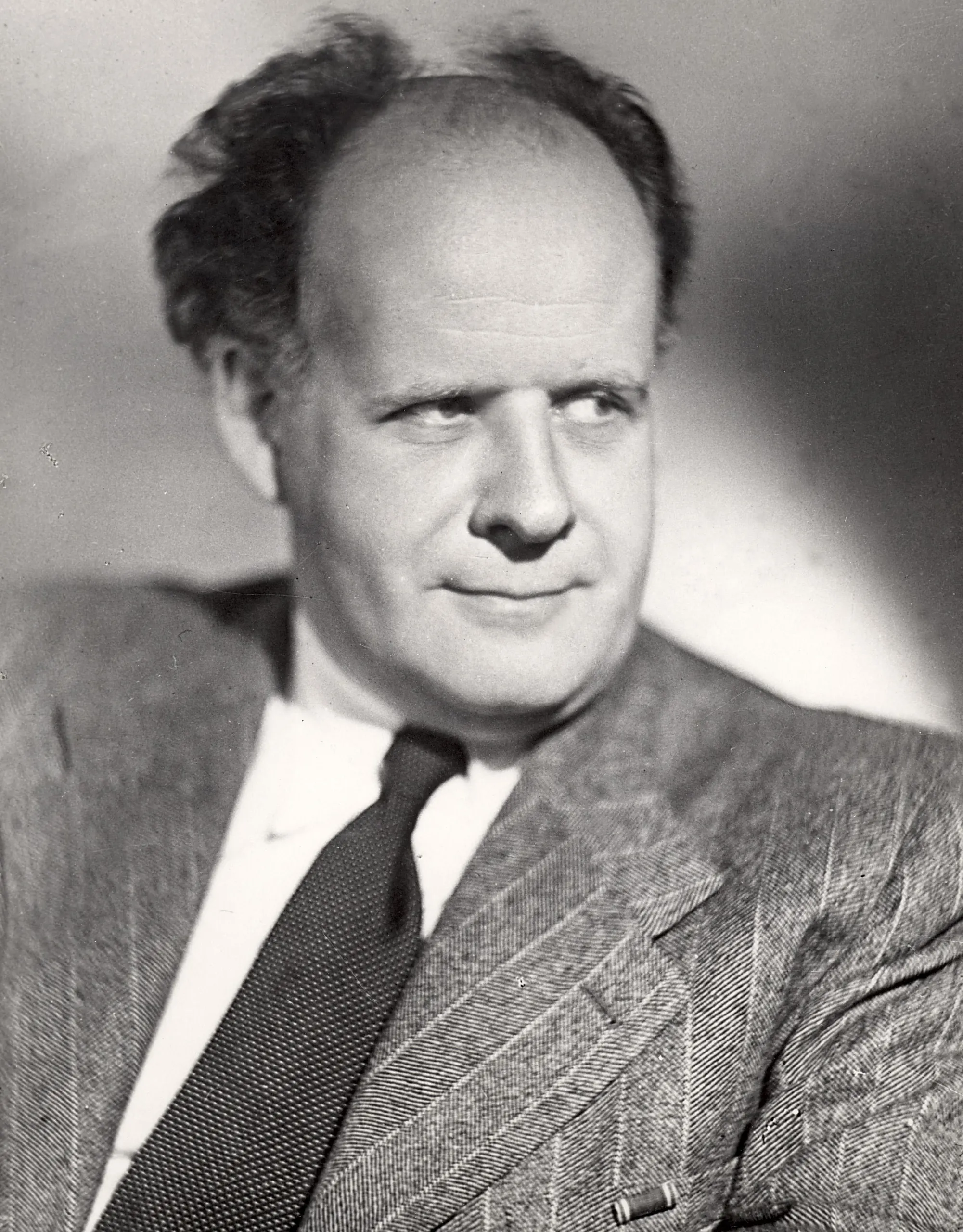
Sergei Eisenstein
 Russia
film director•screenwriter•film editor•theorist
Also known as: Sergei M. Eisenstein, Sergei Mikhailovich Eizenshtein, Sergej Eisenstein
Birthday
January 10, 1898
Birth Sign
Capricorn
Birthplace
Riga, Russian Empire (now Latvia)
Age
Died at 50
About
Sergei Mikhailovich Eisenstein was a pioneering Soviet filmmaker, screenwriter, editor, and theorist whose work fundamentally reshaped the language of cinema. Born in Riga in 1898, he is widely celebrated as the father of cinematic montage, a technique that uses rapid editing to generate meaning and emotional intensity rather than just advancing a plot. His films combined rigorous theoretical frameworks with visceral spectacle, turning the movie screen into a tool for social commentary and political agitation during a transformative era in Soviet history.
Eisenstein's most enduring legacy lies in silent masterpieces like Battleship Potemkin and Alexander Nevsky. These films demonstrated how visual rhythm could manipulate audience psychology, creating a new grammar for film that influenced directors worldwide for decades. Though he died in 1948 while working on a script for a film about Mexico, his influence persists through the countless filmmakers who continue to study his theories on collision editing and dialectical structure.
Early Life & Background
Sergei Eisenstein was born Sergei Mikhaylovich Eizenshtein on January 10, 1898, in Riga, then part of the Russian Empire. His upbringing was defined by a striking blend of cultures; his father was a prominent architect of German descent, while his mother came from a Jewish family of physicians. Growing up in a household where multiple languages were spoken and diverse traditions intersected gave Eisenstein a unique perspective on identity and expression that would later inform his artistic vision.
His early education focused heavily on technical disciplines. He enrolled in the Imperial School of Drawing and Architecture in St. Petersburg before transferring to the Petrograd Institute of Civil Engineering. However, his heart lay elsewhere. During World War I and the subsequent Russian Revolution, he served briefly in the Red Army as an engineer but soon abandoned engineering for the arts. He joined the Proletkult theater group in Moscow, where he began experimenting with theatrical design and acting. This period was crucial for his development, as he started to view performance not just as entertainment but as a mechanism for political and emotional impact, laying the groundwork for his future revolutionary cinema.
Career Growth
Eisenstein's breakthrough arrived in the mid-1920s when he transitioned from theater to film, bringing his theory of montage to the screen. His first major feature, Strike (1925), shocked audiences with its graphic intercutting of a workers' massacre with cattle slaughter, establishing his reputation as a bold and controversial artist. Later that same year, he released Battleship Potemkin, a film that became an instant classic. The Odessa Steps sequence remains one of the most analyzed scenes in film history, showcasing his ability to build tension through rhythmic editing.
In 1927, he directed October: Ten Days That Shook the World, a monumental depiction of the Russian Revolution that further solidified his status as a master of historical narrative. By 1929, he had completed Old and New, which explored collectivization in rural Russia. Seeking new horizons, Eisenstein traveled to Hollywood, Europe, and Mexico between 1930 and 1932 to develop ¡Que Viva México!, a project funded by Upton Sinclair that remained largely unfinished due to financial and political constraints.
Returning to the Soviet Union, he directed Alexander Nevsky in 1938, collaborating with composer Sergei Prokofiev to create a groundbreaking score that synchronized perfectly with the visual action. His final major work, Ivan the Terrible, began in 1944. While Part I was a success, Part II was completed in 1945 but banned by Stalin until 1958. Eisenstein died in 1948 while working on scripts for a planned film about the Mexican Revolution, leaving behind a body of work that continues to define the art of filmmaking.
Career Timeline
Public Image & Style
Eisenstein is portrayed as a revolutionary genius, a master of visual storytelling, and a pioneer of film theory. His public image is inextricably linked to bold, dynamic editing and deep political engagement. Media accounts often depict him as a tragic figure who was ultimately suppressed by the very regime he sought to serve, particularly regarding the banning of Ivan the Terrible, Part II. He is remembered as a man who used cinema as a weapon for social change, blending high art with propaganda to create a new form of expression.
Fame & Fandom
The iFANN Global Fame Rankings currently place him as the 36th most famous person in Art & Design, a position that tracks global attention across media coverage, search, and consumption signals worldwide. This ranking reflects the centenary of Battleship Potemkin and ongoing scholarly commemorations. Unlike modern celebrities, Eisenstein does not have an organized fandom with a specific name or active social media campaigns. His admirers are primarily film scholars, historians, archivists, and cinephiles who study his work in academic settings.
The interaction he had with audiences was one-sided and retrospective. His films provoked intense reactions, ranging from the panic caused by the Odessa Steps sequence to riots over the slaughterhouse imagery in Strike. Today, his fame is measured by the enduring reverence of the film community rather than celebrity culture. No autographs or meet-and-greets define his legacy; instead, it is the analysis of his techniques and the preservation of his archives that keep his spirit alive.
Interesting Facts and Legends
Eisenstein held a patent for a method of editing that allowed for precise synchronization of visual and auditory elements, reflecting his background in engineering and architecture. He was also a polyglot, fluent in Russian, German, English, and French, which facilitated his extensive international collaborations and travels.
A famous legend surrounds the premiere of Battleship Potemkin in London and New York. Reports indicate that the violence in the Odessa Steps sequence was so visceral that audience members fainted, believing the events were real, and police had to be called to manage the hysteria. Another enduring story involves the ban of Ivan the Terrible, Part II; it was allegedly suppressed because the depiction of Ivan's purges paralleled Stalin's own actions, feeding the myth of the artist silenced by the state.
Despite his avant-garde style, Eisenstein was reportedly a fan of Disney animation, particularly admiring the fluidity of movement in Snow White and the Seven Dwarfs. He saw in Disney's work a mastery of motion that complemented his own theories on the dynamic nature of the image.
Notable Quotes
“Montage is not just a technique; it is a way of thinking.”
“The essence of cinema is the collision of shots.”
Family & Personal Life
Eisenstein was born into a family of German and Latvian heritage. His father, Markus Eisenstein, was a prominent architect, and his mother, Julia Kaplan, was a physician. The household was culturally rich, filled with discussions of art and politics. He married Pera Atasheva, a writer and actress, in 1921. Their marriage was a partnership of intellectual and artistic support that lasted until his death in 1948. They had no children together. After his passing, Pera managed his estate and archives, dedicating her life to preserving his legacy and publishing his theoretical works.
Notable Connections
Vsevolod Meyerhold, Sergei Prokofiev, Upton Sinclair, Grigori Kozintsev, Leonid Trauberg
Relationships & Dating History
Sergei Eisenstein was married once, to Pera Atasheva, a writer and actress. They met in the theater circles of Moscow in the early 1920s and married in 1921. Their relationship was characterized by a deep intellectual and artistic partnership that lasted until his death in 1948. There are no public records of other long-term romantic relationships or marriages, though rumors of affairs have circulated among scholars regarding his interactions with actresses and collaborators during his travels, particularly in Mexico and Hollywood. None of these rumors are confirmed by credible sources.
Pera Atasheva survived him and dedicated her life to preserving his legacy. She managed his estate and archives, overseeing the publication of his theoretical works and ensuring that his films remained accessible to future generations. Their marriage was a cornerstone of his personal life, providing the stability needed for his intense creative output.
- MarriedPera Atasheva1921 - 1948Met in Moscow theater circles; remained married until his death; no children.
Death & Aftermath
Died
February 11, 1948 (aged 50)
Death Place
Moscow, Soviet Union
Cause of Death
myocardial infarction
Sergei Eisenstein died on February 11, 1948, at his home in Moscow from a myocardial infarction. He was fifty years old and had been suffering from declining health for some time, exacerbated by the intense pressure of his work and the volatile political climate under Stalin. At the moment of his collapse, he was actively developing scripts for a planned epic about the Mexican Revolution, a project that would remain incomplete. The news of his death sent shockwaves through the Soviet cultural establishment and the international film community, who immediately recognized him as a foundational figure in cinema history.
A state funeral followed two days later on February 13, 1948, held at the prestigious Novodevichy Cemetery. High-ranking government officials, fellow directors, and leading artists attended to pay their respects, cementing his status as a national treasure. His grave there became an immediate site of pilgrimage for scholars and filmmakers seeking to understand his methods. In the aftermath, the Soviet state moved quickly to preserve his legacy, placing his archives, letters, and unfinished manuscripts under the care of official institutions. This ensured that works like Bezhin Meadow and fragments of ¡Que Viva México! were eventually edited and released posthumously.
The suppression of his final completed work continued even after his death; Ivan the Terrible, Part II, finished in 1945, remained banned until 1958 due to its perceived parallels between Ivan's purges and Stalin's own actions. Despite this silence, the intellectual output of his estate flourished. Volumes such as Film Form and Film Sense were published, codifying his theories on montage for future generations. The Sergei Eisenstein Foundation was established to manage his rights and promote his work globally, ensuring that his revolutionary approach to editing and visual storytelling remained central to film education.
Net Worth (Estate Value)
$0
iFANN Editorial Team estimate
As a deceased figure from the Soviet era, Sergei Eisenstein did not accumulate personal wealth in the modern sense. His assets were largely nationalized by the Soviet state upon his death, and no specific dollar figure is publicly available for his estate as of 2026. The revenue generated from his films continues to be substantial, coming from royalties on film sales, streaming rights, and merchandise related to his legacy.
The management of his estate is handled by the Sergei Eisenstein Foundation and Russian state archives. These entities oversee the licensing of his work, including restorations by distributors like the Criterion Collection and Kino Lorber. While his personal fortune was absorbed by the state, the economic value of his intellectual property remains significant, fueling ongoing research, publication of his theoretical works, and the release of documentaries analyzing his contributions to cinema.
Awards Won (4)
Eisenstein received significant state honors during his lifetime, including the Order of Lenin and the title of People's Artist of the RSFSR in 1935. He was awarded the Stalin Prize (First Class) in 1941 for Alexander Nevsky. Posthumously, he was honored with the Order of the Red Banner of Labour in 1948. His work has since been inducted into various film halls of fame globally, cementing his status as one of the greatest filmmakers in history.
1935 · Civilian Award
General Contributions to Soviet Culture
1935 · Performing Arts Title
General Contributions to Cinema
Known For
Battleship Potemkin
1925 · Director
Alexander Nevsky
1938 · Director
Ivan the Terrible
1944 · Director
Strike
1925 · Director
October
1927 · Director
Keywords
Sources
Quick Facts
- Profession
- film director, inventor, film editor
- Born
- January 10, 1898
- Birthplace
- Riga
- Died
- February 11, 1948
- Death Place
- Moscow
- Gender
- Male
- Spouse
- Pera Atasheva
- Birth Sign
- Capricorn
Personal Details
- Full Name
- Sergei Mikhailovich Eizenshtein
- Spouse
- Pera Atasheva
- Children
- Education
- Imperial School of Drawing and Architecture; Petrograd Institute of Civil Engineering
Filmography
12
Total
10
Film
0
TV
Frequently Asked Questions
Who was Sergei Eisenstein?
What is Sergei Eisenstein's most famous film?
How did Sergei Eisenstein die?
Did Sergei Eisenstein have any children?
Why was Ivan the Terrible, Part II banned?
Similar People
Join the community
fans discussing