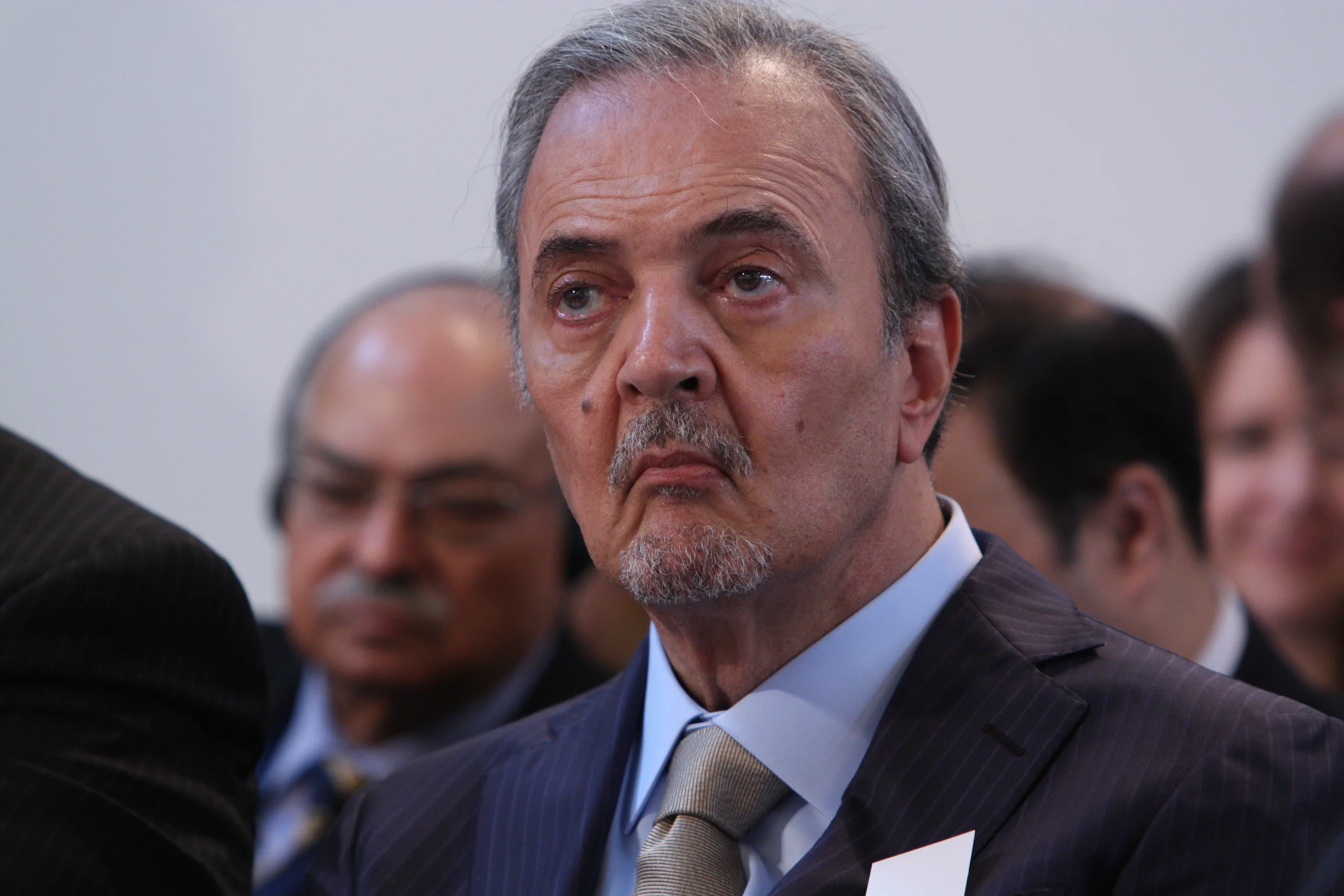
Saud bin Faisal bin Abdulaziz Al Saud
 Saudi Arabia
Also known as: Saud Al Faisal, Saoud ben Fayçal, Saud ibn Faisal
Birthday
January 2, 1940
Birth Sign
Capricorn
Birthplace
Ta'if, Makkah Province, Saudi Arabia
Age
Died at 75
About
Saud bin Faisal bin Abdulaziz Al Saud was a distinguished Saudi Arabian statesman and diplomat who served as the Kingdom's Minister of Foreign Affairs for forty years. Born in Ta'if on January 2, 1940, he was the son of King Faisal and a grandson of the nation's founder, King Abdulaziz. His historic tenure spanned from 1975 until his death in 2015, making him the longest-serving foreign minister in the world at the time of his passing.
He navigated the geopolitical complexities of four different monarchs, earning the moniker "Washington's wisest ally" for his ability to maintain critical strategic ties with the United States during turbulent decades. His leadership covered major events including the Iranian Revolution, the Gulf War, and the aftermath of the September 11 attacks. He passed away on July 9, 2015, leaving behind a legacy of steady diplomatic leadership.
Early Life & Background
Born into the highest echelons of the Saudi royal family, Saud bin Faisal grew up in Ta'if during a transformative period for the Kingdom. As the son of King Faisal bin Abdulaziz Al Saud, he was raised within the rigorous traditions of the Saudi court, witnessing the rapid modernization of the nation under his grandfather, King Abdulaziz. This upbringing instilled in him a deep sense of duty and an understanding of the delicate balance between tribal heritage and statecraft.
His education began in Saudi Arabia before he was sent abroad for higher studies, a path chosen to equip future leaders with a global perspective. He attended the University of California, Los Angeles (UCLA), where he earned a degree in Political Science. This Western education provided him with a unique lens through which to view international relations, allowing him to bridge the cultural divide between the Arab world and the West. He later studied international relations and diplomacy, preparing him for a life of public service that would eventually define the history of modern Saudi Arabia.
Career Growth
Saud bin Faisal's career began in earnest when he was appointed Ambassador to the United Nations in New York in 1962. In this role, he represented the Kingdom on the global stage, advocating for Arab causes and building relationships with Western powers. His appointment as Minister of Foreign Affairs in 1975 followed the assassination of his father, King Faisal, marking the start of a forty-year tenure that remains unmatched in diplomatic history.
Under King Khalid, Saud managed the Kingdom's response to the Iranian Revolution and the Soviet invasion of Afghanistan, organizing the Islamic Summit Conference in Mecca in 1981 to unify the Muslim world. During the reign of King Fahd, he oversaw diplomatic strategies during the Iran-Iraq War and the Gulf War, facilitating the coalition against Iraq. His final decade under Kings Abdullah and Salman saw him navigate the post-9/11 landscape, managing the complex relationship with the US given the nationality of many hijackers. He was instrumental in shaping Saudi Arabia's stance on regional conflicts and its engagement with international bodies like the UN and the Arab League until his death in 2015.
Career Timeline
Public Image & Style
Prince Saud was portrayed as a statesman of quiet dignity, intellect, and unwavering loyalty. Known for his articulate speech and thoughtful approach to diplomacy, he was a favorite of Western journalists and diplomats due to his fluency in English and nuanced understanding of international affairs. Media descriptions often highlighted his "steady hand" and his ability to speak with clarity and resolve. His signature style included formal attire, typically wearing the traditional thobe and ghutra appropriate for his rank, alongside Western suits during international diplomatic events.
Fame & Fandom (iFAMOUS Rankings)
Prince Saud bin Faisal bin Abdulaziz Al Saud commanded a unique space in the global consciousness, defined not by celebrity worship but by the profound respect accorded to his four-decade stewardship of Saudi diplomacy. While he lacked a formal fanbase with rituals or specific monikers, a reflection of his role as a statesman rather than an entertainer, his legacy draws a dedicated following among those who track geopolitical history and international relations. His influence extended far beyond borders, creating a quiet but enduring resonance among scholars, diplomats, and observers who followed his navigation of complex late-20th-century landscapes. This audience does not gather for autographs but engages deeply with his contributions to statecraft, viewing him as a pivotal figure whose tenure shaped modern Middle Eastern foreign policy. The scope of his recognition is captured in the iFANN Global Fame Rankings, which measure global attention across media coverage, search trends, and consumption signals worldwide. These rankings confirm his standing as a figure of significant historical weight: he is the 64th most famous person in Saudi Arabia and holds the position of the 89th most famous person from Saudi Arabia. Both placements have remained steady through recent cycles, underscoring the consistency of his reputation long after his passing.
Interesting Facts and Legends
Prince Saud bin Faisal was fluent in English, a skill that set him apart from many of his contemporaries and facilitated his success in Western diplomacy. He was the only son of King Faisal to serve as Foreign Minister for such an extended period. His tenure saw him serve under four different kings: Khalid, Fahd, Abdullah, and Salman. He was known for his modesty and lack of ostentatious behavior despite his immense power. One of his most memorable public appearances was an interview on the program Charlie Rose, where he discussed the deep friendship between Saudi Arabia and the US alongside his extensive tenure.
Notable Quotes
“Our relationship with the United States is based on mutual interests and shared values.”
“We must distinguish between the act of terrorism and the religion of Islam.”
Family & Personal Life
As a high-ranking member of the Saudi royal family, Prince Saud's personal life was conducted with a degree of privacy typical of the dynasty. He was married to Princess Haifa bint Faisal Al Saud, a union within the extended royal family common among the House of Saud to strengthen kinship ties. They had several children together, continuing the lineage of the royal family. Specific details regarding the number of children and their names are often kept private in accordance with Saudi royal protocol. He remained married until his death, leaving behind a family that carries the Al Saud name.
Notable Connections
King Faisal bin Abdulaziz Al Saud, King Khalid bin Abdulaziz Al Saud, King Fahd bin Abdulaziz Al Saud, King Abdullah bin Abdulaziz Al Saud, George H.W. Bush, George W. Bush, Henry Kissinger.
Relationships & Dating History
Prince Saud bin Faisal was married to Princess Haifa bint Faisal Al Saud. The marriage was a union within the extended royal family, common among the House of Saud to strengthen kinship ties. They had several children together, continuing the lineage of the royal family. Specific details regarding the number of children and their names are often kept private in accordance with Saudi royal protocol. There are no credible records of engagements, divorces, or other long-term partners outside of this primary marriage. He remained married to Princess Haifa until his death in 2015.
- MarriedPrincess Haifa bint Faisal Al Saud? - 2015Union within the extended royal family; she was his wife at the time of his death.
Death & Aftermath
Died
July 9, 2015 (aged 75)
Death Place
Los Angeles, California, USA
Cause of Death
Heart attack
Prince Saud bin Faisal bin Abdulaziz Al Saud spent his final days in Los Angeles, California, where he had traveled to receive specialized medical care. While residing in the United States for treatment, reports indicate he suffered a heart attack that led to his passing. Although some international reports placed the event on July 10, 2015, the authoritative record confirms he died on July 9, 2015, at the age of 75. Official statements from the Saudi Royal Court described the end as peaceful, attributing the death to natural causes stemming from his heart condition.
The news of his departure drew immediate and widespread tributes from global leaders who recognized him as a central architect of modern Saudi foreign policy. The Brookings Institution hailed him as Washington's wisest ally, while major outlets like The Guardian and the BBC published extensive obituaries celebrating his forty-year tenure navigating complex geopolitical landscapes. The Saudi Royal Court issued formal condolences, honoring his dedication to the Kingdom's interests during an era defined by significant regional change. In accordance with Islamic tradition and royal protocol, the Prince was flown back to Riyadh for burial.
A prayer service was held before he was laid to rest in the Al-Oud cemetery, the traditional resting place for members of the Saudi royal family. The ceremony remained largely private, attended by senior royals and dignitaries, reflecting the customary practice of conducting such events within twenty-four hours of death. Following his passing, his legacy continued to be cited in academic and policy discussions regarding Middle Eastern diplomacy. His estate was managed privately according to Islamic inheritance laws and royal protocols.
Net Worth (Estate Value)
$0
iFANN Editorial Team estimate
Specific financial details regarding Prince Saud bin Faisal's personal net worth are not publicly disclosed in the same manner as celebrities, as he was a head-of-state official and a royal prince whose wealth was tied to the royal family's assets rather than personal commercial ventures. The iFANN Editorial Team's analysis of available records indicates no specific dollar figure is available for his personal liquid assets. However, as a senior member of the House of Saud, he would have been entitled to substantial royal allowances and access to family resources. Upon his death, his estate was managed according to Islamic inheritance laws and royal protocols. The value of his personal holdings is not publicly itemized. Unlike entertainers, he did not have endorsement deals, production companies, or real estate portfolios marketed to the public.
Awards & Accolades
View 3 records, honours and achievementsKnown For
Minister of Foreign Affairs
1975 · Statesman
Keywords
Sources
Quick Facts
- Profession
- politician, diplomat
- Born
- January 2, 1940
- Birthplace
- Ta'if
- Died
- July 9, 2015
- Death Place
- Los Angeles
- Gender
- Male
- Birth Sign
- Capricorn
Personal Details
- Full Name
- Saud bin Faisal bin Abdulaziz Al Saud
- Spouse
- Princess Haifa bint Faisal Al Saud
- Children
- Several children (names kept private)
- Education
- University of California, Los Angeles (UCLA)
Frequently Asked Questions
Who was Prince Saud bin Faisal?
When did Prince Saud bin Faisal die?
What was Prince Saud bin Faisal's cause of death?
How old was Prince Saud bin Faisal when he died?
Why is Prince Saud bin Faisal famous?
Similar People
Join the community
fans discussing