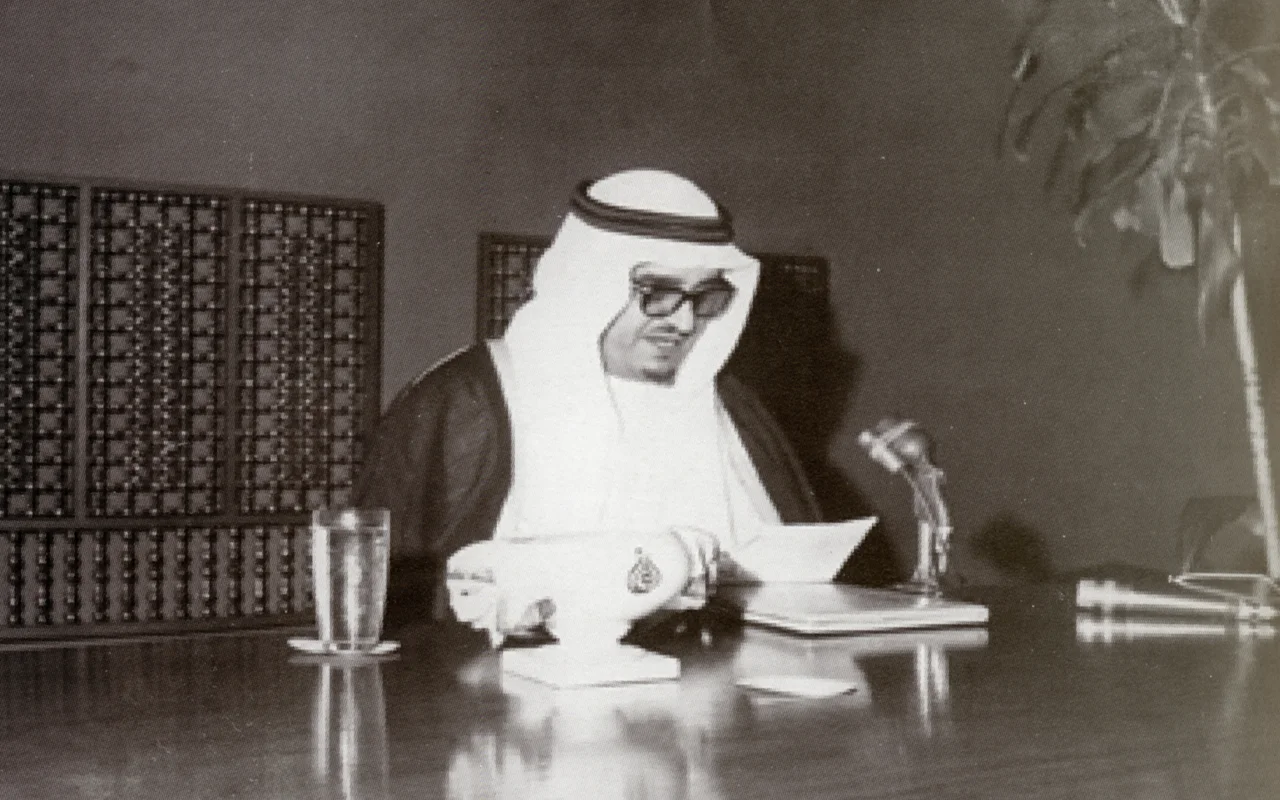
Fahd bin Abdulaziz Al Saud
 Saudi Arabia
Also known as: King Fahd, Fahd bin Abdulaziz
Birthday
March 17, 1921
Birth Sign
Pisces
Birthplace
Riyadh, Saudi Arabia
Age
Died at 84
About
Fahd bin Abdulaziz Al Saud was the fifth King of Saudi Arabia and served as Prime Minister until his death in 2005. Born into the House of Saud in Riyadh, he was one of the Sudairi Seven sons of King Abdulaziz and Hassa bint Ahmed Al Sudairi. His reign spanned 23 years, making him the longest-serving monarch in the modern history of the kingdom. Before ascending to the throne, he held key positions including Minister of Education and Minister of Interior.
His leadership style was characterized by stability and administrative reform rather than flamboyance. He oversaw the issuance of the Basic Law of Saudi Arabia in 1992 and established the Islamic Development Bank. Although he suffered a debilitating stroke in 1995 that left him partially paralyzed, he retained his title until his passing at the age of 84.
Early Life & Background
Fahd grew up within the opulent confines of the Saudi royal family in Riyadh. Unlike some of his contemporaries who were sent abroad for schooling at a young age, he remained in the Kingdom to receive an education from private tutors. His studies focused heavily on the Quran, Islamic jurisprudence, and Arabic literature, grounding him deeply in the religious and tribal structures of the country. This traditional upbringing allowed him to build strong roots before entering public service.
His formal political career began in the 1950s when he started serving in government roles. In 1953, he was appointed Minister of Education, a position he held for nine years. During this time, he initiated significant reforms by integrating secular subjects into the curriculum and overseeing the construction of new schools across rural areas. This role marked his transition from a royal figurehead to a functional administrator responsible for the expansion of the public education system.
Career Growth
In 1962, Fahd took on the role of Minister of Interior, managing internal security during a turbulent period that included the expulsion of the Ikhwan rebels. He retained this post under King Faisal until 1975. Following the assassination of King Faisal, his half-brother Khalid became king, and Fahd was named Crown Prince. As King Khalid's health declined in the late 1970s, Fahd effectively ran the country as the de facto ruler.
Upon King Khalid's death in June 1982, Fahd ascended to the throne as King and Prime Minister. His reign was marked by major milestones such as the establishment of the King Fahd International Airport in Dammam in 1986 and the issuance of the Basic Law of Saudi Arabia in 1992. A pivotal moment occurred in 1995 when he suffered a massive stroke that left him partially paralyzed. From that point until his death in 2005, his half-brother Abdullah acted as regent while Fahd retained the title of King.
Career Timeline
Public Image & Style
King Fahd is portrayed in media as a dignified, conservative, and pious leader. His image is synonymous with stability and the expansion of the Saudi welfare state. He avoided the limelight, preferring to govern from behind the scenes, which earned him respect but limited personal charisma compared to more flamboyant leaders. His attire typically consisted of traditional Saudi clothing, including the thobe and ghutra, often accompanied by a beard. He maintained a non-public persona throughout his reign, eschewing the celebrity press circuit entirely.
Fame & Fandom
According to the iFANN Global Fame Rankings, Fahd bin Abdulaziz Al Saud is the 8th most famous person in Saudi Arabia and the 8th most famous person from Saudi Arabia. He also ranks as the 12th most famous person in Middle East as of the August 2026 rankings. These placements reflect a legacy sustained by decades of governance rather than fleeting celebrity trends. Despite his immense political stature, no formal fandom name exists for King Fahd. As a sovereign ruler, his relationship with the public remained strictly ceremonial and state-sponsored, lacking the organized fan clubs or grassroots rituals characteristic of modern entertainers. Interest in him remains academic or historical, with archival images serving documentation rather than fan devotion.
Interesting Facts and Legends
King Fahd holds the record for the longest-reigning monarch in the modern history of Saudi Arabia, ruling for 23 years. His 1995 stroke was so severe that it led to a unique political arrangement where power was transferred to his half-brother without changing the constitution. He established the Islamic Development Bank in 1975, an institution that continues to operate globally today. The King Fahd Causeway connecting Bahrain and Saudi Arabia remains a critical infrastructure project named in his honor. Historical records confirm he passed away on August 1, 2005, leaving behind a legacy defined by quiet statecraft rather than dramatic public spectacles.
Notable Quotes
“The stability of our nation is the foundation of our future.”
Family & Personal Life
Fahd was married at least thirteen times, though historical records indicate he divorced eight of these wives. He had six sons and four daughters, with only five of his wives bearing children. Among his known spouses were Al Jawhara bint Ibrahim Al Ibrahim and Princess Al Anoud bint Faisal Al Saud. His son Abdulaziz bin Fahd studied Administrative Sciences at King Saud University, while another son, Prince Turki bin Mohammed bin Fahd, served as a Minister of State. The royal household maintained strict adherence to tradition, with family life largely confined within the palace walls.
Notable Connections
Relationships & Dating History
King Fahd did not engage in public romantic relationships in the manner of Western celebrities. His marriages were dynastic alliances arranged to consolidate power and strengthen tribal ties. He was married at least thirteen times, though historical records indicate he divorced eight of these wives. He had six sons and four daughters, with only five of his wives bearing children. Notable spouses included Al Jawhara bint Ibrahim Al Ibrahim and Princess Al Anoud bint Faisal Al Saud. There are no public records of dating history, flings, or engagements outside of his marital unions. His personal life was strictly confined to the royal household, and he died widowed in 2005 after his final spouse passed away prior to him.
- MarriedAl Jawhara bint Ibrahim Al Ibrahim1950 - 1970Royal marriage that produced offspring
- MarriedPrincess Al Anoud bint Faisal Al Saud1970 - 2005Royal marriage that produced offspring
Death & Aftermath
Died
August 1, 2005 (aged 84)
Death Place
Riyadh, Saudi Arabia
Cause of Death
Complications from a massive stroke
King Fahd bin Abdulaziz Al Saud passed away in the early hours of August 1, 2005, at the King Faisal Specialist Hospital and Research Centre in Riyadh following a prolonged decline in health that had begun with a massive stroke in late 2003. His final public appearance occurred in January 2005 when he met with U.S. Secretary of State Condoleezza Rice, after which he remained in seclusion until his condition deteriorated significantly enough to require intensive care. The succession was handled immediately by the Allegiance Council, with his half-brother Abdullah bin Abdulaziz Al Saud assuming the throne.
The funeral service took place on August 2, 2005, just one day after his passing, featuring Quranic recitations at the Grand Mosque in Mecca before the body was buried in the Al-Oud cemetery in Riyadh under Islamic tradition. Tributes poured in from global leaders, including United Nations Secretary-General Kofi Annan, who described the monarch as a wise leader, and U.S. President George W. Bush, who praised his commitment to stability and economic development. Flags flew at half-mast across Saudi Arabia for seven days and special prayers were held in mosques.
Posthumously, King Fahd has been honored through various dedications and foundations. The King Fahd International Stadium in Riyadh, the King Fahd University of Petroleum and Minerals, and the King Fahd Complex for the Printing of the Holy Quran remain prominent landmarks bearing his name. A scholarship program, the King Fahd Scholarship Program, continues to support students studying abroad, particularly in the United States and Europe. Regarding the estate, it was never made public how the King's personal wealth and assets were distributed.
Net Worth (Estate Value)
$1.2 Billion
iFANN Editorial Team estimate
As King Fahd bin Abdulaziz Al Saud passed away in 2005, his net worth is now part of the collective estate of the House of Saud. Research by the iFANN Editorial Team puts his fortune at around $1.2 Billion. At the time of his death. The specific value of his personal estate is not publicly disclosed, but the broader House of Saud controls an estimated $1.4 trillion in assets collectively.
His wealth originated from the royal stipend, ownership of vast real estate holdings in Riyadh and Jeddah, and investments in oil and gas sectors. Posthumously, the estate continues to generate revenue through royalties, licensing of his name, and management of charitable foundations established in his name. Institutions like the King Fahd International Airport and the King Fahd Causeway continue to operate under his name, generating ongoing economic activity managed by the royal court.
Awards Won (3)
King Fahd received numerous national honours and international distinctions including the Order of the White Elephant from Thailand and the Legion of Honour from France. He was widely recognized for his statecraft and long tenure as the longest-serving monarch in Saudi history. While he did not receive entertainment industry awards, his legacy is enshrined in the Saudi Royal Court Hall of Fame. He established the Islamic Development Bank in 1975, an institution that continues to operate globally today.
1975 · International Honours
State Visit to Thailand
1980 · International Honours
State Visit to France
Known For
King of Saudi Arabia
1982 · Monarch
Minister of Education
1953 · Government Official
Minister of Interior
1962 · Government Official
Keywords
Sources
Quick Facts
- Profession
- monarch, politician
- Born
- March 17, 1921
- Birthplace
- Riyadh
- Died
- August 1, 2005
- Death Place
- King Faisal Specialist Hospital and Research Centre
- Gender
- Male
- Spouse
- Al Jawhara bint Ibrahim Al Ibrahim, AlAnoud
Personal Details
- Full Name
- Fahd bin Abdulaziz Al Saud
- Spouse
- Al Jawhara bint Ibrahim Al Ibrahim, Princess Al Anoud bint Faisal Al Saud
- Children
- Abdulaziz bin Fahd, Turki bin Mohammed bin Fahd, and four others
- Education
- Private tutors in Islamic jurisprudence and Arabic literature
Frequently Asked Questions
When did King Fahd die?
How many times was King Fahd married?
Who succeeded King Fahd?
Was King Fahd the longest-reigning Saudi king?
What caused King Fahd's death?
Similar People
Join the community
fans discussing