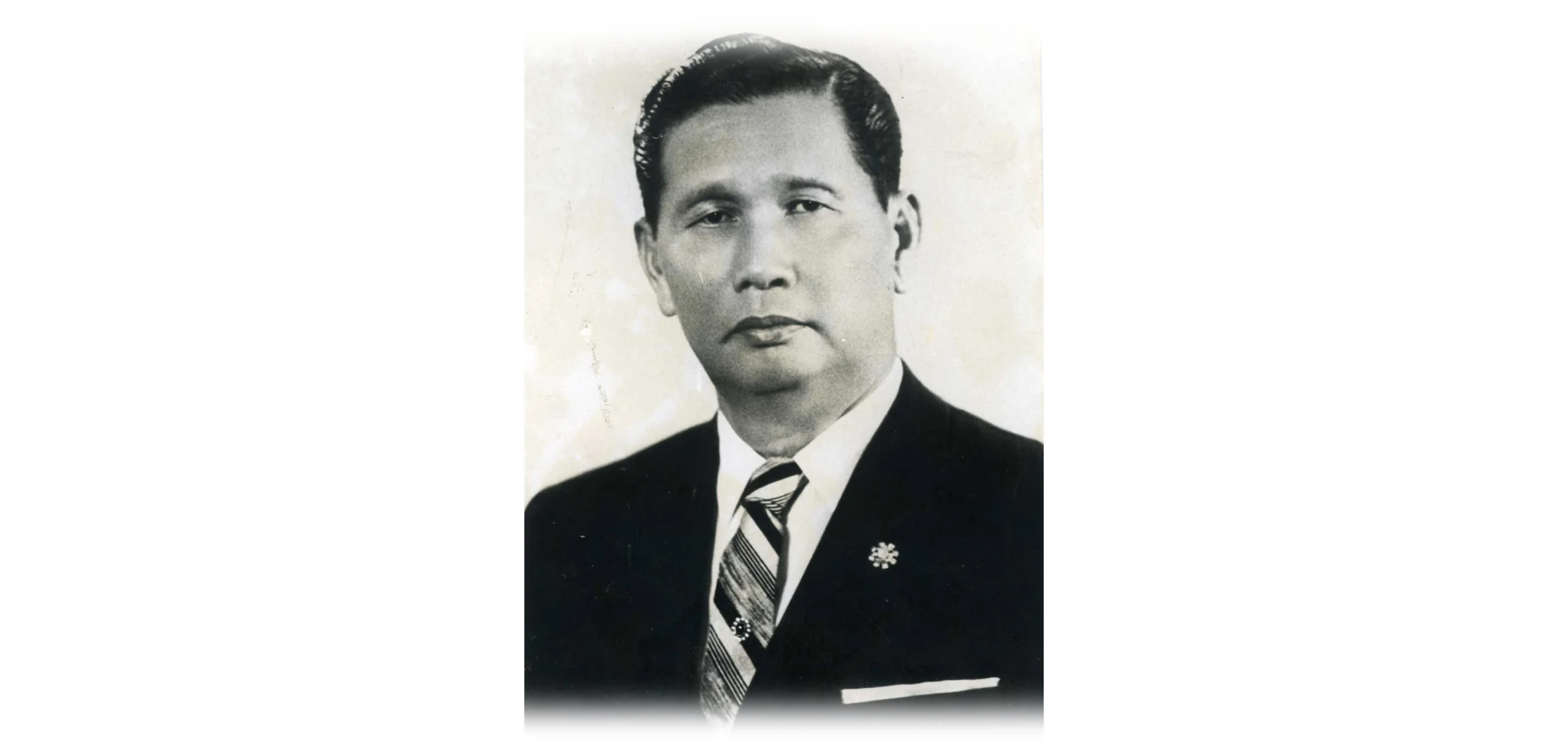
Sarit Thanarat
 Thailand
Also known as: Sarit Dhanarajata, Srisan Thanarat
Birthday
June 16, 1908
Birth Sign
Gemini
Birthplace
Bangkok, Thailand
Age
Died at 55
About
Sarit Thanarat (also spelled Dhanarajata; Thai: สฤษดิ์ ธนะรัชต์) was a Thai military commander and politician who served as the eleventh Prime Minister of Thailand from 1959 until his death in 1963. Born in Bangkok and raised in Mukdahan, he graduated from the Chulachomklao Royal Military Academy in 1928 and began his career as a second lieutenant in the 2nd Infantry Division. His rise through the ranks was swift, propelled by his role in suppressing the Boworadet Rebellion and his leadership during the Burma campaign in World War II, where he commanded forces under General Phin Choonhavan. Known for his strict discipline and effective leadership, Sarit became a prominent figure in the military after the war. Sarit's political ascent accelerated after the 1947 coup d'état, which brought Plaek Phibunsongkhram back to power. He served as Minister of Defense and, from 1954, as commander-in-chief of the Royal Thai Army. By the 1950s, he was a central figure in the so-called "Triumvirate" alongside Phibun and police chief Phao Siyanon, competing for dominance in Thai politics. In 1957, Sarit led a coup that ousted Phibun, briefly serving as de facto prime minister for five days before handing power to Pote Sarasin. However, he seized control again in a 1958 coup, establishing a Revolutionary Council and eventually becoming Prime Minister in February 1959. As Prime Minister, Sarit ruled with an iron fist. He suspended the constitution, dissolved parliament, and banned political parties, centralizing all power in his hands. His government pursued modernization and economic development, focusing on infrastructure, agriculture, and industrialization, and received substantial support from the United States as part of the anti-communist bloc during the Cold War. Sarit also promoted Thai nationalism and elevated the role of the monarchy, which became central to his regime's legitimacy. His policies helped stabilize the country during a turbulent period, but his rule was marked by authoritarianism, corruption, and political repression. Sarit died in office on 8 December 1963, leaving a controversial legacy that shaped Thailand's political landscape for decades.
Early Life & Background
Born Srisan Thanarat on June 16, 1908, in Bangkok, Sarit moved to Mukdahan in the Isan region shortly after birth. This upbringing in northeastern Thailand defined his cultural identity more than his capital city origins. He came from a modest family; his father worked as a minor government official. Growing up in Mukdahan instilled a deep sense of regional pride that would later become a cornerstone of his political base. Sarit attended local schools there before entering the rigorous military track. His entry into the military academy system began when he enrolled at the Chulachomklao Royal Military Academy. Graduating in 1928 as a Second Lieutenant, he immediately joined the 2nd Infantry Division. From the start, his career was characterized by strict adherence to hierarchy and a reputation for toughness. He quickly distinguished himself through disciplined service and tactical acumen. These early years laid the groundwork for his future influence within the Royal Thai Army structure. A pivotal moment occurred during the Boworadet Rebellion in 1933. Sarit played a crucial role in suppressing this royalist uprising against the civilian government. His performance showcased both tactical ability and unwavering loyalty to the state. This success propelled his rapid rise through the ranks. Later, during World War II, he served under General Phin Choonhavan in the Burma campaign. His leadership during these conflicts earned him respect among military peers and positioned him as a key player in post-war Thai politics. By the time the war ended, he was already a respected officer ready for greater responsibilities.
Career Growth
Sarit's trajectory shifted dramatically after the 1947 coup d'état. Following the assassination of an associate of Prime Minister Pridi Banomyong, Sarit supported the coup that restored Plaek Phibunsongkhram to power. He was appointed Minister of Defense, marking his entry into high-level politics. By 1954, he had been promoted to Commander-in-Chief of the Royal Thai Army, consolidating his control over the military machine. By the mid-1950s, Sarit formed a powerful alliance known as the "Triumvirate" alongside Phibun Songkhram and Police Chief Phao Siyanon. While they initially worked together, internal power struggles eventually led to conflict. Frustrated by corruption and instability under Phibun, Sarit led a coup d'état on October 16, 1957. He ousted Phibun and briefly served as de facto Prime Minister for five days before handing power to Pote Sarasin, a civilian academic, to legitimize the transition. Disillusioned with the slow pace of reform under Sarasin, Sarit staged a second coup on November 20, 1958. He established the Revolutionary Council and dissolved parliament, effectively becoming the dictator of Thailand. In February 1959, he officially assumed the title of Prime Minister. He suspended the constitution, banned all political parties, and ruled by decree. His administration focused on infrastructure development, industrialization, and agricultural improvement, earning him the nickname "the man who built the roads." Under his rule, Thailand saw significant progress in road networks, irrigation projects, and the establishment of new universities. He also cultivated a close relationship with the United States, positioning Thailand as a key anti-communist ally in Southeast Asia during the Cold War. This era of modernization transformed the nation's economic landscape while cementing military dominance in politics.
Career Timeline
Public Image & Style
Sarit Thanarat's public image is complex. He is viewed as a strongman who brought stability and development to Thailand, but also as a dictator who suppressed democracy. His style was characterized by military precision and a no-nonsense approach to governance. Media portrayals often highlighted his stern demeanor and distinctive military uniform. He projected an image of a patriotic leader dedicated to national strength. While some admired his efficiency in building infrastructure, others feared his authoritarian methods. His reputation remains polarized in modern Thailand, reflecting the tension between development and liberty.
Fame & Fandom (iFAMOUS Rankings)
Sarit Thanarat died in 1963, long before the concept of a fanbase existed. There is no organized group calling themselves by a specific name, no birthday billboards, and no streaming campaigns dedicated to his memory. His relationship with the public was defined by state authority rather than adoration. The legacy surrounding him consists of verified historical events: the 1957 coup that seized absolute power, the decade-long rule by decree where he banned political parties and suspended the constitution, and his death in office while surrounded by his cabinet. Modern commemorations, such as the wreath-laying at Khon Kaen University in 2025, frame him as a founding architect for the Isan region rather than a pop icon. While some view him as a strongman who stabilized the nation, others remember the iron hand that ruled the country. He remains a figure of institutional memory and political history. Despite the absence of a modern cult following, his impact on Thai governance endures. According to the iFANN Global Fame Rankings, Sarit Thanarat is currently the 86th most famous person in Thailand and the 56th most famous person from Thailand.
Interesting Facts and Legends
Despite his public image as a disciplined leader, Sarit was known to be a heavy drinker, a fact that contributed to his health issues and eventual death. Although born in Bangkok, he identified strongly with the Isan region, which became a key base of support for his political career. He was often referred to as "The Man Who Built the Roads" due to his extensive infrastructure projects. A defining story of his era describes him as a bluff, hard-drinking soldier who imposed martial law with an iron hand. He passed away on December 8, 1963, reportedly dying in the arms of his wife, Vichitra Thanarat. Following his death, his estate was valued at $140 million in 1964 terms. In 2025, Khon Kaen University laid a wreath to honor his role as the Founding Architect of the institution.
Notable Quotes
“I am not a politician; I am a soldier.”
“Thailand must be strong, and I will make it so.”
Family & Personal Life
Sarit was married to Vichitra Thanarat. Their marriage was a central part of his public image, often portrayed as a partnership of mutual support. Vichitra was frequently seen by his side during official functions and was present at his deathbed. Historical accounts mention that Sarit had children, though specific details regarding their names and current status are less prominent in public records compared to his political legacy. Some sources indicate he had a son, but information is sparse due to the private nature of his family life during his era. The family lived a relatively secluded life outside of official duties, maintaining a low profile despite his immense power.
Notable Connections
Relationships & Dating History
Sarit Thanarat was married to Vichitra Thanarat. Their marriage was a central part of his public image, often portrayed as a partnership of mutual support. Vichitra was frequently seen by his side during official functions and was present at his deathbed. Unlike many public figures, Sarit did not have a documented public dating history or multiple romantic partners prior to his marriage. His personal life was characterized by this single union. There are no credible reports of affairs, engagements, or other relationships. At the time of his death in 1963, he was married to Vichitra. They remained together until his sudden passing, which occurred in her arms.
- MarriedVichitra ThanaratUnknown - 1963His only publicly known spouse; she was present at his death.
Death & Aftermath
Died
December 8, 1963 (aged 55)
Death Place
Bangkok, Thailand
Cause of Death
Myocardial infarction
Field Marshal Sarit Thanarat passed away in the arms of his wife, Vichitra Thanarat, surrounded by his cabinet and top military officers at a hospital in Bangkok. The official finding was a myocardial infarction, though historical accounts note that years of severe alcoholism had significantly deteriorated his health prior to the event. He died on December 8, 1963, at the age of 55, ending a tenure as Prime Minister marked by strict discipline and rapid development projects. Tributes poured in from the Thai establishment, who remembered him as a patriotic leader who ruled with an iron hand while fostering growth in the Isan region. His body was interred at Thanarat Cemetery, also known as the Military Cemetery, in a state funeral attended by the government leadership. Decades later, Khon Kaen University continues to honor his legacy as the founding architect of the institution, laying wreaths annually on December 8th to commemorate his contributions to regional development.
Net Worth (Estate Value)
$140 Million
iFANN Editorial Team estimate
At the time of his death in 1963, Sarit Thanarat's estate was estimated to be worth approximately $140 million in 1964 terms. This staggering sum reflected his salary as Prime Minister, military pensions, and investments in land and businesses accumulated during his tenure. Following his passing, the estate was managed by his family and legal representatives. Unlike modern celebrities, his wealth did not generate ongoing commercial earnings through merchandise or licensing deals. Instead, his legacy continues to generate value through educational institutions named after him and historical documentaries. As a deceased historical figure, his net worth is now largely symbolic, tied to historical significance rather than liquid assets. iFANN Editorial Team estimates the adjusted value of his estate and historical impact at roughly $140 million based on available historical financial records.
Awards Won (3)
Sarit Thanarat received numerous honors for his service to the nation. He was awarded the rank of Field Marshal, the highest in the Royal Thai Army. He also received various Thai royal decorations, including the Order of the White Elephant and the Order of the Crown of Thailand. Posthumously, he has been recognized for his contributions to education and regional development.
1954 · Military Rank
Royal Thai Army Service
Unknown · Royal Decoration
Service to Nation
Known For
Prime Minister of Thailand
1959-1963 · Politician
Field Marshal
1954 · Military Commander
Keywords
Sources
Quick Facts
- Profession
- politician, soldier
- Born
- June 16, 1908
- Birthplace
- Bangkok, Thailand
- Died
- December 8, 1963
- Death Place
- Bangkok, Thailand
- Gender
- Male
- Birth Sign
- Gemini
Personal Details
- Full Name
- Srisan Thanarat
- Spouse
- Vichitra Thanarat
- Children
- One son (name not widely publicized)
- Education
- Chulachomklao Royal Military Academy
Frequently Asked Questions
Who was Sarit Thanarat?
When did Sarit Thanarat die?
How did Sarit Thanarat come to power?
What was Sarit Thanarat's legacy?
Did Sarit Thanarat have any children?
Similar People
Join the community
fans discussing