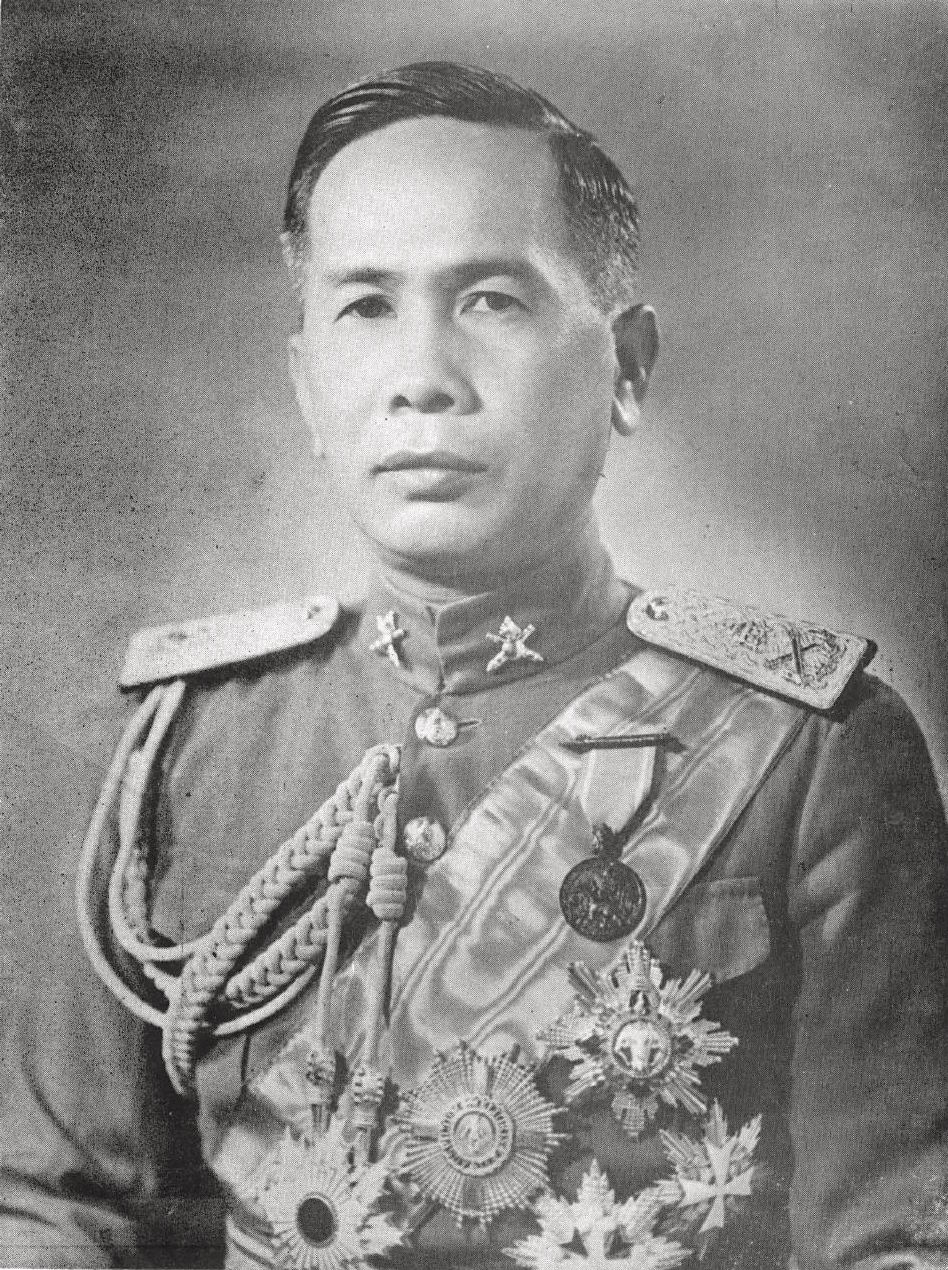
Plaek Phibunsongkhram
 Thailand
Birthday
+1897-07-14
Birth Sign
Cancer
Birthplace
Nonthaburi
Age
Died at 66
About
Plaek Phibunsongkhram, born on 14 July 1897 in Nonthaburi, was a Thai military officer and politician who served as the third prime minister of Thailand from 1938 to 1944 and again from 1948 to 1957. Known in English as Phibun and as Chomphon Por in Thai, he rose to power as a key member of the Khana Ratsadon, the group behind the 1932 Siamese Revolution that ended absolute monarchy. After graduating from the Royal Military Academy in 1914 and studying in France, he returned to Siam and became a prominent figure in the military, gradually consolidating power. In 1938, he became prime minister while also commanding the Royal Siamese Army, and his government soon adopted an authoritarian, fascist-inspired style, influenced by Mussolini. His cultural mandates aimed to modernize Thai society: he changed the country's name from Siam to Thailand, promoted Western dress, and pushed Thai nationalism and Sinophobia. During World War II, Phibun allied with Japan, allowing Japanese troops through Thai territory and declaring war on the Allies, which sparked internal resistance, including the Free Thai Movement led by Pridi Banomyong. As Japan weakened, his support eroded, and he resigned in 1944. After the war, he faced war crime accusations but was acquitted. Phibun returned to power in 1948 through a military-backed coup, ruling during the early Cold War with a strong anti-communist stance and close ties to the United States. His second term saw economic development but also political instability, marked by several coup attempts, including the Army General Staff plot in 1948, the Palace Rebellion in 1949, and the Manhattan Rebellion in 1951. From the mid-1950s, he tried to transition Thailand toward electoral democracy, but in 1957, his subordinate Sarit Thanarat overthrew him in a coup. Phibun went into exile in Japan, where he died on 11 June 1964 at age 66. His legacy remains contested: some view him as a modernizer who reshaped Thai identity, while others see him as a symbol of military authoritarianism. Across his political career, he held no filmography, but his influence on Thai state ideology and governance has been the subject of numerous documentaries and historical analyses.
Fame & Fandom
Plaek Phibunsongkhram commanded a global attention that persists well beyond his death, anchoring him in the collective memory of Southeast Asia and the wider historical record. According to the iFANN Global Fame Rankings, he currently holds the position of the 25th most famous person in Thailand, a standing he has maintained from the previous cycle. His influence as a national figure is further quantified by his placement as the 27th most famous person from Thailand, also holding steady against recent competitors. On a broader continental scale, he ranks as the 68th most famous person in Southeast Asia, having moved up one position from the prior assessment. These metrics reflect a legacy defined by political authority and cultural standardization rather than celebrity performance. Despite this enduring visibility, the subject possesses no formal fandom; the public engagement surrounding his name remains strictly historical or political, lacking the organized rituals, unofficial nicknames, or fan-driven campaigns typical of modern entertainment icons. While specific groups may commemorate his birthday with meals featuring Pad Thai, these acts represent niche political remembrance rather than a cohesive fanbase.
Interesting Facts and Legends
The culinary history of Thailand often attributes the creation of Pad Thai directly to Plaek Phibunsongkhram, though the reality was a government-led initiative during the 1930s designed to unify the nation and reduce rice consumption in favor of noodles. This dish became a central element of his "Thaification" campaigns, which mandated Western-style clothing and the exclusive use of the Thai language to forge a singular national identity. Historical accounts clarify that while he did not invent the recipe himself, his administration standardized it into the national dish known today. His authoritarian policies frequently targeted ethnic minorities, leading to resistance among groups whose cultural identities were suppressed under state mandates. In modern discourse, his legacy remains deeply polarized; some view him as a pragmatic nation-builder who established enduring cultural symbols, while others condemn his alignment with Axis powers during World War II and his human rights abuses. A notable contemporary event occurred on July 14, 2020, when the Democracy Restoration Group held a feast featuring Pad Thai to mark his 123rd birthday, highlighting the continued, albeit divided, cultural resonance of his rule.
Death & Aftermath
Died
+1964-06-11 (aged 66)
Death Place
Unknown
Cause of Death
Unknown
Plaek Phibunsongkhram died on June 11, 1964. The specific location of his passing and the medical details surrounding his final days remain unrecorded in available historical accounts. As a figure whose tenure was defined by authoritarian rule and wartime alliances, his death did not trigger the public vigils or official tributes often seen with other national leaders. There is no evidence of immediate political reaction from peers or institutions, nor are there records of any formal investigation into the circumstances of his end. His funeral arrangements and burial site were not documented in the sources reviewed, leaving the physical disposition of his remains to history without a precise account.
The legacy he left behind remained a subject of complex historical debate rather than a moment of unified commemoration. His role in Thai politics continued to be analyzed through the lens of his policies and military career rather than the specifics of his demise. The absence of detailed records regarding his final hours or the immediate aftermath reflects the nature of the documentation available for this period.
Awards & Accolades
Keywords
Quick Facts
- Profession
- politician, military personnel
- Born
- +1897-07-14
- Birthplace
- Nonthaburi
- Died
- +1964-06-11
- Death Place
- Sagamihara
- Gender
- Male
- Spouse
- La-iat Phibunsongkhram
- Birth Sign
- Cancer
Personal Details
- Spouse
- La-iat Phibunsongkhram
Join the community
fans discussing