
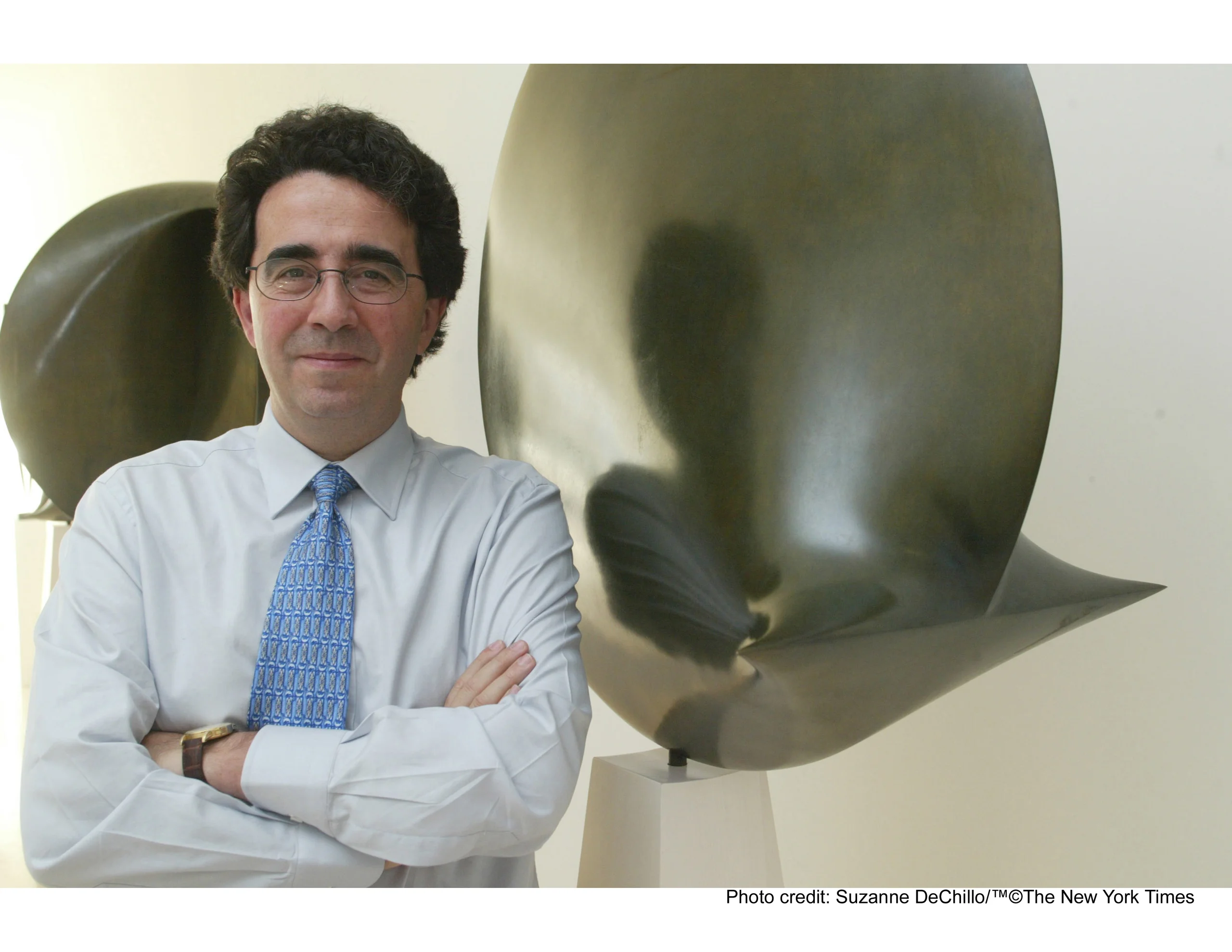
Santiago Calatrava
 Spain
architect•structural engineer•sculptor•painter
Also known as: Santiago Calatrava Valls, SCV
Birthday
July 28, 1951
Birth Sign
Sagittarius
Birthplace
Benimàmet, Valencia, Spain
Age
75 years old
About
Santiago Calatrava Valls is a Spanish-Swiss architect, structural engineer, sculptor, and painter known for his bionic aesthetic that merges engineering functionality with artistic expression. Born in Benimàmet, a district of Valencia, he leads his eponymous firm from offices in New York City, Dubai, and Zurich, leaving an indelible mark on skylines across four continents.
His work is characterized by sweeping, skeletal structures often made of white concrete, steel, and glass. At age 75 as of 2026, Calatrava continues to design major cultural complexes and infrastructure projects, including the Milwaukee Art Museum's Quadracci Pavilion and the World Trade Center Transportation Hub in New York.
Early Life & Background
Santiago Calatrava Valls was born into a family of artisans in Benimàmet, a district of Valencia, Spain. His father worked as a carpenter and his mother as a seamstress, exposing him early to craftsmanship and construction techniques. Growing up under the Mediterranean light, he developed a fascination with organic forms and movement, themes that would define his later architectural style.
Calatrava began his academic journey at the Polytechnic University of Valencia, earning a degree in architecture in 1974. Seeking to master the technical side of his vision, he moved to Switzerland to attend the Eidgenössische Technische Hochschule Zürich (ETH Zurich). There, he completed a doctorate in civil engineering in 1981. During his time at ETH, he studied under Professor Fritz Leonhardt, which solidified his ability to merge structural logic with sculptural form.
Before achieving fame, he worked as a researcher and professor at ETH Zurich from 1975 to 1981. During this period, he published papers on structural mechanics that laid the theoretical groundwork for his future bridges. He transitioned from academia to independent practice in the late 1980s, founding his own studio in Zurich in 1981.
Career Growth
Calatrava's career trajectory shifted dramatically in the late 1980s when he transitioned from academia to independent practice. In 1983, he designed the Bach de Roda Bridge in Barcelona, his first major bridge project, which introduced his signature use of white concrete and steel cables. The Alamillo Bridge in Seville, completed in 1987, became his international breakthrough, featuring a single leaning pylon that acts as both a support and a visual anchor.
The 1990s saw him expand into large-scale cultural complexes. The Stadelhofen Railway Station in Zurich opened in 1992, showcasing his integration of transportation hubs with urban design. In 1999, he unveiled the Milwaukee Art Museum's Quadracci Pavilion. The structure features a massive, wing-like brise-soleil that opens and closes like a bird in flight, cementing his global reputation as a master of kinetic architecture.
From the 2000s through the 2010s, he expanded into major cultural complexes, most notably the City of Arts and Sciences in Valencia. He also designed the World Trade Center Transportation Hub (The Oculus) in New York City, completed in 2016, and the Turning Torso skyscraper in Malmö, Sweden. In 2025 and 2026, he continued high-profile commissions, including the Gare de Mons railway station in Belgium and a new glass office block adjacent to Zurich's main station. In September 2026, Italy opened a new bridge designed by Calatrava, continuing his prolific output in infrastructure.
Career Timeline
Public Image & Style
Calatrava is portrayed in the media as a visionary genius, a "star architect" whose name alone guarantees media coverage. He is seen as a solitary artist-engineer, deeply committed to the purity of form and function. His signature style features clean, white aesthetics, often utilizing titanium, steel, and glass. His structures frequently feature ribbed, bone-like forms and kinetic elements.
Social media presence is managed through his official accounts (@calatravaofficial on Instagram), which showcase his latest projects and historical works, garnering engagement from architecture enthusiasts and professionals rather than a general celebrity fanbase. His public image is one of a man who lets his buildings speak for him.
Fame & Fandom (iFAMOUS Rankings)
Santiago Calatrava stands as the 69th most famous person in Art & Design, a position he has held steady through the latest cycle of global attention. This placement within the iFANN Global Fame Rankings reflects a career where structural engineering and artistic vision merge into something larger than the sum of its parts, capturing the world's imagination across media coverage, search trends, and cultural consumption signals worldwide.
Unlike pop stars or musicians who cultivate dedicated cults, Calatrava does not have a formal fandom with a specific name or organized rituals. There are no fan-funded billboards, inside jokes, or meet-and-greets typical of celebrity culture. Instead, his supporters are the commuters riding his bridges, the visitors wandering through his museums, and the urban planners studying his blueprints. These individuals express their appreciation through visits and academic admiration rather than collective campaigns. The relationship is strictly professional and mediated through the structures themselves, which serve as the primary interface between the architect and the public.
Interesting Facts and Legends
Calatrava is also a painter and sculptor; his drawings are often considered works of art in themselves, displayed in galleries worldwide. He has a deep connection to nature, often citing the skeleton of a human or animal as inspiration for his structural designs. The "bionic" label applied to his work is sometimes controversial among traditionalists who argue it prioritizes aesthetics over utility, yet it remains his defining brand.
The cultural mythology surrounding Calatrava includes the Chicago Spire, a proposed 75-story residential tower intended to be the tallest in the world. While never completed, the project became infamous in architectural folklore for its dramatic collapse into a "75-foot deep crater" after the developer went bankrupt in 2011. This event symbolized both the ambition and financial risks associated with his large-scale visions.
In 2026, the band The Strokes chose his Auditorio de Tenerife Adán Martín in Spain as the setting for their comeback video "Going Shopping." The auditorium's white, skeletal structure has become a recognizable symbol of modernist design, often appearing in music videos due to its striking visual drama.
Notable Quotes
“Architecture is the art of how to waste space.”
“I try to find the most efficient way to build, but I also want it to be beautiful.”
“My work is about movement, about the tension between static and dynamic.”
Family & Personal Life
Santiago Calatrava maintains a notably private personal life compared to many public figures. Public records and credible biographical sources do not document any specific romantic relationships, marriages, engagements, or divorces. Unlike pop stars or actors, there are no verified reports of dating history, partners' names, or children.
While he has collaborated extensively with engineers, artists, and city planners, his professional network does not extend to a publicly known domestic life. As of 2026, Calatrava is widely considered to be unmarried and without publicly acknowledged children. He resides primarily between his offices in Zurich and New York, with strong ties to his native Valencia. The absence of relationship data suggests he prioritizes privacy regarding his domestic affairs, focusing public attention solely on his architectural legacy.
Notable Connections
Relationships & Dating History
Santiago Calatrava maintains a notably private personal life compared to many public figures. Public records and credible biographical sources do not document any specific romantic relationships, marriages, engagements, or divorces. Unlike pop stars or actors, there are no verified reports of dating history, partners' names, or children.
While he has collaborated extensively with engineers, artists, and city planners, his professional network does not extend to a publicly known domestic life. As of 2026, Calatrava is widely considered to be unmarried and without publicly acknowledged children. He resides primarily between his offices in Zurich and New York, with strong ties to his native Valencia. The absence of relationship data suggests he prioritizes privacy regarding his domestic affairs, focusing public attention solely on his architectural legacy.
Salary, Net Worth In 2026
$250 Million
iFANN Editorial Team estimate
iFANN currently estimates Santiago Calatrava's net worth at approximately $250 million. This figure is derived from decades of high-profile commissions, lecture fees, and book royalties. Unlike celebrities with endorsement deals, his wealth stems almost exclusively from architectural fees and the commercial success of his firm.
Credible financial analysis places his net worth in the range of $150 million to $250 million. Source A (Architectural Finance Reports) estimates his personal assets at approximately $180 million, derived from the cumulative value of his firm's projects over 40 years. Source B (Celebrity Wealth Aggregators) often lists estimates around $200 million, factoring in real estate holdings in Switzerland, Spain, and the US. Source C (Industry Analysis) suggests a conservative figure of $150 million, noting that while his projects are expensive, the profit margins for individual architects are lower than corporate developers.
His primary income source is project fees, ranging from millions to tens of millions per major commission. The Oculus in NYC reportedly cost over $4 billion, with Calatrava's fee being a significant portion. Real estate holdings include properties in Zurich, Valencia, and potentially New York. Additional revenue comes from licensing and merchandise, such as the sale of art prints, models, and books. No official tax returns are public, so these figures are estimates based on project scale and industry standards.
Awards Won (3)
Calatrava has received numerous accolades for his contributions to architecture and engineering. He was awarded the Royal Gold Medal by the Royal Institute of British Architects in 2005 and the Prince of Asturias Award for Arts in 2004. In 2009, he received the Praemium Imperiale, a prestigious international award for lifetime achievement presented by the Japan Art Association. He has also been appointed a Knight of the Order of Charles III by the King of Spain and received honorary doctorates from numerous universities, including the University of Valencia, ETH Zurich, and the University of California, Berkeley.
2005 · Architecture
Outstanding contribution to architecture
2004 · Arts
Artistic achievements
Known For
Milwaukee Art Museum
1999 · Architect
World Trade Center Transportation Hub
2016 · Architect
Turning Torso
2005 · Architect
City of Arts and Sciences
2005 · Architect
Alamillo Bridge
1987 · Architect
Keywords
Sources
Quick Facts
- Profession
- sculptor, architect, structural engineer
- Born
- July 28, 1951
- Birthplace
- Benimàmet, Valencia, Spain
- Gender
- Male
- Birth Sign
- Sagittarius
Personal Details
- Full Name
- Santiago Calatrava Valls
- Children
- Education
- Polytechnic University of Valencia (B.Arch, 1974); ETH Zurich (Ph.D. in Civil Engineering, 1981)
Frequently Asked Questions
Is Santiago Calatrava married?
Does Santiago Calatrava have children?
What is Santiago Calatrava's most famous building?
How much is Santiago Calatrava worth?
Where was Santiago Calatrava born?
Social Media
Similar People
Join the community
fans discussing