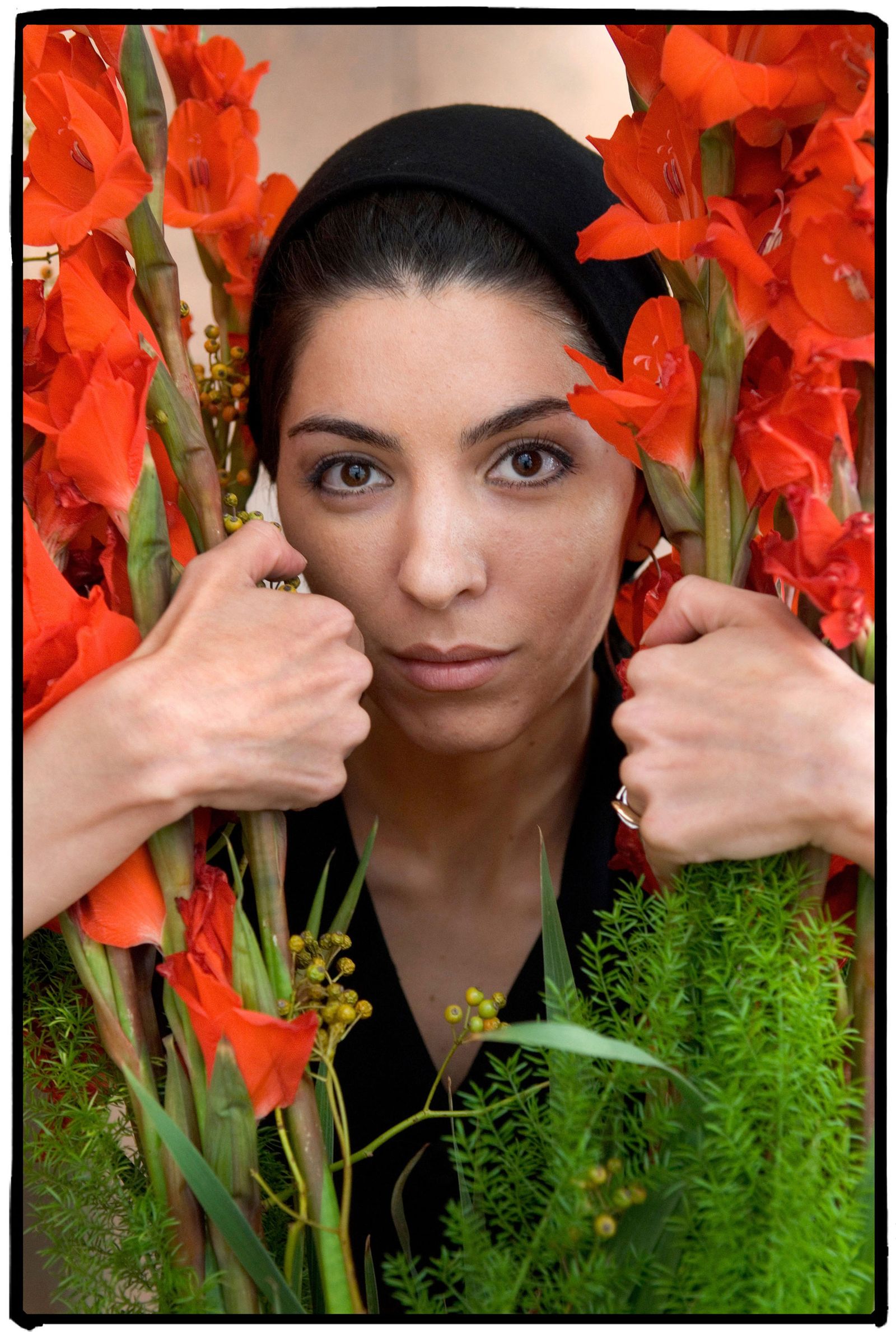
Samira Makhmalbaf
 Iran
Iranfilm director•screenwriter•film producer
Birthday
February 15, 1980
Birth Sign
Aquarius
Birthplace
Tehran, Iran
Age
46 years old
About
Samira Makhmalbaf is an Iranian film director, screenwriter, and producer, celebrated as one of the most precocious filmmakers in cinema history. Born in Tehran in 1980, she emerged from the renowned Makhmalbaf family, a dynasty of Iranian filmmakers. Makhmalbaf is best known for directing four feature films between 1998 and 2008, each premiering at major festivals like Cannes and Venice, and winning critical acclaim. Her work, characterized by poetic realism and a focus on women's lives in Iran and Afghanistan, has made her a key figure of the Iranian New Wave. As of 2026, she remains an influential voice in world cinema, though she has not directed a feature since 2008.
Makhmalbaf's films have earned her international awards, including the Jury Prize at Cannes for At Five in the Afternoon (2003). She has also served as a UNESCO Goodwill Ambassador since 2002, advocating for women's rights and education through cinema. Her sudden departure from filmmaking has been a subject of much discussion, with outlets like The New Yorker calling her "the wunderkind Iranian director who stopped making films." Despite her limited output, her work continues to be studied and screened worldwide, and she remains a symbol of artistic integrity and resilience.
Early Life & Background
Samira Makhmalbaf grew up in a household where cinema was the air she breathed. Her father, Mohsen Makhmalbaf, was already a celebrated director, and her mother, Fatemeh Meshkini, was also a filmmaker. At just eight years old, Samira appeared as an actress in her father's film The Cyclist (1989), giving her an early taste of the film set. Formal schooling took a backseat; instead, she was educated within the Makhmalbaf Film House, the family's production and teaching hub, where she absorbed film theory, production techniques, and the philosophical approach that would define her work.
By her mid-teens, Samira had set her sights on directing, a bold ambition in post-revolutionary Iran where opportunities for women in cinema were scarce. Her first directorial effort came at an astonishingly young age: at just 17, she directed her debut feature The Apple (1998), a semi-documentary based on the true story of twin sisters locked inside their home by their father for 11 years. The film, which blends documentary and fiction, explores themes of patriarchal control and female liberation. It premiered at the Cannes Film Festival in 1998, marking an extraordinary debut and launching her international career.
Career Growth
Samira Makhmalbaf's career is a string of festival triumphs. After The Apple premiered at Cannes in 1998, she followed with The Day I Became a Woman (2000), which premiered at Venice and won the UNESCO Award and the FIPRESCI Prize. Her 2002 documentary Five Minutes to Dawn, shot in post-Taliban Afghanistan, won the François Chalais Award at Cannes. In 2003, At Five in the Afternoon competed at Cannes and won the Jury Prize, cementing her reputation as a major international filmmaker. Her final feature, Two-Legged Horse (2008), won the Special Jury Prize at Venice.
After 2008, Makhmalbaf's output stalled. The political situation in Iran forced her family into exile, and she effectively stopped making films. She has since focused on jury work, chairing the Michael Powell Jury at the Edinburgh International Film Festival in 2013, and continues to be honored through retrospectives. In 2026, The Apple was screened on 35mm at Asia Society in New York, a testament to her enduring relevance.
Career Timeline
Public Image & Style
Samira Makhmalbaf is perceived as a prodigious talent whose career was tragically interrupted by political circumstances. Critics and scholars consistently describe her as one of the most precocious directors in film history, with The New Yorker calling her "one of the best modern directors, and one of the most precocious of all time." Her films are known for their poetic, humanistic style, blending documentary realism with fiction to tell stories of women and girls in Iran and Afghanistan. She does not have a named fandom, but her audience includes cinephiles, festival-goers, and academics. Her public voice is thoughtful and philosophical, reflecting her family's artistic values.
Fame & Fandom (iFAMOUS Rankings)
Samira Makhmalbaf is currently evaluated by the iFANN Global Fame Engine but holds no placement in the published rankings. This status reflects her standing as a revered figure within the specific sphere of international arthouse cinema rather than a participant in the global celebrity hierarchy tracked by the system's top lists. Her influence is defined by critical acclaim and historical significance rather than mass-market consumption metrics that drive standard fame indices. The audience surrounding Samira Makhmalbaf does not operate as a formal fandom with an organized name or public rituals. Unlike pop culture icons who command dedicated fanbases capable of coordinating campaigns or digital movements, her following consists primarily of cinephiles, film scholars, and critics who engage with her work through festival screenings and academic discourse. The relationship between the director and her viewers is mediated entirely through the distribution of her films at prestigious venues like the Cannes Film Festival and the Edinburgh International Film Festival. There are no documented fan clubs, social media-driven birthday tributes, or community-led charity drives bearing her name. Instead, the mythology built around her is rooted in her prodigious talent and the enigmatic nature of her career trajectory. Fans and historians recount the story of her appearance as a child actor in *The Cyclist* and celebrate the historic achievement of directing *The Apple* at age seventeen to win the Camera d'Or. This narrative of a wunderkind who produced four masterpieces before seemingly stepping away from filmmaking serves as the central legend for those who study her life, creating a legacy based on artistic impact rather than active fan engagement.
Interesting Facts and Legends
Samira Makhmalbaf directed her breakthrough feature *The Apple* without any formal film school training, learning the craft entirely on the job. She has served as a UNESCO Goodwill Ambassador since 2002, using her platform to advocate for educational causes. Her film *At Five in the Afternoon* stands as one of the first major productions shot in post-Taliban Afghanistan, capturing a nation in transition. Despite her global recognition, she maintains a strict absence from public social media, a rarity among contemporary directors. Additionally, she contributed as a producer to her sister Hana's film *Budha Collapsed out of Shame* in 2007. A defining moment in her cinematic lore involves her debut feature *The Apple*, which tells the true story of two sisters kept isolated until adolescence. Directed when she was only seventeen, this film made her the youngest director ever to receive the Camera d'Or at the Cannes Film Festival at that time. Another significant chapter in her career involved the complex production of *The Blackboard*, which explored the lives of Kurdish teachers in war-torn regions and faced significant logistical challenges. In 2013, her status as a major global figure was further cemented when she was selected to chair the jury at the Edinburgh International Film Festival, where she also visited Jerusalem. A more recent narrative emerging around 2020 concerns her apparent hiatus from filmmaking after directing four acclaimed features, creating a quiet legend of a once-in-a-generation talent who chose to step back from the spotlight.
Notable Quotes
“I like things difficult.”
“Cinema is a tool for social change.”
“I feel a responsibility toward the subjects of my films.”
Family & Personal Life
Samira Makhmalbaf comes from a family of filmmakers. Her father, Mohsen Makhmalbaf, is an internationally acclaimed director known for Kandahar and A Moment of Innocence. Her mother, Fatemeh Meshkini, directed The Hidden Half. Her sister Hana Makhmalbaf directed Budha Collapsed out of Shame (2007), and her brother Maysam Makhmalbaf also works in film. The family's production company, Makhmalbaf Film House, has been central to their work. Samira has no publicly documented spouse or children, and she keeps her personal life private.
Notable Connections
Samira Makhmalbaf is closely associated with her father, Mohsen Makhmalbaf, who mentored her and has been a major influence on her work. Her mother, Fatemeh Meshkini, and sister, Hana Makhmalbaf, are also filmmakers, making the Makhmalbaf family a significant dynasty in Iranian cinema. She has collaborated with editor Marziyeh Meshkini on several films.
Relationships & Dating History
Samira Makhmalbaf is intensely private about her personal life. No credible sources document any public romantic relationships, engagements, or marriages. She has never been the subject of tabloid speculation. As of 2026, her relationship status remains unknown, and she has no publicly documented children.
Salary, Net Worth In 2026
$5 Million
iFANN Editorial Team estimate
iFANN currently estimates Samira Makhmalbaf's net worth at $5 Million as of 2026. Her financial profile is shaped by her five feature films, which, while critically lauded, function as art-house productions with modest commercial returns compared to mainstream blockbusters. Revenue streams include appearances on juries for international festivals, participation in retrospective events, and potential royalties from academic screenings and institutional licensing. The family-run entity known as Makhmalbaf Film House manages their collective projects, keeping detailed revenue figures private. Given her limited output over the last decade and the absence of high-budget commercial ventures, her wealth remains modest relative to Hollywood counterparts.
Awards Won (9)
Samira Makhmalbaf has won several prestigious awards for her films. The Apple won the Sutherland Trophy at the London Film Festival and the Critics' Week Grand Prize at Locarno. The Day I Became a Woman earned the UNESCO Award and FIPRESCI Prize at Venice. Five Minutes to Dawn won the François Chalais Award at Cannes. At Five in the Afternoon won the Jury Prize at Cannes, and Two-Legged Horse won the Special Jury Prize at Venice.
2003 · Jury Prize
At Five in the Afternoon
2002 · François Chalais Award
Five Minutes to Dawn
Known For
The Apple
1998 · Director
The Day I Became a Woman
2000 · Director
At Five in the Afternoon
2003 · Director
Two-Legged Horse
2008 · Director
Keywords
Sources
Quick Facts
- Profession
- film director, screenwriter, film producer
- Born
- February 15, 1980
- Birthplace
- Tehran, Iran
- Gender
- Female
- Birth Sign
- Aquarius
- Net Worth
- $5 Million
Personal Details
- Full Name
- Samira Makhmalbaf
- Education
- Educated at the Makhmalbaf Film House, the family's production and educational institution
Filmography
5
Total
5
Film
0
TV
Frequently Asked Questions
Why did Samira Makhmalbaf stop making films?
How old was Samira Makhmalbaf when she made her first film?
Is Samira Makhmalbaf related to Mohsen Makhmalbaf?
What is Samira Makhmalbaf's net worth?
Is Samira Makhmalbaf married?
Similar People
Join the community
fans discussing