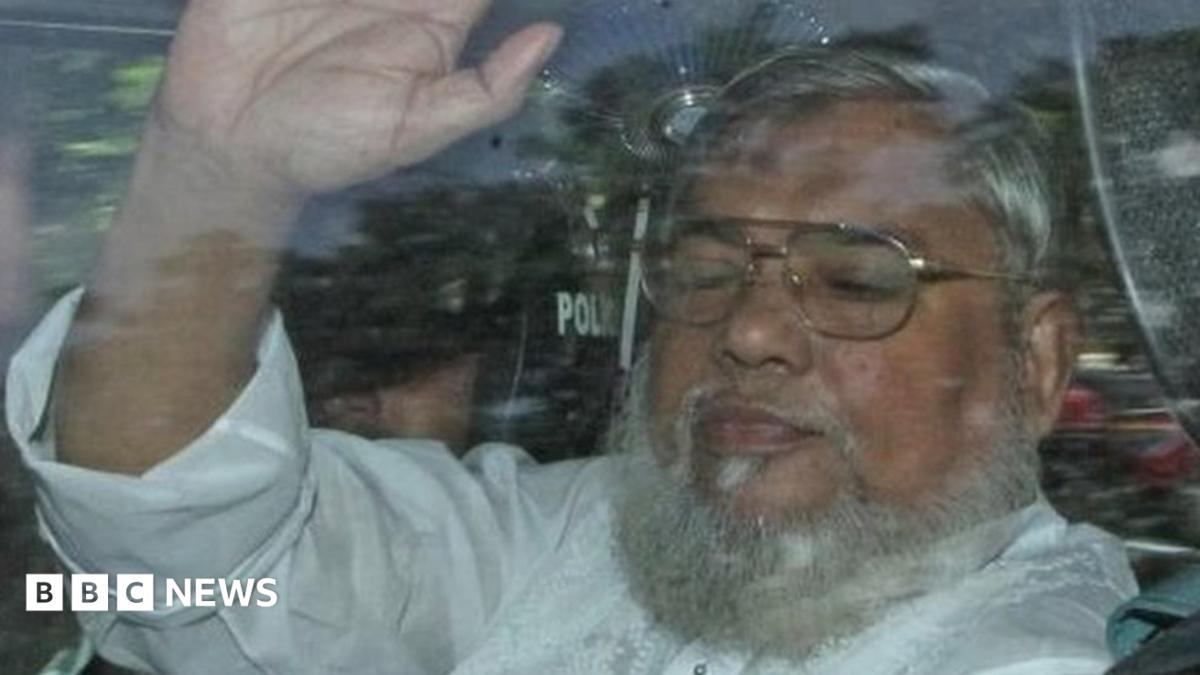
Salahuddin Quader Chowdhury
 Bangladesh
Also known as: SQC
Birthday
March 13, 1949
Birth Sign
Pisces
Birthplace
Jabaranpur, Bangladesh
Age
Died at 66
About
Salahuddin Quader Chowdhury was a distinguished Bangladeshi politician and a six-term member of the Jatiya Sangsad, the national parliament. He was a senior figure in the Bangladesh Nationalist Party (BNP), serving on its Standing Committee and holding significant ministerial roles. His influence was particularly notable from 2001 to 2006 when he served as Adviser on Parliamentary Affairs to Prime Minister Khaleda Zia, playing a crucial role in legislative strategy. His political career, however, became inextricably linked with his conviction for war crimes committed during the 1971 Bangladesh War of Independence. In 2013, the International Crimes Tribunal found him guilty on multiple charges, including murder and genocide, leading to a death sentence. Despite international observations regarding the trial's fairness, his appeals were ultimately unsuccessful, and he was executed by hanging in Dhaka on November 22, 2015. He remains a polarizing figure, remembered for his sharp parliamentary wit and the gravity of the charges that defined his later years.
Early Life & Background
Salahuddin Quader Chowdhury was born on March 13, 1949, in Jabaranpur, East Pakistan. He hailed from a prominent political family; his father, A.K.M. Fazlul Quader Chowdhury, was a leader of the Convention Muslim League and a minister in the provincial government. This familial background steeped him in the political landscape from a young age. His initial forays into public life were marked by his alignment with the Bangladesh Nationalist Party. He first entered the Jatiya Sangsad following his victory in the 1979 parliamentary elections, marking the commencement of a long and impactful political tenure. Over the subsequent decades, he secured re-election five additional times, solidifying his position as a significant political force in the Chittagong region. These formative years established his reputation as a skilled orator and an individual with an unreserved approach to public discourse.
Career Growth
Chowdhury's political career was marked by sustained electoral success, establishing him as one of Chittagong's most enduring political figures. He held ministerial positions twice under President Hussain Muhammad Ershad's administration, wielding considerable influence in his appointed capacities. His most significant governmental role was from 2001 to 2006, when Prime Minister Khaleda Zia appointed him Adviser on Parliamentary Affairs. In this pivotal position, he was instrumental in managing government business within the parliament, facilitating legislative progress through coordination with the speaker and opposition parties. His professional life, however, was irrevocably impacted by the proceedings of the war crimes tribunal. In 2013, he was formally indicted by the International Crimes Tribunal for alleged atrocities during the 1971 war, including mass murder and genocide. The tribunal swiftly concluded its proceedings, and on October 1, 2013, he received a death sentence. His final legal recourse, an appeal to the Supreme Court, was rejected on July 29, 2015, leading to his execution by hanging on November 22, 2015. This conviction and subsequent execution marked the end of a political career spanning nearly four decades, leaving behind a deeply contested legacy.
Career Timeline
Public Image & Style
In the public sphere, Salahuddin Quader Chowdhury was perceived as a figure of considerable polarization. His supporters viewed him as a charismatic and articulate orator, a staunch defender of the BNP's political agenda, and a politician unafraid to voice his opinions candidly. Conversely, his detractors saw him as a symbol of the grave human rights violations that occurred during the 1971 war. His trial and subsequent execution garnered significant international attention, with various human rights organizations raising concerns about the procedural fairness of the proceedings. His sharp wit and quick repartee were hallmarks of his parliamentary presence, making him a memorable figure. However, his enduring legacy is indelibly marked by the war crimes conviction. Even posthumously, he continues to be a focal point in political discourse within Bangladesh, with his family and political associates maintaining their dispute of the charges leveled against him. He has been described as one of the wittiest parliamentarians and sharpest tongues.
Fame & Fandom
Salahuddin Quader Chowdhury never cultivated a fandom in the traditional sense of organized fan clubs, birthday billboards, or ritualistic adoration. His supporters were political loyalists bound by party allegiance to the Bangladesh Nationalist Party rather than a dedicated fanbase with its own mythology or internal culture. The narrative surrounding him was defined entirely by his legal battles, execution, and the polarized political mythology that emerged from these events, not by personal charisma or viral performance moments. While he was remembered for his sharp wit and status as one of the wittiest parliamentarians, the massive gatherings associated with him were ideological protests regarding his trial and sentencing rather than expressions of fan adoration. There is no documented name for any such group, and no records exist of fan-funded projects or specific interactions where fans are celebrated as a distinct community. In August 2026, the iFANN Global Fame Engine evaluated this figure but determined that Salahuddin Quader Chowdhury does not currently hold a placement in the published rankings, including the Global Top 1,000 or any Top-100 scope list. This absence reflects the complex nature of his legacy, which remains deeply entangled with historical controversy rather than contemporary fame metrics. The evaluation stands as a neutral assessment of his current standing within the global consciousness, distinguishing between verified historical impact and active popularity signals. While his execution on November 22, 2015, transformed him into a martyr figure within the BNP base, this transformation did not translate into a measurable rank on the iFANN platform. The data confirms that while his story is widely retold, it does not generate the volume of consumption or search activity required for a specific ordinal placement in the current year.
Interesting Facts and Legends
Chowdhury was recognized for his sharp wit and rapid verbal exchanges in parliamentary sessions, earning him a reputation as one of the most intellectually agile lawmakers of his era. Beyond his legislative duties, he was an active writer who contributed numerous columns and essays on political and societal issues. Despite his high profile, he maintained a relatively private personal life away from the political arena and his electoral constituency. His son, Hummam Quader Chowdhury, continued the family's political tradition and was elected to a parliamentary seat in 2024. In a significant development in August 2025, the Criminal Investigation Department officially cleared him posthumously in a money laundering case, a fact frequently cited by his supporters to reframe aspects of his public record. The defining moment of his public life remains his execution on November 22, 2015, when he was hanged alongside Muhammad Kamaruzzaman after appeals were rejected. This event became a major flashpoint in Bangladesh's political history, with reports indicating that his funeral was marred by violence, including an incident where a reporter was shot during the proceedings. Supporters often recount his conviction as a pivotal moment where the first member of the BNP was tried by the International Crimes Tribunal, sparking international controversy over the trial process. Stories from his later years highlight his status as a controversial yet articulate defender of his party's agenda, even as detractors viewed him as a symbol of grave human rights violations committed during the 1971 war.
Notable Quotes
“Judicially murdered on 22 November 2015, Salahuddin Quader Chowdhury (SQC) was one of the wittiest parliamentarians and one of the most sharp-tongued.”
“I have full faith in the judiciary and hope to get justice.”
“The war crimes tribunal is a political tool to destroy the opposition.”
Family & Personal Life
Salahuddin Quader Chowdhury was born into a distinguished political dynasty. His father, A.K.M. Fazlul Quader Chowdhury, was a notable leader of the Convention Muslim League and served as a minister in the provincial government of East Pakistan. This prominent lineage provided Salahuddin with an early and deep immersion into the world of politics. He was married, and his household included his son, Hummam Quader Chowdhury. Hummam has followed in his father's footsteps, becoming an active figure in the Bangladesh Nationalist Party (BNP) and subsequently elected as a Member of Parliament for Chattogram-7 (Rangunia). The family has navigated considerable public scrutiny and personal hardship; Hummam Quader Chowdhury recounted his experiences of 'enforced disappearance' before a tribunal in January 2026. Despite these challenges, the Chowdhury family continues to be a presence in Bangladeshi politics.
Notable Connections
Salahuddin Quader Chowdhury was closely associated with the Bangladesh Nationalist Party (BNP) and its leaders, including Prime Minister Khaleda Zia, under whom he served as Adviser. He also worked with former President Hussain Muhammad Ershad during his administration. His son, Hummam Quader Chowdhury, is a BNP executive committee member and MP. The International Crimes Tribunal, which convicted him, and human rights organizations such as Amnesty International and the International Commission of Jurists, also feature in his story.
Relationships & Dating History
Salahuddin Quader Chowdhury was married, although specific details concerning his spouse are not widely disseminated in public records. He was the father of at least one son, Hummam Quader Chowdhury, who has actively participated in politics. At the time of his death in 2015, he was married. His family has remained closely involved with his public memory; his son has spoken publicly about experiencing 'enforced disappearance' and has urged party activists in 2026 to refrain from engaging in 'dirty politics.' His son Hummam Quader Chowdhury was elected as a Member of Parliament in 2024.
- MarriedUnknown? - 2015Married at the time of his death; wife's name not publicly documented.
Death & Aftermath
Died
November 22, 2015 (aged 66)
Death Place
Dhaka, Bangladesh
Cause of Death
Execution by hanging
Among his supporters within the Bangladesh Nationalist Party, the execution of Salahuddin Quader Chowdhury was immediately characterized as a judicial murder and a political assassination rather than a lawful sentencing. Tributes from party leadership condemned the event as an injustice against a democratic leader, sparking political mobilization and protests that stood in stark contrast to traditional mourning rituals. The public reaction remained deeply polarized, with critics labeling the proceedings politically motivated while the tribunal maintained their legal soundness. On November 22, 2015, the six-term member of parliament was executed by hanging at Dhaka Central Jail in Dhaka, Bangladesh, marking the end of a career spanning nearly four decades. He had spent his final days under sentence of death while appealing his conviction for war crimes committed during the 1971 Liberation War, with his last known presence being his continued custody awaiting the legal process.
The International Crimes Tribunal had convicted him on nine charges including murder and genocide in October 2013, a verdict upheld by the Supreme Court of Bangladesh after he exhausted all legal recourse. His body was released to his family following the state-sanctioned capital punishment, allowing for funeral arrangements conducted privately according to Islamic rites amidst the sensitive political climate. Posthumously, his legacy has been cemented as a martyr figure for the BNP and a focal point in ongoing debates regarding war crimes trials, with academic reflection appearing years later in works analyzing his controversial life.
Net Worth (Estate Value)
$10 Million
iFANN Editorial Team estimate
As a career politician, Salahuddin Quader Chowdhury's financial standing was derived primarily from his parliamentary remuneration, government allowances, and inherited family assets. He owned properties located in both Chittagong and Dhaka, though detailed financial disclosures were not a common feature of his public life. Following his passing, the management of his estate has fallen to his family members. In August 2025, the Criminal Investigation Department (CID) cleared the late BNP leader in a money laundering case, a decision that could potentially influence the future handling of his assets. Per iFANN's editorial analysis, the value of his estate is estimated at $10 Million, encompassing the worth of his real estate holdings and various investments.
Awards & Accolades
Known For
Member of Parliament
1979-2006 · Six-term MP for Chittagong
War Crimes Conviction
2013 · Convicted of genocide and murder
Keywords
Sources
Quick Facts
- Profession
- Politician
- Born
- March 13, 1949
- Birthplace
- Jabaranpur, Bangladesh
- Died
- November 22, 2015
- Death Place
- Dhaka, Bangladesh
- Gender
- Male
- Birth Sign
- Pisces
- Political Party
- Bangladesh Nationalist Party
Personal Details
- Children
- Hummam Quader Chowdhury
Frequently Asked Questions
Who was Salahuddin Quader Chowdhury?
What was Salahuddin Quader Chowdhury convicted of?
When was Salahuddin Quader Chowdhury executed?
Who is Hummam Quader Chowdhury?
What is the net worth of Salahuddin Quader Chowdhury?
Similar People
Join the community
fans discussing